
- Home
- Services
- Locations
Amesbury, MA
Boxford, MA
Chelmsford, MA
Danvers, MA
Dracut, MA
Essex, MA
Georgetown, MA
Groveland, MA
Hamilton, MA
Haverhill, MA
Ipswich, MA
Merrimac, MA
Methuen, MA
Middleton, MA
Newbury, MA
Newburyport, MA
North Andover, MA
North Reading, MA
Peabody, MA
Rowley, MA
Salem, MA
Salisbury, MA
Tewksbury, MA
Topsfield, MA
Topsfield, MA
West Newbury, MA
Atkinson, MA
Derry, NH
East Kingston, NH
Kensington, NH
Kingston, NH
Londonderry, NH
Plaistow, NH
Salem, NH
- Company
- Contact
- Home
- Services
- Locations
Amesbury, MA
Boxford, MA
Chelmsford, MA
Danvers, MA
Dracut, MA
Essex, MA
Georgetown, MA
Groveland, MA
Hamilton, MA
Haverhill, MA
Ipswich, MA
Merrimac, MA
Methuen, MA
Middleton, MA
Newbury, MA
Newburyport, MA
North Andover, MA
North Reading, MA
Peabody, MA
Rowley, MA
Salem, MA
Salisbury, MA
Tewksbury, MA
Topsfield, MA
Topsfield, MA
West Newbury, MA
Atkinson, MA
Derry, NH
East Kingston, NH
Kensington, NH
Kingston, NH
Londonderry, NH
Plaistow, NH
Salem, NH
- Company
- Contact
Vinyl Siding Installation in West Newbury, MA
West Newbury still has a lot of original clapboard on its eighteenth and nineteenth century farmhouses, especially along Main Street and up around the Pipestave Hill area, and most of it has been painted so many times the wood underneath is tired, not sound. Out toward the newer subdivisions off Bachelor Street and Church Street, you get a mix of aging vinyl from the 1980s and 90s that has faded, warped, or cracked at the corners. Both situations end up at the same conversation with us: does the siding still protect the house, or is it just hanging there.
Vinyl Siding Installation in West Newbury
Siding almost never gets tackled by itself out here. If we are already on the roof for a repair or a full tear-off, the siding conversation usually comes up at the same time, because a lot of these homes need both and it is cheaper to do the work in one mobilization than to pay for two separate setups. We install standard lap vinyl, insulated vinyl for houses with older walls that need the extra R-value, and we pay attention to trim details that matter on older New England homes – corner boards, frieze boards, window casings that were never designed for modern J-channel. Getting those details wrong is how a vinyl job ends up looking cheap on a house that deserves better.
Deck-mounted
units fasten straight to the roof deck and use a matched step-flashing kit. This is what goes on most pitched roofs now. It sits low, looks clean and handles snow well.
Curb-mounted
units sit on a raised wood frame built on the roof. They are the right call on low-slope sections, generally below about 3 in 12, and a lot of older installs already have them.
Fixed
units let in light and nothing else. Fine over a high cathedral ceiling you will never reach.
Manual or electric venting
units open to let heat and steam out. They earn their keep in kitchens and bathrooms.
Solar-powered venting
units run off a small panel, need no wiring to the house, and close on their own when the rain sensor gets wet.
What West Newbury roofs are up against
The tree cover in West Newbury is heavy, especially near the Merrimack and around the older village centers, and that affects siding as much as roofing. Shaded north walls stay damp longer after rain, which is exactly where you find mildew streaking, soft trim, and paint failure on the old wood siding that’s still hanging on. Homes closer to open water or up on higher ground catch more wind, and older vinyl that was never rated for it starts to rattle, bow, or blow off at the bottom courses first – that’s usually the first sign a homeowner notices something is wrong.
The building stock here also clusters by age in a way that matters. The historic center has homes where you’re dealing with true wood clapboard, sometimes under a town or district review if the property carries any historic designation, and that changes what we’re allowed to install and how we detail it. The newer development on the outskirts is almost all original builder-grade vinyl now pushing 30-plus years old, which is past the point where color-matching a patch is realistic – once a few panels crack, the whole run is usually due.
How we assess it
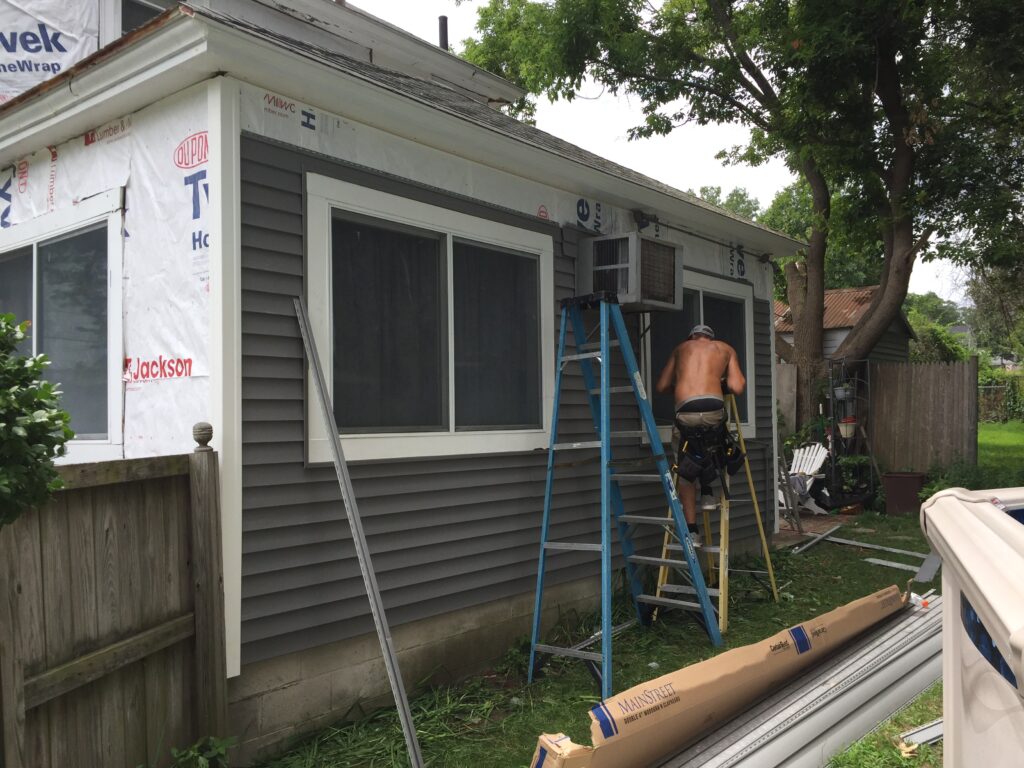
We don’t quote siding off a drive-by. Derek walks the exterior wall by wall, checks how the existing siding is fastened and whether the sheathing behind it is solid or soft, looks at flashing around windows, doors, and any roof-to-wall intersections, and checks corners and butt joints for water intrusion that’s been happening quietly for years. On older wood-sided homes we also check for the kind of rot that only shows up once you pull a board, which is why we tell homeowners upfront that the estimate can shift slightly once panels come off. A recommendation comes after that walk, not before it.
What the job involves
Replacement
We strip the shingles around the unit, pull the old skylight and flashing, repair the deck at the opening if it needs it, and set the new unit. Ice and water shield wraps up the sides and across the top, the step-flashing kit goes on, and we shingle back in. If the new unit matches the rough opening, the interior usually stays as it is. On a full roof replacement in West Newbury, MA, all of this fits inside the reroof. The shingles are already off, the deck is exposed, and the new underlayment and flashing tie in as one system.
New cut-in
We lay out the opening from inside and out, cut the deck, and frame headers between the rafters. Ventilation gets rerouted so the bays above and below the opening still breathe. Then the unit, ice and water shield, flashing and shingles. Inside, a new opening means a light shaft through the attic, drywall and paint. That interior work is part of the conversation at the estimate, and we settle who handles what before anything is scheduled.
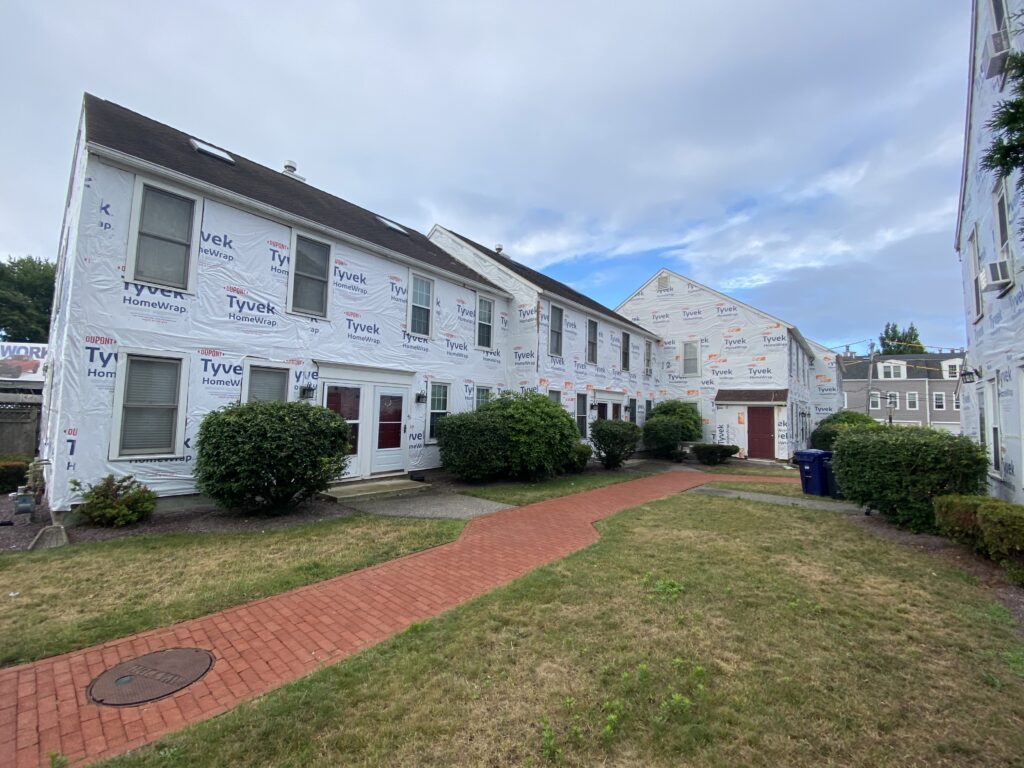
Once we’ve assessed the walls, the job runs in a set order. We strip the old siding down to the sheathing, repair or replace any rotten boards we find, wrap the house in a proper weather-resistant barrier, and install new J-channel, corner posts, and starter strip before the panels go up. Vinyl gets hung with room to expand and contract with temperature swings, which is a detail a lot of cheaper installs skip and it’s why you see waviness on some houses a few winters later. We finish with trim work around windows and doors that matches the lines of the house rather than just covering the gap.
What it costs
Most full vinyl siding jobs in West Newbury run between {PRICE_LOW} and {PRICE_HIGH}, and where a project lands in that range depends on the size and shape of the house, how many corners and window returns there are to trim out, whether we’re stripping one layer or dealing with old wood clapboard and hidden rot, and how easy the site is to access. A simple ranch on flat ground costs less to side than an older farmhouse with dormers, an attached ell, and landscaping tight against the foundation. We give a firm number after the wall-by-wall assessment, not a ballpark over the phone.
How long it takes
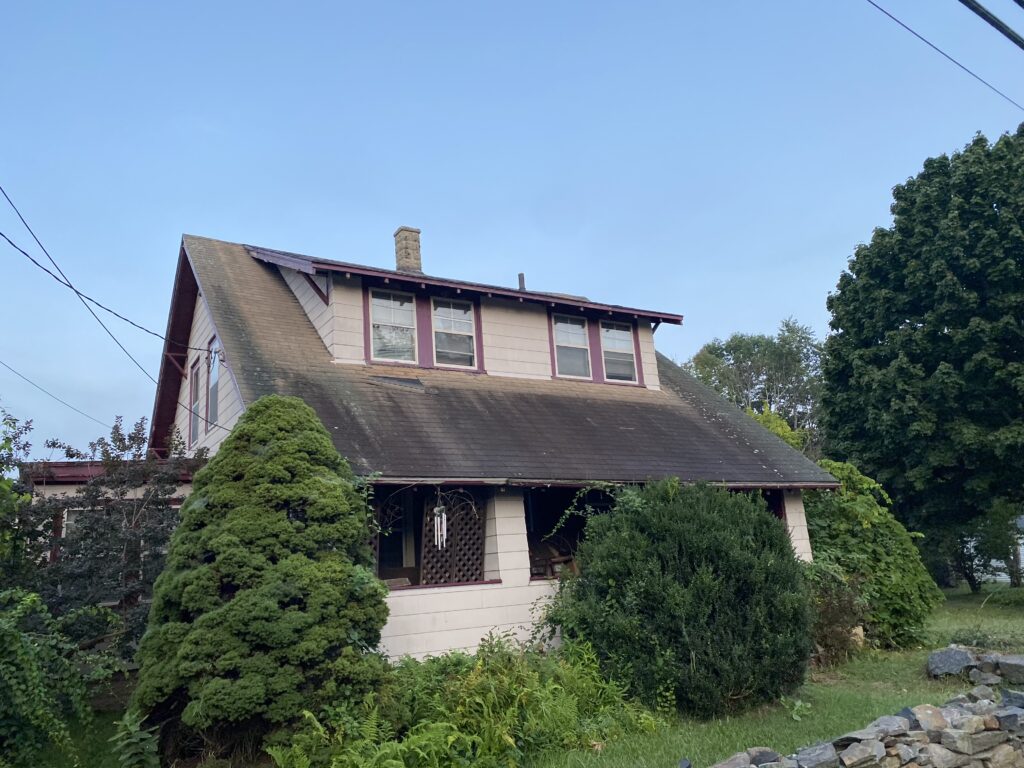
A typical single-family home in West Newbury takes crews between three and six working days once the tear-off starts, weather and crew size being the biggest variables. Older homes with more trim detail, more corners, or rot repairs found mid-project run longer. We’ll give you a realistic window before we start and tell you as soon as anything changes it, rather than let a job drag without an explanation.
Get an estimate
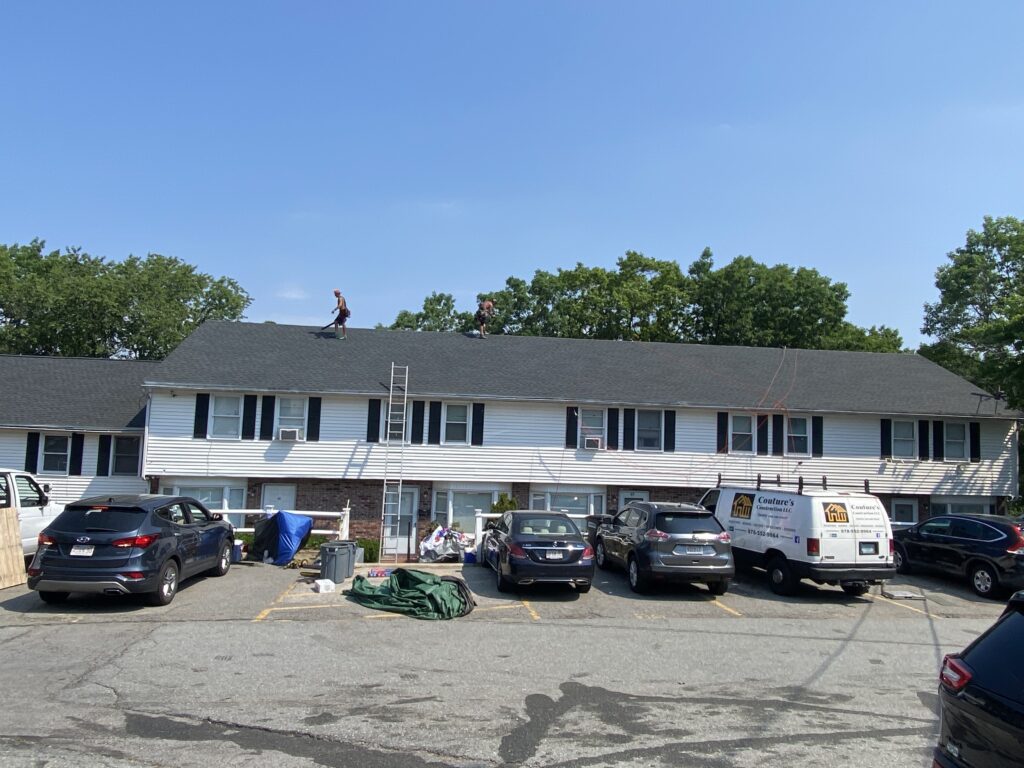
If your siding is fading, cracking, or you’re planning a roof project and want to look at doing both at once, call Couture’s Construction at {PHONE}. We’re based in Methuen and work throughout the Upper Merrimack Valley, and we’ll come look at the actual walls before we tell you what it needs.
Should I replace my siding at the same time as my roof?
If both need work, yes, it usually makes sense. You save on setup and access costs by having one crew mobilize once, and we can coordinate flashing details where the roof edge meets the wall, which is a common trouble spot on older homes.
Can I install vinyl siding over my existing wood clapboard?
Sometimes, if the clapboard is flat and sound, but on a lot of West Newbury's older homes we find rot or uneven surfaces once we look closely, and covering that up just hides a problem that gets worse. We check before recommending either way.
Does my house need to go through historic review before siding work?
If the property sits in a designated historic area of town, there may be restrictions on materials or appearance. We'll ask early in the process and help you understand what's required before we order materials.
How do I know if my old vinyl siding needs full replacement or just a few panels?
If the damage is a couple of cracked panels from an isolated impact, patching can work, but if the siding is faded and brittle across the whole house, matching color and material is nearly impossible after years of sun exposure, and a full replacement ends up looking better and lasting longer.
Ready to talk siding?
Reach out to Couture’s Construction and tell us a bit about your West Newbury home: its age, current siding condition, and what’s prompting the change, whether that’s fading, drafts, or damage. We’ll arrange a walk-around of the exterior, take measurements, and talk through color and style choices before putting together a straightforward plan and quote.