
- Home
- Services
- Locations
Amesbury, MA
Boxford, MA
Chelmsford, MA
Danvers, MA
Dracut, MA
Essex, MA
Georgetown, MA
Groveland, MA
Hamilton, MA
Haverhill, MA
Ipswich, MA
Merrimac, MA
Methuen, MA
Middleton, MA
Newbury, MA
Newburyport, MA
North Andover, MA
North Reading, MA
Peabody, MA
Rowley, MA
Salem, MA
Salisbury, MA
Tewksbury, MA
Topsfield, MA
Topsfield, MA
West Newbury, MA
Atkinson, MA
Derry, NH
East Kingston, NH
Kensington, NH
Kingston, NH
Londonderry, NH
Plaistow, NH
Salem, NH
- Company
- Contact
- Home
- Services
- Locations
Amesbury, MA
Boxford, MA
Chelmsford, MA
Danvers, MA
Dracut, MA
Essex, MA
Georgetown, MA
Groveland, MA
Hamilton, MA
Haverhill, MA
Ipswich, MA
Merrimac, MA
Methuen, MA
Middleton, MA
Newbury, MA
Newburyport, MA
North Andover, MA
North Reading, MA
Peabody, MA
Rowley, MA
Salem, MA
Salisbury, MA
Tewksbury, MA
Topsfield, MA
Topsfield, MA
West Newbury, MA
Atkinson, MA
Derry, NH
East Kingston, NH
Kensington, NH
Kingston, NH
Londonderry, NH
Plaistow, NH
Salem, NH
- Company
- Contact
Vinyl Siding Installation in Andover, MA
Andover’s housing stock runs from big colonials on wooded half-acre lots in South Andover to tighter post-war capes closer to town center, and the siding on both is usually original to the build or one generation removed. Wood clapboard from the 60s and 70s is drying out, cupping, and holding paint about half as long as it used to. When we’re already up on a roof for an inspection or a tear-off, the siding underneath tells us exactly the same story the shingles do.
Vinyl Siding Installation in Andover
We do vinyl siding installation as a companion to roofing work, not as a separate business chasing separate leads. A lot of Andover homeowners call us about a roof and end up doing both at once, because the crew, the dumpster, and the scaffolding are already on site. That sequencing saves money and it means one contractor is accountable for how the roof edge, the fascia, and the siding trim actually meet, instead of two companies pointing at each other later.
Vinyl makes sense on a lot of these homes because it doesn’t need repainting, it holds up fine against Andover’s mix of humid summers and hard winter freeze-thaw cycles, and it comes in profiles and colors that read well against both the older colonials near Phillips Academy and the newer builds off Lowell Street.
Deck-mounted
units fasten straight to the roof deck and use a matched step-flashing kit. This is what goes on most pitched roofs now. It sits low, looks clean and handles snow well.
Curb-mounted
units sit on a raised wood frame built on the roof. They are the right call on low-slope sections, generally below about 3 in 12, and a lot of older installs already have them.
Fixed
units let in light and nothing else. Fine over a high cathedral ceiling you will never reach.
Manual or electric venting
units open to let heat and steam out. They earn their keep in kitchens and bathrooms.
Solar-powered venting
units run off a small panel, need no wiring to the house, and close on their own when the rain sensor gets wet.
What Andover roofs and homes are working with
Andover sits in that Merrimack Valley band where two things are happening on roofs at the same time right now. The 1990s and early 2000s subdivisions – the ones off River Road, near Foster’s Pond, out toward the Andovers’ newer developments – are all hitting twenty to twenty-five years on their original architectural shingles within a few years of each other. That’s the manufacturer’s rated lifespan running out on a huge number of houses at once, and the siding on those same houses, if it’s original vinyl, is fading and getting brittle at the same clip.
Then you’ve got the older housing stock closer to the mill-city edges – part of Andover shares that history with Lawrence and Methuen – where low-slope rear additions and porch roofs fail well before the main roof does, and the wall behind them takes water damage from bad flashing long before anyone notices from the street. Heavy tree cover on the wooded lots common in Andover also means gutters clog and valleys hold wet debris, and that moisture works on siding and trim the same way it works on shingles. If your siding shows dark streaking low on the wall or soft spots near the ground, that’s usually a drainage problem above it, not a siding defect.
How we assess it
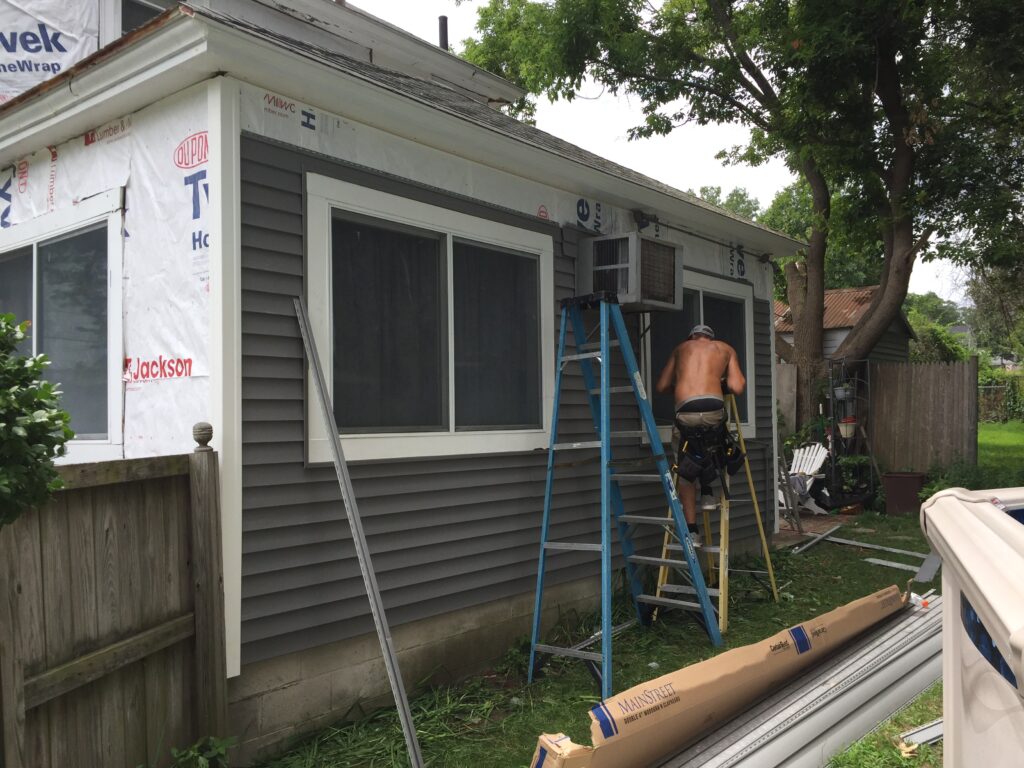
We don’t quote siding off a drive-by. Derek walks the exterior and looks at what’s actually happening under the current siding where we can get access – around window and door trim, at corner boards, behind downspouts. We check for soft or rotted sheathing, especially at the bottom courses and anywhere water has been running off a bad roof edge or clogged gutter for years. We look at how the trim meets the roofline, since that junction is where most siding failures start, not out in the open field of the wall.
If we’re also looking at your roof, we check the decking from inside the attic, the flashing at chimneys and valleys, and whether the ridge and soffit vents are actually moving air. A house with poor attic ventilation cooks its siding from the inside just like it damages shingles, so the two problems are often connected. You get a real recommendation after that walk-through, not a package price read off a brochure.
What the job involves
Replacement
We strip the shingles around the unit, pull the old skylight and flashing, repair the deck at the opening if it needs it, and set the new unit. Ice and water shield wraps up the sides and across the top, the step-flashing kit goes on, and we shingle back in. If the new unit matches the rough opening, the interior usually stays as it is. On a full roof replacement in Andover, all of this fits inside the reroof. The shingles are already off, the deck is exposed, and the new underlayment and flashing tie in as one system.
New cut-in
We lay out the opening from inside and out, cut the deck, and frame headers between the rafters. Ventilation gets rerouted so the bays above and below the opening still breathe. Then the unit, ice and water shield, flashing and shingles. Inside, a new opening means a light shaft through the attic, drywall and paint. That interior work is part of the conversation at the estimate, and we settle who handles what before anything is scheduled.
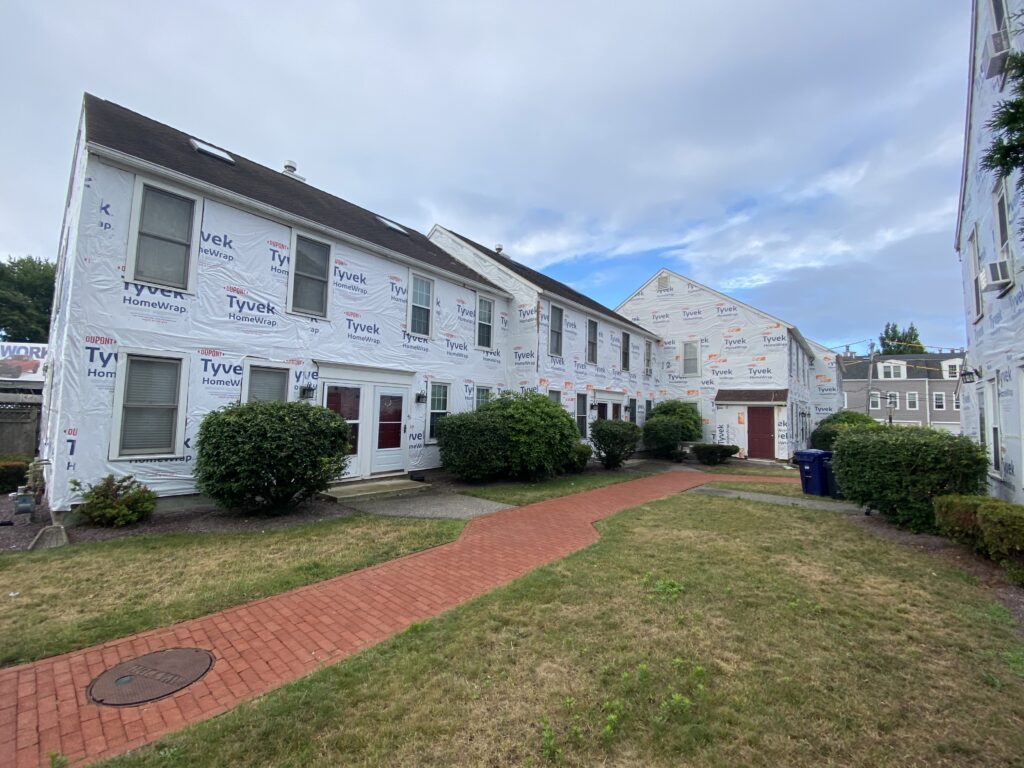
A proper vinyl siding job starts with stripping the old siding down to the sheathing, not installing over it. That lets us check for rot, add a water-resistive barrier where it’s missing, and fix any soft sheathing before it’s covered up for another twenty years. We install new J-channel, corner posts, and trim around every window and door, then hang the panels with room to expand and contract with temperature swings, which is where a lot of rushed jobs go wrong and buckle within a couple of summers.
We flash and seal every penetration – hose bibs, electrical, dryer vents – and pay attention to how the bottom starter strip and the top trim under the soffit are finished, since those two spots are what makes a siding job look finished from the street versus looking like a patch. If we’re coordinating with a roof replacement, we sequence the work so flashing and drip edge details are done once, correctly, instead of siding crew and roofing crew each assuming the other handled it.
What it costs
Vinyl siding on an average Andover single-family home typically runs somewhere between {PRICE_LOW} and {PRICE_HIGH}, and the spread is wide because the variables are real. Total wall square footage and the number of corners, dormers, and trim details all add labor. Homes with extensive rot under the old siding cost more once we’re into the sheathing, and that’s not something we can price accurately until the old siding is off. Access matters too – a house tight against a neighbor’s property line or with a lot of second-story gable work takes longer than a simple ranch. We’ll give you a real number after the walk-through, and we’ll tell you upfront if we find something during tear-off that changes the price, before we do the work, not after.
How long it takes
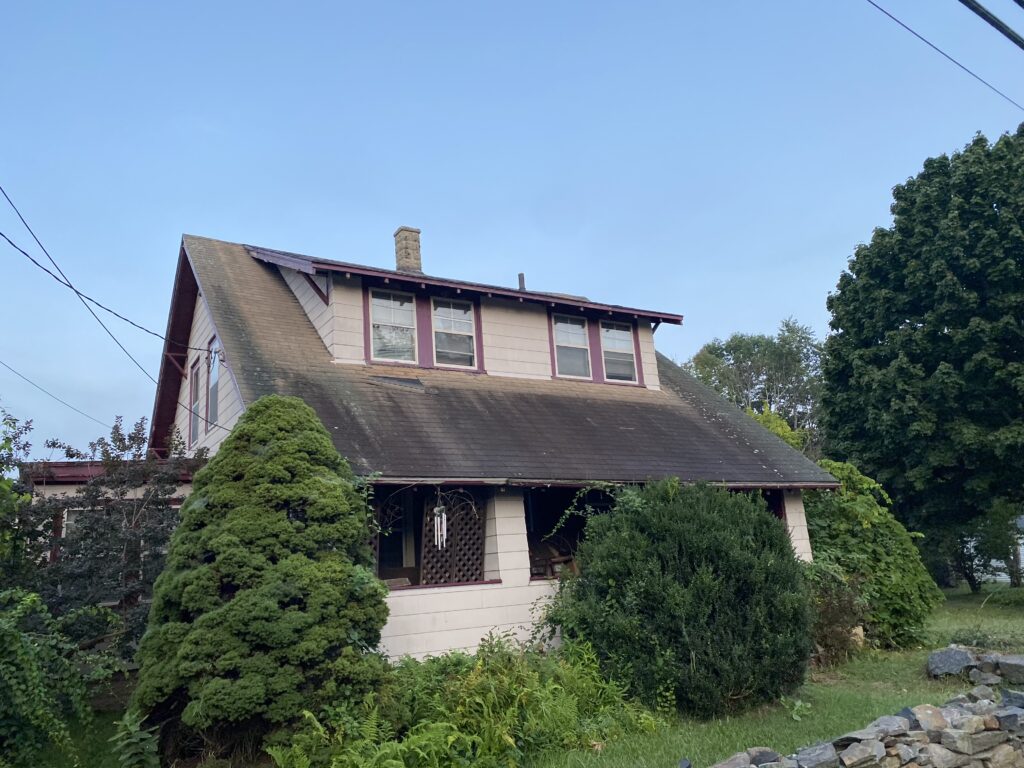
A standard single-family vinyl siding installation in Andover usually takes a few days to about a week once we start, weather permitting. Homes with a lot of trim detail, dormers, or rot repair take longer. If we’re doing siding and roofing together, we sequence the crews so the roof gets closed in first, then siding wraps around it, and we give you a realistic window before we start rather than a vague estimate that slips once we’re on site.
Questions Andover Homeowners Ask Us
Homeowners across Andover often have similar questions before starting a siding project. Below are a few we hear most, though every home is different.
- Will new siding disrupt my landscaping? We take care to protect gardens, walkways, and outdoor fixtures throughout the job.
- Can you match existing trim colors? Yes, we offer a range of finishes to complement your home’s style.
- Do you handle permits? We manage the necessary paperwork for your Andover property.
Have another question? Reach out and we’ll gladly answer it before you commit to anything.
Does vinyl siding go directly over my existing siding?
We don't recommend it and we don't do it that way. Installing over old siding traps moisture problems and hides sheathing damage that needs to be fixed first. We strip down to the sheathing, check it, repair what needs repairing, then install new siding correctly.
Should I do my roof and siding at the same time?
If both are near the end of their life, yes, it usually saves money and gives you one contractor responsible for how the roofline and the siding trim meet. If your roof still has good years left, there's no reason to rush the siding just because the crew is already there.
What vinyl siding thickness or wind rating should I ask for in Andover?
We'll walk you through the options for your specific exposure. Homes on more open lots or higher ground benefit from a heavier-gauge panel with a higher wind rating than homes tucked into wooded, sheltered lots. We don't sell one product to every house.
Will new siding fix the water stains I'm seeing on my walls?
Sometimes, but not always. Staining low on a wall is often a gutter or flashing problem above it, not a siding problem itself. We check the source before we quote a fix so you're not paying to reside a wall that will just stain again.
Do you handle the permit for siding work in Andover?
Ready to Talk Siding?
Give us a call and tell us a bit about your Andover home: how old the current siding is, whether you’re seeing warping or gaps, and what look you’re after. We’ll set up a time to walk the exterior with you, measure what’s needed, and talk through vinyl options before any numbers get put on paper.