
- Home
- Services
- Locations
Amesbury, MA
Boxford, MA
Chelmsford, MA
Danvers, MA
Dracut, MA
Essex, MA
Georgetown, MA
Groveland, MA
Hamilton, MA
Haverhill, MA
Ipswich, MA
Merrimac, MA
Methuen, MA
Middleton, MA
Newbury, MA
Newburyport, MA
North Andover, MA
North Reading, MA
Peabody, MA
Rowley, MA
Salem, MA
Salisbury, MA
Tewksbury, MA
Topsfield, MA
Topsfield, MA
West Newbury, MA
Atkinson, MA
Derry, NH
East Kingston, NH
Kensington, NH
Kingston, NH
Londonderry, NH
Plaistow, NH
Salem, NH
- Company
- Contact
- Home
- Services
- Locations
Amesbury, MA
Boxford, MA
Chelmsford, MA
Danvers, MA
Dracut, MA
Essex, MA
Georgetown, MA
Groveland, MA
Hamilton, MA
Haverhill, MA
Ipswich, MA
Merrimac, MA
Methuen, MA
Middleton, MA
Newbury, MA
Newburyport, MA
North Andover, MA
North Reading, MA
Peabody, MA
Rowley, MA
Salem, MA
Salisbury, MA
Tewksbury, MA
Topsfield, MA
Topsfield, MA
West Newbury, MA
Atkinson, MA
Derry, NH
East Kingston, NH
Kensington, NH
Kingston, NH
Londonderry, NH
Plaistow, NH
Salem, NH
- Company
- Contact
Roof Repair in Plaistow, NH
Plaistow’s mix of older farmhouse-era roofs along Main Street and the ranch and colonial subdivisions built off Route 125 in the 1970s and 80s creates two very different repair calls in the same town. One is a roof with a patch history and questionable flashing. The other is a roof hitting 25 to 35 years old with granule loss and a soffit that never had enough intake vent to begin with. Both walk into the same conversation: is this a repair, or are we past that.
Roof Repair in Plaistow
We get called out to Plaistow for the usual New England reasons: a stain spreading across a bedroom ceiling after a nor’easter, a valley that’s been dripping since the maple next door dropped its leaves, or a shingle tab that peeled back in a March wind and never got dealt with. Some of these are an afternoon fix. Some turn into a bigger conversation once we’re actually up there. We don’t decide which one it is from the ground or from a photo you texted us.
Couture’s Construction is based in Methuen, Massachusetts, and we work Plaistow and the rest of southern New Hampshire the same way we work our home towns on the Massachusetts side. A lot of homeowners here assume a company across the state line doesn’t bother crossing it. We do, regularly, and we’re familiar with how Rockingham County towns handle permitting, which is not identical to how Massachusetts towns handle it.
What Plaistow roofs are up against
Plaistow sits far enough inland that you’re not dealing with the wind uplift issues that hit the seacoast towns, but you get plenty of tree cover along Kingston Road, Sweet Hill, and the wooded lots off Westville Road, and that means valley debris is a real recurring problem. Pine needles and oak leaves pack into valleys and behind chimneys, hold moisture against the shingle mat, and rot the felt or ice-and-water shield underneath long before the shingles themselves look bad from the street. If your roof has a valley running under a tree canopy, that’s usually the first place we check, and often the first place we find the actual leak even when the stain shows up somewhere else in the house.
The bigger pattern in this part of southern New Hampshire, and it’s not unique to Plaistow but it’s very real here, is build-era clustering. A lot of the housing stock in Plaistow, and in Derry, Windham, and Salem NH right next door, went up in the same twenty-year window after 1980. That means a huge number of these roofs are approaching first-replacement age within a few years of each other. On the repair side, what that means practically is: a roof from that era that’s still structurally sound underneath can often get another good stretch of life out of a targeted repair, but a roof from that same era that’s already lost decking integrity or has failed ridge venting is not a candidate for a patch no matter how small the visible damage looks.
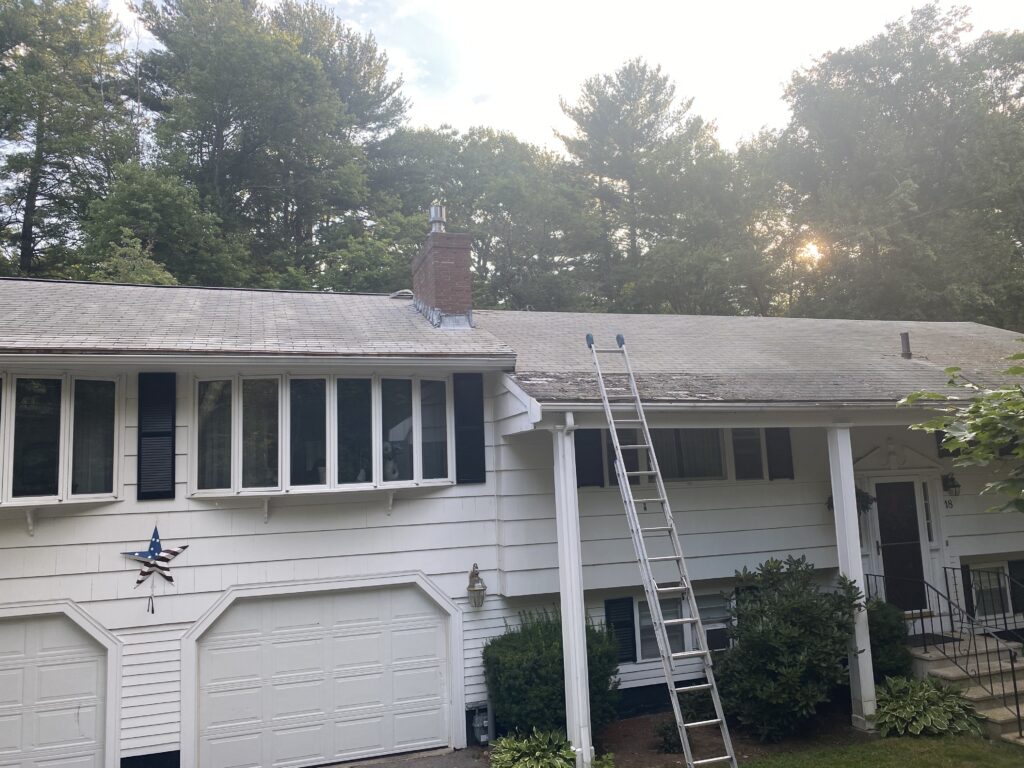
Professional Roof Repair Solutions for Plaistow Homes
A repair done right on a Plaistow roof means matching the existing shingle line where possible, tying new flashing into old correctly at chimneys and sidewalls, and re-establishing proper water shedding at valleys rather than just caulking a gap and calling it done. We carry materials that match common architectural shingle profiles used across southern New Hampshire construction, and where an exact match isn’t available we’ll tell you that upfront rather than let you find out after the job.
Ice dam damage is its own category of repair here. A north-facing slope with poor attic ventilation backs up meltwater behind the ice ridge, and that water finds its way under shingles that are otherwise fine. The fix isn’t always a new roof. Sometimes it’s better ice-and-water shield at the eaves, corrected soffit intake, and a ridge vent that actually moves air the way it’s supposed to.
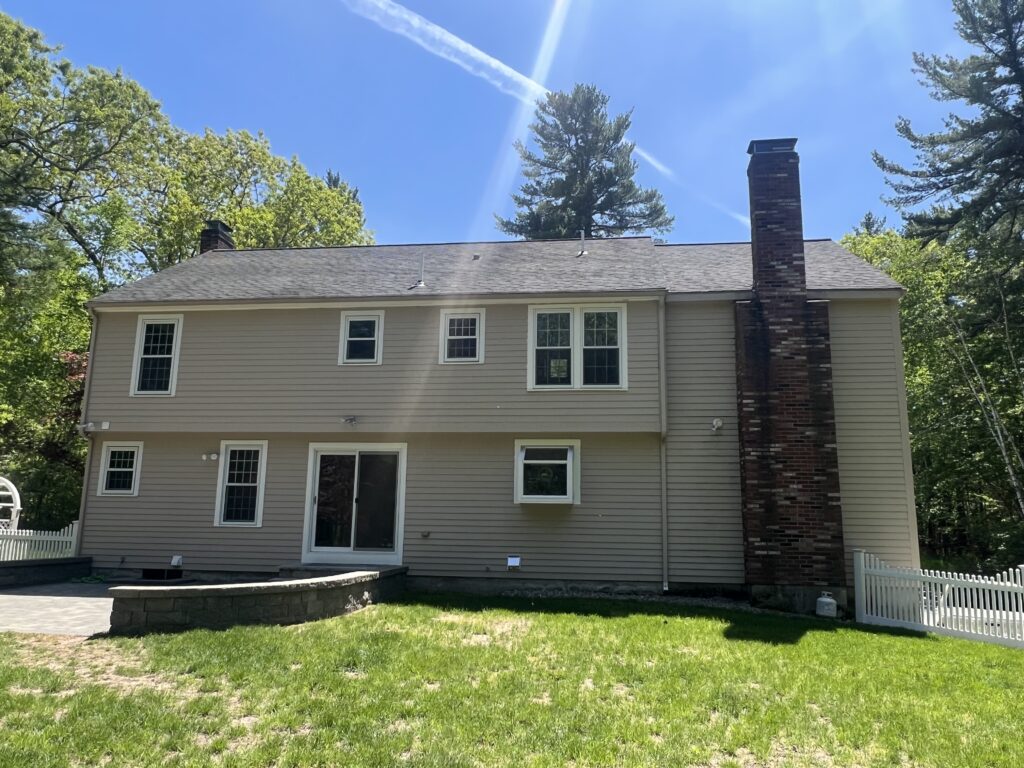
How we assess it
Derek gets on the roof before he tells you anything. That means checking decking condition by walking the slopes and feeling for soft spots, inspecting flashing at every chimney, skylight, and sidewall for gaps or rusted-through metal, and pulling back shingles near the damage to see what the underlayment actually looks like rather than guessing. Then we go up into the attic and look at the underside of the deck for water staining, check for adequate ridge and soffit ventilation, and look for daylight where there shouldn’t be any.
That’s the whole assessment before we say a word about scope or cost. If the roof needs a repair, we tell you it needs a repair. If we find rot spreading past what a patch can fix, or decking that’s failed in more than one spot, we’ll show you what we found and why it changes the recommendation. We’re not going to run a repair estimate through a sales script designed to land on replacement. Plenty of roofs we look at in Plaistow genuinely just need a repair, and that’s what we write up.
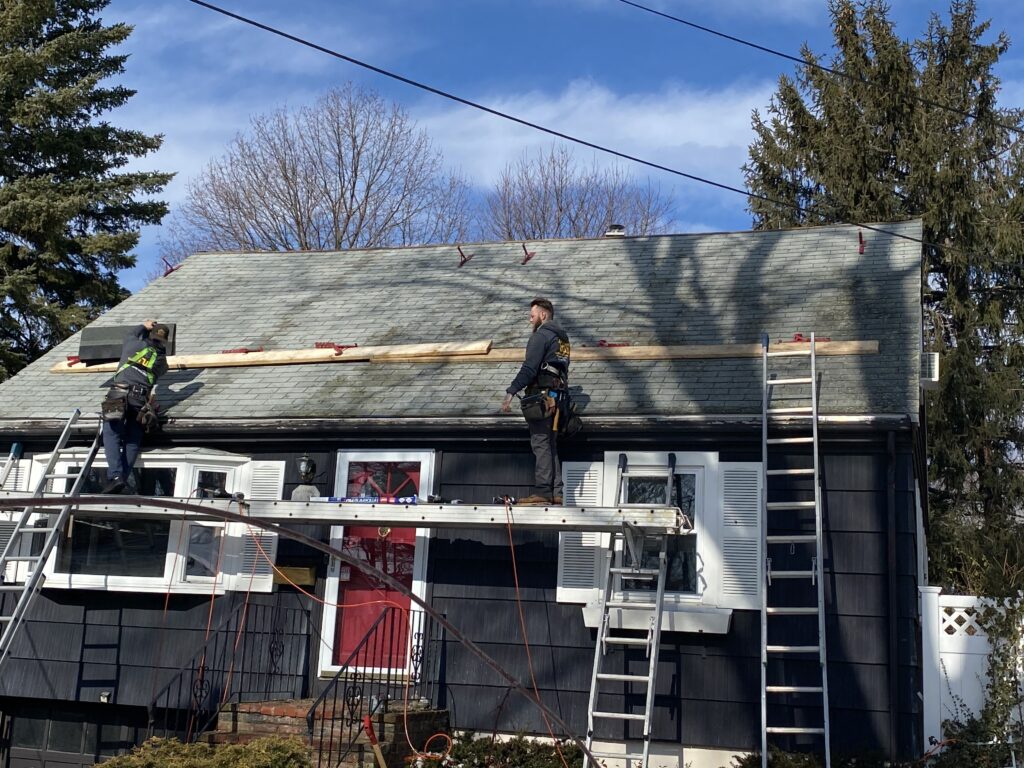
What the job involves
Most repair jobs on a Plaistow roof follow the same basic sequence. We strip shingles and underlayment back beyond the visible damage until we hit sound material, not just the exact square footage that looks stained. We check and replace flashing wherever it’s part of the problem, since a shingle repair over bad flashing just fails again in a year or two. We re-lay ice and water shield at eaves and valleys where the old barrier has degraded, then tie new shingles into the existing course lines so the patch doesn’t stand out as a obvious rectangle from the driveway. Debris goes in the truck the same day, and we walk the ground with a magnetic sweep for nails before we leave.
What it costs
Repair pricing on a Plaistow roof typically runs between {PRICE_LOW} and {PRICE_HIGH}, and where it lands in that range depends on a handful of specific things: how much of the roof needs to come off versus a localized patch, the pitch (steep roofs take longer and need more safety setup), how many layers of old shingles are already down, whether the decking underneath is sound or needs sheets replaced, and how accessible the roof is from the ground for staging material and running a lift or ladders. We won’t quote a number sight unseen, and we won’t lock you into a fixed price before we’ve actually been on the roof, because the surprises that change a repair estimate are usually hiding under the shingles, not sitting on top of them.
Can a Plaistow roof usually be repaired instead of replaced?
Often, yes. If the decking is sound and the damage is limited to a valley, flashing point, or a section of wind-lifted shingles, a repair is the right call and we'll say so. We only recommend replacement when the assessment shows widespread decking failure, multiple aging layers, or ventilation problems that a patch can't fix.
Do you work in New Hampshire even though you're based in Methuen, Massachusetts?
Yes, regularly. We work Plaistow and the surrounding southern New Hampshire towns as part of our normal service area, not as a special trip. We're familiar with how permitting works on the New Hampshire side, which differs from Massachusetts town to town.
What usually causes leaks on Plaistow roofs specifically?
The two most common causes we see are valleys packed with debris under heavy tree cover, and ice dams backing water up under shingles on north-facing slopes with weak attic ventilation. Both can look like a shingle problem from the ground but usually trace back to flashing or underlayment failure.
How do I know if it's a repair or if I need a new roof?
You need someone on the roof and in the attic before anyone can answer that honestly. Age alone doesn't decide it. A 30-year-old roof with sound decking can often still be repaired, while a 15-year-old roof with a ventilation problem might already have hidden rot. That's why we assess before we quote.
Do you handle the permit if one is needed for a repair in Plaistow?
Most straightforward repairs don't trigger a permit requirement, but larger repairs involving significant decking replacement can. We'll tell you upfront if your job needs a permit filed with the town and handle that as part of the job.
How long it takes
A straightforward valley or flashing repair on a Plaistow roof is usually a one-day job, sometimes finished in half a day if weather and access cooperate. Larger repairs involving multiple sections, decking replacement, or full re-flashing around a chimney can run two days. We schedule around New Hampshire weather the same way we do in Massachusetts, which means we’re not putting a crew on a wet or icy roof just to hit a date. Once we’re on site, we work straight through to completion rather than stretching one job across multiple visits.
Get an estimate
If you’ve got a leak, a soft spot you can feel through the shingles, or a ceiling stain that showed up after the last storm, call Couture’s Construction at {PHONE}. We’ll get up on the roof, tell you honestly what we find, and give you a straight answer on repair versus replacement before any work starts. Couture’s Construction is BBB accredited with an A+ rating, and we work both sides of the Massachusetts-New Hampshire line as a matter of routine, not as an exception.