
- Home
- Services
- Locations
Amesbury, MA
Boxford, MA
Chelmsford, MA
Danvers, MA
Dracut, MA
Essex, MA
Georgetown, MA
Groveland, MA
Hamilton, MA
Haverhill, MA
Ipswich, MA
Merrimac, MA
Methuen, MA
Middleton, MA
Newbury, MA
Newburyport, MA
North Andover, MA
North Reading, MA
Peabody, MA
Rowley, MA
Salem, MA
Salisbury, MA
Tewksbury, MA
Topsfield, MA
Topsfield, MA
West Newbury, MA
Atkinson, MA
Derry, NH
East Kingston, NH
Kensington, NH
Kingston, NH
Londonderry, NH
Plaistow, NH
Salem, NH
- Company
- Contact
- Home
- Services
- Locations
Amesbury, MA
Boxford, MA
Chelmsford, MA
Danvers, MA
Dracut, MA
Essex, MA
Georgetown, MA
Groveland, MA
Hamilton, MA
Haverhill, MA
Ipswich, MA
Merrimac, MA
Methuen, MA
Middleton, MA
Newbury, MA
Newburyport, MA
North Andover, MA
North Reading, MA
Peabody, MA
Rowley, MA
Salem, MA
Salisbury, MA
Tewksbury, MA
Topsfield, MA
Topsfield, MA
West Newbury, MA
Atkinson, MA
Derry, NH
East Kingston, NH
Kensington, NH
Kingston, NH
Londonderry, NH
Plaistow, NH
Salem, NH
- Company
- Contact
Roof Replacement in Wenham, MA
A lot of the roofs in Wenham were built before anyone thought about ridge vents or ice and water shield, and it shows the first time a nor’easter parks over the estate belt. Long driveways, mature tree canopy, and rooflines with three or four intersecting planes are the norm here, not the exception, and that changes how a replacement gets planned before it changes how it gets done.
Roof Replacement in Wenham
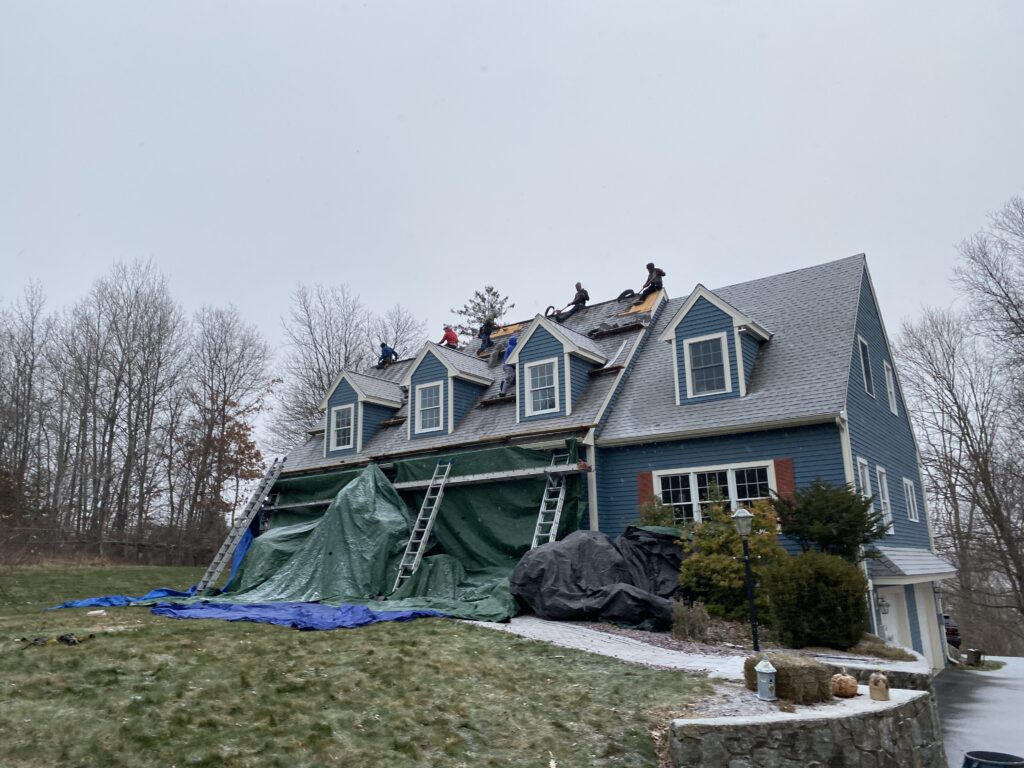
We put new roofs on Wenham properties that range from a straightforward colonial with a single ridge to a rambling antique with dormers, an attached ell, and a barn or carriage house that needs its own roof matched to the main house. This is not a town where you show up with one shingle sample and one crew size. The lot itself dictates a lot of the plan, from where the dumpster and material lift can actually sit to whether a section of lawn or stone wall needs protection during tear-off.
Derek walks these properties himself before quoting, because a rear addition roof or a carriage house roof often needs a different decision than the main house even on the same job.
What Wenham roofs are up against
The tree cover that makes these lots private also loads valleys with pine needles and leaf litter every fall, and a valley that never dries out is a valley that rots decking from underneath long before the shingles above it look bad. On the older colonial and antique homes, low-pitch additions off the back of the house, often added decades after the original build, carry a real risk of ice damming in a hard winter because they were never built with enough slope or enough insulation above the ceiling line to keep the roof cold and dry the way it should be. North-facing slopes on steep, shaded lots hold snow and ice longer than the rest of the roof, which is exactly where you’ll find the granule loss and the soft decking when we get up there.
Because so many of these houses predate modern code, the original roof geometry sometimes has valleys and hips that don’t line up cleanly with today’s standard shingle courses, so matching the existing roofline on a replacement takes more layout work than it would on a newer subdivision roof. Wind isn’t the same threat here as it is right on the water, but open exposure across larger lots still means we spec shingles and fastening patterns rated for real New England wind, not the minimum.
How we assess it
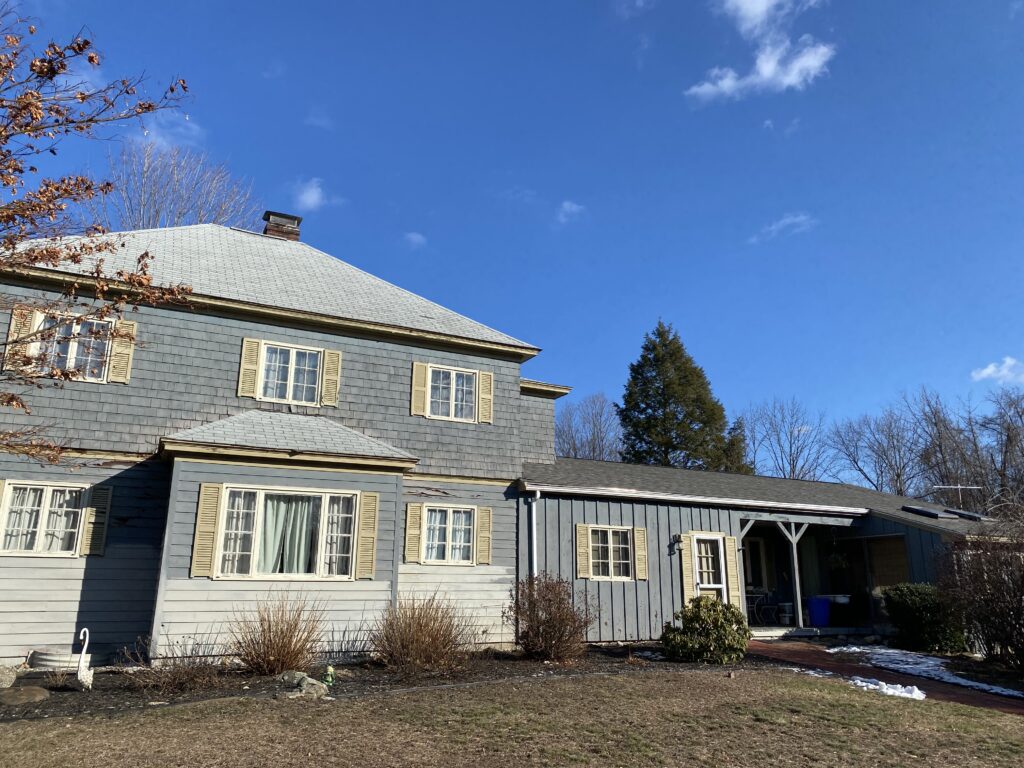
We don’t quote a roof replacement from the driveway. Derek gets on the roof and checks the decking for soft spots, especially around valleys, chimney flashing, and any low-slope section, because soft or delaminated decking is the single biggest cost variable on an older Wenham house. He checks the flashing at every chimney, skylight, and roof-to-wall intersection, since that’s where leaks actually start nine times out of ten, not in the middle of a shingle field. He’ll also get into the attic if it’s accessible, because ridge and soffit ventilation, or the lack of it, tells you as much about a roof’s real condition as the shingles do. Rotted sheathing, dark staining on rafters, and compressed insulation all show up in the attic before they show up as a stain on a ceiling.
If the roof is close but not there yet, we say so. A recommendation gets made after that walk-through, not before it.
What the job involves
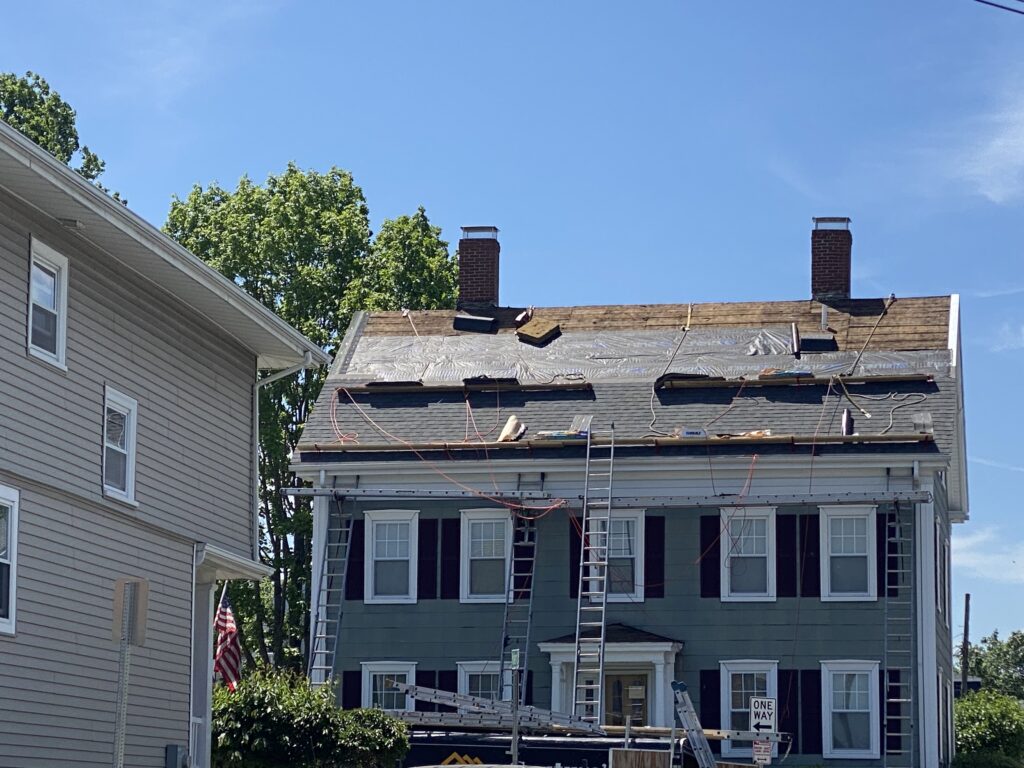
Tear-off comes first, down to bare decking, and any rotted or delaminated sheathing gets cut out and replaced rather than shimmed or skimmed over. We run ice and water shield along eaves, valleys, and around every penetration, which matters more here than in flatter, more open towns because of how much snow and ice sits under tree cover into March. New flashing goes in at chimneys, skylights, and sidewalls rather than reusing old step flashing that’s already rusted or bent. Ventilation gets corrected where the attic assessment showed a problem, usually a mix of ridge vent and soffit intake so the roof deck can actually stay cold and dry in winter.
Shingle choice depends on the house. A lot of Wenham colonials call for a heavier architectural shingle with a higher wind rating given the tree exposure and open lot lines, and on a handful of true antiques we’ve matched slate or cedar sections rather than switching the whole roof to asphalt, because changing material on a historic house changes how the whole property reads from the street. Staging and access get planned around the driveway length and the lawn, walls, and gardens that a big property usually has, which is a real logistics conversation on these jobs, not an afterthought.
What it costs
Most full roof replacements in Wenham run between {PRICE_LOW} and {PRICE_HIGH}, and the honest answer is that the number moves a lot on this kind of property. Total roof area and pitch drive the base cost, and a steep antique roofline with multiple dormers takes longer to strip and shingle than a simple gable. How many layers of old shingles have to come off matters, since a single-layer tear-off is a different job than stripping two or three layers down to bare wood. Decking condition is the biggest wildcard, because rotted sheathing found mid-tear-off gets replaced, not covered, and that adds material and labor that couldn’t be priced until the old roof was off. Access plays into it too, since a long private driveway or a lawn that can’t take heavy equipment sometimes means more hand-carrying of material and a longer timeline than a roof of the same size on an easy lot.
How long it takes
A straightforward single-ridge colonial roof usually gets torn off, decked, and shingled in a day or two of decent weather. A larger estate-belt property with dormers, a carriage house roof, and multiple valleys typically runs several days once you account for the extra flashing detail and the layout work those intersecting planes require. Weather and access add or subtract time on top of that. We’ll give you a realistic window before the crew shows up and tell you if something found mid-job, like rotted decking under a valley, is going to change it.
How do I know if my Wenham roof needs replacement instead of repair?
If the decking underneath is still sound and the problem is isolated, like a single flashing leak or a small area of storm damage, a repair is the honest answer and that's what we'll recommend. Replacement makes sense when shingles are failing across large sections of the roof, when there's soft or rotted decking in multiple spots, or when the roof is old enough that patching one area just means the next failure is a year away. We'll tell you which situation you're in after we're actually up there.
Do you match roofing material on antique and historic Wenham homes?
Yes. On older houses where the roof material is part of how the property reads, we've matched slate and cedar sections rather than defaulting everyone to asphalt. It costs more than a straight asphalt replacement and takes more planning, but it's the right call on the right house.
Can your crews get equipment onto a long private driveway or a wooded lot?
Almost always, but we plan it ahead of time rather than showing up and figuring it out. Driveway length, turning room for a dumpster, and how close a lift can get to the house all get discussed before we schedule the job, not on the day of.
What causes ice dams on Wenham roofs specifically?
Heavy tree cover keeps snow and shade on the roof longer, and a lot of older additions have low pitch and thin insulation above the ceiling, which lets heat escape into the roof deck and melt snow that then refreezes at the colder eaves. Proper ice and water shield at the eaves and correct attic ventilation are the two things that actually address it, not just more shingle.
Will you check the attic before quoting a replacement?
We will if it's accessible. Ventilation, insulation, and any staining on the rafters tell us things about the roof's real condition that we can't see from outside, and it factors directly into what we recommend.
Ready When You Are
If your Wenham home needs a new roof, Couture’s Construction is happy to walk the property with you and lay out your options honestly. We’ll look at the current condition, discuss materials suited to New England weather, and give you a clear picture of what the project involves before any work begins.
- No-pressure consultation
- Straightforward answers about your roof
- Guidance on materials and next steps