
- Home
- Services
- Locations
Amesbury, MA
Boxford, MA
Chelmsford, MA
Danvers, MA
Dracut, MA
Essex, MA
Georgetown, MA
Groveland, MA
Hamilton, MA
Haverhill, MA
Ipswich, MA
Merrimac, MA
Methuen, MA
Middleton, MA
Newbury, MA
Newburyport, MA
North Andover, MA
North Reading, MA
Peabody, MA
Rowley, MA
Salem, MA
Salisbury, MA
Tewksbury, MA
Topsfield, MA
Topsfield, MA
West Newbury, MA
Atkinson, MA
Derry, NH
East Kingston, NH
Kensington, NH
Kingston, NH
Londonderry, NH
Plaistow, NH
Salem, NH
- Company
- Contact
- Home
- Services
- Locations
Amesbury, MA
Boxford, MA
Chelmsford, MA
Danvers, MA
Dracut, MA
Essex, MA
Georgetown, MA
Groveland, MA
Hamilton, MA
Haverhill, MA
Ipswich, MA
Merrimac, MA
Methuen, MA
Middleton, MA
Newbury, MA
Newburyport, MA
North Andover, MA
North Reading, MA
Peabody, MA
Rowley, MA
Salem, MA
Salisbury, MA
Tewksbury, MA
Topsfield, MA
Topsfield, MA
West Newbury, MA
Atkinson, MA
Derry, NH
East Kingston, NH
Kensington, NH
Kingston, NH
Londonderry, NH
Plaistow, NH
Salem, NH
- Company
- Contact
Vinyl Siding Installation in Plaistow, NH
Plaistow’s housing stock runs newer than a lot of towns we work in, plenty of it built in the 1980s and 1990s subdivisions off Route 125 and Kingston Road, and a good chunk of that original siding is now thirty-plus years old and past its practical life. Add in the mature tree lines that back up to a lot of these lots and you get a specific combination: siding that’s chalked out and brittle, plus gutters and trim behind it that have been catching leaf litter and moisture for two decades without anyone looking closely.
Vinyl Siding Installation in Plaistow
Siding is the second thing Derek gets asked about after roofing, and it usually comes up in the same conversation. A homeowner calls about a roof and mentions the siding is chalky, cracked at the corners, or was never right after the last contractor installed it. We install vinyl siding as its own project or bundled with a roof replacement, and honestly, doing both together is often the smarter move for the homeowner, not just for us. One crew, one set of scaffolding, and the flashing where the roof meets the wall gets built correctly the first time instead of being patched twice by two different trades.
We’re not chasing volume on siding. It’s a service Derek wants to grow because it’s a natural fit with the roofing work we already do well, not because we’re trying to be a general contractor for every exterior trade in southern New Hampshire. If you want siding done right by people who also understand how it interacts with your roof, gutters, and trim, that’s the job we’re set up for.
Deck-mounted
units fasten straight to the roof deck and use a matched step-flashing kit. This is what goes on most pitched roofs now. It sits low, looks clean and handles snow well.
Curb-mounted
units sit on a raised wood frame built on the roof. They are the right call on low-slope sections, generally below about 3 in 12, and a lot of older installs already have them.
Fixed
units let in light and nothing else. Fine over a high cathedral ceiling you will never reach.
Manual or electric venting
units open to let heat and steam out. They earn their keep in kitchens and bathrooms.
Solar-powered venting
units run off a small panel, need no wiring to the house, and close on their own when the rain sensor gets wet.
What Plaistow homes are working with
New Hampshire is a different state than Massachusetts in ways that actually matter here, not just on a map. Permitting runs through the Town of Plaistow rather than a Massachusetts building department, the inspection process has its own timeline, and the competitive field is different too. A lot of contractors who work Massachusetts hard never bother crossing the border, and that leaves southern New Hampshire homeowners with a thinner bench of contractors who actually know the local process. We work both sides of the line every week. A homeowner in Plaistow, Derry, Windham, or Salem NH has no reason to assume a Methuen-based company crosses the state line unless we say so plainly, so we’re saying it: we do, regularly, and the permitting isn’t something we’re learning on your project.
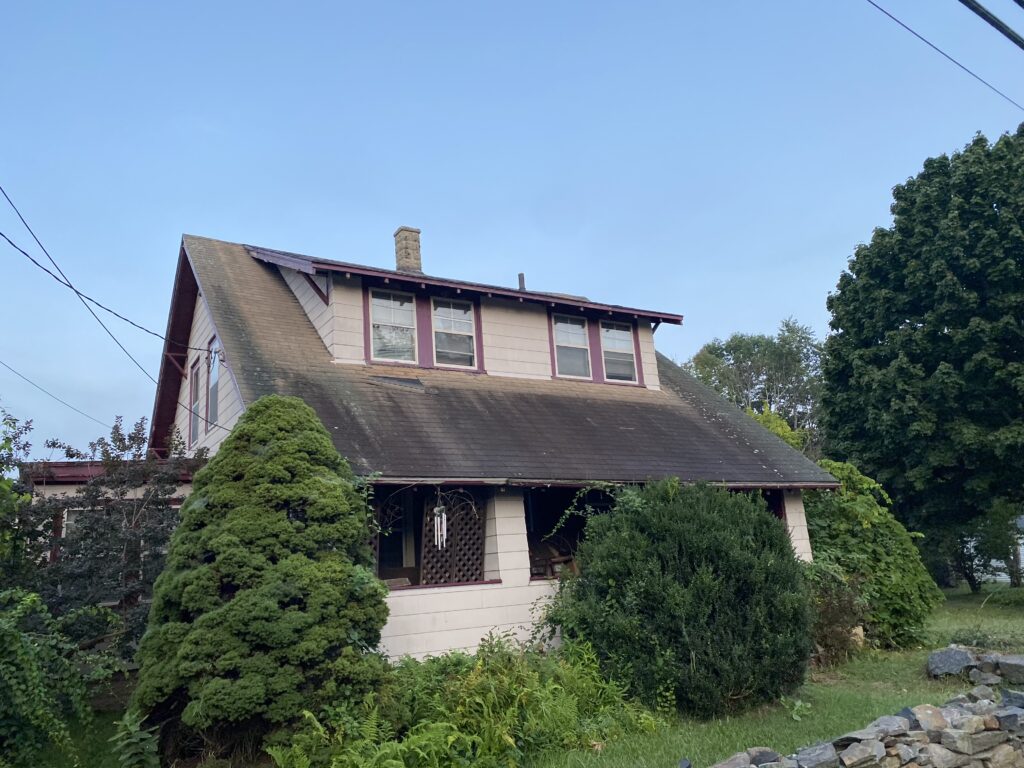
The other factor specific to Plaistow and its neighbors is build-era clustering. Derry, Londonderry, Windham, and Salem NH all saw heavy subdivision construction from the early 1980s through the 1990s, and Plaistow followed a similar pattern. That means a lot of these houses are hitting first-replacement age on siding and roofing at nearly the same calendar time. If your siding was installed with the original build, it’s very likely original vinyl that’s now brittle, faded well past its factory color, and cracking at the nail line in cold weather. Heavy tree cover on the older, more wooded lots also means more moisture sitting against north-facing walls, which accelerates warping and mildew staining on the siding closest to the tree line.
How we assess it
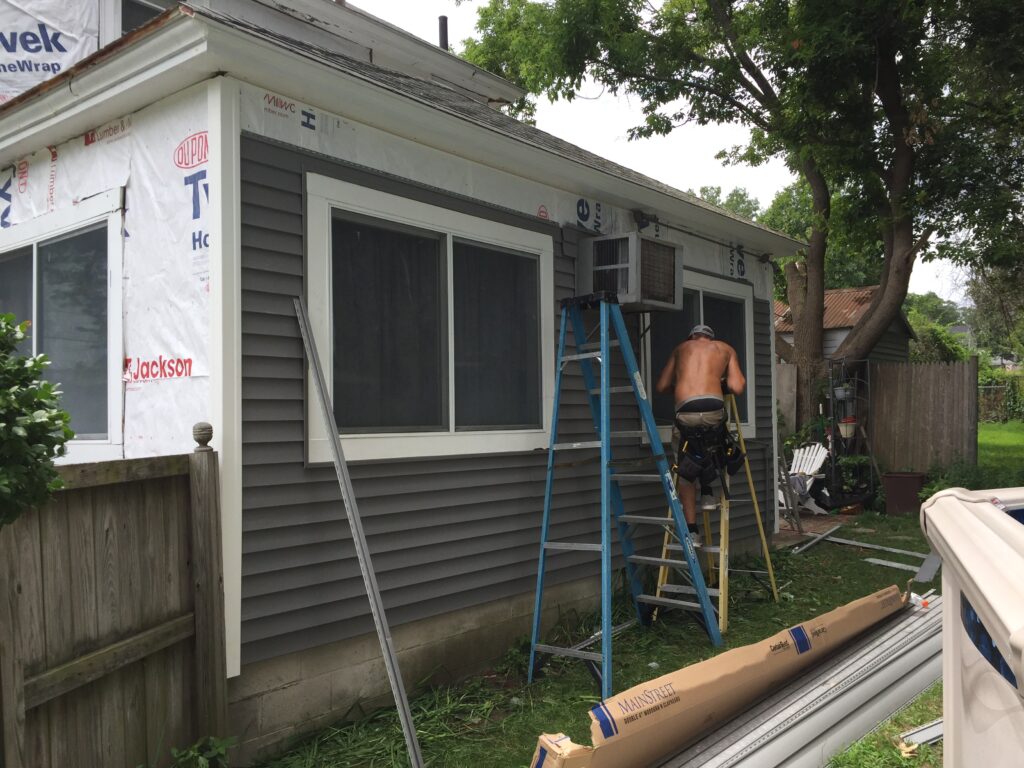
Before we quote a siding job we walk the exterior on foot, not from a truck window. We’re looking at the condition of the existing panels, how they’re fastened, whether the wall sheathing underneath is flat and dry, and where the trim, corner posts, and J-channel are failing. We check the flashing where siding meets the roofline and around every window and door opening, because that’s where water gets behind a wall even when the siding itself looks fine from the street. If there’s any question about moisture intrusion, we’ll pull a panel to look at the sheathing directly rather than guess.
We also look at what’s happening above the siding. If your roof has ice dam staining, sagging gutters, or valley debris buildup, that water is running down onto the siding and trim below it, and fixing the siding without addressing that just buys you a few years before the same staining shows back up. A real assessment covers both, and we’ll tell you plainly if the roof needs attention first, second, or not at all.
What the job involves
Replacement
We strip the shingles around the unit, pull the old skylight and flashing, repair the deck at the opening if it needs it, and set the new unit. Ice and water shield wraps up the sides and across the top, the step-flashing kit goes on, and we shingle back in. If the new unit matches the rough opening, the interior usually stays as it is. On a full roof replacement in Plaistow, NH, all of this fits inside the reroof. The shingles are already off, the deck is exposed, and the new underlayment and flashing tie in as one system.
New cut-in
We lay out the opening from inside and out, cut the deck, and frame headers between the rafters. Ventilation gets rerouted so the bays above and below the opening still breathe. Then the unit, ice and water shield, flashing and shingles. Inside, a new opening means a light shaft through the attic, drywall and paint. That interior work is part of the conversation at the estimate, and we settle who handles what before anything is scheduled.
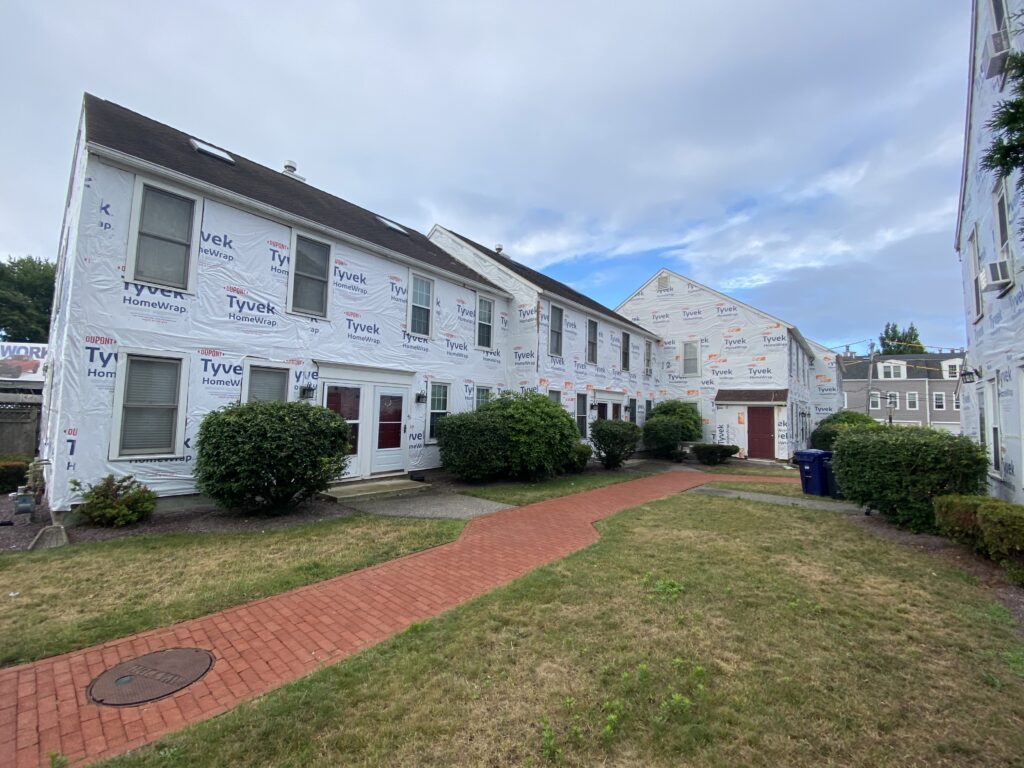
Most vinyl siding installations start with a full tear-off of the old material, not an overlay, because overlaying onto uneven or damaged sheathing just telegraphs those problems through the new panels within a couple of seasons. Once the walls are stripped we check the sheathing for rot or soft spots, especially around window sills and the bottom courses near grade where moisture collects. Any damaged sheathing gets replaced before house wrap goes on. We install a weather-resistant barrier, then new J-channel, corner posts, and starter strip before the siding itself goes up, and we pay close attention to proper nailing, panels need room to expand and contract with temperature swings or they’ll buckle. Trim work around windows, doors, and the roofline gets finished last, and that’s also when we correct any flashing details that were wrong on the original install.
What it costs
A straightforward vinyl siding installation on a typical Plaistow single-family home runs somewhere between {PRICE_LOW} and {PRICE_HIGH}, and where you land in that range depends on a handful of real factors, not a sales pitch. Total square footage of wall area is the biggest driver. Whether we’re doing a full tear-off versus finding sheathing damage that needs repair changes the number, since rotted sheathing isn’t something you find out about until the old siding comes off. The complexity of your home’s trim, dormers, bump-outs, multiple gable ends, adds labor time. Access matters too: a house with clear ground-level access on all four sides goes faster than one with tight side yards or a second story that needs staging. We give you a number after we’ve actually looked at the house, not before.
How long it takes
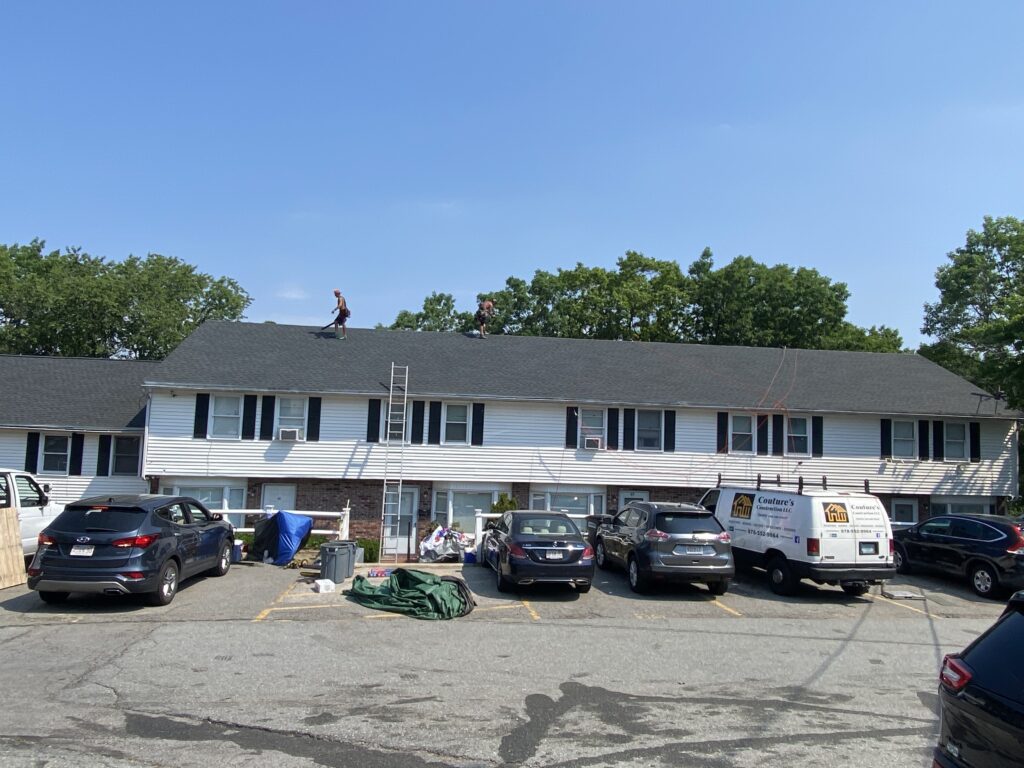
A typical single-family vinyl siding installation in Plaistow takes somewhere in the range of a few days to about a week and a half of active work, weather permitting. That timeline stretches if we find sheathing damage that needs to be repaired before the new siding goes on, or if the home has a lot of trim detail around windows and rooflines. If we’re doing siding and a roof replacement together, we sequence the roof first so any flashing work at the roofline is finished before the siding trim goes up around it, which usually adds a few days total but saves you from paying for two separate mobilizations.
Get an estimate
If your siding is chalky, cracked, or original to a 1980s or 1990s build, or if you’re planning a roof and siding project together, call Couture’s Construction at {PHONE}. We’ll come look at the house in person, tell you honestly what we see, and give you a real number for the work, whether that’s siding alone or a combined exterior project.
Do you install vinyl siding in New Hampshire, or just Massachusetts?
Both. Couture's Construction is based in Methuen but we work on both sides of the state line every week. Plaistow, Derry, Salem NH, Windham and Londonderry are all in our regular service area, and the New Hampshire permitting process is one we handle routinely, not something we're learning on your job.
Can vinyl siding be installed over my existing siding?
Sometimes, but we don't recommend it as a default. If the wall sheathing underneath is sound and flat, an overlay can work and saves on labor. If there's rot, old asbestos shingle siding, or wavy wall lines, we strip it back so the new siding lays flat and the house doesn't trap moisture behind it.
How do I know if it's time to replace my siding instead of patching it?
If you're dealing with warping, cracking panels, soft spots when you press on the wall, or siding that's more than 20 to 25 years old, patching becomes a losing game. One or two damaged panels, sure, we'll replace them. Whole sections failing at once means the material's at the end of its life.
Does new siding help with the ice dam and moisture problems on my roof?
Indirectly, yes. New siding installation is a chance to correct flashing at the roofline, box in exposed trim, and make sure water is shedding away from the house instead of behind the siding. It won't fix a ventilation problem on the roof itself, but the two systems work together and we look at both when we're on site.
Will you coordinate a siding job with a roof replacement at the same time?
Ready to talk siding?
Reach out to Couture’s Construction and let us know a little about your Plaistow home: its age, the siding you have now, and what’s prompting the change, whether it’s damage, drafts, or just wanting a fresh look. We’ll arrange a visit, walk the exterior with you, and talk through material choices before putting together your estimate.