
- Home
- Services
- Locations
Amesbury, MA
Boxford, MA
Chelmsford, MA
Danvers, MA
Dracut, MA
Essex, MA
Georgetown, MA
Groveland, MA
Hamilton, MA
Haverhill, MA
Ipswich, MA
Merrimac, MA
Methuen, MA
Middleton, MA
Newbury, MA
Newburyport, MA
North Andover, MA
North Reading, MA
Peabody, MA
Rowley, MA
Salem, MA
Salisbury, MA
Tewksbury, MA
Topsfield, MA
Topsfield, MA
West Newbury, MA
Atkinson, MA
Derry, NH
East Kingston, NH
Kensington, NH
Kingston, NH
Londonderry, NH
Plaistow, NH
Salem, NH
- Company
- Contact
- Home
- Services
- Locations
Amesbury, MA
Boxford, MA
Chelmsford, MA
Danvers, MA
Dracut, MA
Essex, MA
Georgetown, MA
Groveland, MA
Hamilton, MA
Haverhill, MA
Ipswich, MA
Merrimac, MA
Methuen, MA
Middleton, MA
Newbury, MA
Newburyport, MA
North Andover, MA
North Reading, MA
Peabody, MA
Rowley, MA
Salem, MA
Salisbury, MA
Tewksbury, MA
Topsfield, MA
Topsfield, MA
West Newbury, MA
Atkinson, MA
Derry, NH
East Kingston, NH
Kensington, NH
Kingston, NH
Londonderry, NH
Plaistow, NH
Salem, NH
- Company
- Contact
Commercial Roofing in North Reading, MA
Most commercial buildings in North Reading sit tucked back off Route 28 or Main Street on wooded lots, surrounded by oak and pine that shed onto low-slope roofs nobody walks except the roofer. That tree cover is the whole story on a flat roof here. Debris packs into drains and scuppers, ponding follows, and membranes that should last two decades start failing at twelve or thirteen years because nobody’s cleaning the roof between visits.
Commercial Roofing in North Reading
We install and repair EPDM rubber, TPO, and modified bitumen roofing on flat and low-slope commercial buildings in North Reading, and we work around whatever your business needs to stay open. Retail space, office buildings, small industrial and warehouse units, medical and professional buildings with rooftop mechanicals – the work is the same category of problem no matter the tenant. We phase the job so loading docks, entrances, and parking stay usable, and we coordinate with property managers on timing that doesn’t put you in the middle of a leak during business hours.
EPDM is still the workhorse for straightforward flat roofs with a lot of square footage and simple drainage. TPO gets the nod when reflectivity and heat-welded seams matter more, especially on buildings with rooftop HVAC where seam integrity around penetrations is the failure point. Modified bitumen shows up most on older buildings with a torch-down or cold-adhesive history where matching the existing system is cheaper than a full tear-off. We’ll tell you which one fits your roof and your budget, not which one we happen to stock.
What North Reading roofs are up against
Flat commercial roofs in this town take a beating from the same source that drives residential roof calls here: heavy tree cover. Overhanging limbs drop leaves, pine needles, and branches straight into roof drains and internal gutters, and on a low-slope roof that debris doesn’t run off the way it does on a pitched shingle roof. It sits, it holds water, and it feeds algae and moss growth on the membrane, especially on north-facing sections that stay shaded most of the day. Ponding water that would just evaporate on an open, sunny roof stays wet for days under a tree canopy, and standing water is the single fastest way to age an EPDM or TPO membrane past its rated life.
North Reading’s mix of older single-story commercial buildings and newer light-industrial construction also means we see a lot of roofs with rear additions or expansions built at a different pitch and tied into the original roof with flashing that was never quite right to begin with. Those transition points are where leaks start, not in the middle of the field membrane. Add in wind loading across open parking lot exposures on some of the newer sites off Concord Street, and you’ve got a roof that needs someone checking flashing, drainage, and membrane condition on a schedule, not just when a tenant calls about a stain on the ceiling tile.
How we assess it
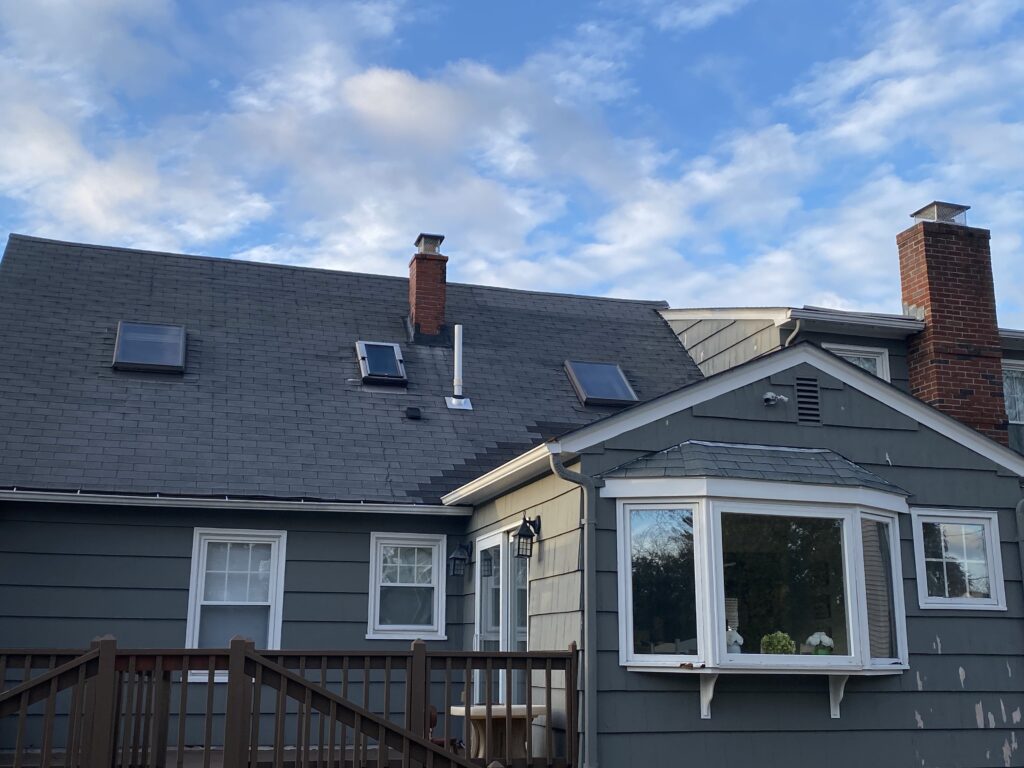
Derek walks the roof before anyone talks numbers. That means checking the membrane itself for cracking, blistering, or seam separation, checking drains and scuppers for standing water and debris, and pulling back flashing at parapet walls, curbs, and rooftop unit penetrations to see what’s actually happening underneath. On buildings where we can get attic or deck access, we look at the underside for water staining, rot, and insulation that’s gone wet and stopped doing its job. If there’s a roof membrane warranty still active, we check what it covers before recommending anything that might void it.
We give you a straight answer on whether you’re looking at a patch repair, a recover over the existing membrane, or a full tear-off and replacement. A lot of commercial roof calls turn out to be a bad drain or a flashing detail that failed, not a roof that’s done. We’re not going to sell you a new membrane system when a $[PRICE_LOW] repair fixes the actual problem.
What the job involves
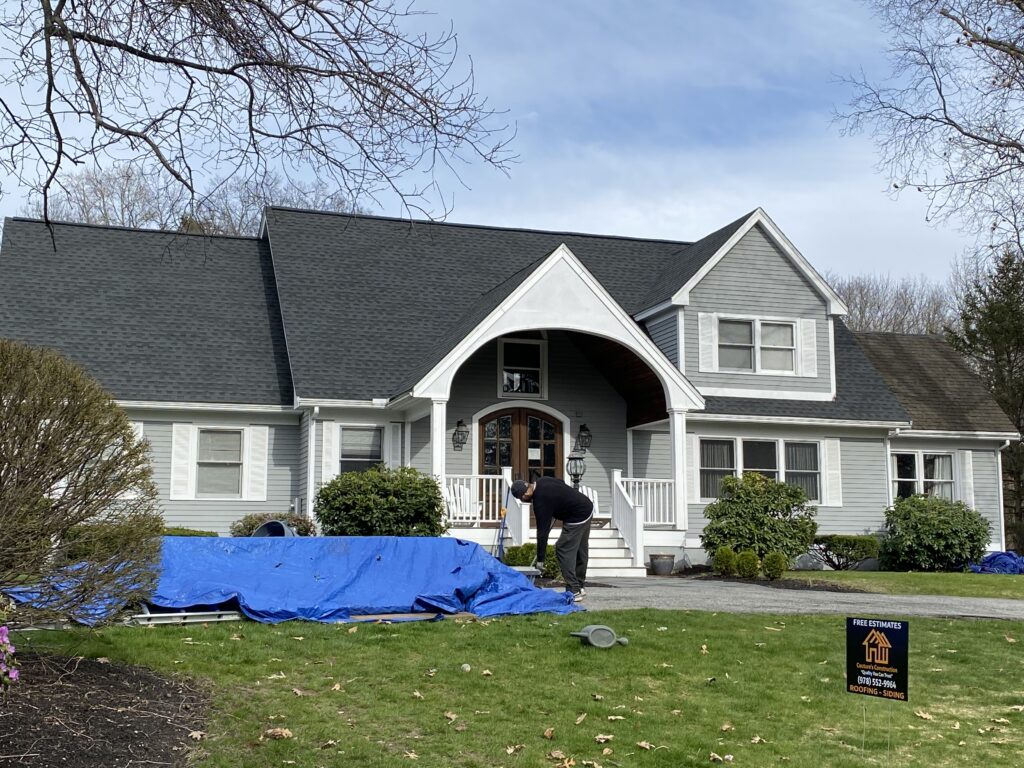
A repair job is targeted: cut out the failed section, address whatever’s underneath, tie the new material into the existing membrane with proper flashing and seam work. A full replacement means stripping the old membrane (or roofing over it, if the deck and code allow), inspecting and replacing damaged decking, re-flashing every penetration and edge detail, and installing new insulation and membrane with drainage corrected where debris and ponding have been an issue. On buildings with rooftop units, we coordinate curb flashing and unit reinstallation as part of the job, not as an afterthought.
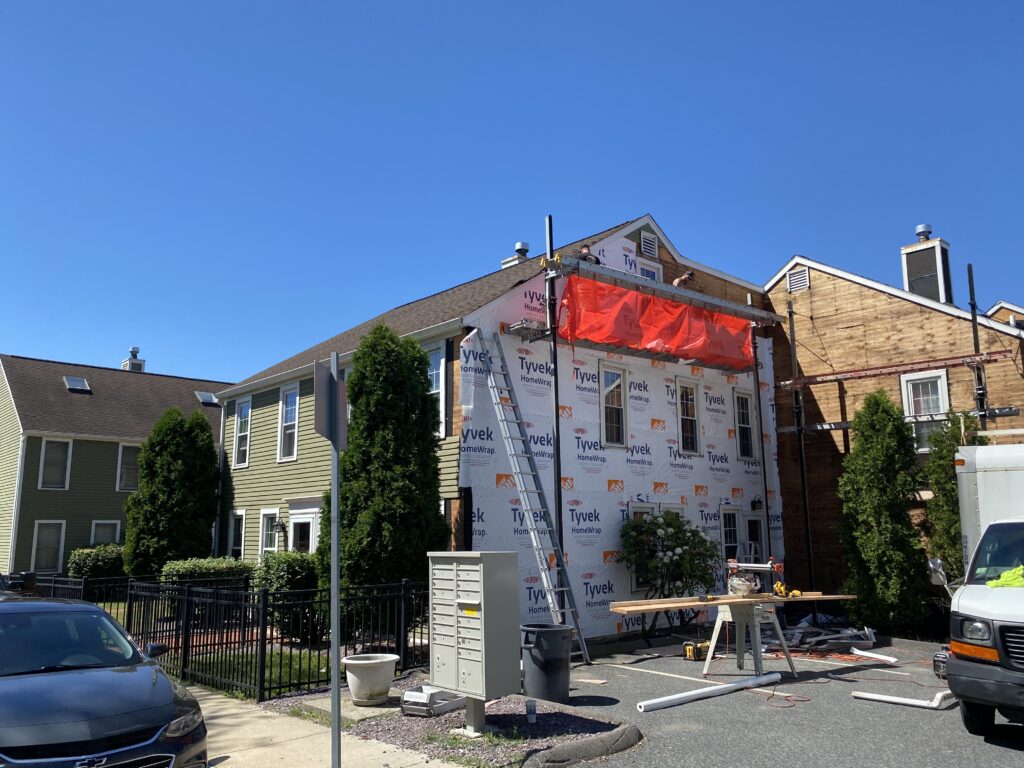
For occupied commercial buildings, staging matters as much as the roofing work itself. We section the roof, protect entrances and loading areas below the work zone, and keep material staging away from customer parking where we can. If your building has specific hours we need to work around, tell us up front and we’ll build the schedule to it.
What it costs
Commercial flat roof repairs typically run $[PRICE_LOW] to $[PRICE_HIGH], depending on how much membrane and flashing needs replacing and how accessible the area is. Full replacements price out per square foot of roof area and move with a handful of specific factors: total square footage, how many layers need to be stripped versus roofed over, whether the decking is sound or needs replacement in places, drainage work required to fix ponding, and roof access – a building with a straightforward loading dock is a different job than one where everything has to go up and over a parking lot. We walk every roof and give you a number based on what we actually find, not a phone estimate.
How long it takes
A flashing or membrane repair is usually a one-day job, sometimes two if we’re dealing with wet decking underneath. A full tear-off and replacement on a mid-size commercial building generally runs several days to a couple of weeks, depending on square footage and weather. We schedule around your operating hours where we can and section large roofs so you’re never fully exposed overnight. Weather is the biggest variable – flat roofing needs a dry deck and dry membrane to install correctly, so rain delays are real and we won’t cut that corner to hit a date.
Do you work on flat roofs during business hours?
Yes, and we plan around them. We section the roof, protect entrances and drive lanes, and coordinate loud or disruptive phases like tear-off to times that work for your tenants or customers. Tell us your operating hours before we schedule and we'll build the job around them.
EPDM, TPO, or modified bitumen - which is right for my building?
It depends on your existing system, your roof's exposure, and your budget. EPDM is a solid, economical choice for straightforward flat roofs. TPO handles heat and UV exposure better and welds cleanly around rooftop units. Modified bitumen often makes sense on older buildings where matching the existing roofing system costs less than switching systems entirely. We'll recommend based on what we find on your roof, not on what's easiest for us to install.
Can you just repair the leak instead of replacing the whole roof?
Often, yes. A lot of commercial roof leaks trace back to a failed drain, a flashing detail, or debris-clogged drainage rather than a membrane that's actually failed. If a targeted repair fixes the real problem, that's what we'll recommend. We only push toward full replacement when the membrane itself is past its useful life or the deck underneath is compromised.
Why do north-facing sections of my roof stay wet longer?
Shade. North-facing roof sections under tree cover get less direct sun, so they dry out slower after rain and hold moisture longer, which accelerates algae growth and membrane aging. It's a bigger issue in a heavily wooded town like North Reading than it would be on an open, sun-exposed site.
Do you handle drainage problems, not just membrane repair?
Get an estimate
If you’re managing a commercial building in North Reading and you’ve got a stain on a ceiling tile, standing water you can see from a window, or a roof warranty that’s aging out, call Couture’s Construction at {PHONE}. We’re based in Methuen and cover this part of the North Shore corridor regularly, so we can usually get out for a walk-through within a few days. Derek looks at the actual roof before quoting anything.