
- Home
- Services
- Locations
Amesbury, MA
Boxford, MA
Chelmsford, MA
Danvers, MA
Dracut, MA
Essex, MA
Georgetown, MA
Groveland, MA
Hamilton, MA
Haverhill, MA
Ipswich, MA
Merrimac, MA
Methuen, MA
Middleton, MA
Newbury, MA
Newburyport, MA
North Andover, MA
North Reading, MA
Peabody, MA
Rowley, MA
Salem, MA
Salisbury, MA
Tewksbury, MA
Topsfield, MA
Topsfield, MA
West Newbury, MA
Atkinson, MA
Derry, NH
East Kingston, NH
Kensington, NH
Kingston, NH
Londonderry, NH
Plaistow, NH
Salem, NH
- Company
- Contact
- Home
- Services
- Locations
Amesbury, MA
Boxford, MA
Chelmsford, MA
Danvers, MA
Dracut, MA
Essex, MA
Georgetown, MA
Groveland, MA
Hamilton, MA
Haverhill, MA
Ipswich, MA
Merrimac, MA
Methuen, MA
Middleton, MA
Newbury, MA
Newburyport, MA
North Andover, MA
North Reading, MA
Peabody, MA
Rowley, MA
Salem, MA
Salisbury, MA
Tewksbury, MA
Topsfield, MA
Topsfield, MA
West Newbury, MA
Atkinson, MA
Derry, NH
East Kingston, NH
Kensington, NH
Kingston, NH
Londonderry, NH
Plaistow, NH
Salem, NH
- Company
- Contact
Commercial Roofing in Methuen, MA
Methuen’s commercial buildings are not one type of roof. You’ve got mill-era brick buildings along the Spicket River with flat built-up roofs patched a dozen times over, strip retail plazas off Pelham and Broadway with aging EPDM membranes, and newer light-industrial buildings near the Route 213 connector with TPO systems that are only a few years old but already showing seams that were never welded right. Low-slope is the rule here, not the exception, and low-slope roofs fail differently than the shingle roofs on the houses next door.
Flat and Low-Slope Commercial Roofing in Methuen
We install and repair the three systems that make up almost every flat and low-slope commercial roof in this area: EPDM rubber, TPO, and modified bitumen. Each one has a place. EPDM is the workhorse for straightforward warehouse and plaza roofs where budget matters and the roof geometry is simple. TPO gives you a reflective white membrane that cuts cooling load in a building with a lot of rooftop HVAC, which matters on the flat-roof retail stock along South Broadway. Modified bitumen still makes sense on smaller sections, additions, and roofs with a lot of penetrations, because it torches or cold-adheres tight around pipe boots and curbs where a single-ply membrane can be harder to detail.
We don’t sell you a system before we’ve been on the roof. What’s up there now, how it’s flashed, what the drainage looks like, and what your building actually needs from the roof over the next ten to fifteen years all factor into the recommendation.
What Methuen Roofs Are Up Against
Methuen’s commercial building stock splits along the same lines as its housing stock, and that split drives what we see. The mill-city buildings downtown and along the river carry flat roofs that have been recoated and patched for decades, often with three or four roofing systems stacked on top of each other. That extra dead weight and the ponding water it creates is usually the real problem, not any one leak. Drainage that was adequate in 1960 is often undersized or clogged now, and standing water is what kills an EPDM or modified bitumen membrane years before its time.
Newer light-industrial and retail buildings built from the 1990s through the 2000s are hitting a different wall: their original TPO or EPDM membranes are aging out at the same twenty-to-twenty-five-year mark that residential architectural shingles are hitting across the Merrimack Valley, and a lot of building owners are dealing with roof, HVAC curb, and rooftop unit replacement all landing in the same budget cycle. Add in Methuen’s tree cover around some of the older commercial parcels, which loads gutters and internal drains with debris every fall, and you get roofs that fail at the drains and parapet flashing long before the membrane field itself gives out.
How We Assess It
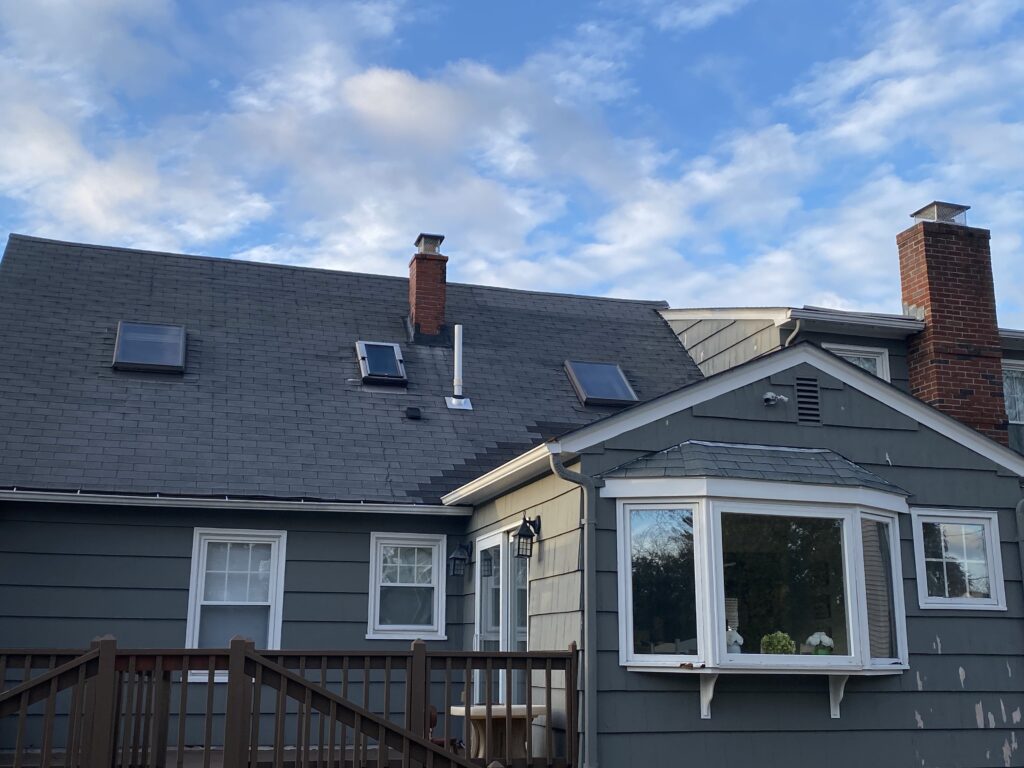
Derek walks the roof himself before anyone talks numbers. That means checking the membrane for blistering, shrinkage, and open seams, checking every penetration, curb, and parapet detail for failed flashing or dried-out sealant, and checking the drains and scuppers for ponding evidence, standing water lines, and debris. If there’s an accessible deck or interior ceiling below, we look at that too, because stained tile or rusted deck is telling you where water has already gotten in even if the membrane looks fine from above.
A proper commercial roof assessment takes real time on the roof, not a drive-by. We tell you plainly what’s failing, what’s still sound, and what your real options are before we recommend anything. If a section can be patched and monitored for another season instead of replaced now, we’ll say so.
What the Job Involves
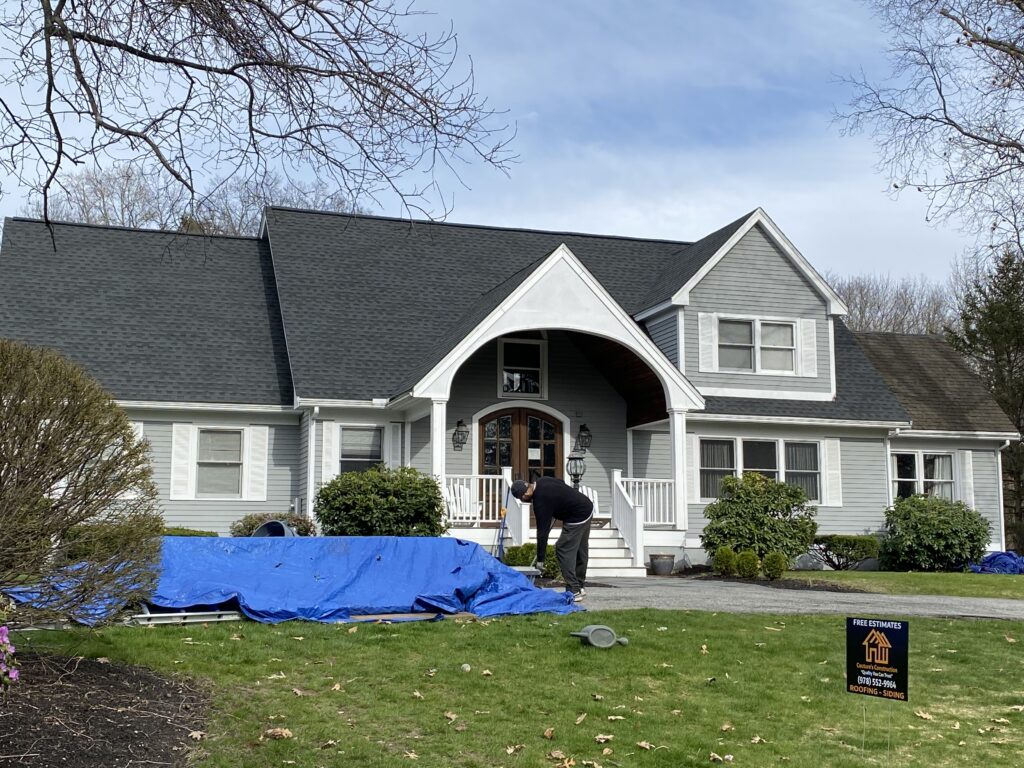
Most commercial roofing jobs in Methuen come down to a few real scenarios. A full tear-off and replacement is right when the membrane has failed broadly, when there are multiple roofing systems stacked underneath adding weight and trapping moisture, or when the insulation underneath is wet and needs to come out. A recover, where a new membrane goes over sound existing insulation, can work when the deck and insulation are dry and the roof just needs a new wearing surface. Targeted repair is the right call when the failure is localized to a few seams, a curb, or a parapet detail and the rest of the membrane still has service life left.
On any of these, phasing around your operating hours matters as much as the roofing work itself. We schedule tear-off, dry-in, and membrane work in sections so a retail plaza or industrial tenant isn’t shut down, and we coordinate noise and access with your tenants or staff ahead of time, not the morning we show up.
What It Costs
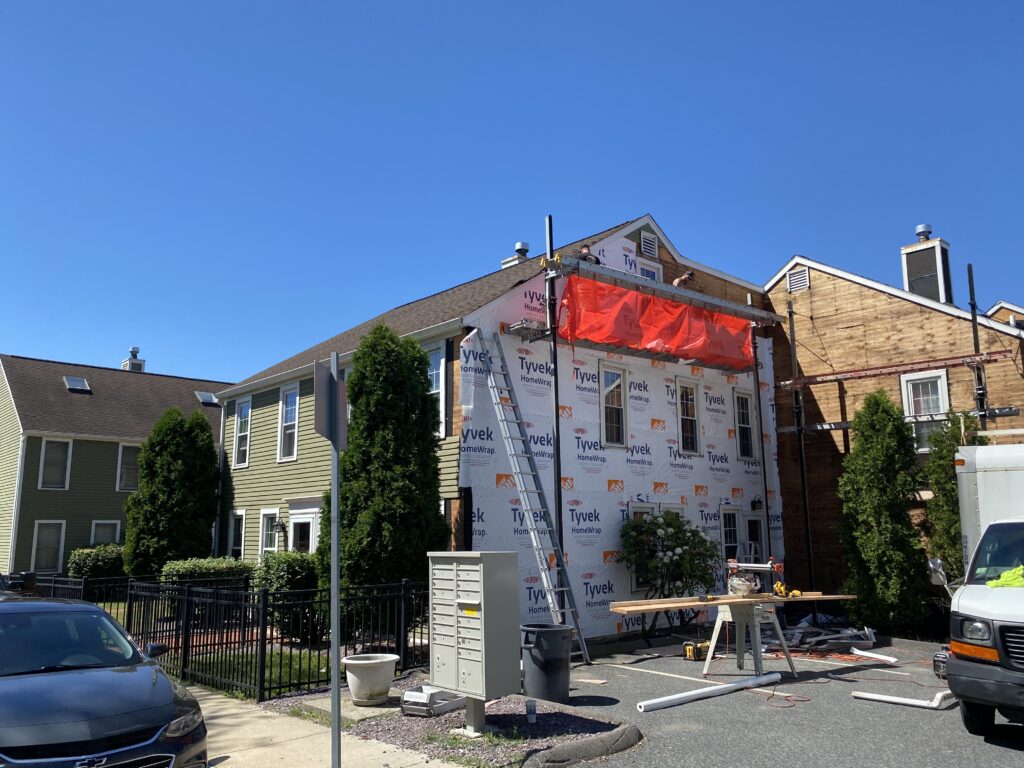
Commercial roof pricing runs a wide range in this area, generally {PRICE_LOW} to {PRICE_HIGH} depending on the system and the scope, and there’s no honest way to quote it without seeing the roof. What actually moves the number: total square footage, how many roof levels and parapet details there are, how many layers of old roofing have to come off, whether the insulation underneath is wet and needs replacing, drain and scupper work, and rooftop access. A single-story plaza with easy crane access prices very differently than a multi-level mill building with a fire escape as the only way up.
How Long It Takes
A straightforward EPDM or TPO recover on a small to mid-size commercial roof typically runs a few days to about a week. A full tear-off with wet insulation replacement or multiple phasing sections for an occupied building takes longer, often two to three weeks, because we’re only opening up as much roof as we can dry in and close by end of day. Weather windows matter too. We don’t tear off more roof than we can weatherproof before a forecasted rain, especially in a New England fall.
Does a flat roof always need full replacement when it starts leaking?
No. A lot of flat roof leaks trace back to one bad seam, a failed pipe boot, or a clogged drain, not a failed membrane. If the roof still has service life left, targeted repair is the honest answer and we'll say so.
Can you replace a commercial roof without shutting down the business?
In most cases yes. We phase tear-off and membrane work in sections and schedule around your operating hours, deliveries, and tenant access so the building keeps running.
What's the difference between EPDM and TPO for a building like mine?
EPDM is a black rubber membrane that's cost-effective and durable for straightforward roofs. TPO is a reflective white membrane that helps with cooling load, which matters if you've got a lot of rooftop HVAC. We'll walk you through which one fits your building and budget.
How do you know if the insulation under an old roof is wet?
We check during the assessment, either with visible signs like sagging or soft spots, or by cutting test sections during tear-off. Wet insulation has to come out or it keeps degrading the new roof from underneath.
Do you work on the mill-era buildings downtown?
Get an Estimate
If you manage or own a commercial building in Methuen and you’re not sure whether your roof needs a patch, a recover, or a full replacement, call Couture’s Construction at {PHONE}. Derek will walk the roof with you, tell you what he actually sees, and put a real number on paper before any work starts.