
- Home
- Services
- Locations
Amesbury, MA
Boxford, MA
Chelmsford, MA
Danvers, MA
Dracut, MA
Essex, MA
Georgetown, MA
Groveland, MA
Hamilton, MA
Haverhill, MA
Ipswich, MA
Merrimac, MA
Methuen, MA
Middleton, MA
Newbury, MA
Newburyport, MA
North Andover, MA
North Reading, MA
Peabody, MA
Rowley, MA
Salem, MA
Salisbury, MA
Tewksbury, MA
Topsfield, MA
Topsfield, MA
West Newbury, MA
Atkinson, MA
Derry, NH
East Kingston, NH
Kensington, NH
Kingston, NH
Londonderry, NH
Plaistow, NH
Salem, NH
- Company
- Contact
- Home
- Services
- Locations
Amesbury, MA
Boxford, MA
Chelmsford, MA
Danvers, MA
Dracut, MA
Essex, MA
Georgetown, MA
Groveland, MA
Hamilton, MA
Haverhill, MA
Ipswich, MA
Merrimac, MA
Methuen, MA
Middleton, MA
Newbury, MA
Newburyport, MA
North Andover, MA
North Reading, MA
Peabody, MA
Rowley, MA
Salem, MA
Salisbury, MA
Tewksbury, MA
Topsfield, MA
Topsfield, MA
West Newbury, MA
Atkinson, MA
Derry, NH
East Kingston, NH
Kensington, NH
Kingston, NH
Londonderry, NH
Plaistow, NH
Salem, NH
- Company
- Contact
Commercial Roofing in Newburyport, MA
Downtown Newburyport is packed with brick storefronts, mixed-use buildings, and warehouse conversions where the original roof line was pitched but every addition since 1960 went on flat. That mix of old and new roof geometry, sitting a few blocks from the Merrimack River mouth and open ocean wind, is what makes commercial roofing here different from a subdivision job. If you manage or own a commercial building in Newburyport, the roof over your head is probably a patchwork, and it needs to be assessed as one.
Flat and Low-Slope Commercial Roofing in Newburyport
Most of the commercial roof area we work on in Newburyport is flat or low-slope, not shingled. That covers EPDM rubber membrane, TPO single-ply, and modified bitumen, sometimes all three on the same building where additions were tacked on over the decades. Each system has a real place. TPO’s heat-welded seams and reflective surface do well on roofs with a lot of direct sun and rooftop HVAC traffic. EPDM has decades of proven performance on lower-exposure sections and is often the more practical repair-and-patch option on an older building. Modified bitumen, torched or cold-applied, is frequently the right call over decking that’s not perfectly flat or true, which describes a lot of the older commercial stock downtown.
We don’t sell one system across every building. We tell you what’s under the current membrane, what shape the decking is in, and which system actually fits the roof you have, not the roof a catalog would prefer.
What Newburyport Roofs Are Up Against
Newburyport sits close enough to open water that wind uplift is a real design factor, not a line item nobody checks. On a shingle roof that means confirming the wind rating actually matches the exposure. On a commercial flat roof it means checking that the membrane is properly adhered or mechanically fastened at the perimeter and corners, where uplift pressure concentrates hardest and where we most often find loose or lifted membrane after a coastal storm blows through. Salt air also accelerates corrosion on exposed metal flashing, coping caps, and rooftop equipment curbs faster than it does twenty miles inland, so metal that would last elsewhere fails sooner here.
The other factor specific to this town is the downtown itself. A lot of Newburyport’s commercial buildings sit in or near the historic district, with tight lot lines, no room for a dumpster or lift truck at street level, and shared party walls with the building next door. That changes how tear-off and material staging actually happen. We plan access and disposal before we plan anything else, because on these buildings that’s often the harder problem to solve, not the roofing itself.
How We Assess It
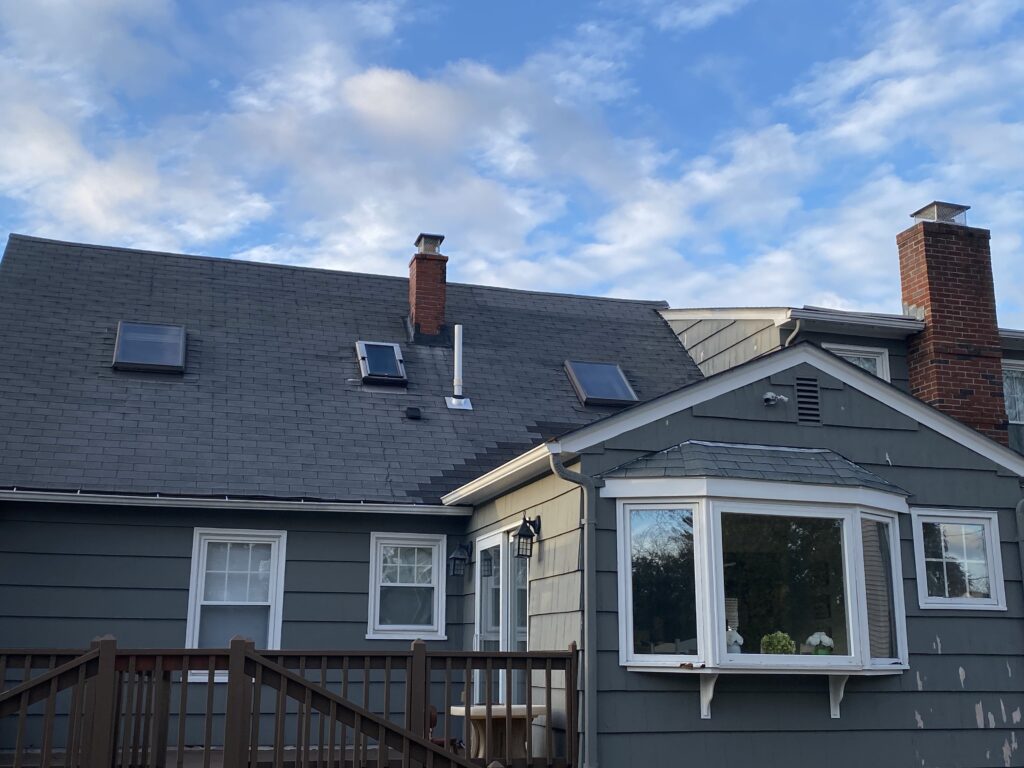
Before we recommend anything, Derek gets on the roof and looks at what’s actually there. That means checking the membrane or shingle condition section by section, since older commercial roofs are rarely uniform. It means probing the decking for soft spots, especially near drains and at parapet transitions where water sits longest. It means checking every flashing detail: parapet walls, HVAC curbs, pipe boots, and any place the roof meets a wall or a taller adjacent structure. And where there’s an accessible interior space below, we look at it from underneath too, because staining, rust on fasteners, and daylight through the deck tell you things the top surface won’t.
You get a written assessment of what we found and what it means before you get a proposal. If a section can be repaired instead of replaced, we say so.
What the Job Involves
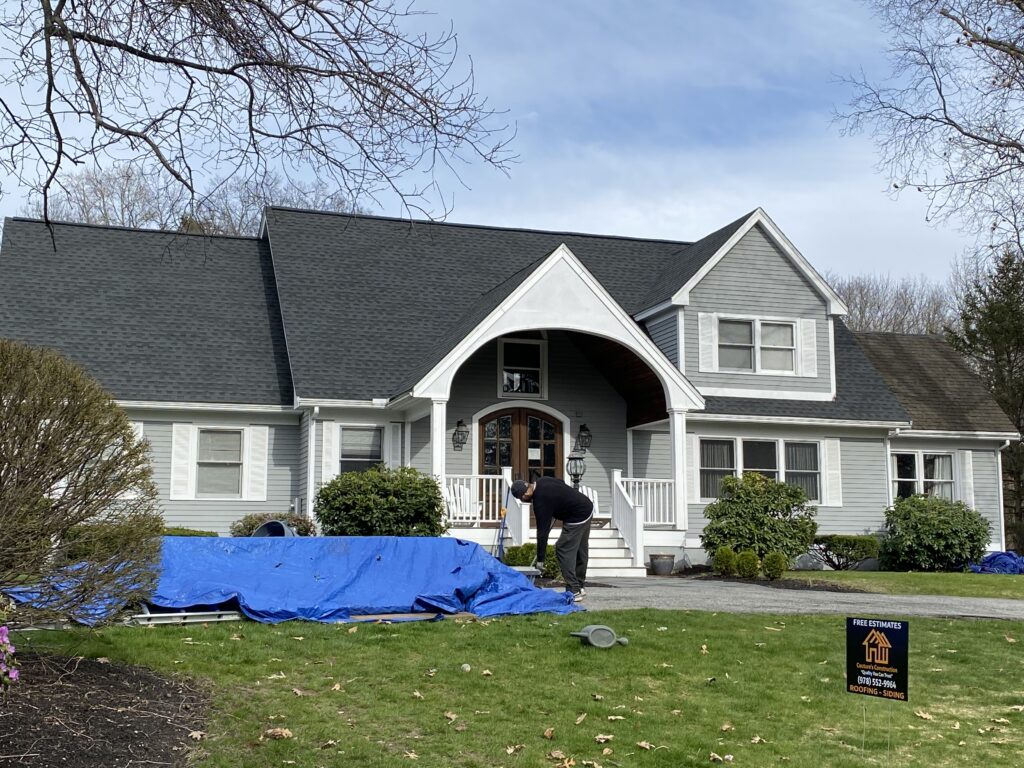
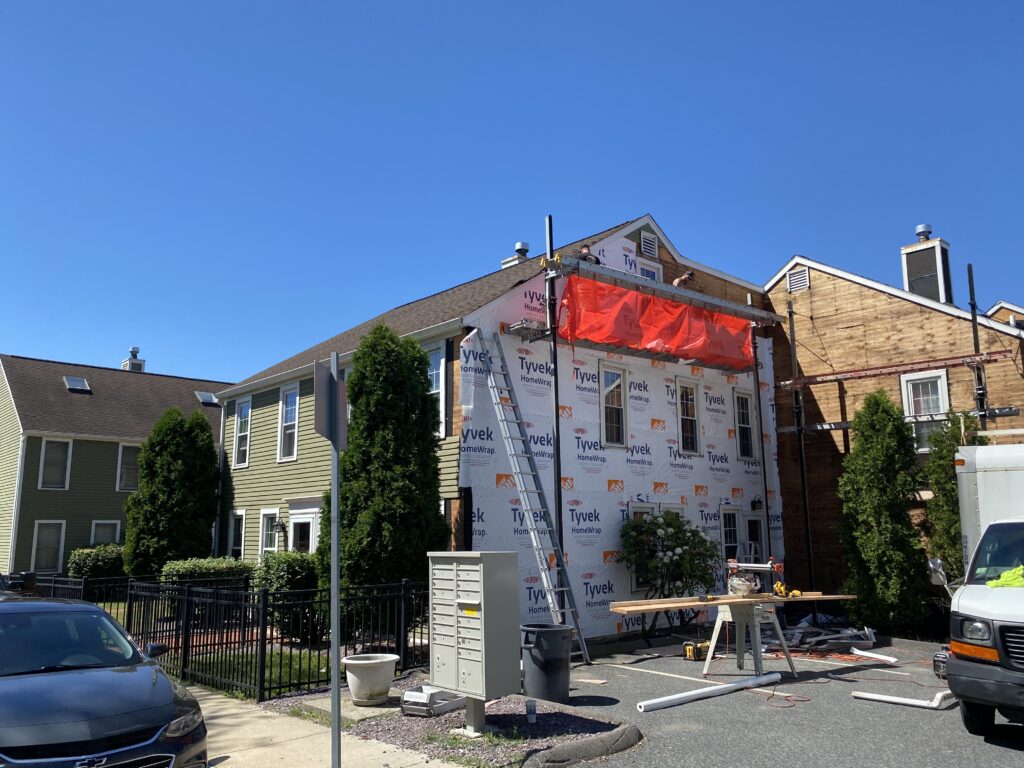
Commercial roof work gets scoped and phased differently than a house. We section the roof so tear-off, deck repair, and new membrane installation happen in manageable stages rather than opening the whole building at once. Rooftop units, exhaust fans, and any equipment on curbs get flagged early since they dictate sequencing around them. Drainage gets checked and corrected as part of the job, not treated as a separate problem, because a new membrane installed over bad slope or clogged drains will fail again regardless of material quality. Flashing at every penetration and perimeter edge is redone as part of the scope, not patched around. We also handle disposal and staging plans specific to downtown access constraints, which for a lot of Newburyport buildings is half the logistics of the job.
What It Costs
Commercial flat and low-slope roofing runs from roughly {PRICE_LOW} to {PRICE_HIGH}, and the spread is wide because commercial buildings vary more than houses do. What moves the number: total roof area, how many layers of old membrane need to come off, whether the decking needs repair once we’re into it, how many roof penetrations and equipment curbs need new flashing, and how hard the building is to access with equipment and dumpsters. A single-story building with clear alley access costs less to work on than a party-wall storefront downtown where everything has to move by hand or hoist. We walk the roof and give you a number based on your building, not a square-footage formula.
How Long It Takes
A single-section EPDM or TPO re-roof on a modest commercial building typically runs several days to a week and a half once materials are on site, weather and access allowing. Larger or more complex buildings, especially ones phased in sections to keep the business open below, run longer, and we give you that schedule up front so you can plan around it rather than finding out mid-job. Downtown access constraints in Newburyport can add time to staging and disposal regardless of the roofing work itself, and we build that into the timeline we give you, not into a surprise at the end.
Can you do this work without shutting down our building?
In most cases, yes. Flat and low-slope work is phased by section so the space below stays open and dry. We schedule loud tear-off and material staging around your hours where we can, and we walk the access plan with you before anything gets loaded on the roof.
EPDM, TPO, or modified bitumen - which one is right for our building?
It depends on the roof's exposure, the deck underneath, and what's already up there. TPO handles heat and UV well and welds clean at seams. EPDM has a long track record on lower-slope sections with less direct sun. Modified bitumen is often the right call over older buildings with irregular decking. We'll tell you which one fits after we're up there, not before.
How do you handle drainage on a flat roof near the water?
We check every drain, scupper, and internal leader for slope and blockage before we touch the membrane. A flat roof that's holding water isn't a design flaw by default – it's usually a drainage problem, and fixing that is often cheaper than a full replacement.
Do you carry commercial general liability insurance for jobsite work?
Yes, and we'll provide certificates before we're on your property. Property managers and building owners should ask for this every time, from every contractor.
What's the biggest thing that shortens the life of a commercial roof in this area?
Get an Estimate
If you manage or own a commercial building in Newburyport with a flat or low-slope roof section that’s leaking, ponding, or just due for an honest look, call {PHONE}. Derek will walk the roof with you, tell you what he finds, and give you a straight answer on repair versus replacement before any proposal gets written.