
- Home
- Services
- Locations
Amesbury, MA
Boxford, MA
Chelmsford, MA
Danvers, MA
Dracut, MA
Essex, MA
Georgetown, MA
Groveland, MA
Hamilton, MA
Haverhill, MA
Ipswich, MA
Merrimac, MA
Methuen, MA
Middleton, MA
Newbury, MA
Newburyport, MA
North Andover, MA
North Reading, MA
Peabody, MA
Rowley, MA
Salem, MA
Salisbury, MA
Tewksbury, MA
Topsfield, MA
Topsfield, MA
West Newbury, MA
Atkinson, MA
Derry, NH
East Kingston, NH
Kensington, NH
Kingston, NH
Londonderry, NH
Plaistow, NH
Salem, NH
- Company
- Contact
- Home
- Services
- Locations
Amesbury, MA
Boxford, MA
Chelmsford, MA
Danvers, MA
Dracut, MA
Essex, MA
Georgetown, MA
Groveland, MA
Hamilton, MA
Haverhill, MA
Ipswich, MA
Merrimac, MA
Methuen, MA
Middleton, MA
Newbury, MA
Newburyport, MA
North Andover, MA
North Reading, MA
Peabody, MA
Rowley, MA
Salem, MA
Salisbury, MA
Tewksbury, MA
Topsfield, MA
Topsfield, MA
West Newbury, MA
Atkinson, MA
Derry, NH
East Kingston, NH
Kensington, NH
Kingston, NH
Londonderry, NH
Plaistow, NH
Salem, NH
- Company
- Contact
Roof Repair in Georgetown, MA
A lot of Georgetown’s housing stock predates the ranch and split-level boom that filled in towns closer to Route 495, and it shows on the roof. You’ve got antique capes and colonials with steep pitches, additions tacked on over decades, and mature tree cover that drops debris into valleys all winter long. When something starts leaking here, it’s rarely as simple as one bad shingle. It’s usually where two roof planes meet, or where a chimney was flashed thirty years ago and never touched again.
Roof Repair in Georgetown
Georgetown call us for repairs before they call for replacement, and that’s the right order to do things in. Most of the calls we get are for an active leak, a stain spreading across a ceiling, or shingles found in the yard after a windy night. Some of those jobs are a flashing fix or a section of damaged shingles. Some of them turn into a bigger conversation once we’re actually up there. We don’t guess which one it is from the ground, and we don’t decide it before we’ve seen the decking.
What we won’t do is send someone out to write up a replacement quote when the roof needs a repair. That’s a fast way to lose a customer’s trust, and on properties like the ones common in Georgetown, where the roof might have three or four intersecting planes and a slate section over the original section of the house, getting the diagnosis right matters more than moving fast.
What Georgetown roofs are up against
The geometry is the first issue. Large lots and long driveways in Georgetown tend to come with houses that grew over time, an ell here, a dormer there, a rear addition with a lower slope than the main roof. Every one of those transitions is a place where flashing has to be cut and fitted by hand, and it’s exactly where we find the most failures. Valleys under heavy tree cover collect needles and leaves that hold moisture against the shingles year-round, which shortens their life well below what the manufacturer rates them for. On the older colonial-era homes we still see original wood shingle or slate sections mixed with asphalt reroofs done at some point in the last few decades, and matching a repair into that mix takes more than a bundle of shingles from the hardware store.
The second issue is ice. North-facing slopes and the shaded roof sections common on wooded Georgetown lots hold snow longer and build ice dams at the eaves, which back water up under the shingles and into the decking. If a house doesn’t have ice and water shield installed correctly under the first few courses at the eaves, that’s usually where the winter leaks start, and it’s a repair we see on the same houses year after year until it’s addressed properly. Add in that a lot of these properties have detached garages or barns that also carry roofing, and Georgetown jobs often mean assessing more than one structure on the same visit.
How we assess it
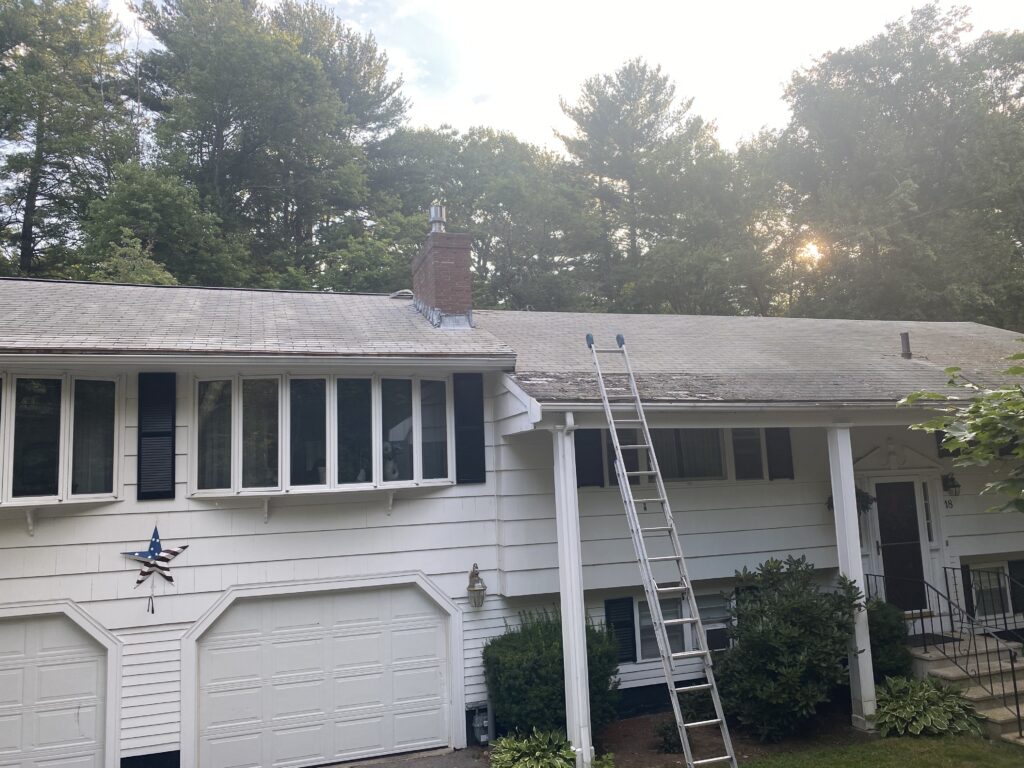
Derek gets on the roof before anyone quotes anything. That means checking the decking for soft spots or delamination, pulling back shingles at the area of concern to see what’s actually happening underneath, checking flashing at every chimney, sidewall, and valley, and looking at the ventilation, ridge vents, soffit intake, whether the attic is breathing the way it should. Then we go into the attic itself and look at the underside of the deck for daylight, staining, or rot, because that tells you things the topside inspection can’t.
A real assessment happens before a real recommendation. If the decking is solid, the flashing is the problem, and the shingles around it have life left in them, we say so and we fix the flashing. If we find soft decking in one section from a slow leak that’s been going for a few seasons, we’ll tell you that section needs to come off and get replaced, and we’ll be specific about how much of the roof that involves, not the whole thing by default.
What the job involves
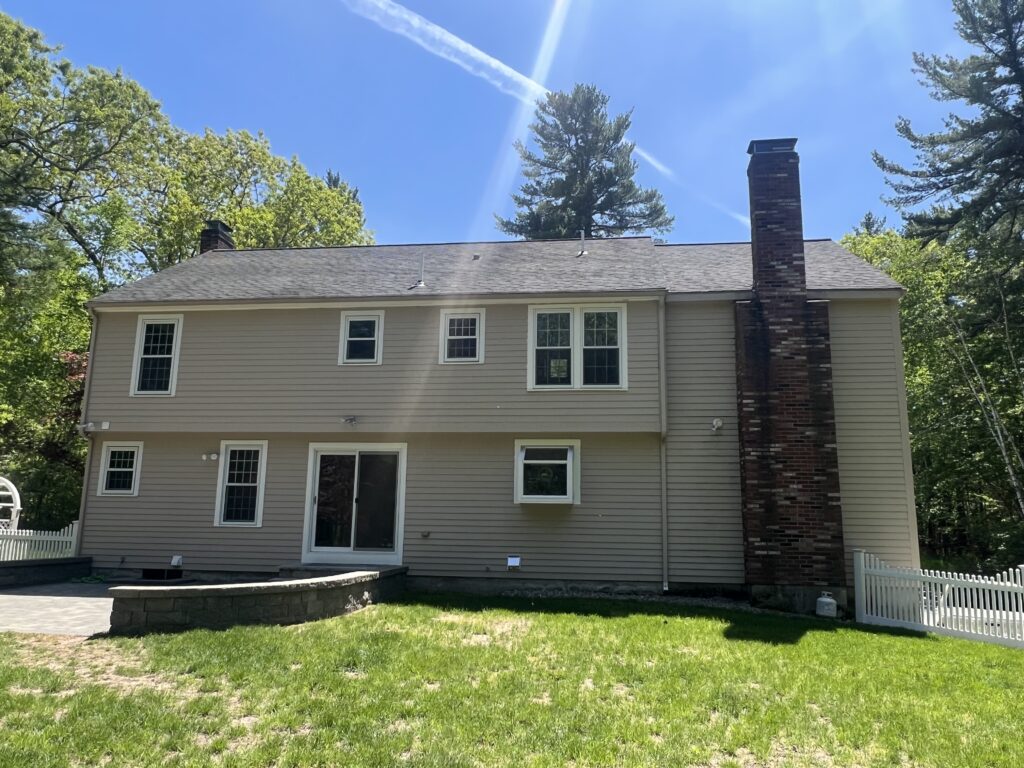
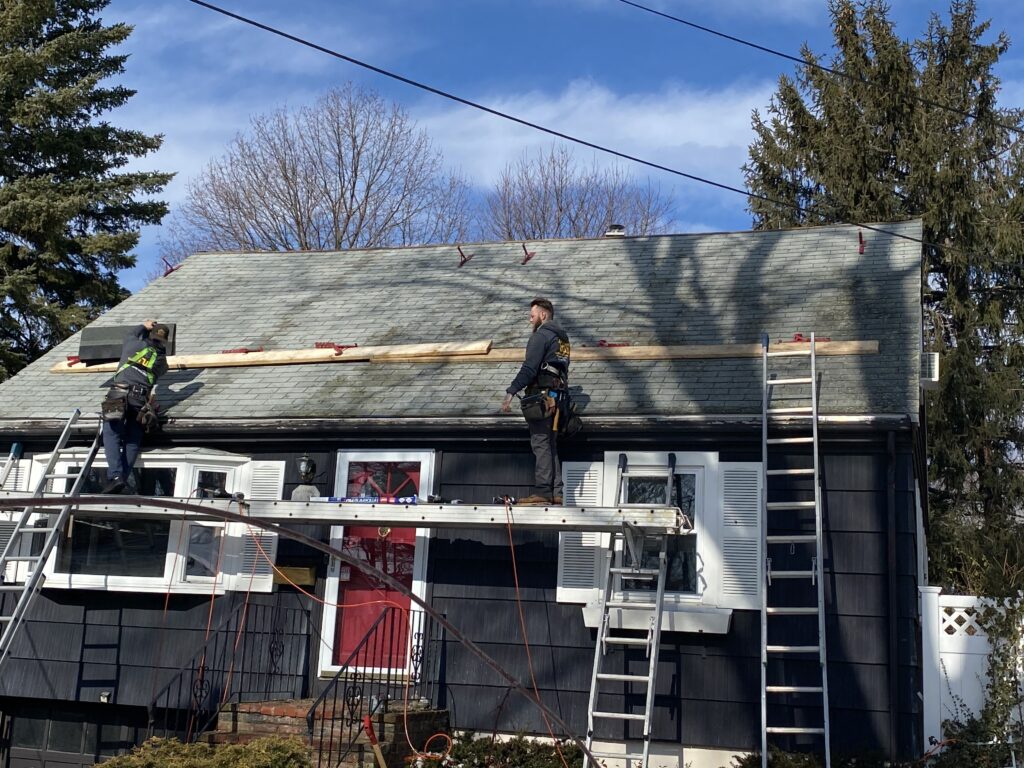
A typical repair on a Georgetown property starts with removing the damaged shingles and any underlayment that’s compromised, checking and replacing decking as needed, then correcting the underlying cause, which is usually flashing, ventilation, or ice and water shield that was never there. We tie the new shingles into the existing roof as closely as the manufacturer and the existing product allow, matching color and profile where we can. On the homes with slate or wood shingle sections, we’ll talk through whether an in-kind repair makes sense or whether a transition to asphalt in that one section is the more practical long-term answer. Chimney and valley flashing gets rebuilt with new step flashing and counterflashing rather than just caulked over, because caulk is a stopgap, not a fix.
What it costs
Repair pricing on Georgetown properties runs from roughly {PRICE_LOW} to {PRICE_HIGH}, and where a specific job falls in that range depends on a few things: how much of the roof is affected, the pitch, how many layers of old shingles are already up there, whether the decking needs partial replacement once we open it up, and access. A steep colonial roofline set back on a long private driveway takes more time to stage equipment on than a roof you can reach straight off a ladder from the driveway. We give you a number after we’ve seen the roof, not before, and we tell you what would move that number up or down before we start.
How long it takes
Most single-area repairs, a flashing rebuild at a chimney or a valley section, a run of damaged shingles, get done in a day. Jobs that involve decking replacement or multiple roof planes usually run one to three days depending on what we find once we’re into it and how the weather cooperates. We’ll tell you upfront if a job looks like it could run longer because of the roof’s complexity, so there are no surprises mid-project.
Can my roof be repaired instead of replaced?
Often, yes. If the decking underneath is sound and the damage is limited to a section of shingles, flashing, or a ventilation issue, a repair is the right call and that's what we'll recommend. Replacement only makes sense when the decking is compromised over a wide area, the shingles are past their service life across the whole roof, or repeated repairs would cost more over time than a new roof.
Why does my roof keep leaking in the same spot every winter?
That's almost always an ice dam problem. Snow melts from attic heat, refreezes at the cold eaves, and backs water up under the shingles. If there's no ice and water shield under those first few courses, or the ventilation isn't moving enough air through the attic, the same spot will leak again every season until that's fixed, not just patched.
Do you repair slate or wood shingle roofs in Georgetown?
We assess them the same way we assess asphalt, and we'll give you an honest read on whether an in-kind repair makes sense given the age and condition of the material, or whether transitioning that section to asphalt is the more practical option long-term. We won't push you toward replacing a slate roof that still has life in it.
Do you also handle roofing on garages and outbuildings?
Yes. A lot of Georgetown properties have a detached garage or barn that needs attention along with the main house. We'll assess those structures at the same visit if you want a full picture of what's needed on the property.
How do you handle access on a long driveway or wooded lot?
We plan staging and equipment placement before the crew shows up, especially on properties where the driveway is long or narrow or the roof is set back from the road. It's factored into the estimate, not treated as a surprise on the day of the job.
Get an estimate
If you’ve got a leak, a stain on the ceiling, or shingles in the yard after a windstorm, get someone on the roof before you decide what it needs. Call Couture’s Construction at {PHONE} and we’ll set up a time to come look at it. We’re based in Methuen and we work throughout this part of Essex County, including Georgetown’s larger, older properties where a straightforward answer takes an actual assessment to get right.