
- Home
- Services
- Locations
Amesbury, MA
Boxford, MA
Chelmsford, MA
Danvers, MA
Dracut, MA
Essex, MA
Georgetown, MA
Groveland, MA
Hamilton, MA
Haverhill, MA
Ipswich, MA
Merrimac, MA
Methuen, MA
Middleton, MA
Newbury, MA
Newburyport, MA
North Andover, MA
North Reading, MA
Peabody, MA
Rowley, MA
Salem, MA
Salisbury, MA
Tewksbury, MA
Topsfield, MA
Topsfield, MA
West Newbury, MA
Atkinson, MA
Derry, NH
East Kingston, NH
Kensington, NH
Kingston, NH
Londonderry, NH
Plaistow, NH
Salem, NH
- Company
- Contact
- Home
- Services
- Locations
Amesbury, MA
Boxford, MA
Chelmsford, MA
Danvers, MA
Dracut, MA
Essex, MA
Georgetown, MA
Groveland, MA
Hamilton, MA
Haverhill, MA
Ipswich, MA
Merrimac, MA
Methuen, MA
Middleton, MA
Newbury, MA
Newburyport, MA
North Andover, MA
North Reading, MA
Peabody, MA
Rowley, MA
Salem, MA
Salisbury, MA
Tewksbury, MA
Topsfield, MA
Topsfield, MA
West Newbury, MA
Atkinson, MA
Derry, NH
East Kingston, NH
Kensington, NH
Kingston, NH
Londonderry, NH
Plaistow, NH
Salem, NH
- Company
- Contact
Roof Replacement in Dracut, MA
Dracut has a lot of ranches and split-levels from the 60s and 70s sitting on wooded half-acre and acre lots, plus newer construction off Lakeview Avenue and along the Methuen line with steeper-pitched roofs and more roof planes to shed water and pine debris. The tree cover here is heavy on most streets, which means valleys and north-facing slopes hold moisture longer than they do in more open subdivisions. That combination, older shingle stock plus constant shade and needle buildup, is why we see more granule loss and valley wear in Dracut than the shingle’s age alone would explain.
Complete Residential Roof Replacement in Dracut
We tear off and replace roofs on ranches, colonials, capes, and the older farmhouse-style homes scattered through Collinsville and the center of town. Most of what we install is architectural asphalt shingle rated for higher wind uplift than the three-tab product a lot of these houses were built with originally. We also handle the low-slope sections you find over additions and enclosed porches, which need a different membrane approach than the main roof field. If your house has a detached garage or shed roof that needs to match, we quote that as part of the same job so you are not dealing with two contractors and two invoices.
What Dracut Roofs Are Up Against
The biggest driver of roofing demand in Dracut right now is simple math. A lot of the architectural shingle roofs installed here in the late 90s and early 2000s are now twenty to twenty-five years old, which is right at the end of their service life even when they look okay from the driveway. Shingles fail from the inside out near the end, losing granules and sealant strength before you ever see a leak. By the time water shows up on a ceiling, the decking underneath has usually been taking on moisture for a while.
The second issue is roof geometry on the older housing stock and additions closer to town center. Rear additions and enclosed porches with low-slope roofs are common in Dracut, and low-slope sections fail long before the main roof does because standard shingles are not built to shed water fast enough at that pitch. Heavy tree cover on most lots also means valleys clog with pine needles and leaves faster than in open subdivisions, which traps moisture against the shingle and accelerates rot at exactly the point where two roof planes meet. Add in ice dams on shaded north-facing slopes during a hard winter and you get a specific, predictable failure pattern that we see house after house on the same streets.
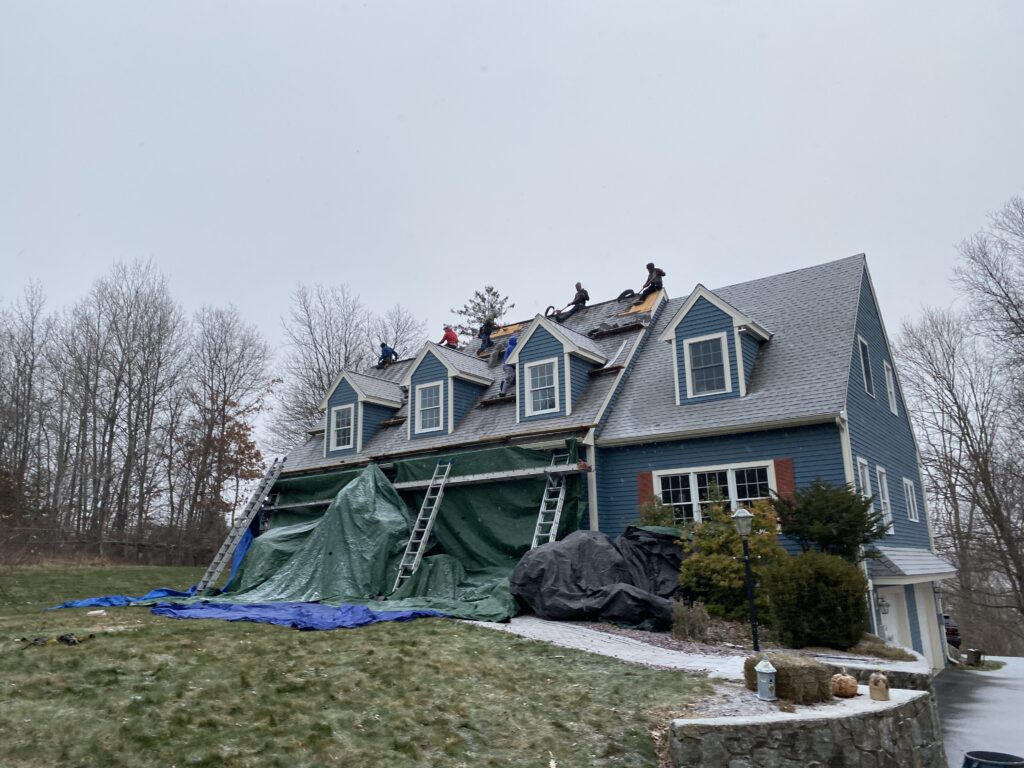
How We Assess It
We do not quote a roof replacement off a drive-by. Derek gets on the roof and looks at the decking for soft spots or delamination, checks the flashing at every chimney, sidewall, and valley, and pulls a shingle or two to see how the granules and sealant strip are holding up. Then we go into the attic, because that is where you actually see whether the ridge and soffit ventilation is working the way it is supposed to, and whether there is staining or frost that tells you moisture has already gotten past the roof deck. That assessment is what the recommendation is based on, not the other way around. If a roof still has a few good years left in it, we say so.
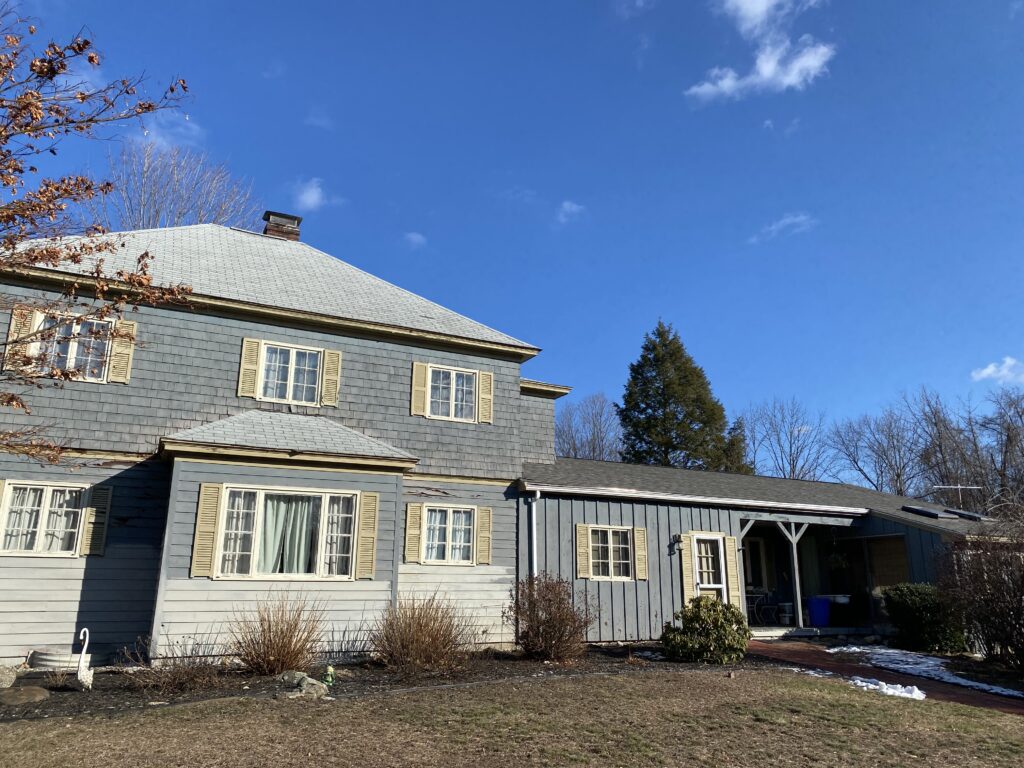
What the Job Involves
Every replacement starts with a full tear-off down to the decking, not a layover, because you cannot properly inspect or flash a roof with old shingles still under it. We replace any decking that has gone soft or delaminated, install ice and water shield along the eaves and in every valley, which matters more in Dracut than in a lot of towns given the tree cover and shading, then lay synthetic underlayment across the field. New flashing goes in at chimneys, sidewalls, and any roof-to-wall transition, since that is where most leaks start on an older Dracut home even when the shingle field is fine. Shingles go down with proper nailing patterns to hold their wind rating, and we finish with ridge vent and confirm soffit intake is actually open, since a lot of older Dracut homes have soffit vents that were painted or insulated shut decades ago and never reopened.
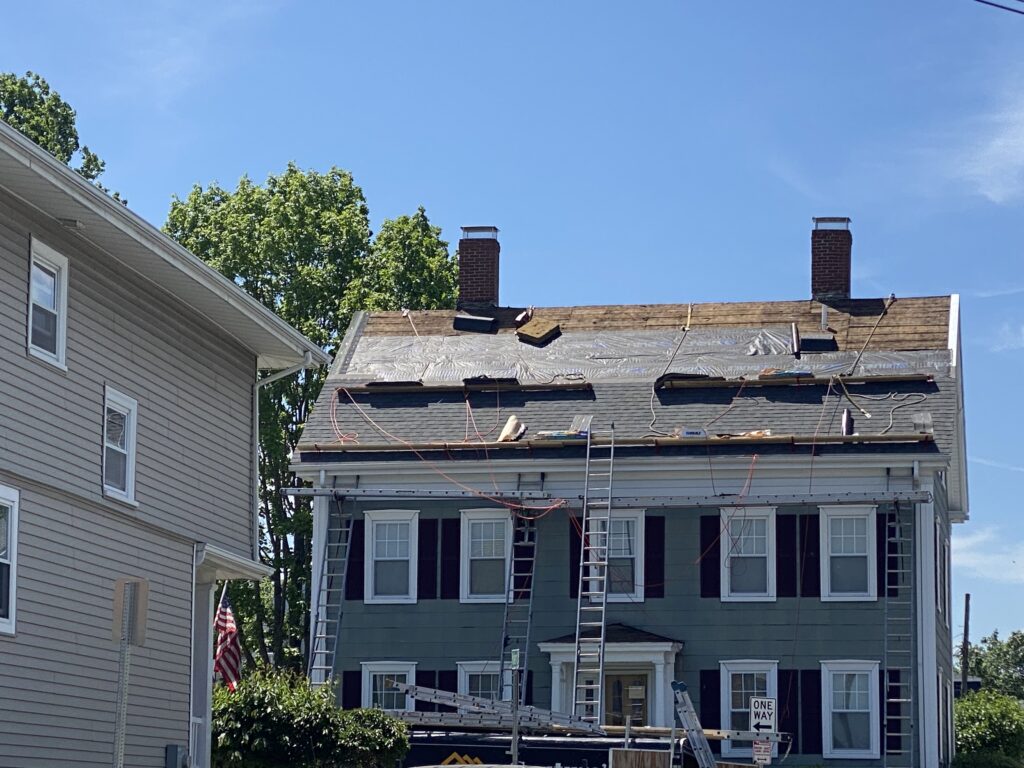
What It Costs
Most Dracut roof replacements run between {PRICE_LOW} and {PRICE_HIGH}, and where a specific job falls in that range depends on a handful of concrete things: total roof size and number of planes, pitch and how steep and dangerous the access is, how many layers of old shingle need to come off, whether we find rotten decking once the old roof is stripped, and whether there are low-slope sections that need a membrane roof instead of standard shingle. We walk every job before we give you a number, and we tell you upfront if decking replacement is likely so it is not a surprise mid-project.
How Long It Takes
A standard single-family roof replacement in Dracut, tear-off through cleanup, usually takes one to two days for the crew once we are on site, weather permitting. Larger roofs, steep pitch, multiple low-slope sections, or decking repairs add time. We give you a start date and a realistic window before we schedule, not a vague sometime-next-month promise.
How do I know if I need a roof replacement instead of a repair?
If the shingles are past twenty years old, you are seeing granule loss across large areas, or you have had more than one leak in different spots, repair stops making financial sense. A single damaged section on a roof under fifteen years old is usually a repair. We will tell you honestly which category yours falls into.
Do you replace low-slope roofs over additions separately from the main roof?
We can, but if both are due around the same time we usually recommend doing them together. Low-slope sections need a membrane system, not standard shingle, and matching that work to the main roof replacement saves you a second mobilization and a second set of flashing tie-ins.
What causes ice dams on Dracut roofs?
Ice dams form when heat escaping from the attic melts snow on the roof, which then refreezes at the colder eaves. Poor attic insulation and blocked soffit ventilation are the usual causes. We check both during the assessment, since fixing ventilation is often part of solving the ice dam problem, not just the shingle.
Will you replace rotted decking as part of the job or is that extra?
Decking replacement is priced separately because we cannot know how much is bad until the old shingles come off. We flag likely trouble spots during the initial assessment based on what we see from the attic, so you have a realistic expectation before we start.
Do you handle the permit for a Dracut roof replacement?
Yes, we pull the required building permit for the town as part of the job.
Get an Estimate
If your Dracut roof is closing in on twenty years old, showing granule loss, or you have had ice buildup the last couple of winters, it is worth having someone actually get up there before you spend money. Call {PHONE} and we will set up a time to walk the roof and the attic and give you a straight answer, whether that answer is replace it now or you have a few years left.