
- Home
- Services
- Locations
Amesbury, MA
Boxford, MA
Chelmsford, MA
Danvers, MA
Dracut, MA
Essex, MA
Georgetown, MA
Groveland, MA
Hamilton, MA
Haverhill, MA
Ipswich, MA
Merrimac, MA
Methuen, MA
Middleton, MA
Newbury, MA
Newburyport, MA
North Andover, MA
North Reading, MA
Peabody, MA
Rowley, MA
Salem, MA
Salisbury, MA
Tewksbury, MA
Topsfield, MA
Topsfield, MA
West Newbury, MA
Atkinson, MA
Derry, NH
East Kingston, NH
Kensington, NH
Kingston, NH
Londonderry, NH
Plaistow, NH
Salem, NH
- Company
- Contact
- Home
- Services
- Locations
Amesbury, MA
Boxford, MA
Chelmsford, MA
Danvers, MA
Dracut, MA
Essex, MA
Georgetown, MA
Groveland, MA
Hamilton, MA
Haverhill, MA
Ipswich, MA
Merrimac, MA
Methuen, MA
Middleton, MA
Newbury, MA
Newburyport, MA
North Andover, MA
North Reading, MA
Peabody, MA
Rowley, MA
Salem, MA
Salisbury, MA
Tewksbury, MA
Topsfield, MA
Topsfield, MA
West Newbury, MA
Atkinson, MA
Derry, NH
East Kingston, NH
Kensington, NH
Kingston, NH
Londonderry, NH
Plaistow, NH
Salem, NH
- Company
- Contact
Commercial Roofing in Danvers, MA
Danvers runs a mix of plaza retail along Route 1, office parks off 128, and older mill-adjacent buildings with flat rear sections tacked on over the decades. Almost none of that roof stock is a simple pitched shingle job. It’s membrane, and it’s the kind of membrane that gets ignored until water shows up on the ceiling tile inside, which is usually a year or two after the roof actually started failing.
Flat and Low-Slope Commercial Roofing Services in Danvers
We work in EPDM, TPO, and modified bitumen, which covers the bulk of what’s actually on Danvers commercial buildings. EPDM is the black rubber membrane you’ve probably seen from a second-floor window. It’s durable and cheap to patch, but seams are the weak point and UV exposure over enough summers will crack it. TPO is the white heat-welded membrane most new commercial roofs go with now. It reflects heat, which matters on a building that’s paying to cool it, and welded seams hold up better than adhered EPDM seams over time. Modified bitumen shows up on older low-slope sections and rear additions, torched or self-adhered in layers.
We also handle roof coatings where a membrane still has life in it but needs a few more years bought before a full tear-off makes sense, and we do the flashing and drain work that actually causes most leaks even when the membrane itself is fine.
What Danvers roofs are up against
Flat roofs in this area fail at the drains and the seams, not usually across the whole field. Danvers gets enough tree debris near the wooded lots off Sylvan Street and around the business park perimeters that scuppers and internal drains clog, and ponding water sits on a membrane a lot longer than it should before anyone notices. Ponding is what ages EPDM and modified bitumen fastest, and it’s almost always a drainage problem, not a membrane problem, until it’s been ignored long enough to become both.
The other issue specific to this stretch of the North Shore is mixed-age construction. A lot of Danvers commercial buildings have additions bolted onto older cores, which means you’ll find two or three different roof systems and roof ages on one building, each meeting at a wall or a height change where flashing has to do real work. Those transitions are where we find the leaks that owners couldn’t locate themselves. Wind off the water toward Beverly and the harbor side adds uplift risk on anything with loose or under-fastened membrane edges, which is a detail worth checking even on a roof that looks fine from the ground.
How we assess it
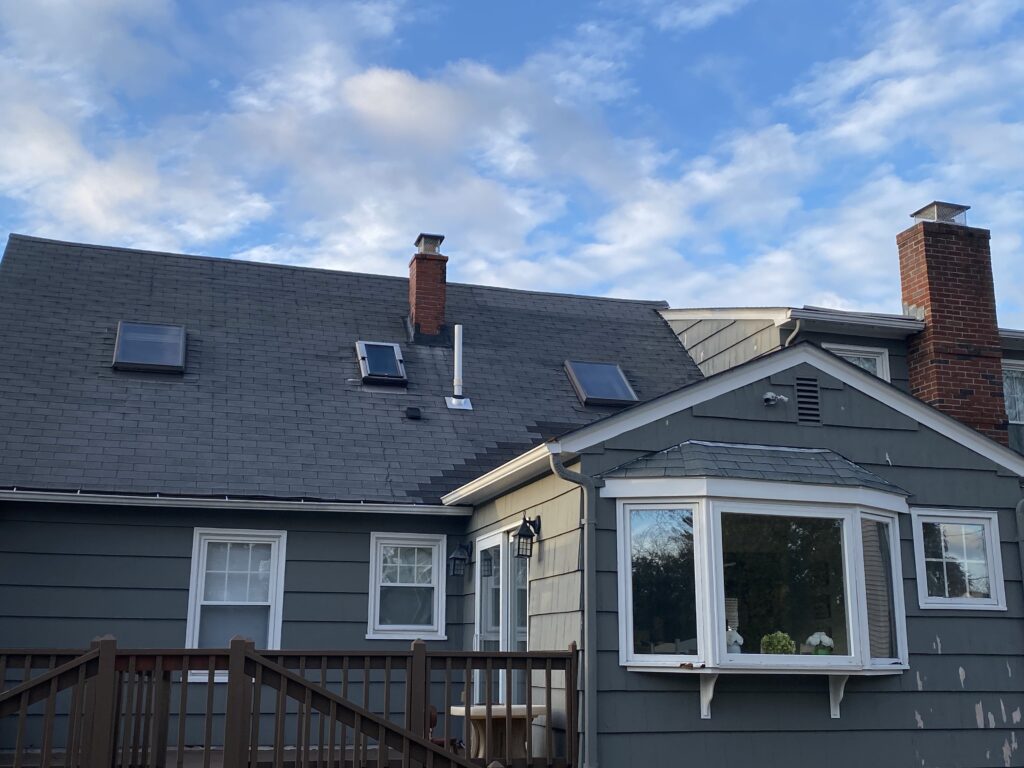
Derek walks the roof before quoting anything. That means checking the membrane for blistering, seam separation, and UV cracking, checking every drain and scupper for debris and slope, and checking flashing at every parapet wall, HVAC curb, and roof penetration. We look at the insulation board underneath where we can access it, because wet insulation under an intact-looking membrane is a common surprise on older buildings. If there’s interior access, we’ll check the underside for staining that shows where water is actually tracking, which is often not directly under where it’s showing up on the ceiling.
You get a straight answer before you get a proposal. If a section can be coated or patched instead of replaced, we say so. If the drainage is the real problem and the membrane is fine, we say that too.
What the job involves
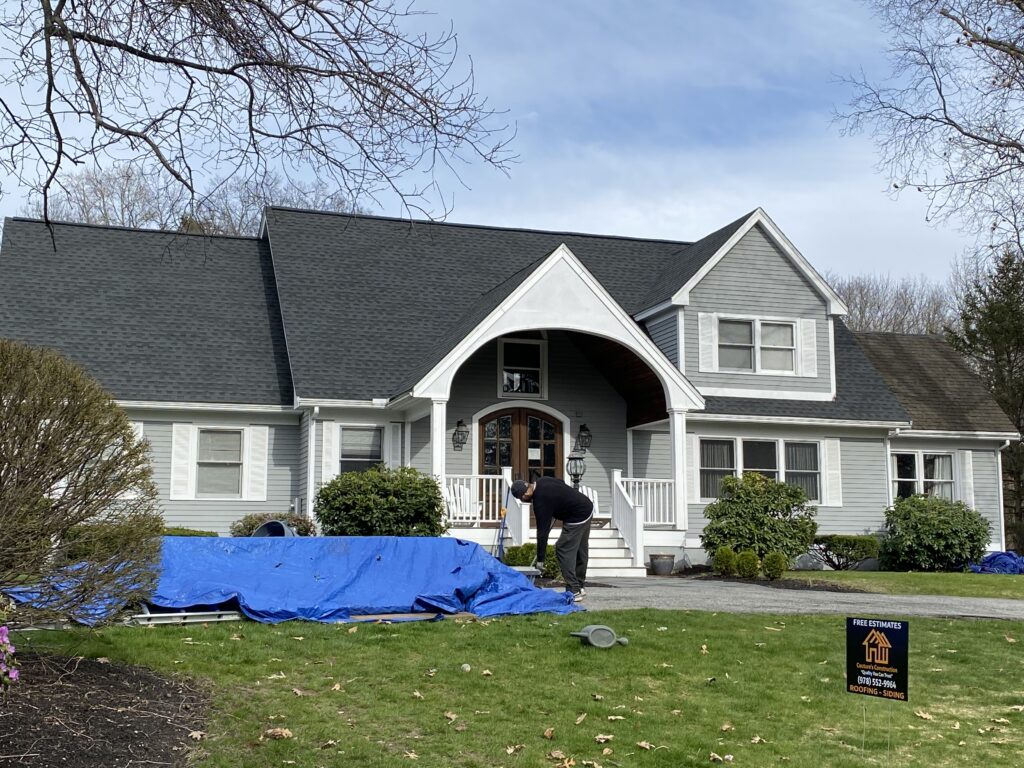
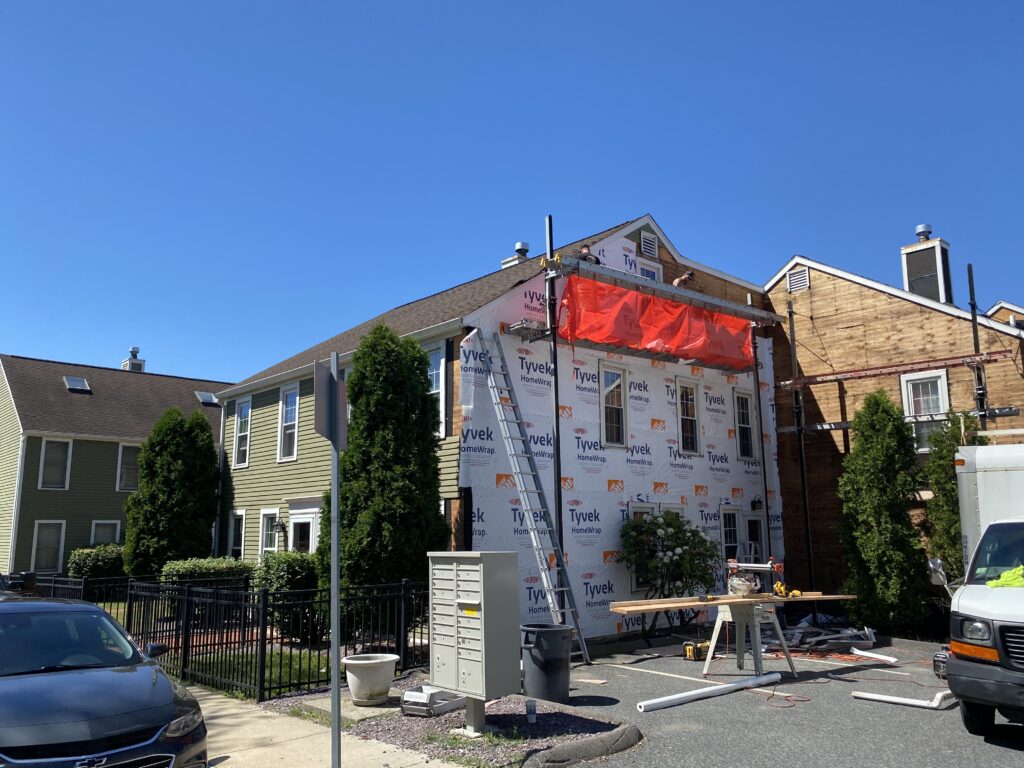
Small commercial roofs are just a bigger version of a residential low-slope job. Larger ones mean more coordination. We tear off or overlay depending on what the decking and existing layers allow, address any wet insulation we find, install new membrane with proper seam welding or adhesive, flash every penetration correctly, and reset or repair drains before we call it done. On occupied buildings we phase the work by section where the roof layout allows it, so a tenant on one side isn’t dealing with an open roof over their space while we’re working on the other end.
What it costs
Commercial low-slope work runs {PRICE_LOW} to {PRICE_HIGH} per job, and the range is wide because commercial roofs vary more than residential ones. Square footage is the biggest driver, followed by how many roof-mounted units, drains, and wall transitions there are to flash around, since each one adds labor that has nothing to do with the membrane itself. Wet insulation found during tear-off changes the number. Access matters too. A roof reachable by a single crane setup costs less to work than one needing staged material hoisting around a building that’s still open for business. We give you a number after the walk, not before it.
How long it takes
A single-section EPDM or TPO re-roof on a Danvers retail or office building typically runs a few days to just over a week once material is on site, weather permitting. Buildings with multiple roof ages or additions take longer because each transition is its own detail. Phased work around an operating business adds time compared to a vacant building, but it’s usually the only realistic option for a tenant who can’t close for a roof job.
Do you work on occupied commercial buildings in Danvers?
Yes. Most of our commercial work is done while the building stays open. We phase by section, schedule noisy work around business hours where we can, and keep the roof watertight at the end of every day, not just at the end of the job.
EPDM, TPO, or modified bitumen: which is right for my building?
It depends on the existing system, the roof's exposure, and the budget. TPO reflects heat and has strong seams but costs more upfront. EPDM is proven and easier to patch but ages faster in direct sun. Modified bitumen is common on older additions and layers well. We tell you which fits your building after the assessment, not before.
Can a leaking flat roof be patched instead of replaced?
Often, yes. If the membrane is otherwise sound and the leak is at a seam, flashing detail, or a drain, a patch or a coating can add real years to the roof. We only recommend replacement when the membrane itself has aged out or there's widespread wet insulation underneath.
What causes most flat roof leaks on Danvers commercial buildings?
Clogged drains and scuppers causing ponding, seam failure on older EPDM, and flashing at wall transitions and rooftop equipment. Straight membrane failure across a whole field is less common than people assume.
Request a walkthrough
If your Danvers property needs a commercial roof inspected, repaired, or replaced, Couture’s Construction will walk the roof with you and lay out exactly what’s going on and what it’ll take to fix it. No guessing games, no pressure to sign anything on the spot.
- On-site inspection of the actual roof, not an estimate from the ground
- Straightforward explanation of findings
- Written scope before any work begins
Reach out to get a walkthrough scheduled.