
- Home
- Services
- Locations
Amesbury, MA
Boxford, MA
Chelmsford, MA
Danvers, MA
Dracut, MA
Essex, MA
Georgetown, MA
Groveland, MA
Hamilton, MA
Haverhill, MA
Ipswich, MA
Merrimac, MA
Methuen, MA
Middleton, MA
Newbury, MA
Newburyport, MA
North Andover, MA
North Reading, MA
Peabody, MA
Rowley, MA
Salem, MA
Salisbury, MA
Tewksbury, MA
Topsfield, MA
Topsfield, MA
West Newbury, MA
Atkinson, MA
Derry, NH
East Kingston, NH
Kensington, NH
Kingston, NH
Londonderry, NH
Plaistow, NH
Salem, NH
- Company
- Contact
- Home
- Services
- Locations
Amesbury, MA
Boxford, MA
Chelmsford, MA
Danvers, MA
Dracut, MA
Essex, MA
Georgetown, MA
Groveland, MA
Hamilton, MA
Haverhill, MA
Ipswich, MA
Merrimac, MA
Methuen, MA
Middleton, MA
Newbury, MA
Newburyport, MA
North Andover, MA
North Reading, MA
Peabody, MA
Rowley, MA
Salem, MA
Salisbury, MA
Tewksbury, MA
Topsfield, MA
Topsfield, MA
West Newbury, MA
Atkinson, MA
Derry, NH
East Kingston, NH
Kensington, NH
Kingston, NH
Londonderry, NH
Plaistow, NH
Salem, NH
- Company
- Contact
Vinyl Siding Installation in Ipswich, MA
Ipswich has more First Period and colonial-era houses than almost any other town on the North Shore, and a lot of them are still wearing wood clapboard that has been patched, painted, and patched again for decades. When that siding finally gives out, the fix usually isn’t another paint job. It’s a full re-side, and on a lot of these homes it’s the first time in their history vinyl gets considered as the replacement.
Vinyl Siding Installation in Ipswich
We install vinyl siding on capes, colonials, and additions all over Ipswich, from the older village lots near the historic center to the newer construction out toward Linebrook Road. This is a service we run alongside roofing, and honestly, a lot of the work comes up that way. A homeowner calls about a roof, we get up there, and the siding is failing at the same rate the shingles are. Doing both at once means one mobilization, one set of flashing details worked out correctly at the wall-roof intersection, and no argument later about which contractor’s work caused a leak.
Deck-mounted
units fasten straight to the roof deck and use a matched step-flashing kit. This is what goes on most pitched roofs now. It sits low, looks clean and handles snow well.
Curb-mounted
units sit on a raised wood frame built on the roof. They are the right call on low-slope sections, generally below about 3 in 12, and a lot of older installs already have them.
Fixed
units let in light and nothing else. Fine over a high cathedral ceiling you will never reach.
Manual or electric venting
units open to let heat and steam out. They earn their keep in kitchens and bathrooms.
Solar-powered venting
units run off a small panel, need no wiring to the house, and close on their own when the rain sensor gets wet.
What Ipswich Roofs and Homes Are Up Against
Ipswich sits close enough to the water that wind matters more here than it does twenty miles inland. Coastal gusts off the Ipswich Bay side of town put real load on siding and roofing alike, which is why we don’t just grab whatever product is cheapest at the yard. Panel wind ratings and proper nailing pattern are not optional extras here. They’re the difference between siding that stays flat through a nor’easter and siding that rattles loose panel by panel over a few seasons.
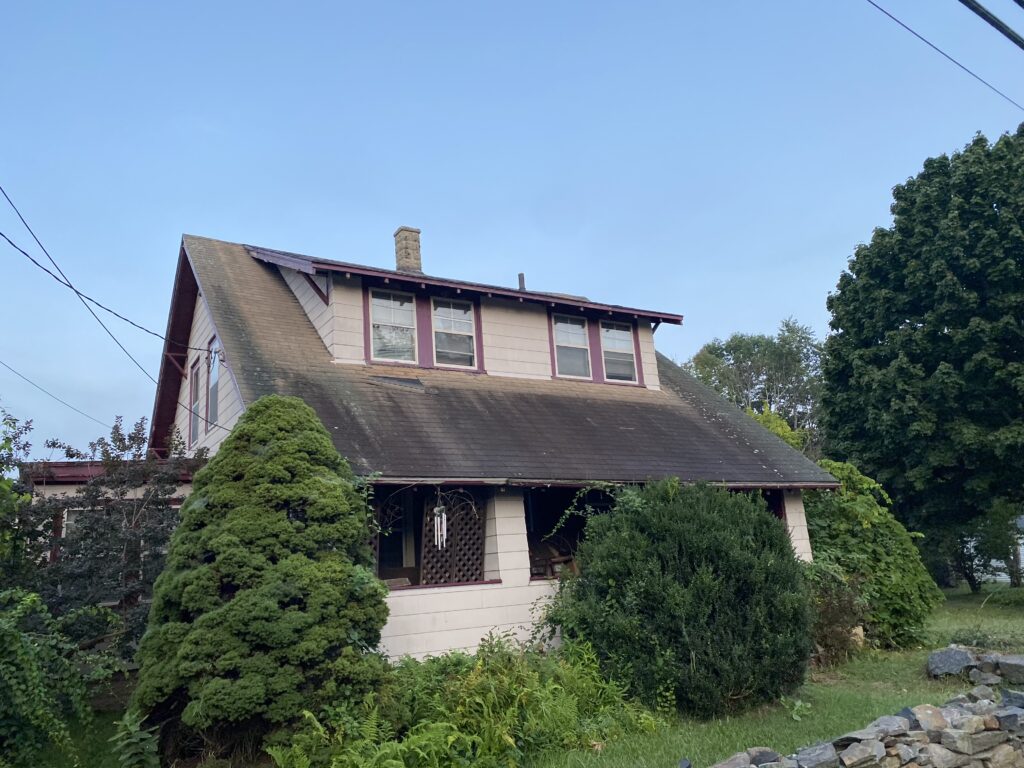
The other thing this town has that most don’t is age. A First Period or early colonial frame was never built with modern wall assemblies in mind, which means when we strip old clapboard we frequently find inconsistent sheathing, old wood shims, and sometimes no house wrap at all underneath. Salt air accelerates corrosion on old nails and fasteners too, so what looks like a simple re-side job can turn into a conversation about what’s actually holding the wall together underneath. We also see a fair number of additions with low-slope roofs tied into the main house, and those transitions need siding and flashing to work together, not fight each other.
How We Assess It
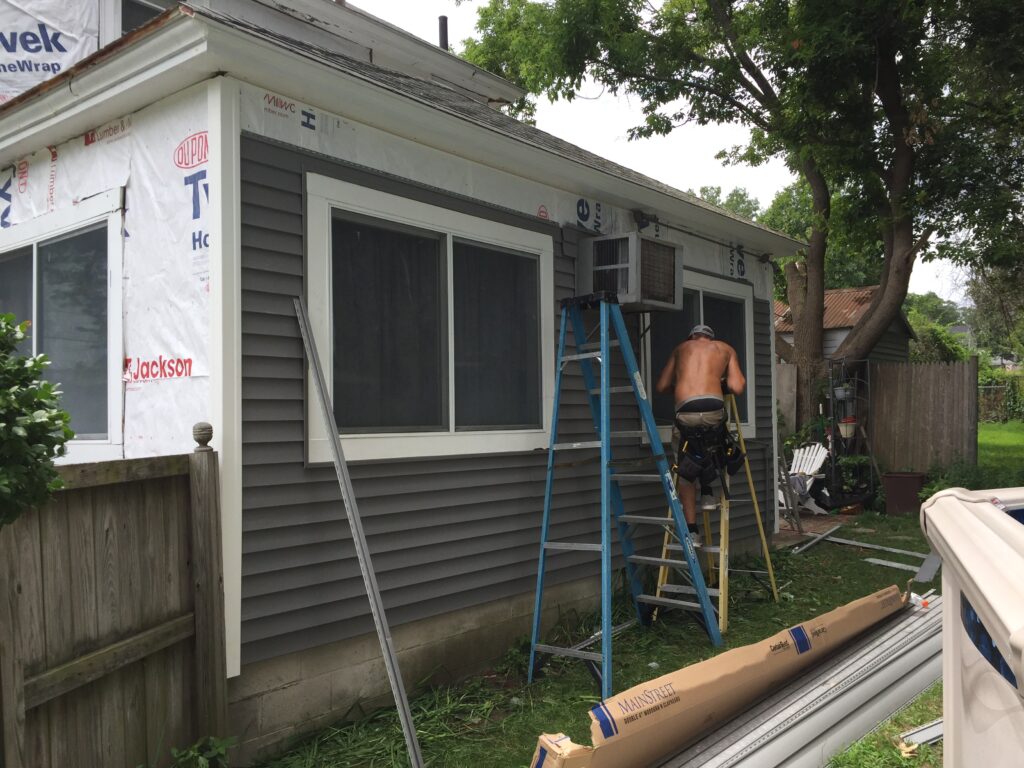
Before we quote anything, we get eyes on the whole exterior, not just the section that looks bad from the street. That means checking the condition of the sheathing where we can access it, looking at existing flashing at window and door heads, checking for soft spots or rot at the bottom courses where moisture sits longest, and looking at how the current siding was fastened. On roofing jobs that pair with siding work, we’re also up in the attic checking decking and ventilation, because a wall assembly and a roof assembly on an old house are rarely independent problems. We tell you what we actually see, not what makes the biggest sale. If a section of wall is sound and just needs new siding over it, we say so.
What the Job Involves
Replacement
We strip the shingles around the unit, pull the old skylight and flashing, repair the deck at the opening if it needs it, and set the new unit. Ice and water shield wraps up the sides and across the top, the step-flashing kit goes on, and we shingle back in. If the new unit matches the rough opening, the interior usually stays as it is. On a full roof replacement in Ipswich, MA, all of this fits inside the reroof. The shingles are already off, the deck is exposed, and the new underlayment and flashing tie in as one system.
New cut-in
We lay out the opening from inside and out, cut the deck, and frame headers between the rafters. Ventilation gets rerouted so the bays above and below the opening still breathe. Then the unit, ice and water shield, flashing and shingles. Inside, a new opening means a light shaft through the attic, drywall and paint. That interior work is part of the conversation at the estimate, and we settle who handles what before anything is scheduled.
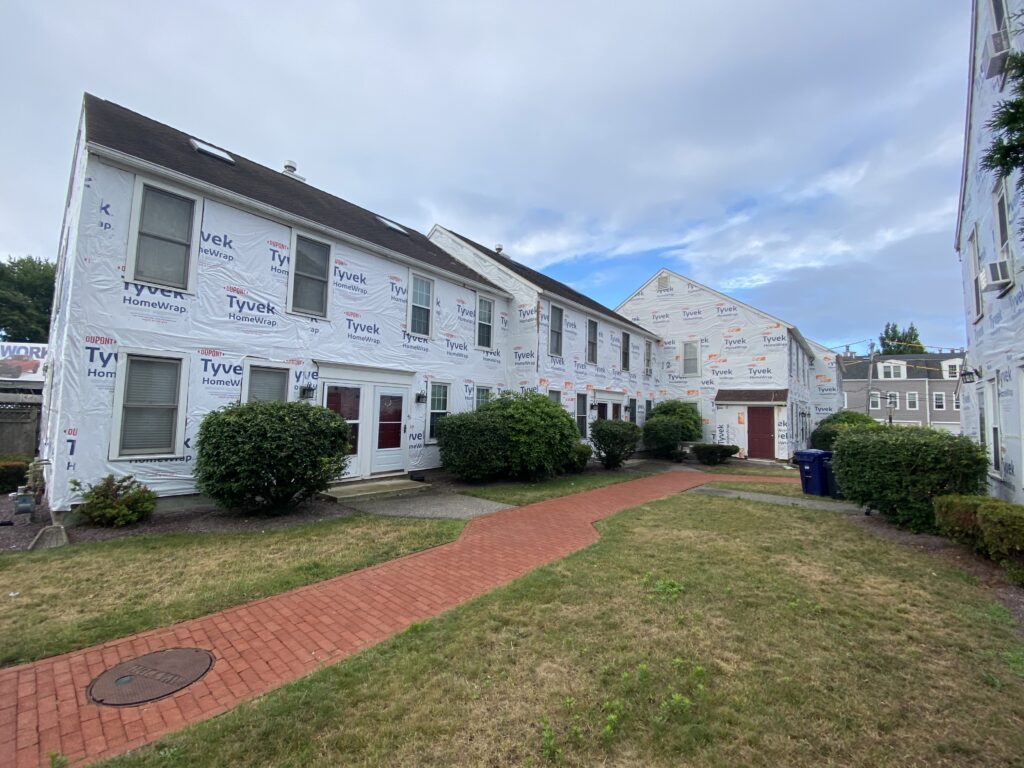
A full vinyl siding installation starts with stripping the old material down to sheathing, which is when the surprises show up. We repair or replace any damaged sheathing before anything new goes on. Then it’s house wrap or building paper for a proper water-resistive barrier, correct flashing at every window, door, and roof intersection, and starter strip set level around the entire foundation line, which matters more on old houses than new ones because very few of them are perfectly square. Panels go on with room to expand and contract with temperature, nailed to manufacturer spec rather than snugged tight, which is a common mistake that causes buckling within a year or two. Corner posts, J-channel around openings, and trim all get detailed before the final course goes up.
What It Costs
Most vinyl siding jobs in Ipswich run somewhere between {PRICE_LOW} and {PRICE_HIGH}, and the spread is wide because the variables are real. Square footage is the obvious one, but pitch and complexity of the roofline above matter too, since that affects flashing and access. The number of stories affects staging and labor time. What we find once the old siding comes off is often the biggest swing factor. Sound sheathing and a straightforward tear-off keeps the job on the lower end. Rot, old lath-and-plaster-era sheathing, or multiple layers of old material adds time and material cost. We give you a number after the walk-through, not before, and we walk you through what’s driving it.
How Long It Takes
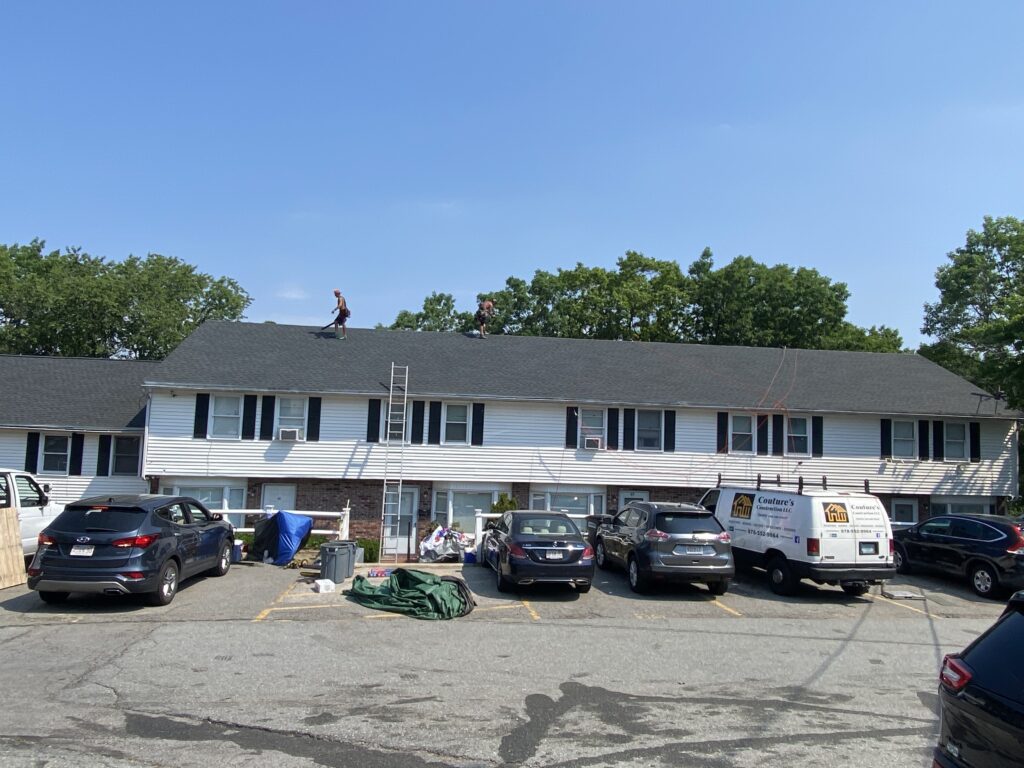
A standard single-family re-side in Ipswich typically runs three to six working days, weather permitting. Additions, dormers, and older homes with more trim detail and corner work add time. If we’re pairing siding with a roof replacement, we sequence the work so the roof gets done first and the siding ties into finished flashing, which keeps water out of the wall assembly during the whole project instead of leaving a gap between trades.
Have Questions?
Homeowners in Ipswich often have questions about vinyl siding options, durability, or how installation will affect their property. We’re happy to walk you through material choices, color options, and what to expect throughout the process.
If you don’t see your question answered here, don’t hesitate to reach out directly. We’re glad to provide clear, honest answers so you can feel confident about your siding project from start to finish.
Should I replace my siding and roof at the same time?
If both are near the end of their life, yes, it's usually cheaper and cleaner to do them together. Flashing at the roof-to-wall transition gets built once, correctly, instead of being redone or patched later by a second crew.
Will vinyl siding work on a First Period or colonial home in Ipswich?
Yes, with the right trim detail. We use wider trim boards and correct corner posts to keep the proportions looking right on older homes, and we're careful about matching reveal size to what the house originally had.
What happens if you find rotted sheathing under my old siding?
We stop, show you what we found, and give you a price to replace it before continuing. We don't cover rot with new siding and hope it holds. That's how small problems turn into structural ones.
Does vinyl siding hold up to the coastal wind we get in Ipswich?
It can, if the wind rating is matched to the exposure and it's installed to spec with the correct fastening pattern. That's a product and installation decision we make specifically because of where you're located, not a one-size-fits-all answer.
Ready to Talk Siding?
Reach out to Couture’s Construction and tell us about your Ipswich home: the current siding material, any soft or damaged spots you’ve noticed, and the look you’re going for. We’ll set up a time to walk the exterior with you, measure the house, and talk through color and style options before putting anything in writing.