
- Home
- Services
- Locations
Amesbury, MA
Boxford, MA
Chelmsford, MA
Danvers, MA
Dracut, MA
Essex, MA
Georgetown, MA
Groveland, MA
Hamilton, MA
Haverhill, MA
Ipswich, MA
Merrimac, MA
Methuen, MA
Middleton, MA
Newbury, MA
Newburyport, MA
North Andover, MA
North Reading, MA
Peabody, MA
Rowley, MA
Salem, MA
Salisbury, MA
Tewksbury, MA
Topsfield, MA
Topsfield, MA
West Newbury, MA
Atkinson, MA
Derry, NH
East Kingston, NH
Kensington, NH
Kingston, NH
Londonderry, NH
Plaistow, NH
Salem, NH
- Company
- Contact
- Home
- Services
- Locations
Amesbury, MA
Boxford, MA
Chelmsford, MA
Danvers, MA
Dracut, MA
Essex, MA
Georgetown, MA
Groveland, MA
Hamilton, MA
Haverhill, MA
Ipswich, MA
Merrimac, MA
Methuen, MA
Middleton, MA
Newbury, MA
Newburyport, MA
North Andover, MA
North Reading, MA
Peabody, MA
Rowley, MA
Salem, MA
Salisbury, MA
Tewksbury, MA
Topsfield, MA
Topsfield, MA
West Newbury, MA
Atkinson, MA
Derry, NH
East Kingston, NH
Kensington, NH
Kingston, NH
Londonderry, NH
Plaistow, NH
Salem, NH
- Company
- Contact
Skylight Installation and Replacement in Essex, MA
Essex sits at the edge of open water, with the marsh and the causeway shaping how weather hits these roofs. A lot of the housing stock here is older capes and colonials with additions built on later, and those additions are where you find most of the skylights: kitchen bumpouts, converted attic bedrooms, sunrooms tacked onto the back of a house that was never designed to let light in from above. If you’re standing under a foggy, yellowed acrylic bubble right now wondering whether to fix it or replace it, or you’ve got a dark north-facing room you want to open up, this page is about that decision.
Skylight Installation and Replacement in Essex
Two different jobs live under this one heading, and they’re not the same conversation. The first is replacement: swapping out a skylight that’s already there, almost always because it’s old, fogged, or leaking around the seals. Most of that work happens during a reroof, because the roof is already open and the labor to redo the flashing is already priced in. The second is a new cut-in: opening a section of roof deck that has never had a skylight, framing a new rough opening, and building the flashing detail from scratch. That’s a bigger decision, more carpentry, and a bigger number, but it’s often the right call for a dark room that just doesn’t work otherwise.
We don’t push people from one into the other. If your unit needs replacing, we tell you that. If a new cut-in makes sense given your roof and your budget, we tell you that too, along with what it actually involves.
Deck-mounted
units fasten straight to the roof deck and use a matched step-flashing kit. This is what goes on most pitched roofs now. It sits low, looks clean and handles snow well.
Curb-mounted
units sit on a raised wood frame built on the roof. They are the right call on low-slope sections, generally below about 3 in 12, and a lot of older installs already have them.
Fixed
units let in light and nothing else. Fine over a high cathedral ceiling you will never reach.
Manual or electric venting
units open to let heat and steam out. They earn their keep in kitchens and bathrooms.
Solar-powered venting
units run off a small panel, need no wiring to the house, and close on their own when the rain sensor gets wet.
What Essex roofs and homes are working with
Wind and salt matter more here than almost anywhere else in our territory. Essex is close enough to open water that a skylight unit rated for inland wind exposure isn’t necessarily the right call on a roof facing the marsh or the harbor. We look at wind uplift ratings on the unit itself, not just the shingles around it, because a skylight is the one place on the roof where the deck has been cut open and reflashed. Salt air also shortens the working life of cheaper aluminum flashing and lower-grade seals, which is part of why a lot of the acrylic bubble units installed decades ago are failing now, roughly on schedule.
Roof pitch varies a lot across this town, from low-slope additions to steeper original roof lines on the older capes, and pitch changes how a skylight is flashed and how much daylight it actually delivers at a given size. Tree cover over the roof matters for leaf litter in the flashing channel and for how much light a skylight is worth cutting in versus how much shade it’ll fight. Ice dam risk shows up on north-facing slopes that don’t get afternoon sun, which is exactly where a lot of these units sit, and that’s a factor in how we detail the ice and water shield around the curb. And because a good chunk of Essex’s skylight-equipped homes were built out or added onto in the same era, we tend to find several units in a neighborhood reaching end of life within a year or two of each other.
How we assess it
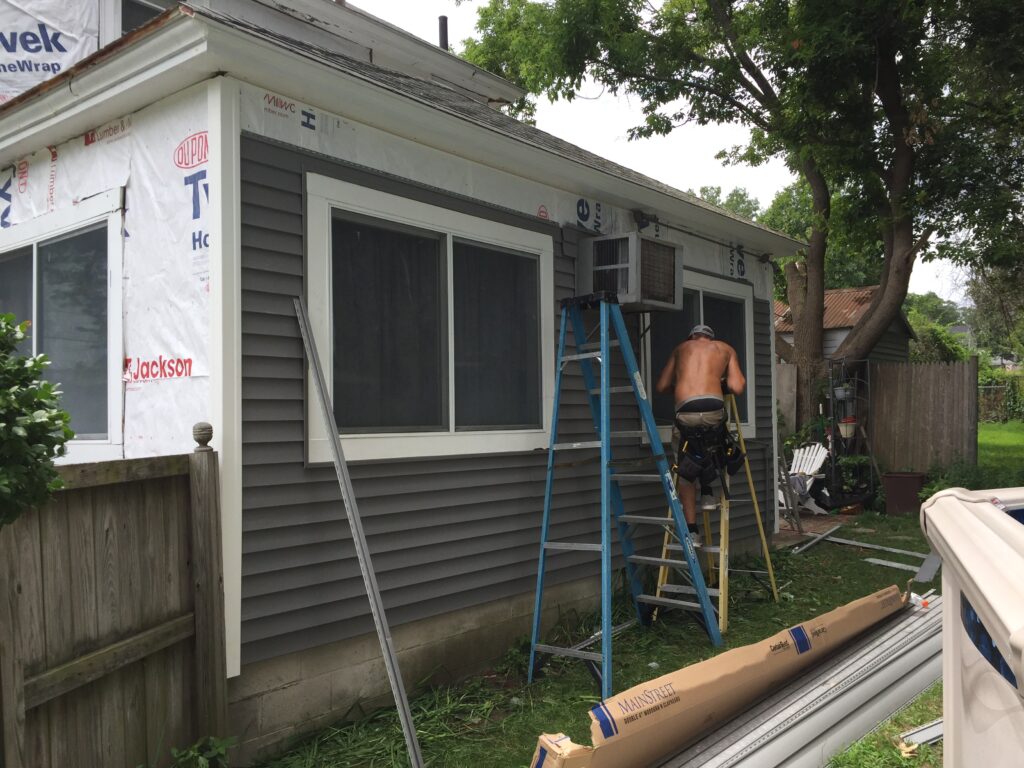
Before we recommend anything, somebody gets on the roof and in the attic. We check the flashing detail around the curb, whether it’s step flashing, counter flashing, or a factory flashing kit for the specific unit, and whether it was installed correctly the first time. We look at the shingle course immediately around the skylight, since that’s usually the first place granule loss and cracking show up. We check the underside from the attic or the finished ceiling for water staining, daylight gaps, or insulation that’s been compressed or wet. We check ventilation, because a skylight in a room with poor soffit or ridge venting condensates more and fails faster. And we check the deck itself around the opening for soft spots or rot, since that changes the scope of the job before we ever talk about the unit.
What the job involves
Replacement
We strip the shingles around the unit, pull the old skylight and flashing, repair the deck at the opening if it needs it, and set the new unit. Ice and water shield wraps up the sides and across the top, the step-flashing kit goes on, and we shingle back in. If the new unit matches the rough opening, the interior usually stays as it is. On a full roof replacement in Essex, all of this fits inside the reroof. The shingles are already off, the deck is exposed, and the new underlayment and flashing tie in as one system.
New cut-in
We lay out the opening from inside and out, cut the deck, and frame headers between the rafters. Ventilation gets rerouted so the bays above and below the opening still breathe. Then the unit, ice and water shield, flashing and shingles. Inside, a new opening means a light shaft through the attic, drywall and paint. That interior work is part of the conversation at the estimate, and we settle who handles what before anything is scheduled.
For a replacement during a reroof, the sequence is straightforward: pull the old unit, inspect the opening and the deck underneath, repair anything soft, set the new flashing kit, and shingle it in as part of the rest of the roof. Curb-mounted units sit on a raised wood curb and are the standard for most replacements, since the curb is usually already there. Deck-mounted units sit flush to the roof deck and give a cleaner look with less visible frame, but they’re a different install method and not always a direct swap for an existing curb-mounted opening.
Fixed units don’t open and are the least expensive option. Venting units open manually or with a remote to let heat and moisture out, which matters over kitchens and bathrooms. Solar-powered venting units run off a small integrated solar panel, no wiring into the house needed, and they’ve become a common upgrade when a homeowner is already paying to reflash the opening. For a new cut-in, add framing the rough opening in the rafters, building the light shaft down to the ceiling below, and the interior finish work of drywall, trim, and paint. That interior side is part of the overall conversation and something we plan for, but it’s a separate scope from the roof work itself.
What it costs
A straightforward replacement, curb-mounted, same size opening, done while the roof is already open for a reroof, runs {PRICE_LOW} to {PRICE_HIGH} per unit. That range moves with unit type, fixed versus venting versus solar-powered venting, size, and whether the existing curb and deck are sound or need rebuilding. A new cut-in costs more, because it adds framing, a light shaft, and interior finish work on top of the roof-level work, and steep pitch or difficult access adds to the labor on either job.
The one number worth saying plainly: replacing a skylight while the roof is already torn open for a reroof costs a fraction of doing that same replacement as its own standalone job later. If you know a unit is on its way out, replacing it now, during a scheduled reroof, is almost always the cheaper path.
How long it takes
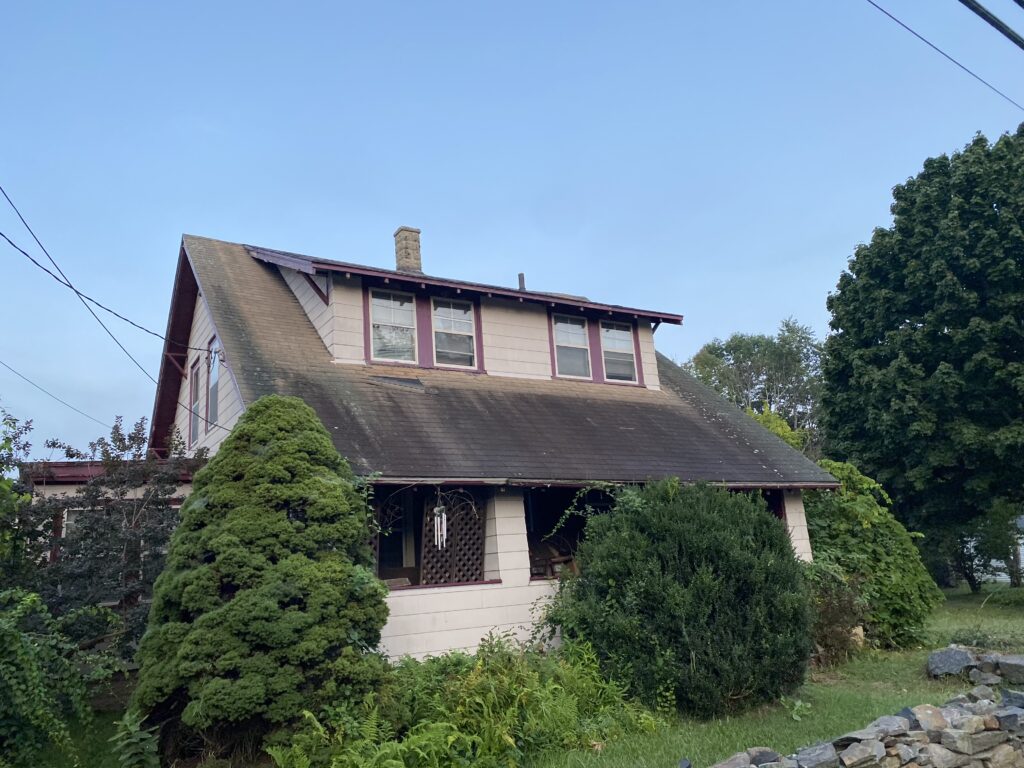
A single replacement, folded into a reroof, adds relatively little to the overall schedule since the crew is already up there and the flashing sequence is part of the normal roofing workflow. Done as its own job, a straightforward curb-mounted replacement is typically a one-day project depending on access and pitch. A new cut-in takes longer, since it involves interior framing and finish work in addition to the roof opening, and timelines depend on how much of that interior scope you want us coordinating.
Get an estimate
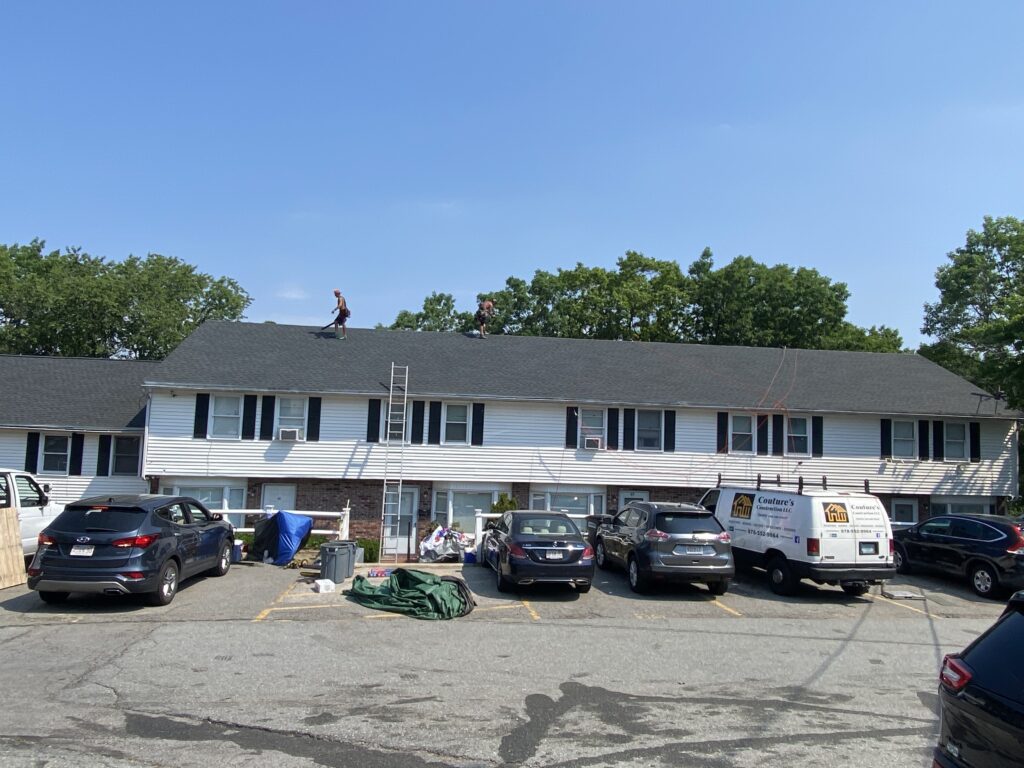
If you’ve got a skylight that’s fogged, drafty, or just old, or a room you’d like to bring some light into, call Derek at {PHONE}. We’ll get up on the roof, look at what’s actually there, and give you a straight answer on replacement versus a new cut-in before anything gets scheduled.
Should I replace my skylight now or wait until I reroof?
If the roof is due for replacement within the next few years, wait if you can. Replacing a skylight while the roof is already open for a reroof costs a lot less than doing the same job as a standalone project later, because the labor to reflash is already part of the roofing work.
What's the difference between curb-mounted and deck-mounted skylights?
Curb-mounted units sit on a raised wood curb built into the roof deck and are the standard for most replacements. Deck-mounted units sit flush with the roof surface for a lower profile, but they use a different flashing method and aren't always a direct swap for an existing curb-mounted opening.
Do you install venting or solar-powered venting skylights?
Yes. Fixed units are the simplest and least expensive. Venting units open to let out heat and moisture, which helps over kitchens and bathrooms. Solar-powered venting units run off a small built-in solar panel and don't need house wiring, and they're a common upgrade when a homeowner is already reflashing the opening.
Will a skylight leak because of how close Essex is to the water?
A properly flashed skylight with the right wind rating for coastal exposure shouldn't leak from wind or salt exposure alone. Older units installed with lower-grade flashing or without accounting for coastal wind loads are the ones that tend to fail early here.
Do you handle the interior work for a new skylight opening?
Ready when you are
If you’re weighing a new skylight or need an old one replaced, reach out and describe your Essex home: the roof pitch, the room below, and what’s driving the project, whether it’s a leak, fogged glass, or wanting more natural light. We’ll set up a visit, look at the roof and attic, and walk through options that fit your house.