
- Home
- Services
- Locations
Amesbury, MA
Boxford, MA
Chelmsford, MA
Danvers, MA
Dracut, MA
Essex, MA
Georgetown, MA
Groveland, MA
Hamilton, MA
Haverhill, MA
Ipswich, MA
Merrimac, MA
Methuen, MA
Middleton, MA
Newbury, MA
Newburyport, MA
North Andover, MA
North Reading, MA
Peabody, MA
Rowley, MA
Salem, MA
Salisbury, MA
Tewksbury, MA
Topsfield, MA
Topsfield, MA
West Newbury, MA
Atkinson, MA
Derry, NH
East Kingston, NH
Kensington, NH
Kingston, NH
Londonderry, NH
Plaistow, NH
Salem, NH
- Company
- Contact
- Home
- Services
- Locations
Amesbury, MA
Boxford, MA
Chelmsford, MA
Danvers, MA
Dracut, MA
Essex, MA
Georgetown, MA
Groveland, MA
Hamilton, MA
Haverhill, MA
Ipswich, MA
Merrimac, MA
Methuen, MA
Middleton, MA
Newbury, MA
Newburyport, MA
North Andover, MA
North Reading, MA
Peabody, MA
Rowley, MA
Salem, MA
Salisbury, MA
Tewksbury, MA
Topsfield, MA
Topsfield, MA
West Newbury, MA
Atkinson, MA
Derry, NH
East Kingston, NH
Kensington, NH
Kingston, NH
Londonderry, NH
Plaistow, NH
Salem, NH
- Company
- Contact
Roof Replacement in Amesbury, MA
Walk down High Street or up toward Powow Hill and you’ll see roofs that have been patched, re-shingled, and patched again since the mill days. Amesbury’s housing stock runs old near the river and downtown, with steep gable and gambrel rooflines that were never built with today’s attic insulation standards in mind, and newer capes and colonials further out toward Route 150 where the roofs are simpler but the shingles are starting to hit twenty-plus years of sun and salt-tinged wind off the Merrimack. Both types fail differently, and knowing which one you’ve got is the first step.
Roof Replacement in Amesbury
Not every bad roof needs a full tear-off. But there’s a point where patching a roof costs you more over three or four years than replacing it once, and most homeowners cross that line without realizing it. Signs you’re past repair territory: shingles that are cupping or losing granules across large sections rather than one spot, soft or spongy decking you can feel underfoot in the attic, daylight showing through the roof boards, water stains that keep coming back after a patch, or a roof that’s already had one layer of shingles installed over the original. If you’re dealing with one leak around a single flashing point or a handful of wind-lifted shingles after a storm, that’s usually a repair. If the whole field of shingles is aging out at the same time, replacement is the honest answer and we’ll tell you that on the first visit.
What Amesbury roofs are up against
The older homes near the town center and along the Powow River tend to have tight roof lines, multiple valleys, and additions tacked on over the decades, sometimes with a low-slope porch or kitchen roof that was never detailed right for New England winters. Heavy tree cover in the older neighborhoods means valleys and gutter lines fill with oak and maple debris every fall, and that debris holds moisture against the shingles longer than a clean roof would. North-facing slopes on these older, steeper roofs are classic ice dam territory, especially where the attic below is under-insulated or under-ventilated, which is common in homes built well before ridge and soffit venting was standard practice.
Closer to the water and on the more exposed lots toward the Salisbury line, wind uplift is the bigger concern. A standard three-tab shingle rated for 60 to 70 mph winds doesn’t hold up the same way an architectural shingle rated for 110 to 130 mph does, and that difference shows up the first time a nor’easter comes through. We also see a fair number of low-slope rear additions on the older Amesbury housing stock where standard shingles were never the right material to begin with. If your house falls in a historic district overlay, we work within those material and appearance constraints rather than treating them as an afterthought.
How we assess it
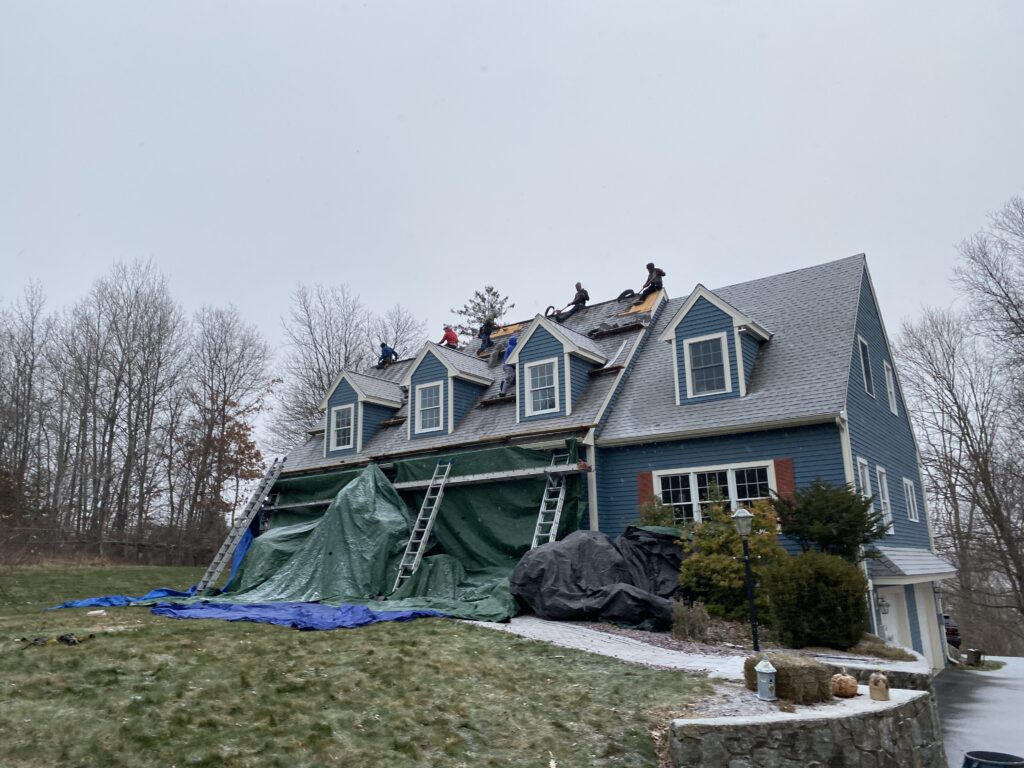
Derek walks the roof first, not the sales pitch. That means checking the decking for soft spots, looking at flashing around every chimney, skylight, and valley, and getting into the attic to look at the underside of the roof deck for daylight, water staining, and mold, which tells you more about a roof’s real condition than anything visible from the ground. We check ridge and soffit ventilation, because a roof can look fine and still be cooking itself from underneath due to trapped heat and moisture. We look at how many layers of shingles are already up there, since Massachusetts building code limits how many layers can go under a new roof before a tear-off is required. You get a plain answer about what we found and what it means, before any recommendation gets made. If it’s a repair, we say so.
What the job involves
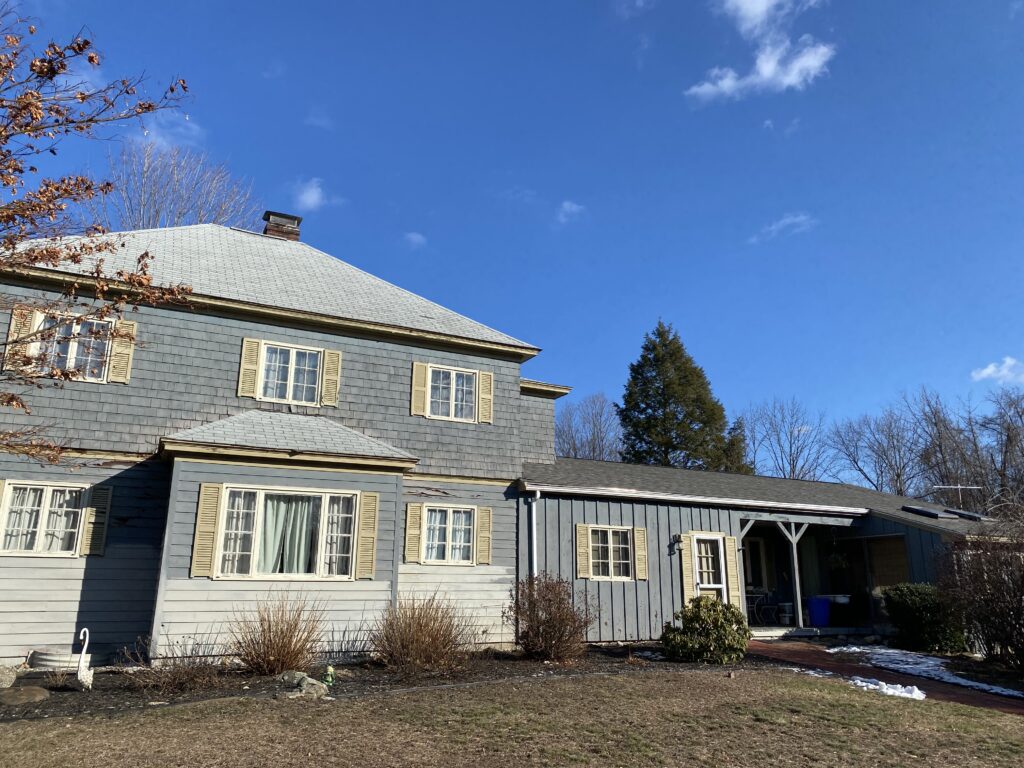
A full replacement starts with tear-off down to the decking, and that’s the point where a lot of surprises show up, mostly around chimneys and old valley flashing that was never done right the first time. Any soft or rotted decking gets replaced before anything else goes down, not covered over. Ice and water shield goes down along the eaves, valleys, and around penetrations, which matters more in Amesbury than in a lot of towns given how much ice dam activity we see on the older, steeper roofs here. Underlayment, then shingles, whether that’s a standard architectural asphalt shingle or a higher wind-rated option for the more exposed lots. Ridge venting gets tied into proper soffit intake so the attic actually breathes instead of trapping heat. Flashing at chimneys, skylights, and sidewalls gets rebuilt, not just caulked. Cleanup includes a magnetic sweep for nails, because a driveway full of roofing nails is nobody’s idea of a finished job.
What it costs
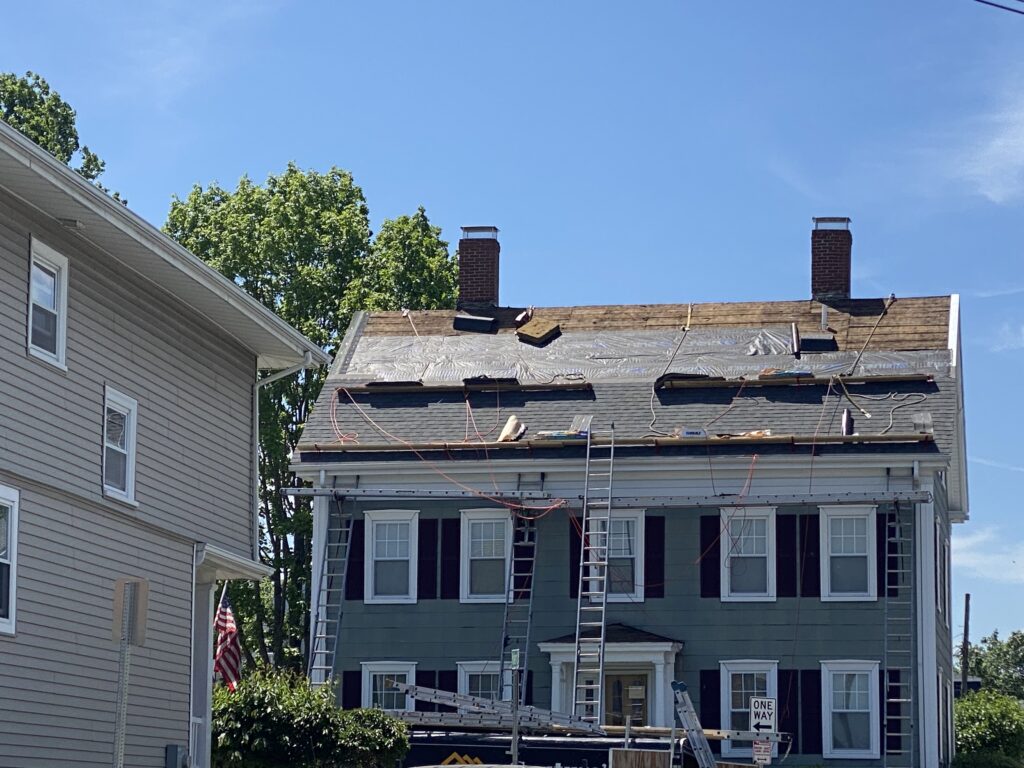
Most full roof replacements in Amesbury run between {PRICE_LOW} and {PRICE_HIGH}, and where you land in that range depends on the size and pitch of the roof, how many layers need to come off, what we find once the decking is exposed, and how hard the house is to access with equipment and dumpsters on a tighter downtown lot versus an open driveway further out toward Merrimac Road. A steep gambrel with multiple valleys costs more to labor than a simple gable roof of the same square footage. We give you a number after we’ve actually looked at the roof, not a phone estimate, because a roof that looks fine from the street can have decking issues that change the price.
How long it takes
A straightforward single-layer tear-off and replacement on an average Amesbury house usually takes one to two days, weather permitting. Older homes with complex rooflines, multiple valleys, or decking replacement can run longer. We don’t leave a house open to the weather overnight if we can help it, and we’ll walk you through the schedule before the crew shows up so you know what to expect for noise, driveway access, and parking.
How do I know if I need a roof replacement or just a repair in Amesbury?
If the damage is limited to one area, like a single flashing leak or a section of wind-lifted shingles, that's typically a repair. If shingles are aging out across the whole roof, decking feels soft in the attic, or you've already got two layers of shingles up there, replacement is usually the more honest and more cost-effective answer over time.
Does Amesbury's historic district affect what roofing materials I can use?
If your property falls within a historic overlay, there can be restrictions on visible materials and appearance. We work within those constraints and can talk through compliant options during the assessment rather than after materials are ordered.
What causes ice dams on older Amesbury roofs?
Ice dams form when heat escapes from an under-insulated or poorly ventilated attic, melts snow on the upper roof, and that meltwater refreezes at the colder eaves. It's especially common on the steep, north-facing slopes typical of the older homes near the town center. Proper ridge and soffit ventilation, plus ice and water shield at the eaves, are the fix.
Do you handle the permit for a roof replacement in Amesbury?
Yes, we handle the permitting process for the replacement. You can also review the town's own permit requirements directly if you want to see what's required before work starts.
How many layers of shingles can be on my roof before a tear-off is required?
Massachusetts building code limits roofs to two layers of asphalt shingles. If your roof already has two layers, a full tear-off to the decking is required before new shingles go on, which we check during the assessment.
Get an estimate
If your roof is showing its age, or you just want an honest read on whether you’re looking at a repair or a replacement, call {PHONE} or reach out through the site. Derek will come look at the actual roof, not guess from a satellite photo, and you’ll get a straight answer about what’s going on and what your options are.