
- Home
- Services
- Locations
Amesbury, MA
Boxford, MA
Chelmsford, MA
Danvers, MA
Dracut, MA
Essex, MA
Georgetown, MA
Groveland, MA
Hamilton, MA
Haverhill, MA
Ipswich, MA
Merrimac, MA
Methuen, MA
Middleton, MA
Newbury, MA
Newburyport, MA
North Andover, MA
North Reading, MA
Peabody, MA
Rowley, MA
Salem, MA
Salisbury, MA
Tewksbury, MA
Topsfield, MA
Topsfield, MA
West Newbury, MA
Atkinson, MA
Derry, NH
East Kingston, NH
Kensington, NH
Kingston, NH
Londonderry, NH
Plaistow, NH
Salem, NH
- Company
- Contact
- Home
- Services
- Locations
Amesbury, MA
Boxford, MA
Chelmsford, MA
Danvers, MA
Dracut, MA
Essex, MA
Georgetown, MA
Groveland, MA
Hamilton, MA
Haverhill, MA
Ipswich, MA
Merrimac, MA
Methuen, MA
Middleton, MA
Newbury, MA
Newburyport, MA
North Andover, MA
North Reading, MA
Peabody, MA
Rowley, MA
Salem, MA
Salisbury, MA
Tewksbury, MA
Topsfield, MA
Topsfield, MA
West Newbury, MA
Atkinson, MA
Derry, NH
East Kingston, NH
Kensington, NH
Kingston, NH
Londonderry, NH
Plaistow, NH
Salem, NH
- Company
- Contact
Vinyl Siding Installation in Newbury, MA
Newbury runs from the Route 1 corridor out to Plum Island, and the siding on those two ends of town takes completely different punishment. Old Newbury farmhouses set back from the water deal with tree cover and moisture. Anything near the marsh or the barrier beach takes wind and salt spray head on, and it shows first in faded, chalking, or cracked vinyl on the water-facing wall.
Vinyl Siding Installation in Newbury
We usually get called to Newbury alongside a roofing job, not instead of one. A homeowner is already replacing shingles and asks what we can do about siding that has gone brittle, bowed, or faded on one side of the house. That is the right way to think about it. Doing both at once means one set of staging, one set of flashing details at the trim, and no mismatched paint lines where new roof edge meets old siding.
We install vinyl siding as a standalone project too. Not every house needs a new roof to justify new siding, and we will tell you that straight if that is what your house needs.
Deck-mounted
units fasten straight to the roof deck and use a matched step-flashing kit. This is what goes on most pitched roofs now. It sits low, looks clean and handles snow well.
Curb-mounted
units sit on a raised wood frame built on the roof. They are the right call on low-slope sections, generally below about 3 in 12, and a lot of older installs already have them.
Fixed
units let in light and nothing else. Fine over a high cathedral ceiling you will never reach.
Manual or electric venting
units open to let heat and steam out. They earn their keep in kitchens and bathrooms.
Solar-powered venting
units run off a small panel, need no wiring to the house, and close on their own when the rain sensor gets wet.
What Newbury Roofs and Siding Are Up Against
This stretch of the coast means wind uplift is not a theoretical spec sheet number, it is what actually happens to a wall assembly during a nor’easter. Siding installed without proper nailing clearance, or with panels locked too tight, will oyster and buckle the first time gusts come off the water. We size panel gauge and fastening pattern for wind exposure, not for the cheapest option on the truck. Salt air also accelerates fading and chalking on lower-grade vinyl faster than inland towns ever see, which matters when you are picking a product line.
Newbury also has a real mix of building stock. Old Town homes near the green and the river have tight lot lines, mature trees, and in some cases historic-district style expectations even where formal review does not apply, so we match trim profiles and color rather than defaulting to a builder-grade white. Out toward the Plum Island side, homes are newer, more exposed, and built for direct weather, so the priority shifts to fastening and flashing detail rather than matching a period look.
How We Assess It
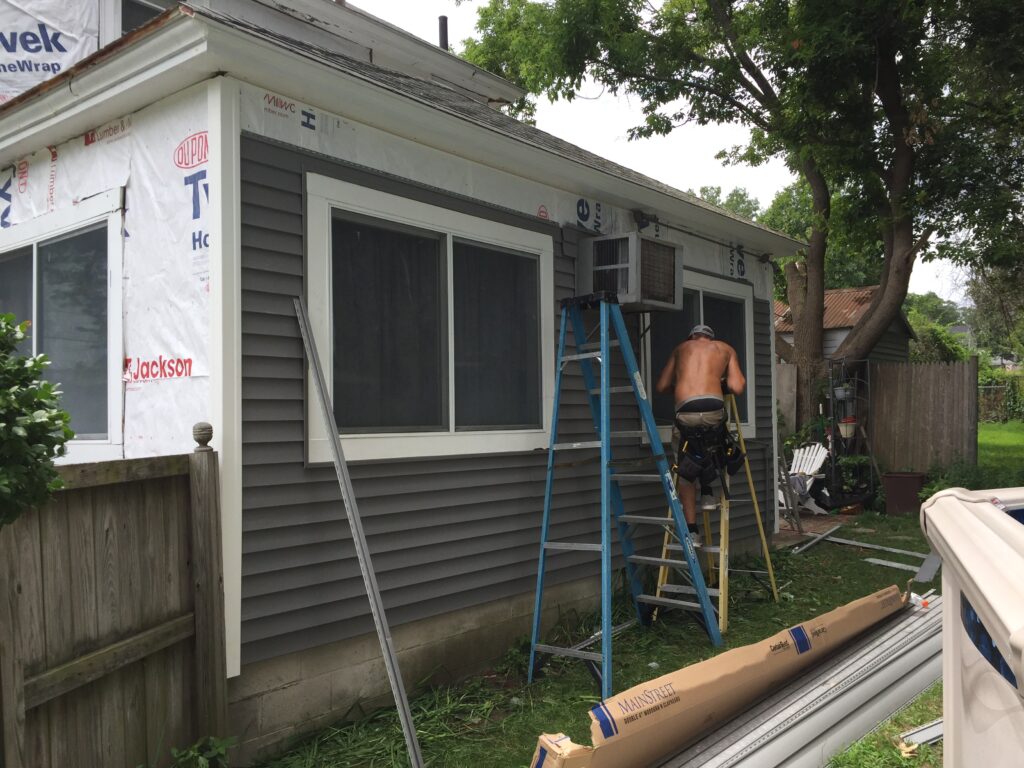
Before we quote siding, someone from our crew walks the exterior and looks at what is actually driving the problem. Is the sheathing behind the siding solid, or is there soft wood at corner boards and window returns from years of water getting behind old panels. Is the house wrapped properly, or is there no weather barrier at all under the existing siding. We check flashing at every window and door head, at the transition where siding meets the roofline, and at any spot where a deck or bump-out breaks the wall plane. If we are on a house for roofing too, we will look at the underside from the attic while we are up there, because ventilation problems at the roof often show up as moisture staining on siding lower down. You get a real assessment before you get a number, not the other way around.
What the Job Involves
Replacement
We strip the shingles around the unit, pull the old skylight and flashing, repair the deck at the opening if it needs it, and set the new unit. Ice and water shield wraps up the sides and across the top, the step-flashing kit goes on, and we shingle back in. If the new unit matches the rough opening, the interior usually stays as it is. On a full roof replacement in Newbury, MA, all of this fits inside the reroof. The shingles are already off, the deck is exposed, and the new underlayment and flashing tie in as one system.
New cut-in
We lay out the opening from inside and out, cut the deck, and frame headers between the rafters. Ventilation gets rerouted so the bays above and below the opening still breathe. Then the unit, ice and water shield, flashing and shingles. Inside, a new opening means a light shaft through the attic, drywall and paint. That interior work is part of the conversation at the estimate, and we settle who handles what before anything is scheduled.
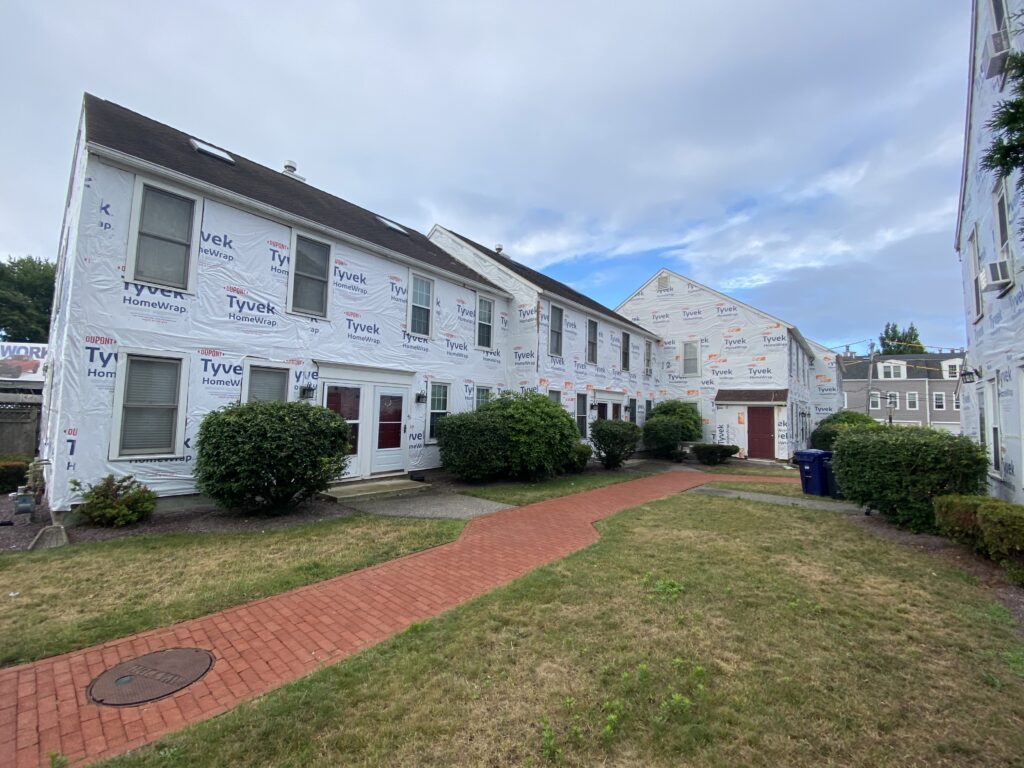
Removal of the old siding, repair of any rotted sheathing or trim we find underneath, a proper weather-resistant barrier, and then installation of new panels with fastening spaced for wind exposure rather than tight-nailed. We flash every window and door correctly rather than caulking over a gap and calling it done. Trim, corner posts, and starter strip get replaced, not reused, because reused trim is where most callback problems start. If the job is paired with roofing, we sequence it so flashing at the roof edge and the top course of siding tie together properly instead of one crew working around the other’s leftover mess.
What It Costs
Most full siding jobs in Newbury run between {PRICE_LOW} and {PRICE_HIGH}, and the real number depends on square footage, how many corners and window returns the house has, what condition the sheathing is in once we strip the old siding off, and how much of the house is easily reachable versus needing staging over a deck or a tight side yard. Houses with rot hiding under old siding cost more once we find it, and we will show you the damage before we touch pricing, not after the invoice is written. We do not quote a number over the phone without seeing the house.
How Long It Takes
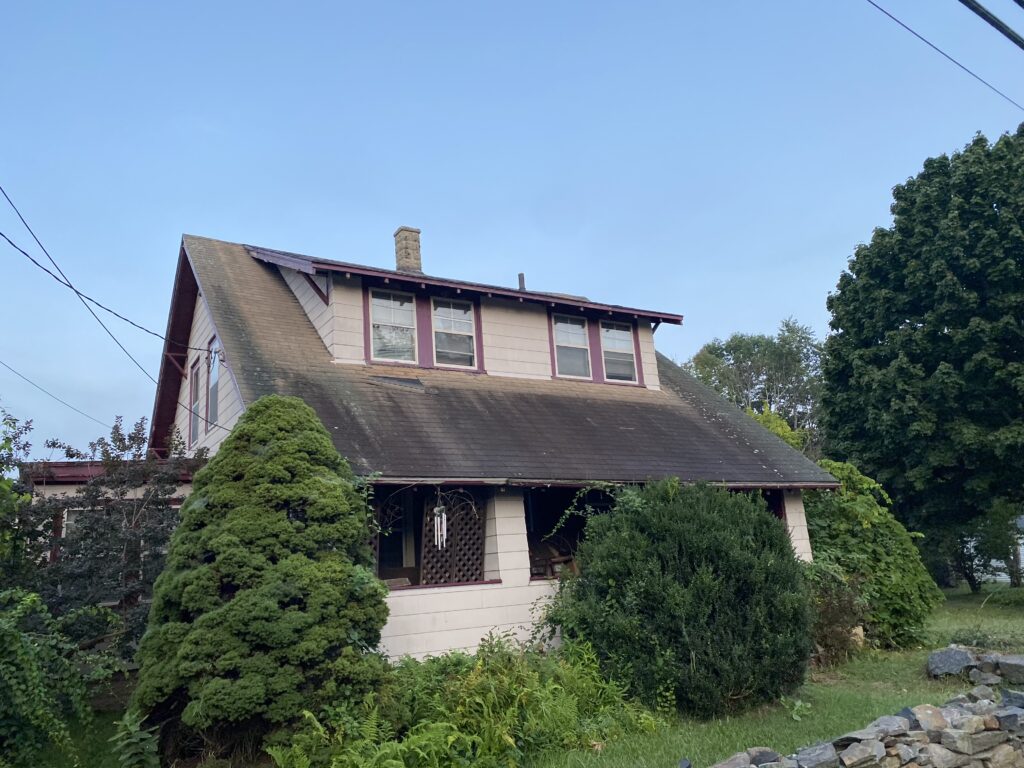
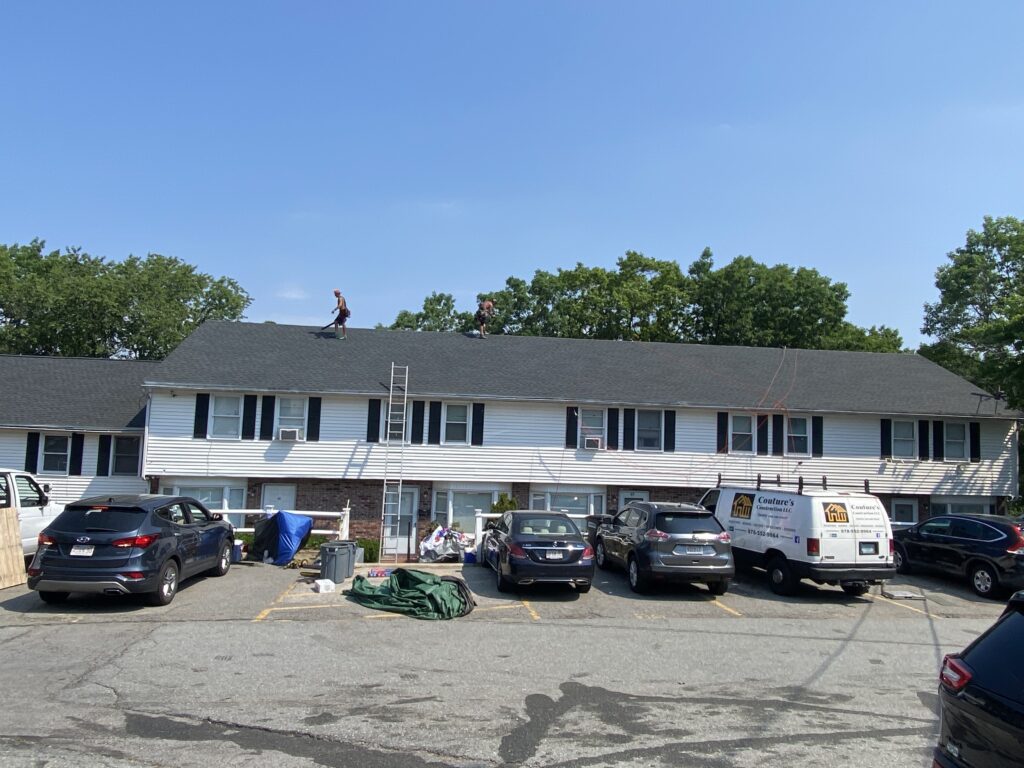
A straightforward single-family home in Newbury typically takes three to five working days for siding alone, weather and crew size depending. Add a day or two if we find sheathing damage that needs repair before we can hang new panels. If siding and roofing are happening together, we usually plan for a full week to ten days total, run back to back so your house is not sitting open between trades any longer than necessary.
Get an Estimate
If you want a straight answer on what your Newbury home actually needs, call {PHONE} and we will set up a time to walk the exterior with you. Derek handles the estimates himself, so you are talking to the person who will actually be answering questions about your job, not a call center reading from a script.
Should I do siding and roofing at the same time?
If both need work in the next year or two, yes. It saves on staging and access costs, and it means flashing at the roofline and top siding course get installed as one connected system instead of two separate jobs that meet in the middle.
Will new vinyl siding hold up to wind off the Newbury marsh and Plum Island?
It will if it is installed for exposure. We adjust fastening pattern and leave proper nailing clearance so panels can move slightly in the wind instead of locking tight and buckling. Cheap installation, not cheap vinyl, is usually what fails first in a storm.
My siding is faded and chalky but not damaged. Do I need to replace it?
Not necessarily. Salt air fades vinyl faster than inland towns see, but fading alone is a cosmetic issue. We will tell you honestly if what you have is still functional or if it has actually failed.
Does old Newbury have any restrictions on exterior materials?
There is no blanket historic overlay covering the whole town, but homes near Old Town and the green often have neighborhood expectations around trim profile and color even without formal review. We take that into account when we recommend a product line.
Do you replace rotted trim or sheathing you find under old siding?
Talk It Through With Us
Give us a call and describe your Newbury home’s current siding, whether it’s cracked, faded, or just outdated, and what look you’re after. We’ll ask a few questions about the house’s age and exposure to the coast, then schedule a visit to walk the exterior with you and talk through vinyl options before any work is planned.