
- Home
- Services
- Locations
Amesbury, MA
Boxford, MA
Chelmsford, MA
Danvers, MA
Dracut, MA
Essex, MA
Georgetown, MA
Groveland, MA
Hamilton, MA
Haverhill, MA
Ipswich, MA
Merrimac, MA
Methuen, MA
Middleton, MA
Newbury, MA
Newburyport, MA
North Andover, MA
North Reading, MA
Peabody, MA
Rowley, MA
Salem, MA
Salisbury, MA
Tewksbury, MA
Topsfield, MA
Topsfield, MA
West Newbury, MA
Atkinson, MA
Derry, NH
East Kingston, NH
Kensington, NH
Kingston, NH
Londonderry, NH
Plaistow, NH
Salem, NH
- Company
- Contact
- Home
- Services
- Locations
Amesbury, MA
Boxford, MA
Chelmsford, MA
Danvers, MA
Dracut, MA
Essex, MA
Georgetown, MA
Groveland, MA
Hamilton, MA
Haverhill, MA
Ipswich, MA
Merrimac, MA
Methuen, MA
Middleton, MA
Newbury, MA
Newburyport, MA
North Andover, MA
North Reading, MA
Peabody, MA
Rowley, MA
Salem, MA
Salisbury, MA
Tewksbury, MA
Topsfield, MA
Topsfield, MA
West Newbury, MA
Atkinson, MA
Derry, NH
East Kingston, NH
Kensington, NH
Kingston, NH
Londonderry, NH
Plaistow, NH
Salem, NH
- Company
- Contact
Skylight Installation and Replacement in Chelmsford, MA
Chelmsford has a lot of split-level and raised ranch homes from the 1960s and 70s with low-pitch rear sections, mixed in with center-entrance colonials from the later subdivisions off North Road and around the Westford line. A good chunk of that housing has partially finished attic space and cathedral-style additions where a skylight actually makes sense, not just a bonus room with a hole cut in the roof for looks. That mix is exactly why this page has to separate two different jobs: swapping out a tired old unit, and cutting a brand new opening where one has never existed.
Skylight Installation and Replacement in Chelmsford
Most of the skylight calls we get in Chelmsford fall into one of two buckets. The first is a homeowner with a twenty-year-old acrylic dome over a kitchen or bathroom that fogs up between the panes, has gone yellow, or leaks a little every time it rains sideways. That’s a replacement, and it’s almost always cheapest and cleanest to do while the roof around it is already being redone. The second is somebody looking at a dark north-facing family room or a finished attic that never got natural light and wants to cut in something new. That’s a bigger project, a bigger decision, and one we walk through carefully before any cutting happens.
We don’t push either job as an add-on to something else. A replacement during a reroof is genuinely the better value and we’ll say so. A new cut-in stands on its own as a project with its own cost, timeline, and structural questions, and we treat it that way.
Deck-mounted
units fasten straight to the roof deck and use a matched step-flashing kit. This is what goes on most pitched roofs now. It sits low, looks clean and handles snow well.
Curb-mounted
units sit on a raised wood frame built on the roof. They are the right call on low-slope sections, generally below about 3 in 12, and a lot of older installs already have them.
Fixed
units let in light and nothing else. Fine over a high cathedral ceiling you will never reach.
Manual or electric venting
units open to let heat and steam out. They earn their keep in kitchens and bathrooms.
Solar-powered venting
units run off a small panel, need no wiring to the house, and close on their own when the rain sensor gets wet.
What Chelmsford roofs and homes are working with
Chelmsford’s housing stock spans a wide range of build eras, which means skylight condition varies a lot street to street. The subdivisions built through the 1990s and early 2000s are hitting the twenty to twenty-five year mark on their original architectural shingles right around now, and any skylights installed with those original roofs are aging out at the same time. If your neighbors are starting to get roofs redone, there’s a decent chance the skylight units in that same wave of construction are original units too, and original units from that era were rarely top-shelf.
Tree cover is heavy in a lot of Chelmsford’s older neighborhoods, which matters for skylights in two ways: debris and shade buildup in the well around the curb accelerates flashing wear, and shaded north-facing roof sections hold snow and ice longer, which raises the risk of ice damming right at the skylight’s upper edge. We also see a fair number of additions with lower-slope roofs tacked onto older colonials and capes, and those additions are where skylight leaks show up first because the roof pitch gives water less help draining away from the flashing. None of this means skylights are a bad idea here. It means the flashing detail and the ventilation around the unit matter more in this town than the brochure the skylight comes in.
How we assess it
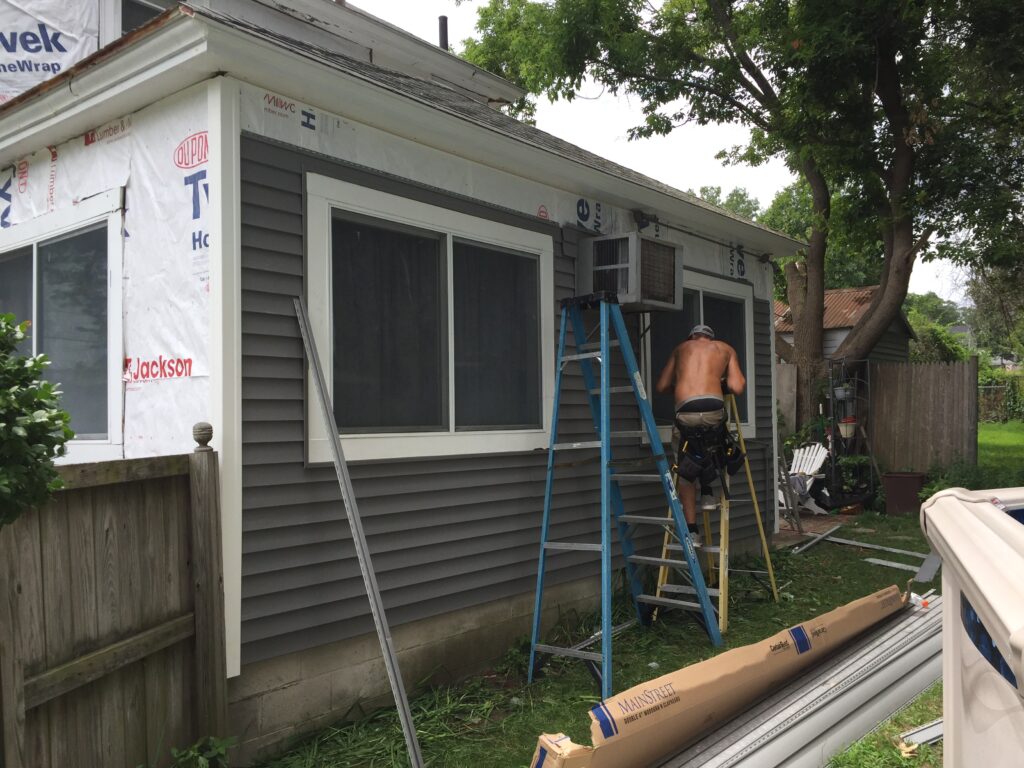
Before we recommend anything, we get on the roof and in the attic. On the roof, we look at the flashing kit around the existing curb or opening, the condition of the shingle courses tying into it, and whether step flashing has been layered correctly or just caulked over, which is a common shortcut that fails within a few years. From inside, we check the underside of the deck around the opening for staining or soft spots, and we look at whether the attic or cathedral cavity has enough ridge and soffit ventilation to keep condensation from forming on the skylight shaft itself, which gets mistaken for a roof leak more often than people expect.
For a new cut-in, we also check what’s between the rafters before anyone talks about size or style. Roof framing, any wiring or ductwork running through the bay, and roof pitch all affect where a skylight can actually go and how big it can be. We tell you what we find and what it means before we talk product or price, not after.
What the job involves
Replacement
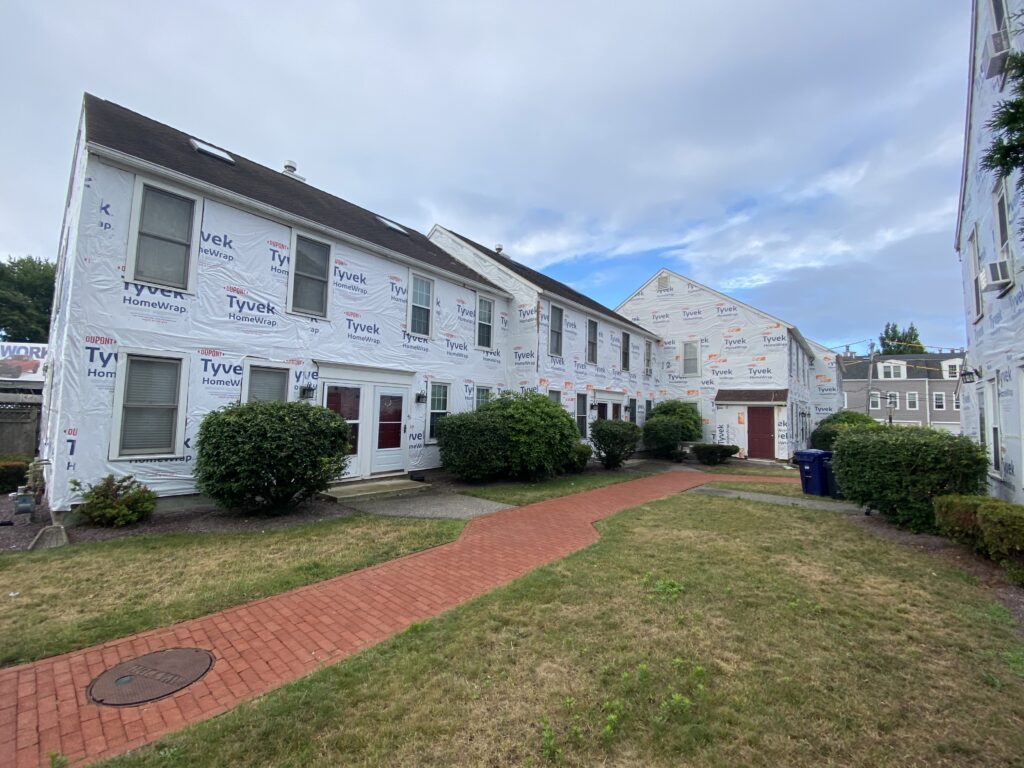
We strip the shingles around the unit, pull the old skylight and flashing, repair the deck at the opening if it needs it, and set the new unit. Ice and water shield wraps up the sides and across the top, the step-flashing kit goes on, and we shingle back in. If the new unit matches the rough opening, the interior usually stays as it is. On a full roof replacement in Chelmsford, all of this fits inside the reroof. The shingles are already off, the deck is exposed, and the new underlayment and flashing tie in as one system.
New cut-in
We lay out the opening from inside and out, cut the deck, and frame headers between the rafters. Ventilation gets rerouted so the bays above and below the opening still breathe. Then the unit, ice and water shield, flashing and shingles. Inside, a new opening means a light shaft through the attic, drywall and paint. That interior work is part of the conversation at the estimate, and we settle who handles what before anything is scheduled.
A straight replacement, same size and same location, is a controlled job: remove the old unit, inspect the curb and decking underneath, replace ice and water shield around the opening, install new flashing, and set the new unit. If the roof is already stripped for a reroof, this step gets folded directly into that work and the flashing ties into new shingles instead of old ones, which is a better result structurally as well as a better price.
A new cut-in starts with framing. We open the roof deck, frame the rough opening according to the rafter spacing, and build or set a curb if you’re going with a curb-mounted unit. From there it’s the same flashing and ice and water shield process as a replacement, plus the interior side: a light shaft or drywall opening down to the ceiling below. That interior finish work, drywall, paint, and trim, is part of the conversation we have with you as we scope the job, and we’ll tell you plainly whether it’s something to plan for separately.
On the unit itself, fixed skylights are the simplest and least expensive option. Venting units open manually or electrically and help with airflow in kitchens and baths. Solar-powered venting units add a small panel that runs the vent motor without new wiring, which is useful when running power to a roof-level opening is more trouble than it’s worth.
What it costs
A straight skylight replacement, same opening, same size, done during a reroof, typically runs {PRICE_LOW} to {PRICE_HIGH}. Do that same replacement as a standalone job outside of a reroof and the price climbs, because you’re paying for the labor of opening and re-flashing a finished roof section on its own. A new cut-in costs more again, since it adds framing, a curb, ice and water shield across a larger area, and often more complex flashing depending on where it sits relative to the ridge and any valleys.
What moves the number: whether you choose fixed, manual venting, or solar-powered venting, curb-mounted versus deck-mounted, unit size, roof pitch and how much staging or fall protection the crew needs, and whether the decking around the opening turns out to be soft and needs replacing once we open it up. We give you a number after we’ve been on the roof, not before.
How long it takes
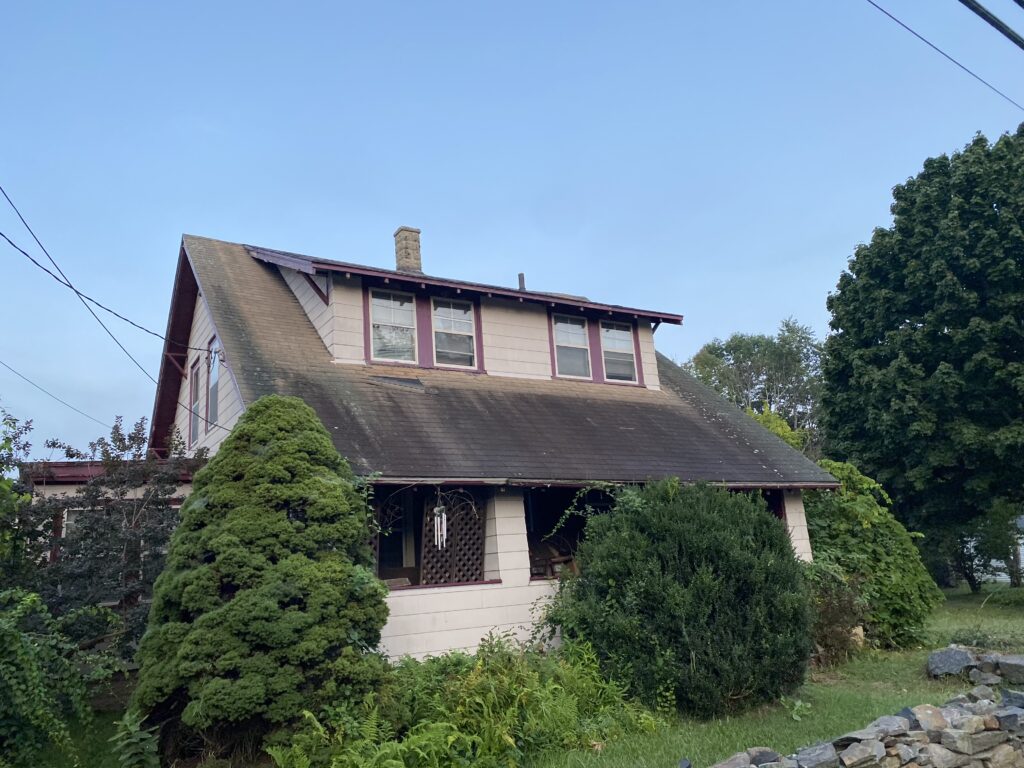
A single skylight replacement, done on its own, is usually a one-day job. Bundled into a reroof, it adds only a few hours to the overall schedule since the crew and the flashing materials are already there. A new cut-in typically takes one to two days depending on framing complexity and whether interior finish work is happening at the same time as the roof work or scheduled separately.
Get an estimate
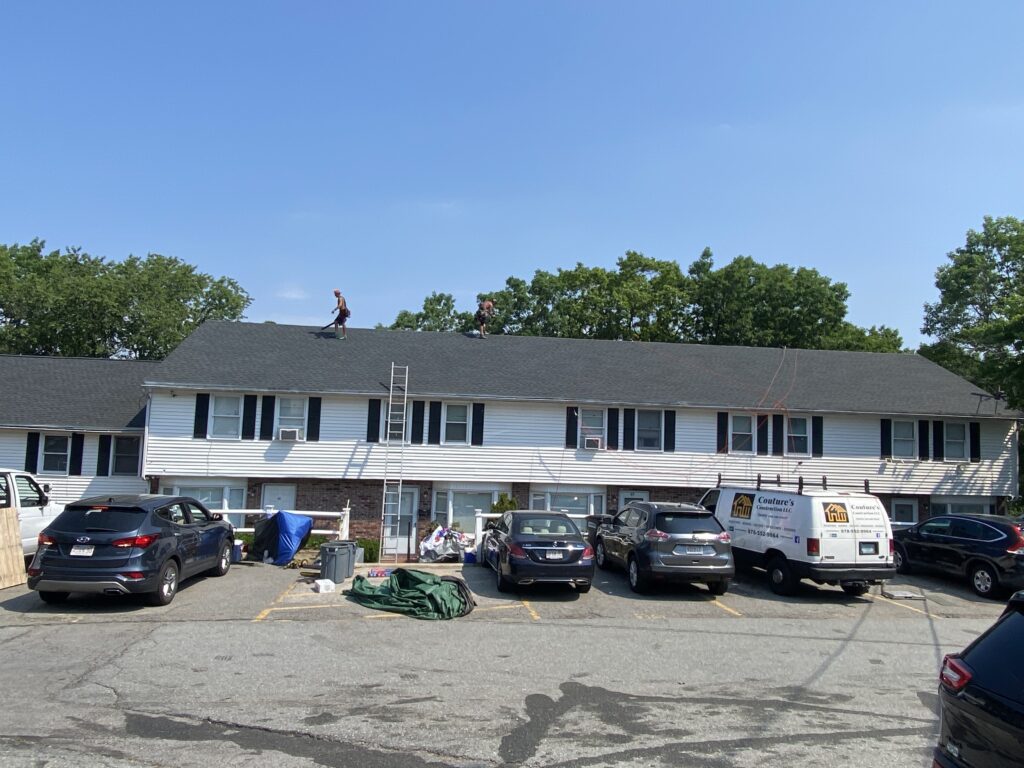
If you’ve got a skylight that’s fogging, yellowing, or leaking at the flashing, or a room in your Chelmsford home that’s never had the light it should, call Couture’s Construction at {PHONE}. We’ll look at the roof, look at the framing, and tell you straight whether you’re looking at a replacement, a new cut-in, or something else entirely. Couture’s is based in Methuen and BBB accredited with an A+ rating.
Can you replace a skylight without redoing the whole roof?
Yes. If the shingles around the unit are still sound and the flashing can be tied in cleanly, we can swap a skylight on its own. The catch is cost: opening a small section of an otherwise finished roof, tying new step and head flashing into existing shingles, and matching the surrounding course takes more labor than doing it while the roof is already stripped down. If your roof is within a few years of needing a full replacement anyway, we will tell you that up front rather than charge you twice for the same flashing work.
How do I know if my skylight needs replacing or just resealing?
Age and the type of unit tell you most of it. Older acrylic dome or bubble skylights, especially anything installed before the mid-1990s, were never great at handling condensation and their seals don't last. If you're seeing fogging between double panes, cracked or yellowed acrylic, or water tracking in from the flashing every time it rains hard, that's a replacement, not a patch. A single active leak with an otherwise sound unit is a repair question, which is a separate job we handle on our waterproofing page.
What's the difference between curb-mounted and deck-mounted skylights?
A curb-mounted unit sits on a raised wooden frame built up from the roof deck, which is the standard for most retrofits and older homes because it works with existing framing. A deck-mounted unit sits flush against the roof deck itself, which gives a lower profile and slightly better thermal performance but usually needs to be planned into new construction or a full reroof rather than dropped into an existing opening. We'll tell you which one fits your roof and your budget once we've looked at the framing.
Will a new skylight cause ice dams?
A poorly flashed one can make an existing ice dam problem worse, because it interrupts the plane of the roof and gives melting snow another place to refreeze. A properly installed unit with correct ice and water shield around the curb and good attic ventilation shouldn't. This is one of the reasons we check your ridge and soffit venting as part of any skylight job, not just the opening itself.
Do I need a permit for a new skylight cut-in in Chelmsford?
Ready to talk skylights?
Reach out to Couture’s Construction and let us know if you’re swapping out a leaky old unit or adding a new one to a room that’s never had natural light before. Mention the roof pitch and roughly where the room sits under the roofline. From there we’ll schedule a visit to your Chelmsford home to check the framing and roof before laying out real options.