
- Home
- Services
- Locations
Amesbury, MA
Boxford, MA
Chelmsford, MA
Danvers, MA
Dracut, MA
Essex, MA
Georgetown, MA
Groveland, MA
Hamilton, MA
Haverhill, MA
Ipswich, MA
Merrimac, MA
Methuen, MA
Middleton, MA
Newbury, MA
Newburyport, MA
North Andover, MA
North Reading, MA
Peabody, MA
Rowley, MA
Salem, MA
Salisbury, MA
Tewksbury, MA
Topsfield, MA
Topsfield, MA
West Newbury, MA
Atkinson, MA
Derry, NH
East Kingston, NH
Kensington, NH
Kingston, NH
Londonderry, NH
Plaistow, NH
Salem, NH
- Company
- Contact
- Home
- Services
- Locations
Amesbury, MA
Boxford, MA
Chelmsford, MA
Danvers, MA
Dracut, MA
Essex, MA
Georgetown, MA
Groveland, MA
Hamilton, MA
Haverhill, MA
Ipswich, MA
Merrimac, MA
Methuen, MA
Middleton, MA
Newbury, MA
Newburyport, MA
North Andover, MA
North Reading, MA
Peabody, MA
Rowley, MA
Salem, MA
Salisbury, MA
Tewksbury, MA
Topsfield, MA
Topsfield, MA
West Newbury, MA
Atkinson, MA
Derry, NH
East Kingston, NH
Kensington, NH
Kingston, NH
Londonderry, NH
Plaistow, NH
Salem, NH
- Company
- Contact
Commercial Roofing in Georgetown, MA
Georgetown does not have a business park. What it has is a village center with a few mixed-use buildings, a handful of churches and municipal buildings with flat rear sections, and a fair number of large residential properties with barns, garages, and outbuildings that get roofed the same way a commercial building does. If you own or manage one of those buildings, you are not shopping for a shingle roof. You are shopping for a membrane system that will hold up over a low-slope deck without babysitting.
Commercial Roofing in Georgetown
We will say this plainly because it is true and it saves everyone time: Georgetown is not a commercial roofing market the way Haverhill or Lawrence is. There is no industrial corridor here and no strip of big box retail. What there is a small number of buildings that need a real low-slope roof done right, and those jobs matter just as much to us as a bigger contract somewhere else. We work in EPDM rubber, TPO, and modified bitumen, and we size the crew and the schedule to the building in front of us, not to a minimum job size.
Flat and Low-Slope Commercial Roofing Services in Georgetown
Most of the low-slope work we see in Georgetown is on additions behind older buildings, second-floor apartments over storefronts, or outbuildings on estate-sized lots that get used for storage, workshops, or small operations. EPDM is still the most common membrane we install here because it is forgiving of an older, slightly uneven deck and it is a known quantity for repair down the road. TPO comes into play when the owner wants a reflective white surface, usually because the space underneath gets warm in summer or there is a cooling load to manage. Modified bitumen shows up on smaller sections, tie-ins, and roofs where a torch-down or self-adhered cap sheet fits the existing roof assembly better than a fully adhered membrane would.
Whatever the system, the deck underneath it matters more than the membrane on top. We check for soft spots, old fastener patterns from a prior roof, and drainage before we recommend anything.
What Georgetown roofs are up against
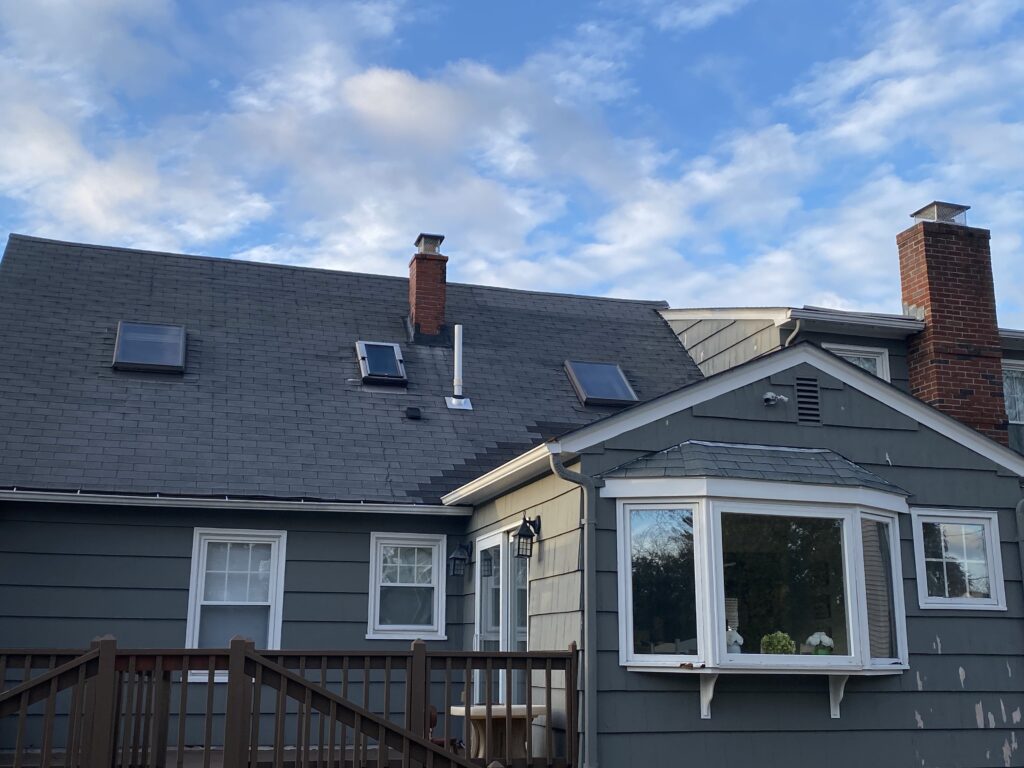
Georgetown’s low-slope roofs are almost always attached to something older. That second-floor space above a shop, or the flat-roofed addition behind a colonial-era building, was usually built decades after the original structure and the roof was framed to be functional, not to spec. That means slopes that are flatter than they should be for good drainage, and it means ponding water is the number one thing we look for before anything else. Standing water breaks down membrane seams years before they should fail, and on a building with limited slope, a quarter inch of framing error is the difference between a roof that sheds water and one that holds it.
Georgetown’s tree cover adds a second problem specific to this town: heavy leaf and pine needle debris collecting on flat sections and clogging drains and scuppers. On a pitched residential roof that debris washes off. On a flat commercial roof it sits, holds moisture against the membrane, and turns a five-minute drain clog into a slow leak that shows up as a stain on the ceiling weeks later. We clear drains as a standard part of every commercial inspection here, not as an upsell.
How we assess it
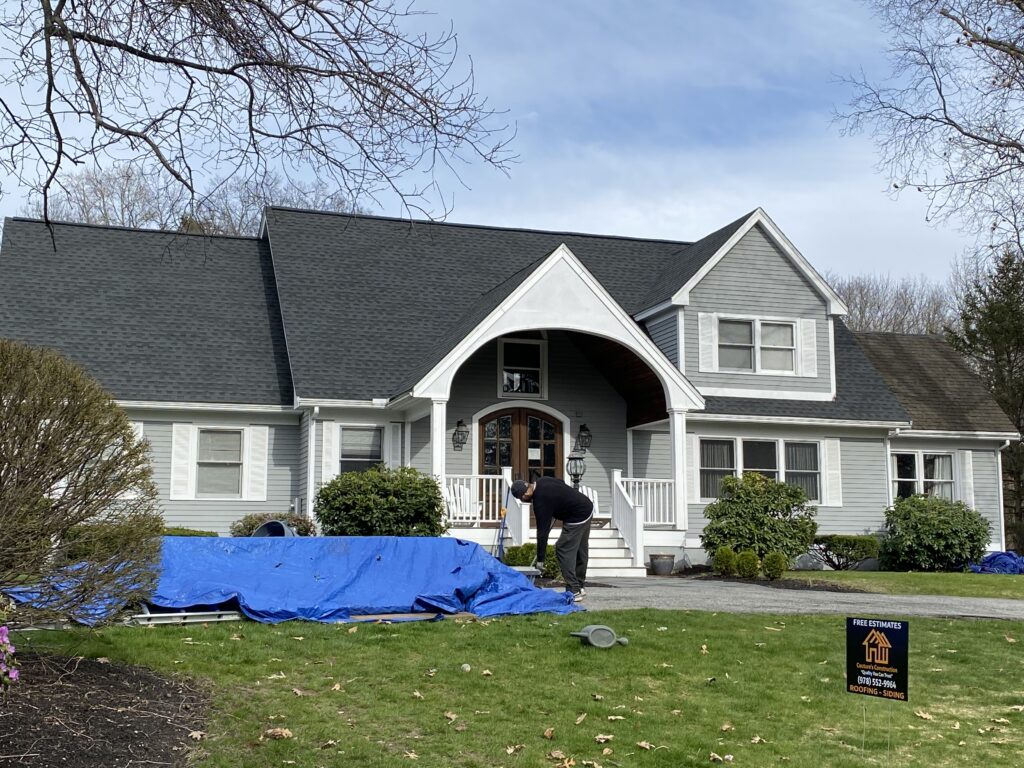
Derek walks the roof before quoting anything. That means checking the membrane for blistering, open seams, and UV degradation, checking flashing at every wall, curb, and penetration, and checking every drain and scupper for standing water or debris. If there is access to the space below, we look at the underside of the deck too. Water stains, rusted fasteners, and sagging insulation board tell you things the top of the roof will not. On an occupied building we plan the inspection around your hours, because we know a roof crew walking around over a working office or a church basement meeting is not something you want happening at 9am on a Tuesday without warning.
We do not hand over a recommendation until we have actually seen the deck condition and the drainage. A quote based on square footage alone is a guess. We do not send those.
What the job involves
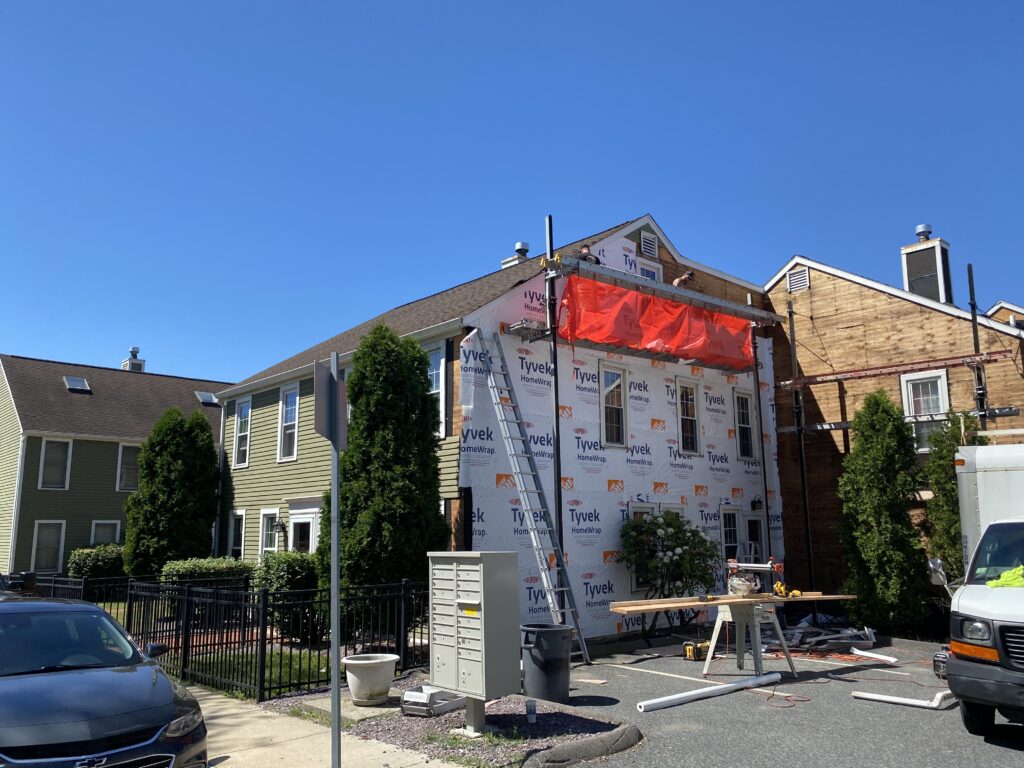
On a re-roof, the sequence is tear-off of the failed membrane, deck inspection and repair of any soft or rotted sections, new insulation board if the R-value or the drainage slope needs improving, then the new membrane, fully adhered or mechanically fastened depending on the system and the building’s exposure, followed by flashing details at every wall and penetration. Flashing failure is the most common cause of leaks we find on low-slope roofs in this area, more than membrane failure itself, so we do not treat that step as an afterthought.
On an operating building, phasing is the real work. We section the roof so no more area is open than we can seal by end of day, we schedule around your business hours where possible, and we keep the site contained so foot traffic below is not walking through roofing debris. On a church or municipal building, that often means working around a weekend service schedule or a public meeting calendar rather than a typical business week.
What it costs
Commercial low-slope roofing in Georgetown generally runs {PRICE_LOW} to {PRICE_HIGH}, and the spread is wide because the drivers are wide. Square footage is the obvious one, but pitch, the number of existing layers we have to strip, deck condition once we open it up, and access all move the number. A building set back on a long private drive with no room for a dumpster or a lift costs more to stage than one with a parking lot right against it. We do not quote a number before we have walked the roof, and we do not pad a range to cover surprises we have not looked for.
Do you work on small commercial buildings even though Georgetown does not have much commercial stock?
Yes. We take on small mixed-use buildings, church and municipal roofs, and outbuildings the same way we take on larger commercial jobs elsewhere. Job size does not change how we assess or install a roof.
Which membrane is right for my building, EPDM or TPO?
It depends on the deck, the building's use, and whether reflectivity matters to you. EPDM is a solid, proven choice for most low-slope roofs we see in Georgetown. TPO makes sense if you want a reflective surface to help with cooling. We will tell you which one fits your building after we look at it, not before.
Can you work around our business hours or a tenant occupying the space below?
Yes. We phase the job and schedule the noisier or more disruptive work around your operating hours whenever the roof and weather allow it.
How do you handle the debris and leaf litter that collects on flat roofs under the trees here?
We clear drains and scuppers as part of every assessment and every re-roof. On buildings under heavy tree cover we will usually recommend a maintenance check once or twice a year so debris does not sit and hold moisture against the membrane between larger service visits.
Is a repair ever the right call instead of a full re-roof?
How long it takes
A small flat roof section, the kind we typically see in Georgetown, is usually a one to three day job once the crew is on site, weather permitting. Larger or more complex roofs with multiple drains, curbs, and rooftop equipment take longer. We give you a real start and finish window before work begins, not a general estimate, because we know a business or a building with occupants needs to plan around it.
Get an estimate
If you manage or own a building in Georgetown with a flat or low-slope section, whether it is a storefront addition, a church annex, or an outbuilding on a larger property, call {PHONE} and we will set up a time to walk the roof. We will tell you honestly what we see, what your options are, and what it will cost before anything gets scheduled.