
- Home
- Services
- Locations
Amesbury, MA
Boxford, MA
Chelmsford, MA
Danvers, MA
Dracut, MA
Essex, MA
Georgetown, MA
Groveland, MA
Hamilton, MA
Haverhill, MA
Ipswich, MA
Merrimac, MA
Methuen, MA
Middleton, MA
Newbury, MA
Newburyport, MA
North Andover, MA
North Reading, MA
Peabody, MA
Rowley, MA
Salem, MA
Salisbury, MA
Tewksbury, MA
Topsfield, MA
Topsfield, MA
West Newbury, MA
Atkinson, MA
Derry, NH
East Kingston, NH
Kensington, NH
Kingston, NH
Londonderry, NH
Plaistow, NH
Salem, NH
- Company
- Contact
- Home
- Services
- Locations
Amesbury, MA
Boxford, MA
Chelmsford, MA
Danvers, MA
Dracut, MA
Essex, MA
Georgetown, MA
Groveland, MA
Hamilton, MA
Haverhill, MA
Ipswich, MA
Merrimac, MA
Methuen, MA
Middleton, MA
Newbury, MA
Newburyport, MA
North Andover, MA
North Reading, MA
Peabody, MA
Rowley, MA
Salem, MA
Salisbury, MA
Tewksbury, MA
Topsfield, MA
Topsfield, MA
West Newbury, MA
Atkinson, MA
Derry, NH
East Kingston, NH
Kensington, NH
Kingston, NH
Londonderry, NH
Plaistow, NH
Salem, NH
- Company
- Contact
Vinyl Siding Installation in North Reading, MA
North Reading lots run big and the tree canopy runs right up against the house on a lot of streets in this town. That means siding here fights moisture and shade a lot more than it fights sun. Homeowners usually call us about siding after we’ve already been up on the roof, because the two problems are related more often than not.
Vinyl Siding Installation in North Reading
Derek and the crew install vinyl siding as its own job or bundled with a roof replacement, and in North Reading the bundle is common. When a roof is old enough to need replacing, the siding underneath the drip edge and around the trim usually shows the same age, same staining, same water damage low on the walls where roof runoff has been dumping for years. Doing both at once means one mobilization, one set of flashing details done correctly at the transitions, and no argument later about who caused what.
This isn’t the flashy part of the business. It’s the part that protects the framing once the roof is doing its job right. We treat it that way.
Deck-mounted
units fasten straight to the roof deck and use a matched step-flashing kit. This is what goes on most pitched roofs now. It sits low, looks clean and handles snow well.
Curb-mounted
units sit on a raised wood frame built on the roof. They are the right call on low-slope sections, generally below about 3 in 12, and a lot of older installs already have them.
Fixed
units let in light and nothing else. Fine over a high cathedral ceiling you will never reach.
Manual or electric venting
units open to let heat and steam out. They earn their keep in kitchens and bathrooms.
Solar-powered venting
units run off a small panel, need no wiring to the house, and close on their own when the rain sensor gets wet.
What North Reading roofs and homes are up against
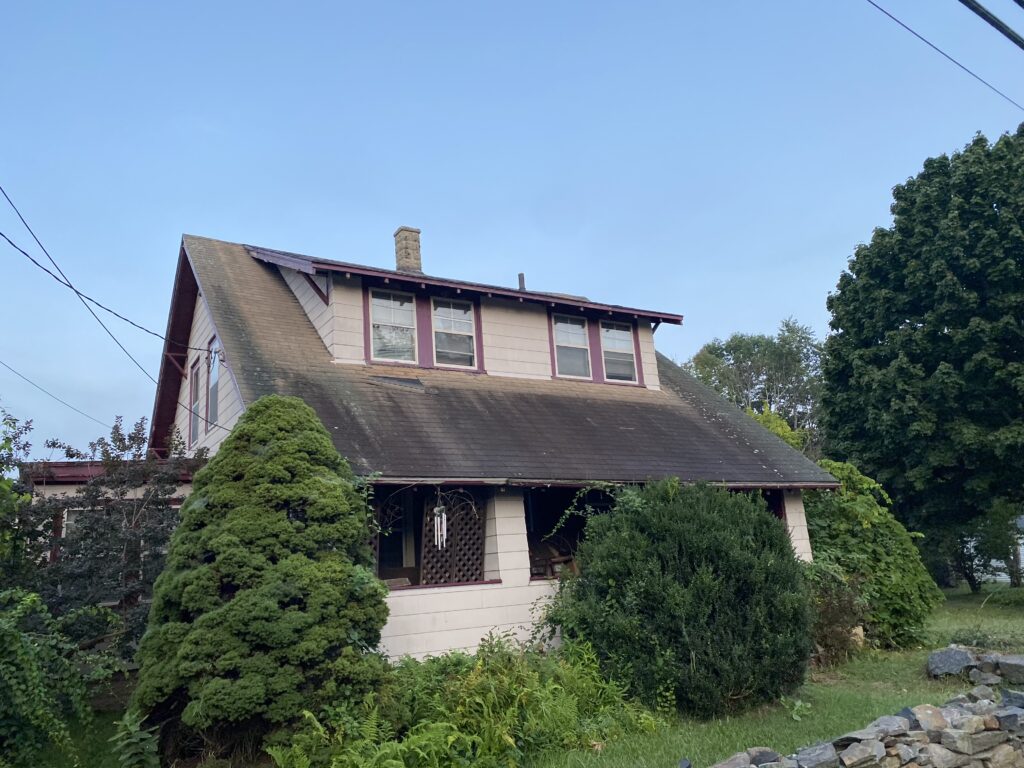
The tree cover in North Reading is the whole story for both the roof and the siding. Heavy shade on north and northeast-facing walls keeps siding damp long after a storm, and that’s where you get the green-black algae streaking and the soft, spongy feel in old wood trim behind vinyl that was never meant to trap moisture. Overhanging limbs drop debris into gutters and against walls constantly, which backs up water at the bottom courses of siding and rots starter strip and J-channel faster than the siding itself ever wears out.
North Reading also has a good mix of build eras, from older capes near the town center to larger colonials and newer construction out toward the Ipswich River side of town. The older homes often have wood clapboard or old aluminum siding underneath layers of paint that’s failing, with no house wrap or a very thin one. The newer subdivisions have vinyl already, but a lot of it was builder-grade, thin-gauge material that oil-cans and cracks in cold snaps. Either way, the fix isn’t cosmetic. It’s about getting a proper water-resistive barrier behind the new siding and closing off the gaps where insects and moisture have been getting into the wall cavity for years.
How we assess it
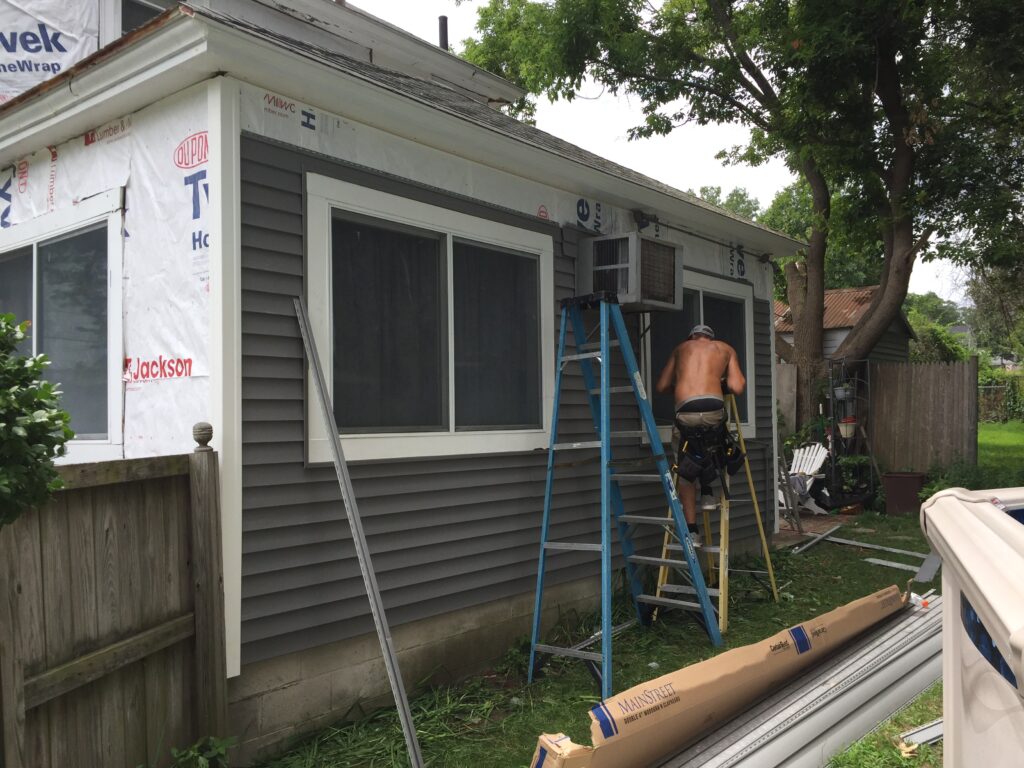
We don’t quote siding off a drive-by. Derek walks the full exterior and checks what’s actually happening at the wall, not just what color the siding is. That means pulling a panel or two where staining suggests trouble, checking the condition of the sheathing underneath at corners and under windows, looking at flashing where siding meets the roofline, and checking soffit and fascia for rot since that’s usually where wood-boring insects and moisture get a foothold first in a heavily wooded town like this.
If we’re doing a roof at the same time, we look at the whole building envelope together, not as two separate quotes stapled together. You get one honest answer on what’s actually wrong and what order it needs to happen in, before we talk about products or price.
What the job involves
Replacement
We strip the shingles around the unit, pull the old skylight and flashing, repair the deck at the opening if it needs it, and set the new unit. Ice and water shield wraps up the sides and across the top, the step-flashing kit goes on, and we shingle back in. If the new unit matches the rough opening, the interior usually stays as it is. On a full roof replacement in North Reading, MA, all of this fits inside the reroof. The shingles are already off, the deck is exposed, and the new underlayment and flashing tie in as one system.
New cut-in
We lay out the opening from inside and out, cut the deck, and frame headers between the rafters. Ventilation gets rerouted so the bays above and below the opening still breathe. Then the unit, ice and water shield, flashing and shingles. Inside, a new opening means a light shaft through the attic, drywall and paint. That interior work is part of the conversation at the estimate, and we settle who handles what before anything is scheduled.
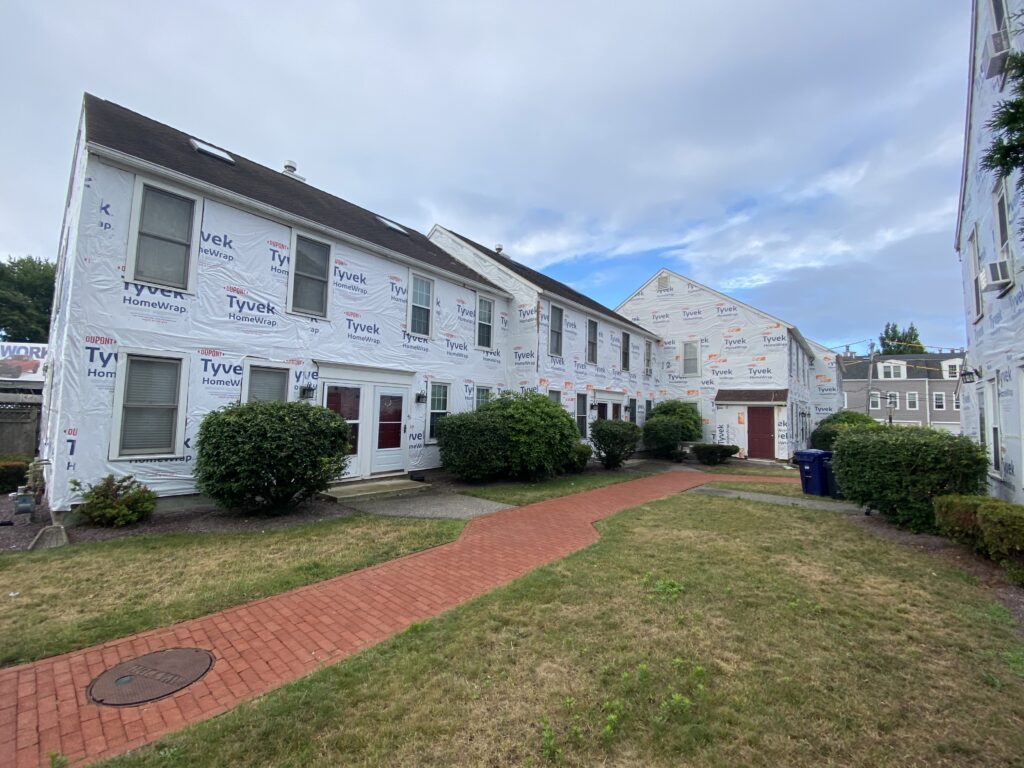
A full tear-off and re-side starts with stripping the old siding down to the sheathing, replacing any rotted boards, and installing a proper house wrap for drainage and air sealing. From there it’s new starter strip, corner posts, J-channel around every window and door, and the siding panels themselves, nailed loose enough to allow for the expansion and contraction New England temperature swings put vinyl siding through every year. Trim gets capped or replaced in PVC or aluminum coil stock depending on what’s there and what the house needs. Where siding meets roof edges, step flashing and kickout flashing get checked and corrected, since a bad kickout flashing detail is one of the most common causes of rot we find behind siding on homes with a roof-to-wall intersection, which North Reading has plenty of given how many homes have additions and dormers tucked under tree cover.
What it costs
Vinyl siding installation in North Reading typically runs between {PRICE_LOW} and {PRICE_HIGH}, and the spread comes down to a handful of real factors. Square footage of wall area matters most, obviously, but so does how much of the old siding and sheathing underneath is rotted and needs to be replaced rather than just covered. Homes with a lot of corners, dormers, and trim detail take more labor than a simple rectangular colonial. Access matters too. Homes tucked back on wooded lots with limited driveway clearance or tight side yards slow the work down compared to an open lot. We won’t give you a number without walking the house first, and we won’t pad a quote with contingencies we haven’t actually found.
How long it takes
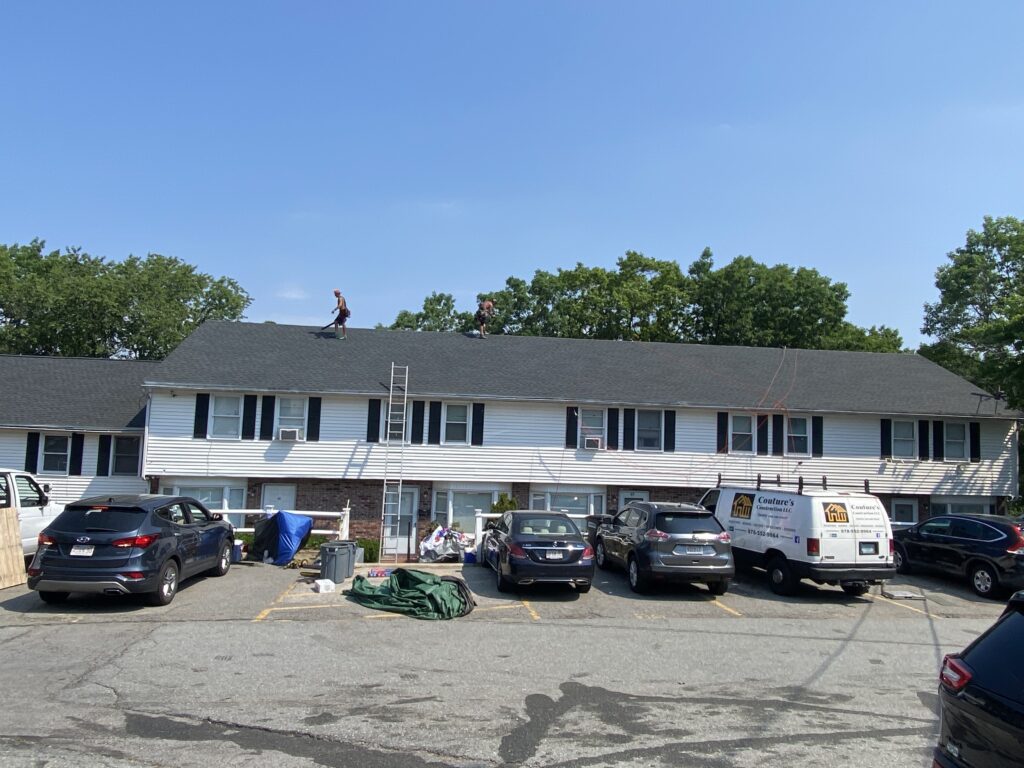
A straightforward re-side on an average North Reading home runs about one to two weeks from tear-off to final trim, weather permitting. Larger homes, homes with significant sheathing repair, or jobs bundled with a full roof replacement run longer, closer to two to three weeks. We give you a realistic schedule up front and tell you if weather or a decking surprise is going to push it, rather than letting you find out on day six.
Get an estimate
If your siding is streaked, warped, or you’re noticing soft spots near the bottom courses or around window trim, get it looked at before another wet season does more damage behind the wall. Derek will walk the exterior with you, tell you plainly what’s wrong and what your real options are, and give you a written estimate with no pressure to sign anything on the spot. Call {PHONE} to set up a time.
Do I need to replace my roof and siding at the same time?
No, but if both are near the end of their life it often makes sense to do them together. It saves you a second mobilization and lets us get the flashing details right at the roof-to-wall transition in one pass instead of two contractors pointing fingers at each other later.
Can you match new siding to an addition or repair a section without redoing the whole house?
Sometimes, if the existing siding is a common profile and color that's still being manufactured and the damaged area is limited. A lot of North Reading homes have older or discontinued vinyl profiles though, so a full re-side is often the more practical answer once you factor in the mismatch.
How does vinyl siding hold up under heavy tree cover?
Vinyl itself doesn't rot, but constant shade and moisture on north-facing walls will grow algae and hold dirt longer than a sunnier wall. The bigger risk under tree cover is what's happening behind the siding, at the sheathing and trim, which is why we check those areas directly rather than just looking at the surface.
Will new siding fix the moss and streaking on my roof?
No. Roof staining and moss come from the roof surface and ventilation, not the siding. If you're seeing streaking on a north-facing slope, that's a roofing conversation, though we're happy to look at both while we're there.
Ready for new siding?
Reach out to Couture’s Construction to talk through your North Reading home’s siding needs. Let us know the age and condition of your current siding, any problem areas you’ve noticed, and the look you’re going for. We’ll schedule a visit to inspect the exterior, measure the house, and walk you through color and style choices before putting together a plan.