
- Home
- Services
- Locations
Amesbury, MA
Boxford, MA
Chelmsford, MA
Danvers, MA
Dracut, MA
Essex, MA
Georgetown, MA
Groveland, MA
Hamilton, MA
Haverhill, MA
Ipswich, MA
Merrimac, MA
Methuen, MA
Middleton, MA
Newbury, MA
Newburyport, MA
North Andover, MA
North Reading, MA
Peabody, MA
Rowley, MA
Salem, MA
Salisbury, MA
Tewksbury, MA
Topsfield, MA
Topsfield, MA
West Newbury, MA
Atkinson, MA
Derry, NH
East Kingston, NH
Kensington, NH
Kingston, NH
Londonderry, NH
Plaistow, NH
Salem, NH
- Company
- Contact
- Home
- Services
- Locations
Amesbury, MA
Boxford, MA
Chelmsford, MA
Danvers, MA
Dracut, MA
Essex, MA
Georgetown, MA
Groveland, MA
Hamilton, MA
Haverhill, MA
Ipswich, MA
Merrimac, MA
Methuen, MA
Middleton, MA
Newbury, MA
Newburyport, MA
North Andover, MA
North Reading, MA
Peabody, MA
Rowley, MA
Salem, MA
Salisbury, MA
Tewksbury, MA
Topsfield, MA
Topsfield, MA
West Newbury, MA
Atkinson, MA
Derry, NH
East Kingston, NH
Kensington, NH
Kingston, NH
Londonderry, NH
Plaistow, NH
Salem, NH
- Company
- Contact
Roof Replacement in Londonderry, NH
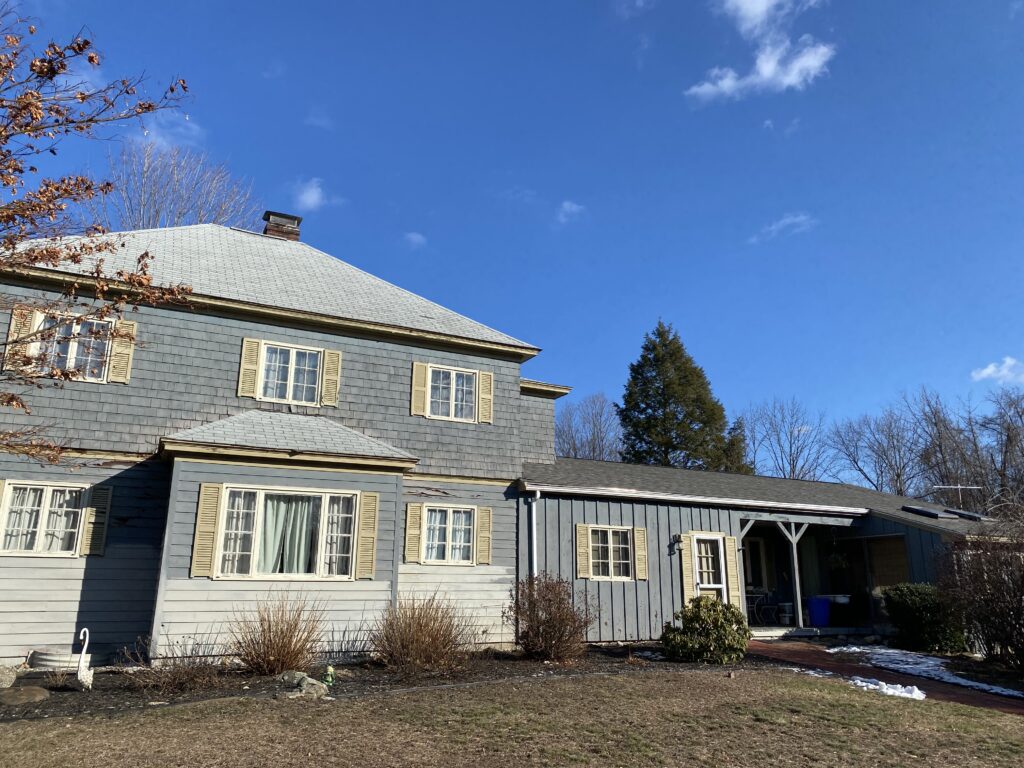
Most of the roofs we look at in Londonderry went up between the late 1970s and the mid-1990s, when the subdivisions off Mammoth Road and around Moose Hill Orchards filled in fast. That means a lot of these roofs are hitting 25 to 40 years old at roughly the same time, on similar cape and colonial frames with moderate pitches and simple gable ends. If your shingles are original or one layer deep, you’re not early to this. You’re right on schedule with half the street.
Roof Replacement in Londonderry
We do full tear-offs and re-roofs on Londonderry homes as one of our main jobs, not a side line. That includes the standard three-tab and architectural shingle roofs that make up most of the town’s housing stock, plus the occasional low-slope rear addition or garage tie-in that needs a different approach than the main roof. We also work across the state line in Massachusetts, so if you’ve got family or neighbors in Methuen, Dracut, or Londonderry, NH, there’s a decent chance we’ve already worked on their street. A homeowner in Londonderry has no reason to assume a Methuen-based company crosses the border, so we’ll say it plainly: we do, regularly, and we carry the same crews and materials both directions.
The decision between repair and replacement usually comes down to a few honest questions. How many layers of shingles are already up there? What does the decking feel like when you walk it? Is the damage isolated to one slope or spread across the whole roof? If you’ve got granule loss in a few spots, one bad flashing detail, or storm damage to a single section, that’s a repair conversation. If you’re seeing curling shingles across multiple slopes, soft spots in the decking, or you’re already on your second layer of shingles, replacement is the honest answer and we’ll tell you that instead of patching something that’s going to fail again in two years.
What Londonderry roofs are up against
Londonderry’s tree cover is heavier than a lot of the tighter subdivisions closer to Manchester, and that matters more than people think. Oak and pine debris builds up in valleys and behind chimneys over a season, and if nobody’s cleaning it out, that debris holds moisture against the shingles and the flashing underneath. We see valley rot and premature granule loss tied directly to tree cover on the west side of town more than almost anywhere else we work in southern New Hampshire.
The other thing working against these roofs is age clustering. When a whole neighborhood goes up in the same five-year window, the roofs age out together, and so does the ventilation design that was standard practice at the time. A lot of these houses were built with minimal soffit intake and no real ridge exhaust, which means heat and moisture get trapped in the attic. That’s a direct contributor to ice damming on north-facing slopes every winter, where meltwater backs up under the shingle edge and finds its way into the fascia and sometimes the ceiling below. If you’ve had icicles hanging off the eaves the size of your arm, that’s not just a cosmetic problem. That’s a ventilation and ice-and-water-shield issue that a straight shingle swap won’t fix on its own.
How we assess it
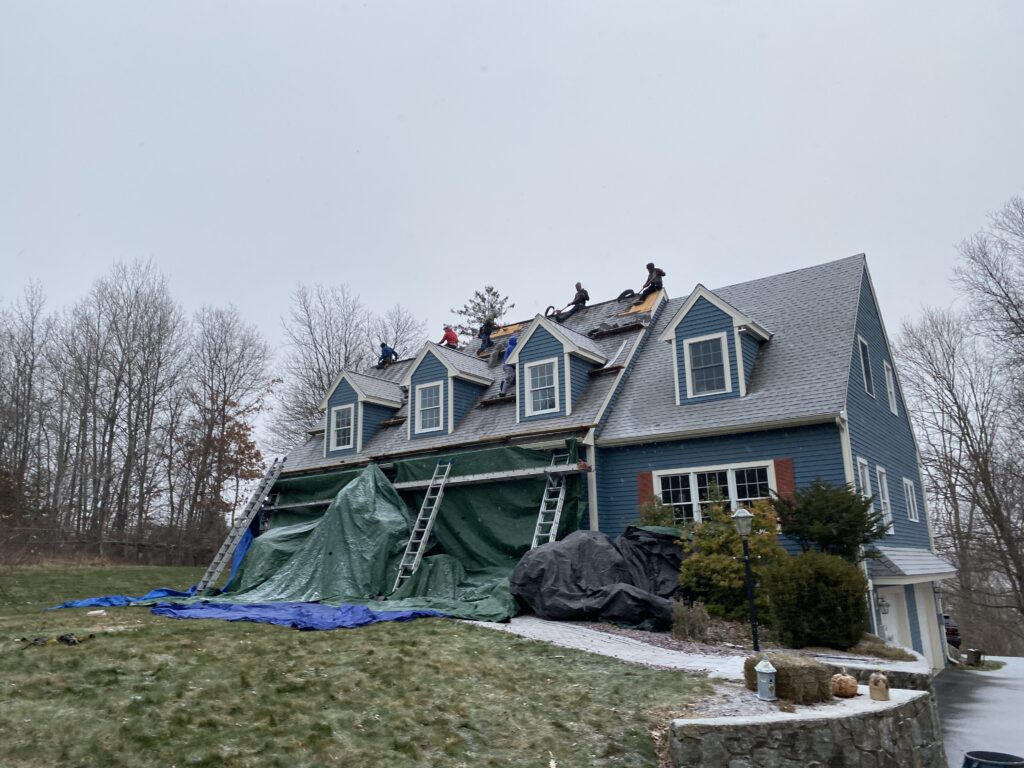
Derek walks every roof before we quote it. That’s not a sales line, it’s how you avoid surprises once the tear-off starts. On the roof, we’re checking decking condition underfoot for soft spots, looking at flashing around chimneys, skylights, and valleys, and checking the shingle field for granule loss, curling, and cracking. From the ground, we’re looking at soffit and ridge ventilation, gutter condition, and how water has actually been draining off the roof historically.
Then we go up in the attic. That’s the step a lot of companies skip and it’s where you find out what’s really going on. Daylight coming through the decking, dark staining on the rafters, insulation that’s wet or compressed, rusted nail heads coming through the sheathing. All of that tells us whether the roof deck is sound or whether we’re going to need to replace sections of it once the old shingles come off. We give you a straight answer on what we find before we talk about what it’s going to cost.
What the job involves
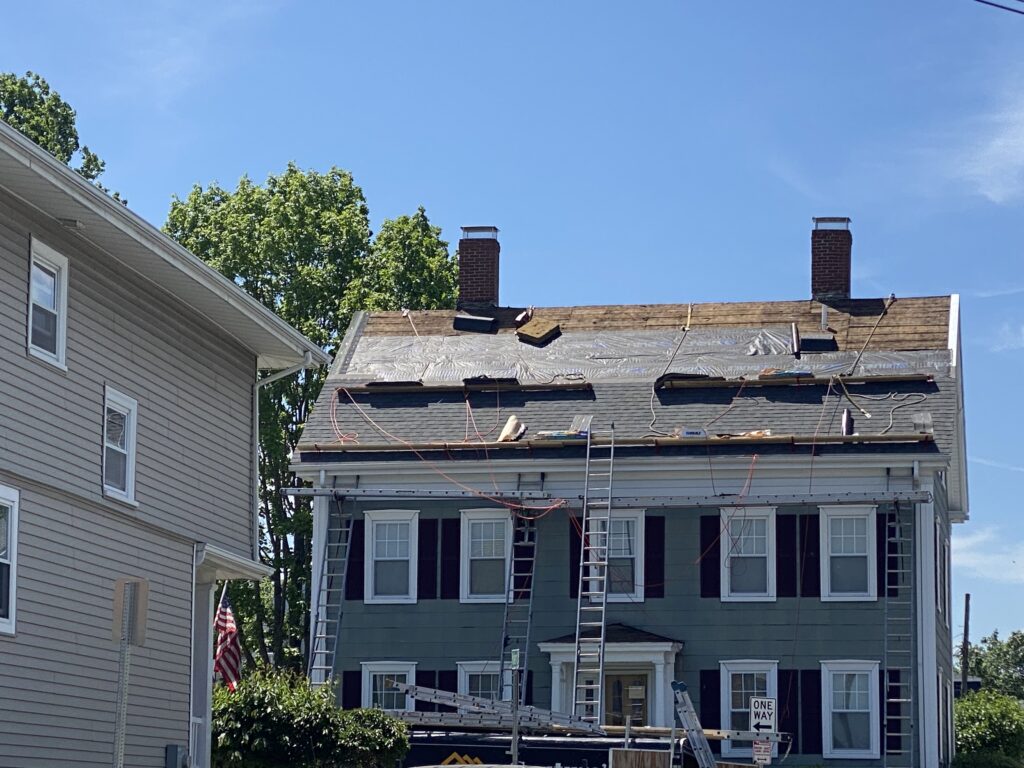
A full replacement starts with tear-off down to the decking. We check every sheet of plywood or board sheathing as we go and replace anything soft, delaminated, or rotted before a single new shingle goes down. Ice and water shield goes along the eaves and up through the valleys, which matters more in Londonderry than in towns with less tree cover and less ice dam history. We install proper drip edge, re-flash chimneys and any roof penetrations, and address ventilation directly, adding ridge vent and soffit intake where the existing setup is inadequate.
For shingles, we install architectural asphalt shingles rated for the wind exposure this area actually sees, not the minimum spec. We’ll walk you through the manufacturer options and wind ratings so you know what you’re buying, not just what color it comes in. Valleys, low-slope sections, and any tie-ins to additions get handled with the right underlayment and metal work for that specific geometry, not a one-size-fits-all approach.
What it costs
Most Londonderry roof replacements run between {PRICE_LOW} and {PRICE_HIGH}, and where you land in that range depends on a handful of real factors. Roof size and the number of facets and valleys matter. Pitch matters, since steeper roofs take longer and need more safety setup. How many layers of old shingles we’re stripping off matters, because tear-off time and disposal cost scale with layers. Decking condition matters a lot, and it’s the piece we can’t fully price until the old roof comes off, since rotted sheathing found mid-job adds material and labor that a walk-through inspection alone can’t always catch. Access, tree cover close to the roofline, and any ventilation upgrades or added flashing work all move the number too. We give you a number based on what we can see and we explain exactly what would change it before we start.
How long it takes
Most single-family roof replacements in Londonderry take one to three days from tear-off to cleanup, depending on roof size, pitch, and weather. A straightforward cape with one layer of shingles and sound decking is usually a one-day job. Add a second layer to strip, a complex roofline with multiple valleys, or decking repairs, and you’re looking at two to three days. We don’t leave a roof open overnight without it being weathered in, and we don’t start a tear-off if the forecast doesn’t support finishing it.
Do you work in Londonderry even though you're based in Massachusetts?
Yes. We're based in Methuen, but we work both sides of the Massachusetts-New Hampshire line regularly, including Londonderry, Derry, Windham, and Salem, NH. Different state, different permitting process, but the same crews and materials.
How do I know if I need a repair or a full replacement?
It depends on how many layers of shingles you have, the condition of the decking underneath, and whether the damage is isolated or spread across the roof. A single bad flashing detail or a storm-damaged section is usually a repair. Curling shingles across multiple slopes, soft decking, or a roof already on its second layer usually means replacement is the more honest call.
Why do I keep getting ice dams on my roof?
In Londonderry, it's almost always a ventilation problem, not just an ice-and-water-shield problem. A lot of homes built in the 1980s and 90s have minimal soffit intake and no real ridge exhaust, which traps heat in the attic and causes uneven melting and refreezing at the eaves. We address both the ventilation and the ice barrier when we replace a roof.
What shingle brands and wind ratings do you install?
We install architectural asphalt shingles from major manufacturers rated for the wind exposure this area sees, generally in the 110 to 130 mph range depending on the product line. We'll go over the specific options and their published wind and warranty specs with you before you decide.
Do you handle the permit for a Londonderry re-roof?
Yes, we handle the building permit through the Town of Londonderry as part of the job. New Hampshire's permitting process differs from Massachusetts, and we're set up to work through both.
Get an estimate
If your roof is showing its age, or you just want an honest read on whether you’re looking at a repair or a full replacement, call us at {PHONE}. Derek will come out, walk the roof and the attic, and give you a straight answer along with a written estimate. No pressure, no storm-chasing pitch, just what we found and what it would take to fix it right.