
- Home
- Services
- Locations
Amesbury, MA
Boxford, MA
Chelmsford, MA
Danvers, MA
Dracut, MA
Essex, MA
Georgetown, MA
Groveland, MA
Hamilton, MA
Haverhill, MA
Ipswich, MA
Merrimac, MA
Methuen, MA
Middleton, MA
Newbury, MA
Newburyport, MA
North Andover, MA
North Reading, MA
Peabody, MA
Rowley, MA
Salem, MA
Salisbury, MA
Tewksbury, MA
Topsfield, MA
Topsfield, MA
West Newbury, MA
Atkinson, MA
Derry, NH
East Kingston, NH
Kensington, NH
Kingston, NH
Londonderry, NH
Plaistow, NH
Salem, NH
- Company
- Contact
- Home
- Services
- Locations
Amesbury, MA
Boxford, MA
Chelmsford, MA
Danvers, MA
Dracut, MA
Essex, MA
Georgetown, MA
Groveland, MA
Hamilton, MA
Haverhill, MA
Ipswich, MA
Merrimac, MA
Methuen, MA
Middleton, MA
Newbury, MA
Newburyport, MA
North Andover, MA
North Reading, MA
Peabody, MA
Rowley, MA
Salem, MA
Salisbury, MA
Tewksbury, MA
Topsfield, MA
Topsfield, MA
West Newbury, MA
Atkinson, MA
Derry, NH
East Kingston, NH
Kensington, NH
Kingston, NH
Londonderry, NH
Plaistow, NH
Salem, NH
- Company
- Contact
Roof Repair in Peabody, MA
Peabody has some of the tightest roof lines in the North Shore footprint. Ranches and capes from the 1950s and 60s sit close together off Lynn Street and Lowell Street, many with additions tacked onto the back with a low-slope section that was never built to shed water the way the main roof does. Add the mix of mature oak and maple canopy along the older streets near downtown, and you get a specific and predictable set of failure points, not a generic one.
Roof Repair in Peabody
Most calls we get from Peabody homeowners start the same way. A stain shows up on a bedroom ceiling, or shingles start showing up in the yard after a windy night, and the question is simple: does this need a repair or a whole new roof. We do not answer that over the phone. We answer it standing on the roof and in the attic, and a lot of the time the honest answer is a repair, not a replacement.
Couture’s Construction is based in Methuen and works throughout the North Shore, including Peabody’s older neighborhoods and its newer developments off Route 1. We do roofing, siding, windows, and decks, and roofing is where we spend most of our time on a roof deck actually looking at what is underneath the shingles, not just what is visible from the driveway.
What Peabody roofs are up against
Peabody’s housing stock runs dense and it runs mixed-era, which means every street can have a different set of problems. In the older sections near the square, roofs built before ventilation codes tightened up often have little to no ridge or soffit venting. That traps heat and moisture in the attic, which shortens shingle life from underneath even when the top side still looks fine. In the post-war neighborhoods further out, we see a lot of low-slope rear additions with rolled roofing or old asphalt that was never designed to handle standing water, and those sections fail years before the main roof does.
Tree cover is the other big factor here. Streets with heavy oak and maple canopy load valleys with leaves and debris every fall, and if those valleys do not get cleared, water backs up under the shingles instead of running off. Combine that with the ice dam pattern that hits north-facing slopes across the whole region, and you get the two most common repair calls we see in Peabody: valley leaks from clogged debris, and eave leaks from ice damming on shaded slopes that never fully thaw in a cold stretch.
How we assess it
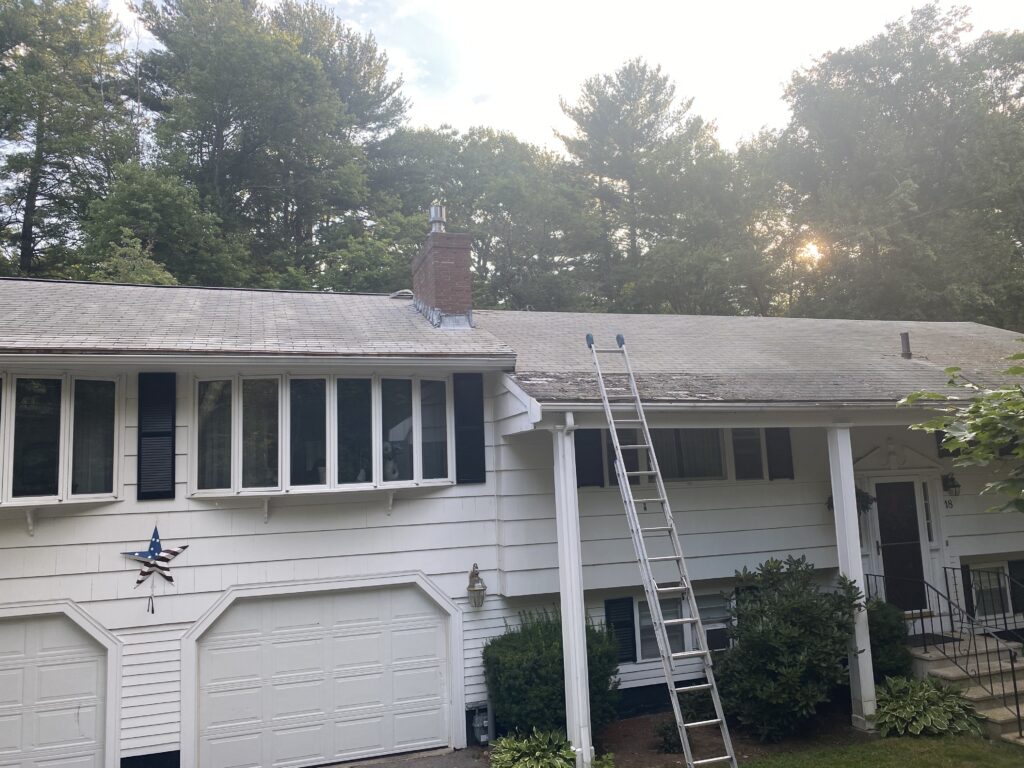
We do not quote a repair off a photo or a description over the phone. Derek or a member of our crew gets on the roof and looks at the decking, the flashing at every chimney and valley, the condition and layout of the ridge and soffit venting, and the shingles themselves for granule loss, curling, and cracking. Then we go into the attic, because that is where a roof tells you the truth. Water staining on the underside of the decking, daylight coming through at the eaves, soft or discolored wood around a chimney chase, that all shows up from below before it shows up as a ceiling stain inside the house.
Only after that walk-through do we tell you what we found and what the options are. If the decking is sound, the flashing is repairable, and the damage is isolated, we say so plainly and we quote a repair. We are not in the business of finding a reason to sell a full roof when a roof does not need one.
What the job involves
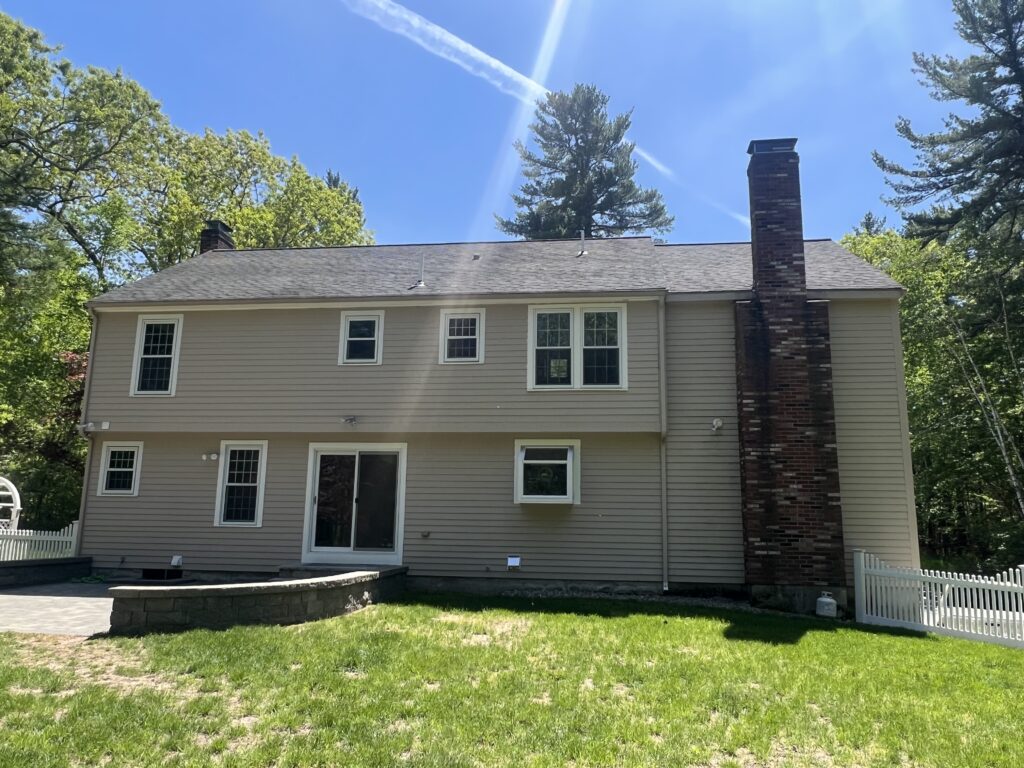
Repairs vary a lot depending on what is actually wrong, but the common ones we do in Peabody break down into a few categories. Valley repairs mean pulling the shingles back, checking the underlayment and ice and water shield, clearing out any rot in the decking, and rebuilding the valley properly instead of just caulking over the symptom. Flashing repairs at chimneys and sidewalls usually mean removing the old step and counter flashing, checking the mortar joint or siding behind it, and re-flashing so water sheds correctly instead of relying on sealant that will fail again in a few seasons.
Ice dam damage repairs often mean replacing a section of eave shingles and adding proper ice and water shield underneath, and sometimes it means addressing the attic ventilation so the dam does not just re-form the following winter. If a low-slope addition roof is the problem, we will talk through whether a patch buys you a few more years or whether a proper low-slope membrane replacement on just that section is the better move. Small jobs, real work either way.
What it costs
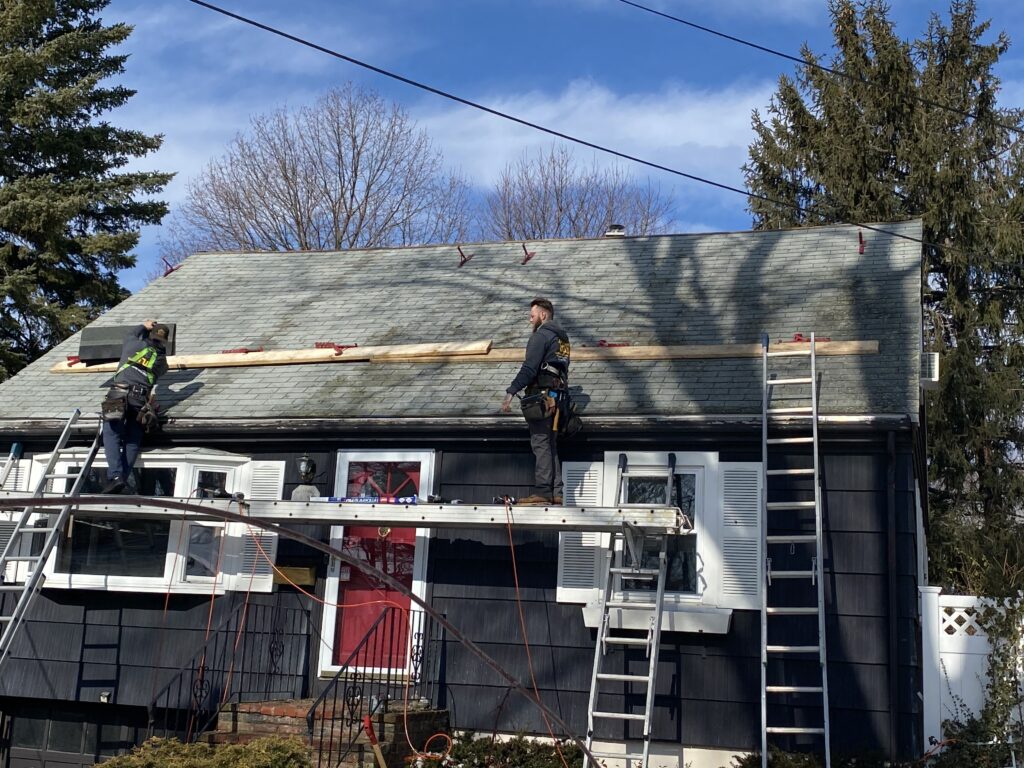
Most roof repairs we do in Peabody fall between {PRICE_LOW} and {PRICE_HIGH}, and where a specific job lands in that range depends on a handful of things. Roof size and pitch matter because a steep roof takes longer and needs more safety setup than a low ranch roof. How many layers of old shingles are on the roof affects tear-off time if we have to strip a section down to decking. Decking condition is the biggest variable of all: if we open up a valley or a chimney flashing and find rotted plywood underneath, that gets replaced before anything goes back down, and that adds material and labor that could not be priced sight unseen. Access matters too, since a roof buried under tree limbs or hemmed in by a tight driveway takes longer to stage safely than an open lot.
We give you a real number after the assessment, not a phone estimate, because guessing at decking condition from the ground is how homeowners end up with a change order mid-job.
How long it takes
A single valley or flashing repair is usually a one-day job once the crew is on site, weather permitting. Ice dam eave repairs that involve replacing shingles and adding ice and water shield along a section of roof typically run one day as well. If we find decking rot once we open things up, that can add a half day to a full day depending on how much needs to be replaced and dried in before shingles go back down. We will tell you upfront if we expect the job to run longer once we see what is under the surface.
How do I know if my Peabody roof needs a repair or a full replacement?
It comes down to decking condition and how widespread the damage is. If the wood underneath is sound and the problem is isolated to a valley, flashing point, or eave section, a repair is the right call. If we find rot spreading across multiple sections, or the shingles are past their service life across the whole roof, replacement makes more sense. We tell you which situation you're in after an on-roof and in-attic assessment, not before.
Why does my roof keep leaking in the same spot every winter?
That pattern almost always points to an ice dam on a north-facing or shaded slope, or a valley that isn't shedding debris properly. Both are fixable, but a temporary patch on the visible leak point without addressing the ventilation or the valley itself tends to bring the same leak back the next cold snap.
Do you repair the low-slope roof sections on older Peabody additions?
Yes. A lot of the post-war housing stock in Peabody has a rear addition with a low-slope roof that was never built to the same standard as the main roof. We repair those sections when a patch is the right call, and we'll tell you honestly if the membrane is past the point where patching still makes sense.
Will you give me a repair estimate over the phone?
No, and we'd be lying if we did. Decking condition, flashing condition, and ventilation issues only show up on the roof and in the attic. We give you a real number after we've actually looked.
Do you handle roof repairs on Peabody's older, tree-heavy streets?
Yes, that's a big part of what we do here. Heavy tree canopy means more valley debris and more granule wear over time, and it's one of the most common repair calls we get from the older Peabody neighborhoods.
Get an estimate
If you have a stain on a ceiling, shingles in the yard, or an ice dam that formed last winter and you want it looked at before it happens again, call us at {PHONE}. We will get on the roof, get in the attic, and tell you straight whether you need a repair or something more. Couture’s Construction is a family-owned, BBB accredited business with an A plus rating, based in Methuen and working across Peabody and the rest of the North Shore.