
- Home
- Services
- Locations
Amesbury, MA
Boxford, MA
Chelmsford, MA
Danvers, MA
Dracut, MA
Essex, MA
Georgetown, MA
Groveland, MA
Hamilton, MA
Haverhill, MA
Ipswich, MA
Merrimac, MA
Methuen, MA
Middleton, MA
Newbury, MA
Newburyport, MA
North Andover, MA
North Reading, MA
Peabody, MA
Rowley, MA
Salem, MA
Salisbury, MA
Tewksbury, MA
Topsfield, MA
Topsfield, MA
West Newbury, MA
Atkinson, MA
Derry, NH
East Kingston, NH
Kensington, NH
Kingston, NH
Londonderry, NH
Plaistow, NH
Salem, NH
- Company
- Contact
- Home
- Services
- Locations
Amesbury, MA
Boxford, MA
Chelmsford, MA
Danvers, MA
Dracut, MA
Essex, MA
Georgetown, MA
Groveland, MA
Hamilton, MA
Haverhill, MA
Ipswich, MA
Merrimac, MA
Methuen, MA
Middleton, MA
Newbury, MA
Newburyport, MA
North Andover, MA
North Reading, MA
Peabody, MA
Rowley, MA
Salem, MA
Salisbury, MA
Tewksbury, MA
Topsfield, MA
Topsfield, MA
West Newbury, MA
Atkinson, MA
Derry, NH
East Kingston, NH
Kensington, NH
Kingston, NH
Londonderry, NH
Plaistow, NH
Salem, NH
- Company
- Contact
Commercial Roofing in Salem, MA
Salem, Massachusetts has some of the densest mixed-use roof stock in our whole service area. Downtown storefronts sit under low-slope additions bolted onto much older brick, and the harbor side of town takes wind loads that a roof three miles inland never sees. A lot of the flat roofing here was patched by whoever was cheapest at the time, and it shows.
Flat and Low-Slope Commercial Roofing Services in Salem
Most of the commercial and mixed-use buildings we look at in Salem are flat or low-slope, and that changes the whole conversation compared to a pitched residential roof. We install and repair EPDM rubber, TPO, and modified bitumen systems, and we work on tapered insulation packages where ponding water is the actual root problem, not just a symptom to patch over.
We also handle the transition details that fail first on this kind of building – parapet wall caps, roof-to-wall flashing where an addition meets an older structure, drain bowls, and pipe boots. On a lot of Salem’s downtown and near-downtown buildings, those transitions are where the water gets in, not the field of the membrane itself.
What Salem roofs are up against
Salem’s building stock runs from the historic district’s tight, older construction through dense multi-family and mixed-use blocks near downtown, into rear commercial additions and post-war strip buildings further out toward the Peabody and Beverly lines. That mix means we see almost every kind of low-slope failure in one town: old built-up roofing that’s past its service life, EPDM that’s UV-cracked and shrinking at the seams, and TPO that was heat-welded wrong the first time and is now open at every T-joint.
Wind off the harbor is a real factor here in a way it isn’t for towns further inland. Loose membrane edges and poorly fastened parapet flashing take a beating during nor’easters, and we see more edge-metal blow-off in Salem than in towns without that open-water exposure. Add heavy tree cover on the residential-adjacent blocks and you get drain scuppers and roof drains clogged with debris, which backs water up faster than most owners expect. If your building sits in or near the historic district, any roof work also has to account for what’s visible from the street, even on a flat roof most people never see.
How we assess it
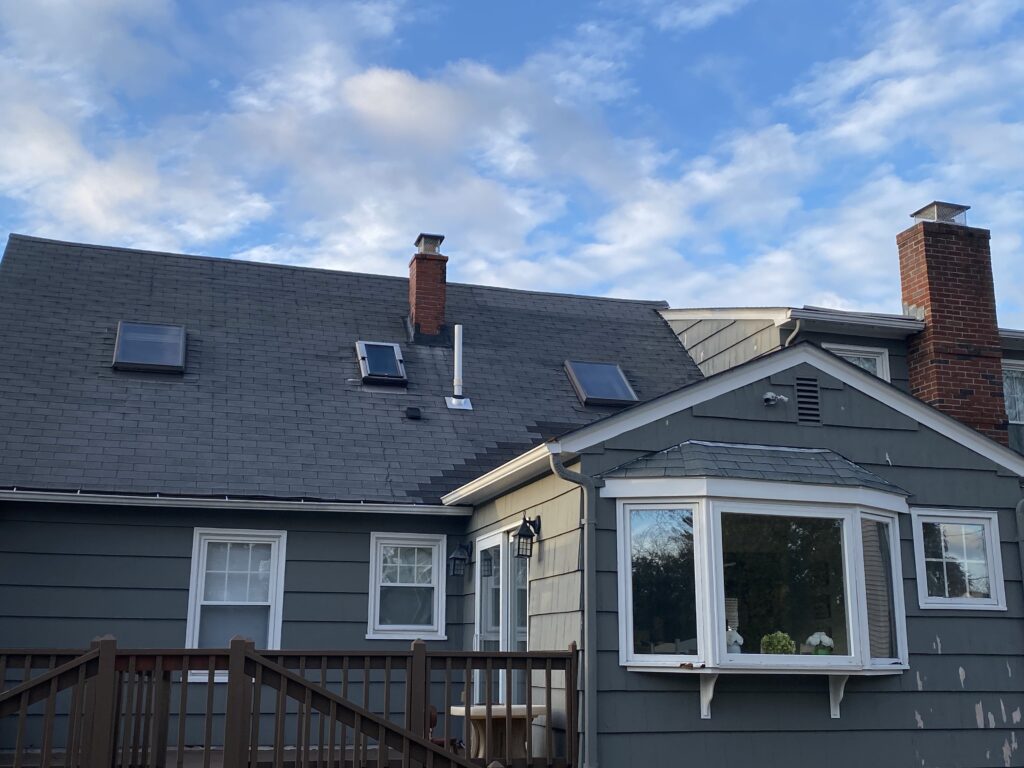
Derek walks the roof before anyone quotes a number. That means checking the membrane for splits, blisters, and seam separation, checking every penetration and parapet detail by hand, and probing the decking where the roof feels soft underfoot. If there’s an accessible interior ceiling or drop ceiling below, we look at that too, because water staining tells you where the leak actually started, which is often nowhere near where it’s showing up on the roof.
For older buildings we also check how many roof layers are already up there. A lot of Salem’s commercial buildings have been re-roofed over the existing membrane more than once, and that changes both the repair options and the weight load if a full tear-off becomes necessary. We tell you what we find before we tell you what to do about it.
What the job involves
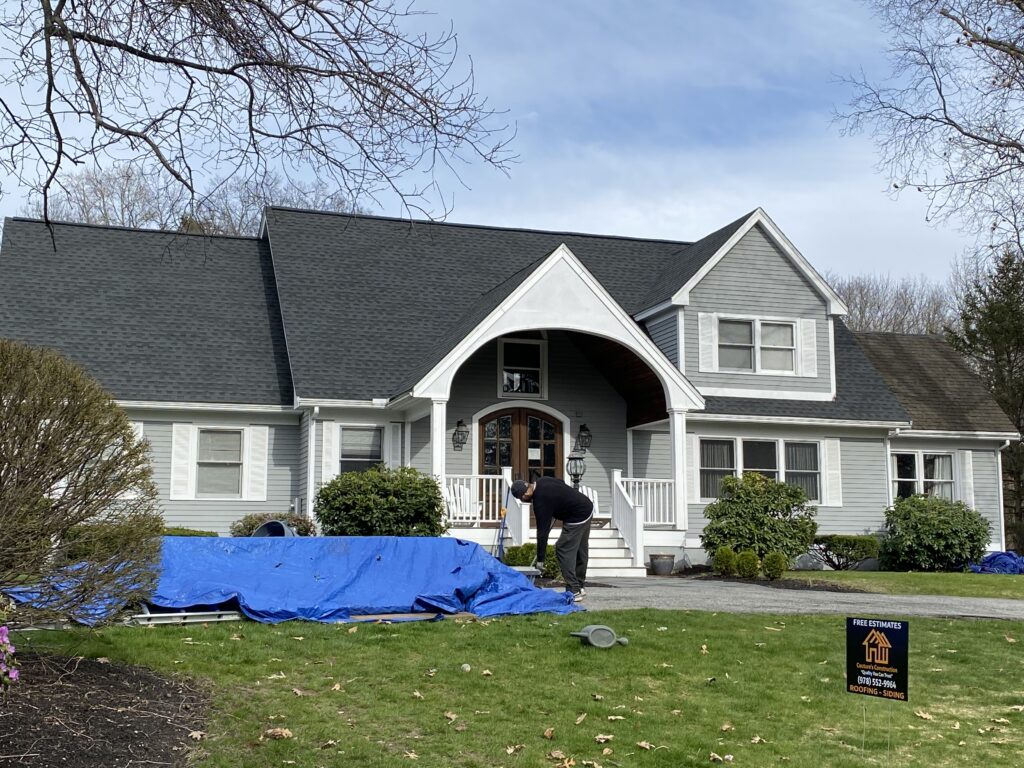
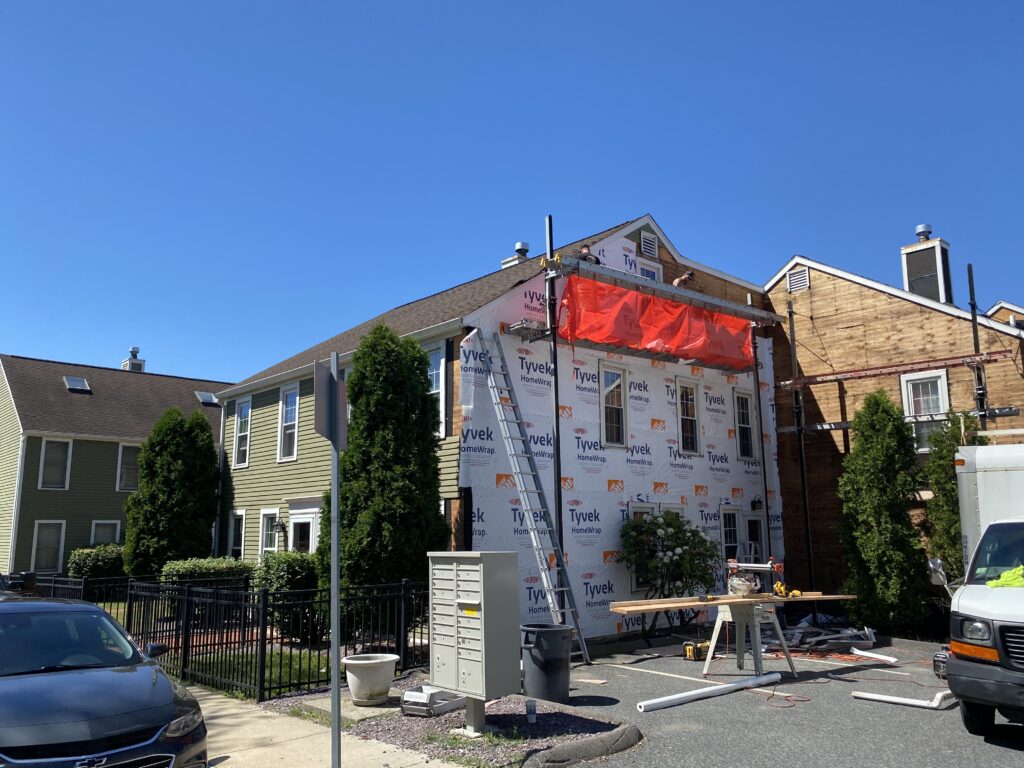
On an occupied commercial building, the roof work has to happen around the business, not the other way around. We phase larger jobs in sections so retail space, office space, or tenant units stay dry and operational the whole way through, and we coordinate access and noise timing with property managers and tenants ahead of the work, not the morning of.
A typical job includes tear-off or overlay decision based on what the decking and existing layers can support, membrane installation with fully adhered or mechanically fastened seams depending on the system, new flashing at every parapet, curb, and penetration, and a walk-through with whoever manages the building before we call it done. Drainage gets particular attention – if ponding water is a recurring issue, we talk tapered insulation or additional drains as part of the scope, not as an upsell after the fact.
What it costs
Commercial low-slope roofing in Salem runs from around {PRICE_LOW} to {PRICE_HIGH} on most jobs we see, and the real number depends on total square footage, how many existing layers need to come off, what condition the decking is in once we open it up, and how much access work is involved on a downtown building versus a standalone structure with a clear parking lot. A single-layer EPDM overlay on sound decking costs a lot less than a full tear-off with new insulation and multiple roof drains. We give you the range and the reasoning, not just a number.
How long it takes
Most commercial low-slope jobs in Salem run a few days to a couple of weeks depending on square footage and how the phasing has to work around the business below. A straightforward overlay on a small building might close out in two or three days. A full tear-off on a larger mixed-use roof, done in sections to keep tenants operating, stretches longer. We give you a schedule up front so you can plan around it instead of finding out day by day.
Do you work on occupied buildings without shutting the business down?
Yes. Most of our Salem commercial work happens while the building stays open. We phase the job, schedule around tenant hours where we can, and keep the work area contained so foot traffic and operations aren't disrupted more than necessary.
EPDM, TPO, or modified bitumen - which is right for my building?
It depends on your roof's slope, drainage, existing layers, and budget. TPO handles UV and reflectivity well, EPDM has a long track record and is often more budget-friendly, and modified bitumen works well on roofs with a lot of existing built-up material. We'll tell you which fits your building instead of pushing one system across every job.
My roof isn't leaking yet - do I actually need to replace it?
Not necessarily. If the membrane is intact and the flashing is sound, a repair or a partial overlay can buy years of service life. We only recommend full replacement when the decking, insulation, or membrane condition actually calls for it.
Does the historic district affect commercial roof work in Salem?
For buildings visible from historic district streets, yes – materials and any visible changes may need to work within district guidelines even on a flat roof. We factor that into the plan before quoting the job.
How do you handle ponding water on a flat roof?
Get an estimate
If you manage or own a commercial building in Salem and the roof is past due for a real look, call {PHONE}. Derek will walk it, tell you what shape it’s actually in, and lay out the repair versus replacement options in plain terms before anyone talks numbers.