
- Home
- Services
- Locations
Amesbury, MA
Boxford, MA
Chelmsford, MA
Danvers, MA
Dracut, MA
Essex, MA
Georgetown, MA
Groveland, MA
Hamilton, MA
Haverhill, MA
Ipswich, MA
Merrimac, MA
Methuen, MA
Middleton, MA
Newbury, MA
Newburyport, MA
North Andover, MA
North Reading, MA
Peabody, MA
Rowley, MA
Salem, MA
Salisbury, MA
Tewksbury, MA
Topsfield, MA
Topsfield, MA
West Newbury, MA
Atkinson, MA
Derry, NH
East Kingston, NH
Kensington, NH
Kingston, NH
Londonderry, NH
Plaistow, NH
Salem, NH
- Company
- Contact
- Home
- Services
- Locations
Amesbury, MA
Boxford, MA
Chelmsford, MA
Danvers, MA
Dracut, MA
Essex, MA
Georgetown, MA
Groveland, MA
Hamilton, MA
Haverhill, MA
Ipswich, MA
Merrimac, MA
Methuen, MA
Middleton, MA
Newbury, MA
Newburyport, MA
North Andover, MA
North Reading, MA
Peabody, MA
Rowley, MA
Salem, MA
Salisbury, MA
Tewksbury, MA
Topsfield, MA
Topsfield, MA
West Newbury, MA
Atkinson, MA
Derry, NH
East Kingston, NH
Kensington, NH
Kingston, NH
Londonderry, NH
Plaistow, NH
Salem, NH
- Company
- Contact
Skylight Installation and Replacement in North Reading, MA
A lot of North Reading roofs sit under a full canopy of oak and pine, on lots big enough that the trees never got trimmed back when the house was built. That changes how skylights age here. A twenty or twenty-five-year-old acrylic bubble unit over a kitchen or a bathroom has usually spent its whole life under drip and shade, and it shows in the seal, the plastic, and the flashing around it. At the same time, plenty of these houses have a dark north-facing family room or a finished attic bedroom that never got enough light, and the owners are finally ready to cut one in.
Skylight Installation and Replacement in North Reading
There are really two different jobs on this page and they call for two different conversations. The first is replacement: swapping an existing skylight, almost always timed with a reroof because the roof is already open and the labor to reflash a curb is already priced into the job. That is the volume work and it is the smart money move for most homeowners who already have a unit that is fogged, leaking around the frame, or just outdated.
The second job is a new cut-in, opening a section of roof deck that has never had a skylight before. That is a bigger decision. It means framing a new opening between rafters, cutting and reinforcing the deck, building a proper curb or deck-mount flashing system, and running a light shaft down through the attic or cathedral ceiling to the room below. It costs more, it takes longer, and it is worth doing right the first time rather than twice.
Deck-mounted
units fasten straight to the roof deck and use a matched step-flashing kit. This is what goes on most pitched roofs now. It sits low, looks clean and handles snow well.
Curb-mounted
units sit on a raised wood frame built on the roof. They are the right call on low-slope sections, generally below about 3 in 12, and a lot of older installs already have them.
Fixed
units let in light and nothing else. Fine over a high cathedral ceiling you will never reach.
Manual or electric venting
units open to let heat and steam out. They earn their keep in kitchens and bathrooms.
Solar-powered venting
units run off a small panel, need no wiring to the house, and close on their own when the rain sensor gets wet.
What North Reading roofs and homes are working with
Tree cover is the single biggest factor in how a North Reading skylight performs over time. Constant leaf and needle debris collects in the valleys and around the skylight curb, holding moisture against the flashing longer than it should sit. North-facing slopes here get less sun to dry out, so you see moss and algae streaking on those slopes well before the south side of the same roof shows any wear. That streaking is usually what gets a homeowner to finally call, and it is often as much about the roof shingles around the skylight as the unit itself.
Roof pitch and layout vary block to block in this town. Some of the older capes and colonials near the center have simple gable roofs with straightforward skylight placement, while newer construction out toward the Middleton and North Reading lines tends to have cathedral ceilings and more complex rooflines with dormers and multiple valleys, which changes both the framing work and the flashing detail for a new cut-in. Homes built out in the same era, which is common in North Reading’s newer subdivisions, also tend to have skylights installed in a similar decade, meaning entire streets can be due for replacement at roughly the same time. Overhanging limbs directly above a roof section shorten the practical life of a skylight seal regardless of what the unit is rated for, so we always look at what is hanging over the specific slope in question, not just the roof as a whole.
How we assess it
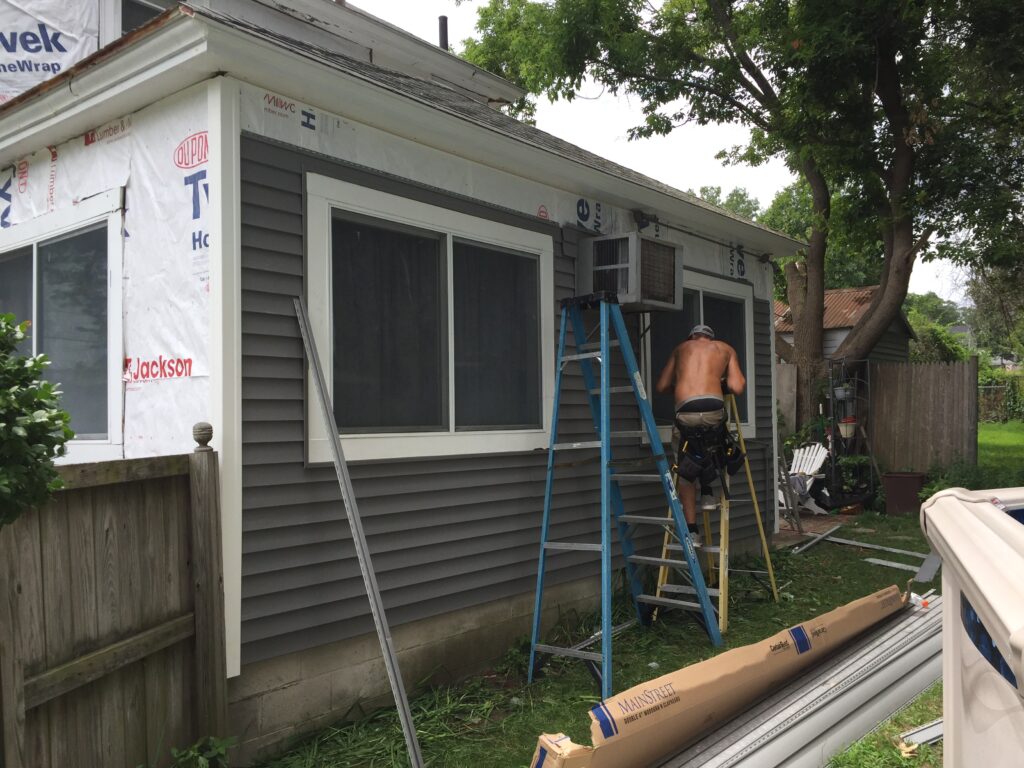
Before Derek recommends anything, he gets on the roof and looks at the actual condition around the unit. That means checking the flashing at the curb or the deck-mount frame, pulling back the shingle course to see how the counterflashing was tied in originally, and looking for soft spots or staining on the deck itself. Inside, he checks the underside of the opening or the light shaft for water staining, mold, or gaps in insulation, and looks at attic ventilation nearby, since poor ridge or soffit venting can cause condensation that gets blamed on the skylight when the real problem is airflow.
For a new cut-in, the assessment goes further. That includes checking rafter spacing and span to see what can be cut without extra structural support, looking at the roof pitch and orientation to figure out how much daylight the room will actually gain, and walking the interior room to talk through where the shaft would run. None of that gets skipped. The recommendation comes after the assessment, not before it.
What the job involves
Replacement
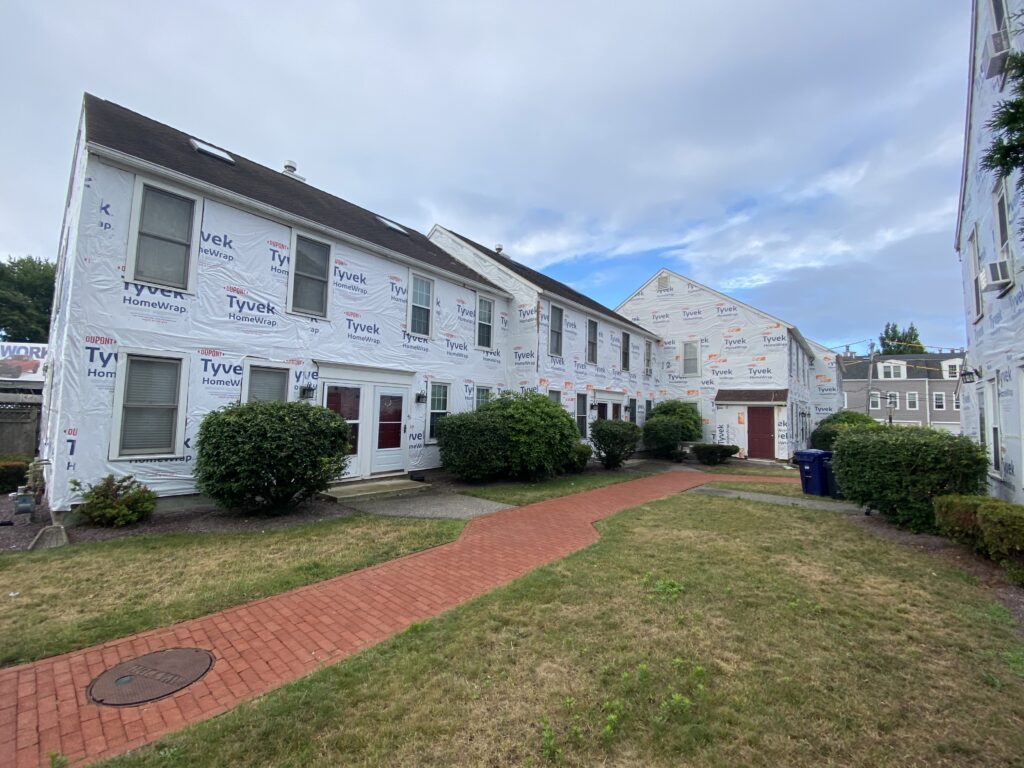
We strip the shingles around the unit, pull the old skylight and flashing, repair the deck at the opening if it needs it, and set the new unit. Ice and water shield wraps up the sides and across the top, the step-flashing kit goes on, and we shingle back in. If the new unit matches the rough opening, the interior usually stays as it is. On a full roof replacement in North Reading, all of this fits inside the reroof. The shingles are already off, the deck is exposed, and the new underlayment and flashing tie in as one system.
New cut-in
We lay out the opening from inside and out, cut the deck, and frame headers between the rafters. Ventilation gets rerouted so the bays above and below the opening still breathe. Then the unit, ice and water shield, flashing and shingles. Inside, a new opening means a light shaft through the attic, drywall and paint. That interior work is part of the conversation at the estimate, and we settle who handles what before anything is scheduled.
Replacement work starts with removing the old unit and inspecting the deck underneath it, since a unit that has been leaking slowly for years can leave the decking soft or delaminated. If the deck is sound, the new unit goes in with fresh flashing, either matching the existing curb-mounted frame or converting to a lower-profile deck-mounted unit if that is a better fit. You will choose between fixed glass, which just lets light in, a manual or crank-operated venting unit, or a solar-powered venting skylight that opens on its own with a rain sensor to close it automatically.
A new cut-in involves opening the roof deck between rafters, framing the rough opening, installing ice and water shield around the curb before the flashing goes on, and tying the new flashing into the surrounding shingle courses correctly at the head, sides, and apron. From there, the light shaft gets framed and insulated down to the ceiling line below. The interior finish work, drywall, trim, and paint around the new shaft, is part of the conversation during the estimate, and we will talk through who handles that piece before the job is scheduled.
What it costs
A straightforward replacement, same size and same mounting style, generally runs in the range of {PRICE_LOW} to {PRICE_HIGH} once you account for the unit itself and the labor to reflash it properly. A new cut-in runs well above that, since it includes framing, structural work, a full light shaft, and often electrical for a solar-powered vent kit. What moves the number most is the unit type and size, whether you are staying curb-mounted or switching to deck-mounted, roof pitch and how much staging or fall protection the crew needs to work safely, and whether the deck around the opening is sound or needs to be replaced.
The one number that matters most for planning purposes is timing. A skylight replaced while the roof is already open during a reroof costs a fraction of the same replacement done as a standalone job later, because the tear-off, disposal, and access are already paid for. If you know a skylight is near the end of its life and a reroof is on the horizon, doing both at once is almost always the better financial move.
How long it takes
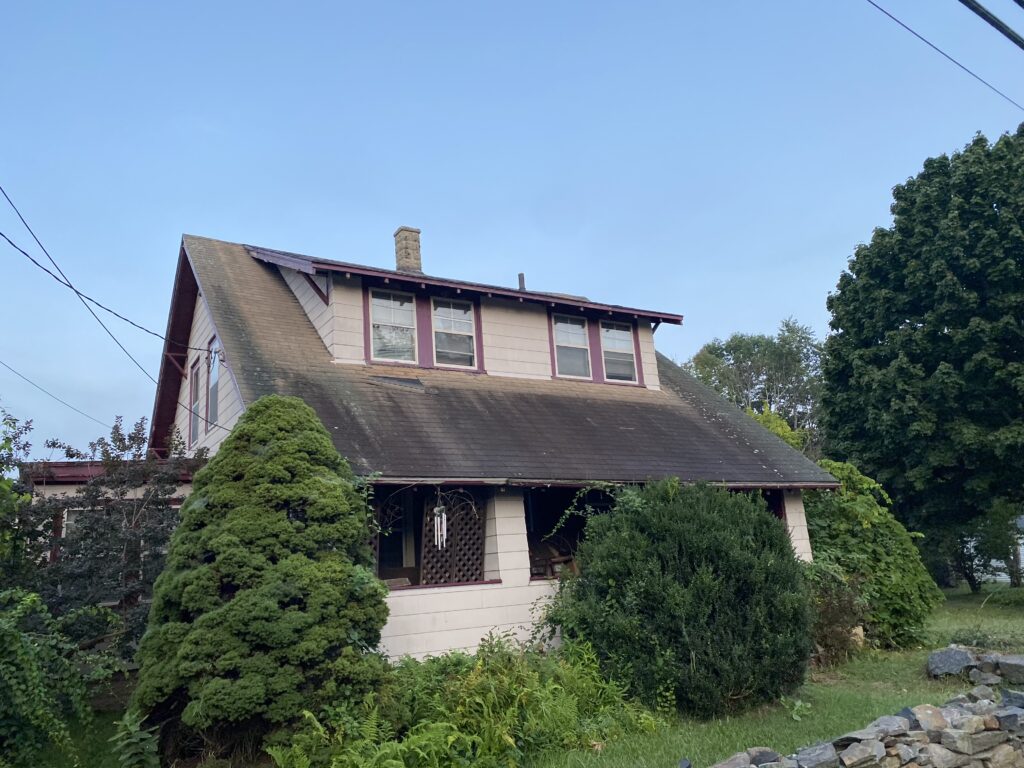
A single skylight replacement, done on its own with a sound deck underneath, typically takes a day. Doing it as part of a full reroof adds very little extra time to the overall project since the crew is already up there. A new cut-in takes longer, usually one to two days depending on the framing complexity and how far the light shaft has to run, and that is before any interior finish work is scheduled separately. Weather matters too. We do not open a roof deck with rain in the forecast, and North Reading’s tree cover means we also plan around wet leaf debris in the fall that can slow down flashing work if it is not cleared first.
Get an estimate
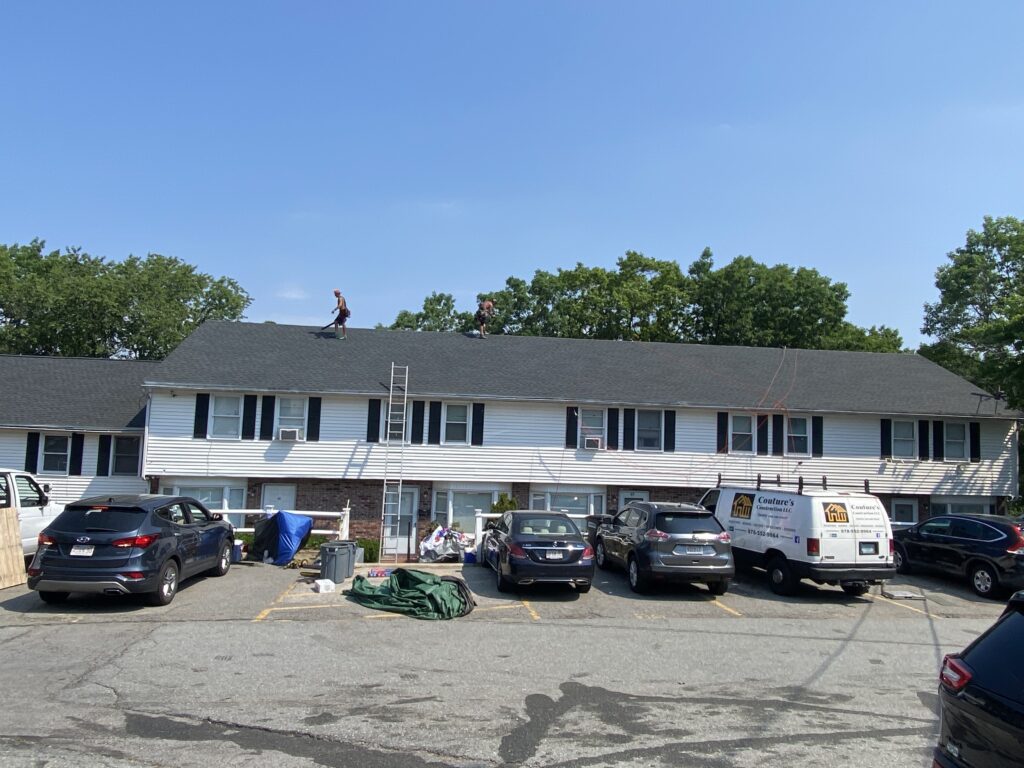
If you have got a skylight that is fogging, streaking, or just past its years, or a room in your North Reading house that could use real daylight, Derek will come look at the roof and the room before recommending anything. Call Couture’s Construction at {PHONE} to set up a time. If you already know a reroof is coming, ask about handling the skylight the same visit and save the second mobilization cost entirely.
Should I replace my skylight now or wait until I reroof?
If your roof has more than a few years of life left, replacing the skylight now stops the leak risk. If a reroof is within the next few years, it is worth timing the skylight replacement to that project, since the labor to reflash it is already built into the reroof and the total cost is much lower than doing it twice.
Can you convert a curb-mounted skylight to deck-mounted?
Yes, in most cases. It usually means slightly modifying the framed opening and building new flashing detail, but it is a common upgrade when a homeowner wants a lower profile look or better weather performance.
Do solar-powered venting skylights actually work well in North Reading's climate?
Yes. They run on a small solar panel built into the frame, so there is no wiring needed, and the rain sensor closes the vent automatically if a storm rolls in while you are not home. They hold up fine through New England winters as long as the flashing and insulation around them are done correctly.
Will a new skylight cut-in cause ice dam problems?
Not if it is flashed and insulated correctly. The bigger ice dam risk in North Reading comes from poor attic ventilation and tree-shaded north slopes generally, not from a properly installed skylight opening. That said, we do check nearby ridge and soffit venting during the assessment since it affects both issues.
How do I know if my skylight needs replacing or just resealing?
Ready to talk skylights?
Reach out to Couture’s Construction and let us know if you’re replacing a leaky, aging skylight or adding a new one to bring light into a North Reading home. We’ll ask a few questions about the roof and the room, then arrange a visit to look things over.
- Existing skylight or new opening
- Room and roof pitch
- Approximate roof age