
- Home
- Services
- Locations
Amesbury, MA
Boxford, MA
Chelmsford, MA
Danvers, MA
Dracut, MA
Essex, MA
Georgetown, MA
Groveland, MA
Hamilton, MA
Haverhill, MA
Ipswich, MA
Merrimac, MA
Methuen, MA
Middleton, MA
Newbury, MA
Newburyport, MA
North Andover, MA
North Reading, MA
Peabody, MA
Rowley, MA
Salem, MA
Salisbury, MA
Tewksbury, MA
Topsfield, MA
Topsfield, MA
West Newbury, MA
Atkinson, MA
Derry, NH
East Kingston, NH
Kensington, NH
Kingston, NH
Londonderry, NH
Plaistow, NH
Salem, NH
- Company
- Contact
- Home
- Services
- Locations
Amesbury, MA
Boxford, MA
Chelmsford, MA
Danvers, MA
Dracut, MA
Essex, MA
Georgetown, MA
Groveland, MA
Hamilton, MA
Haverhill, MA
Ipswich, MA
Merrimac, MA
Methuen, MA
Middleton, MA
Newbury, MA
Newburyport, MA
North Andover, MA
North Reading, MA
Peabody, MA
Rowley, MA
Salem, MA
Salisbury, MA
Tewksbury, MA
Topsfield, MA
Topsfield, MA
West Newbury, MA
Atkinson, MA
Derry, NH
East Kingston, NH
Kensington, NH
Kingston, NH
Londonderry, NH
Plaistow, NH
Salem, NH
- Company
- Contact
Commercial Roofing in Plaistow, NH
Route 125 through Plaistow is lined with strip retail, standalone offices, and warehouse-flex buildings put up between the 1970s and the 1990s, most of them carrying a flat or low-slope roof that nobody looks at until it leaks over the sales floor. A lot of those original built-up or early single-ply systems are now thirty or forty years old, and the plywood or steel deck underneath has usually seen at least one prior patch job that was never tied properly into the rest of the membrane.
Flat and Low-Slope Commercial Roofing in Plaistow
We install and repair EPDM rubber, TPO, and modified bitumen systems on commercial and light-industrial buildings across Plaistow. Each of those systems has a different failure pattern and a different install method, and picking the wrong one for the building’s traffic, drainage, and rooftop equipment load is how a lot of commercial roofs end up leaking within a few years of a supposed replacement.
EPDM still makes sense on a lot of Plaistow’s older flat-roof stock because it’s forgiving over an uneven deck and easy to patch in sections. TPO is the more common call now for reflectivity and heat-welded seams on buildings with HVAC units and other rooftop penetrations, which describes most of the retail and office space along 125 and Plaistow Road. Modified bitumen still gets specified where a building owner wants a torch-down or cold-applied system that can take mechanical abuse near loading docks and foot traffic.
What Plaistow roofs are up against
Plaistow sits far enough into southern New Hampshire that its commercial buildings went up on a different timeline than the towns just south of the state line, and that matters for what’s failing right now. A good chunk of the town’s commercial and light-industrial stock dates to the same general building push that filled in Derry, Salem, and Windham with post-1980 construction, which means a cluster of flat and low-slope roofs across Plaistow are all reaching first or second replacement age within a few years of each other. That’s not a coincidence, it’s a subdivision-and-strip-mall boom hitting its ceiling at the same time.
The other thing working against these roofs is drainage geometry. A lot of the low-slope rear additions and tacked-on loading bays behind Plaistow’s older retail buildings were never built with enough pitch to move water fast, so ponding is common after a heavy rain and it accelerates membrane breakdown at the seams long before the field of the roof looks bad. Add in tree cover around some of the office parks off Route 121A, and you get gutters and roof drains clogged with debris that back water up against parapet flashing. Wind isn’t the dominant threat here the way it is near open water, but uplift at parapet edges and rooftop unit curbs is still the first place we check on an older commercial membrane.
How we assess it
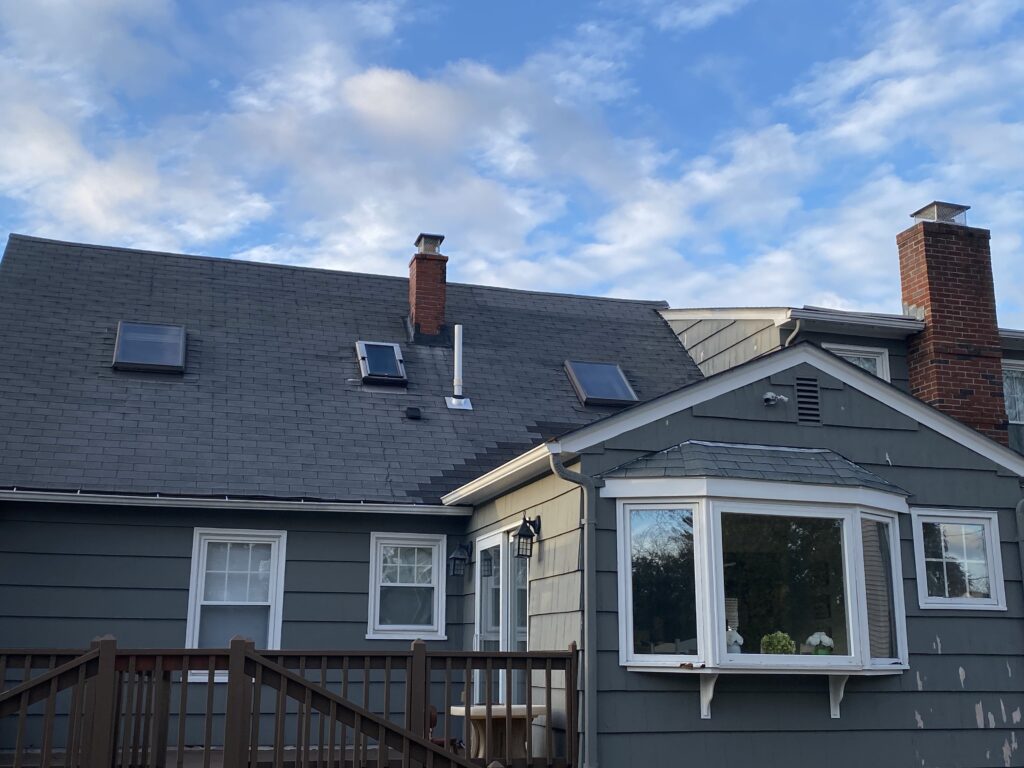
Derek walks the roof before anyone talks about a system or a number. That means checking the membrane for splits, blistering, and shrinkage at the seams, probing the deck at drains and low points for soft spots, and pulling back flashing at every parapet wall, curb, and penetration to see what’s actually underneath it. On a building with an accessible interior ceiling, we’ll also look at staining and insulation condition from below, because water rarely shows up on the roof surface where it’s actually entering.
We don’t quote a commercial roof system off a drive-by or a satellite photo. A flat roof can look fine from the parking lot and still be saturated insulation underneath. You get a real assessment first, then a recommendation that matches what the roof and the building actually need, not a one-size system pitch.
What the job involves
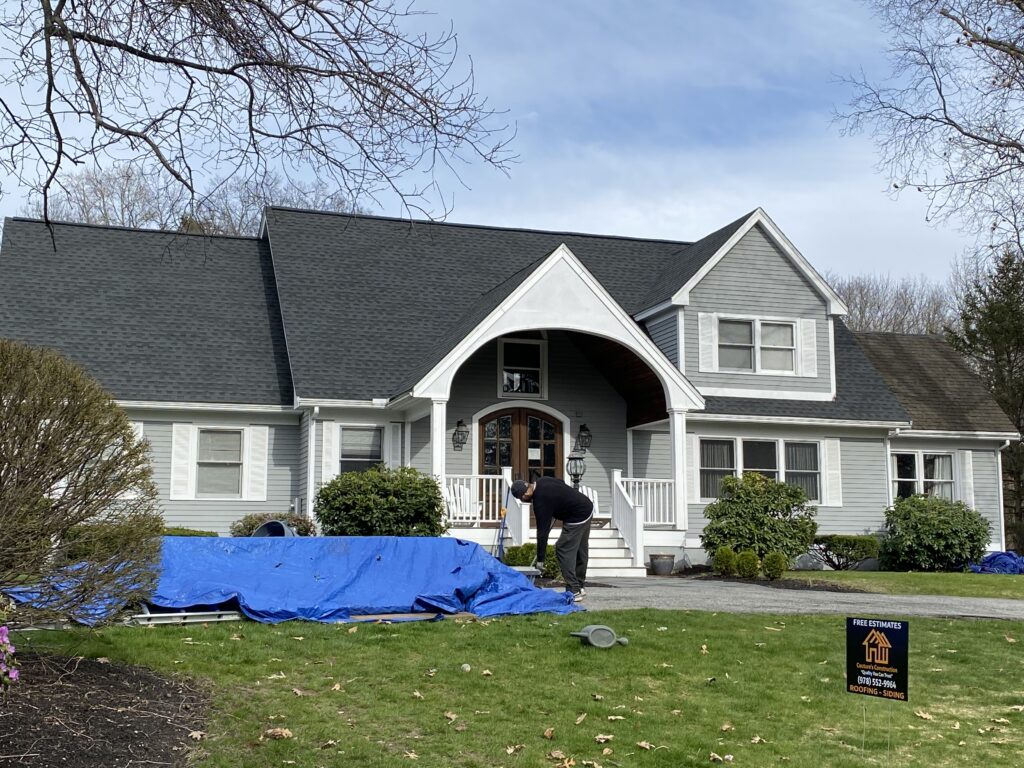
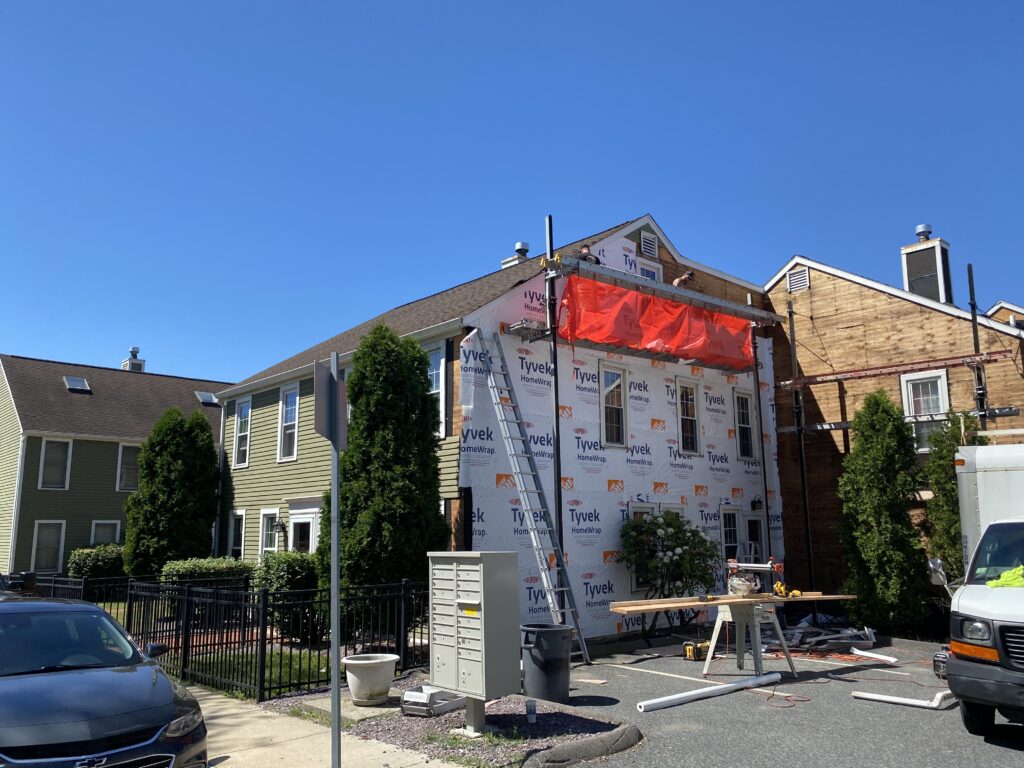
Commercial roof work on an occupied building is a scheduling problem as much as a construction problem. We phase tear-off and install in sections so the building stays operational, coordinate around loading dock hours and tenant traffic, and keep rooftop HVAC and electrical running with proper protection during the work. Where the existing membrane and insulation are sound, we can sometimes recover over the existing system instead of a full tear-off, which cuts cost and disruption. Where the deck has taken on water, that gets replaced before anything goes back down, because a new membrane over a rotten deck just buys you another failure in a few years.
What it costs
Commercial flat and low-slope roofing runs roughly {PRICE_LOW} to {PRICE_HIGH} depending on square footage, system type, and what we find once the old roof comes off. A straightforward EPDM recover on a small office building costs a lot less than a full TPO tear-off and replacement on a building with a dozen rooftop penetrations and a deck that needs sistering. Ponding areas, extra insulation layers to strip, and access constraints around an operating business all move the number. We give you a real range after the walk, not a phone quote.
How long it takes
Most single-building commercial roofs in the size range we see in Plaistow take anywhere from a few days to two weeks depending on square footage, weather, and how much phasing the tenant or ownership needs during business hours. A section-by-section approach on an occupied building always takes longer than tearing off one uninterrupted section, but it’s the only way to keep the doors open while the work happens.
Does Couture's Construction actually work in New Hampshire, not just Massachusetts?
Yes. We're based in Methuen, Massachusetts, and we work commercial and residential roofing jobs on both sides of the state line, including Plaistow, Salem, Derry, Windham, and Londonderry.
Can you recover an existing commercial membrane instead of tearing it off?
Sometimes. If the existing insulation and deck are dry and sound, a recover over EPDM or a compatible system can save cost and time. If we find wet insulation or a compromised deck during the assessment, tear-off is the honest recommendation.
Do you work around business hours so we don't have to close?
Yes, that's standard on commercial jobs. We phase the tear-off and install in sections and coordinate around loading docks, tenant traffic, and operating hours so the building stays functional during the work.
How do I know if my flat roof needs repair or full replacement?
It depends on how much of the membrane and deck are affected. Isolated seam failures or a single damaged section can often be repaired. Widespread ponding, saturated insulation, or a deck that's soft in multiple areas usually means repair is a short-term fix and replacement is the honest answer.
Get an estimate
We’re based in Methuen and work commercial roofing jobs on both sides of the Massachusetts and New Hampshire line, so a property in Plaistow gets the same crew and the same assessment process as a building in Methuen or Haverhill. Call {PHONE} to set up a roof walk. We’ll give you a straight answer on system, condition, and cost before anything gets scheduled.