
- Home
- Services
- Locations
Amesbury, MA
Boxford, MA
Chelmsford, MA
Danvers, MA
Dracut, MA
Essex, MA
Georgetown, MA
Groveland, MA
Hamilton, MA
Haverhill, MA
Ipswich, MA
Merrimac, MA
Methuen, MA
Middleton, MA
Newbury, MA
Newburyport, MA
North Andover, MA
North Reading, MA
Peabody, MA
Rowley, MA
Salem, MA
Salisbury, MA
Tewksbury, MA
Topsfield, MA
Topsfield, MA
West Newbury, MA
Atkinson, MA
Derry, NH
East Kingston, NH
Kensington, NH
Kingston, NH
Londonderry, NH
Plaistow, NH
Salem, NH
- Company
- Contact
- Home
- Services
- Locations
Amesbury, MA
Boxford, MA
Chelmsford, MA
Danvers, MA
Dracut, MA
Essex, MA
Georgetown, MA
Groveland, MA
Hamilton, MA
Haverhill, MA
Ipswich, MA
Merrimac, MA
Methuen, MA
Middleton, MA
Newbury, MA
Newburyport, MA
North Andover, MA
North Reading, MA
Peabody, MA
Rowley, MA
Salem, MA
Salisbury, MA
Tewksbury, MA
Topsfield, MA
Topsfield, MA
West Newbury, MA
Atkinson, MA
Derry, NH
East Kingston, NH
Kensington, NH
Kingston, NH
Londonderry, NH
Plaistow, NH
Salem, NH
- Company
- Contact
Commercial Roofing in Amesbury, MA
Walk Market Square or the mill buildings along the Powow River and you’ll find flat roof decks tucked behind nineteenth-century brick facades, sitting over retail space, offices, and small manufacturing that never stops running long enough for a roof to fail conveniently. Amesbury’s commercial buildings are a mix of old mill conversions with parapet walls and roof drains that predate anyone currently working there, and newer single-story commercial construction out toward Route 150 and the industrial park with simple low-slope membrane roofs. Both types fail in different ways, and both need someone who can work around a business that has to stay open.
Flat and Low-Slope Commercial Roofing in Amesbury
Most of the commercial roofs we’re called out to in Amesbury are EPDM rubber, TPO, or modified bitumen, sometimes layered on top of an old built-up roof nobody wants to talk about. We install and replace all three. EPDM has been the workhorse on New England flat roofs for decades and it holds up well if the seams are done right and the drains are kept clear. TPO gives you a reflective white membrane that helps with summer heat load, which matters if you’re running rooftop HVAC. Modified bitumen is still the right call on some of the older mill-style roofs where you need a heat-welded or torch-applied system that can handle a parapet wall and irregular flashing detail.
We don’t push one system on every building. What’s already up there, what the deck can take, what your drainage looks like, and what your budget and timeline actually allow all factor into the recommendation.
What Amesbury roofs are up against
Amesbury sits in the Merrimack River valley with a lot of tree cover over the older residential and mixed-use streets near downtown, and that means commercial flat roofs tucked behind or above tree-lined properties collect leaf debris in the drains and scuppers every fall. On a low-slope roof that debris doesn’t just sit there looking bad, it dams water against the membrane and that’s how you get ponding that outlasts a rainstorm by a week. Ponding water is the single fastest way to age an EPDM or TPO roof past its expected service life, because UV and standing moisture attack the seams first.
The other pressure is wind. Amesbury is close enough to the coast and open river frontage that gusts off the water put real uplift load on a flat roof membrane, especially at the perimeter and corners where fastening patterns matter most. On older mill buildings the roof edge detail and parapet flashing are frequently original or close to it, which means the weak point isn’t the field of the membrane at all, it’s where that membrane terminates. We also see a fair number of older flat roofs with multiple layers of built-up roofing stacked underneath a more recent membrane, which changes both the tear-off scope and what the deck looks like once you get down to it.
How we assess it
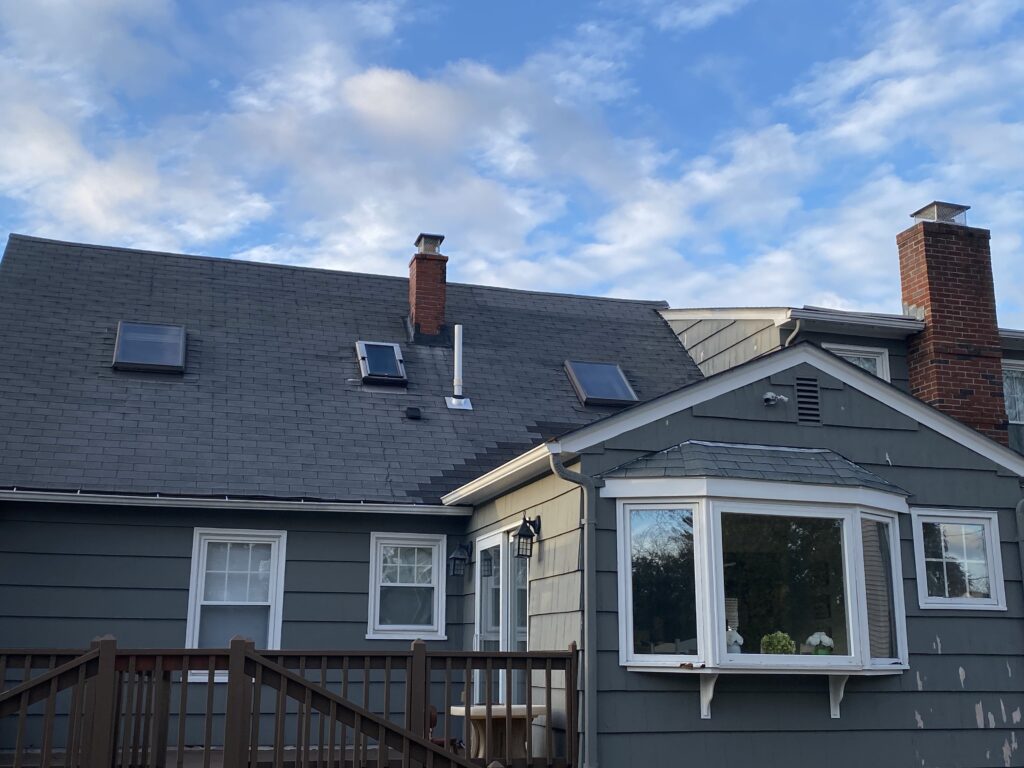
Derek gets on the roof before he tells you anything. That means walking the full membrane, checking seam condition, checking every drain, scupper, and pitch pocket, and pulling back flashing at parapets and any rooftop penetrations for HVAC curbs, vents, or conduit. From inside, if there’s attic or ceiling access below the roof deck, he’s looking for water staining, rusted fasteners, and insulation that’s gone soft, all of which tell you more about what’s actually happening than the surface membrane does on its own.
You get a straight answer on whether you’re looking at a repair, a recover, or a full tear-off and replacement, and why. A proper assessment happens before any recommendation, not after a number gets quoted. If a section of membrane is sound and the problem is isolated to a drain or a flashing detail, we’ll say so instead of scoping a whole-roof job you don’t need yet.
What the job involves
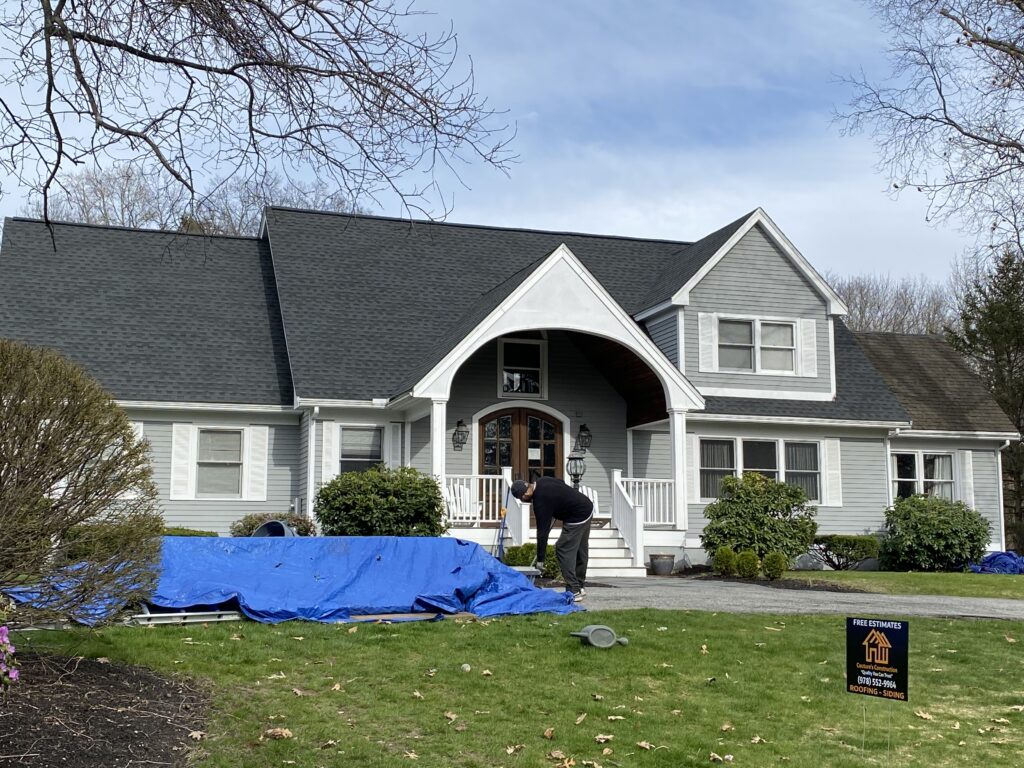
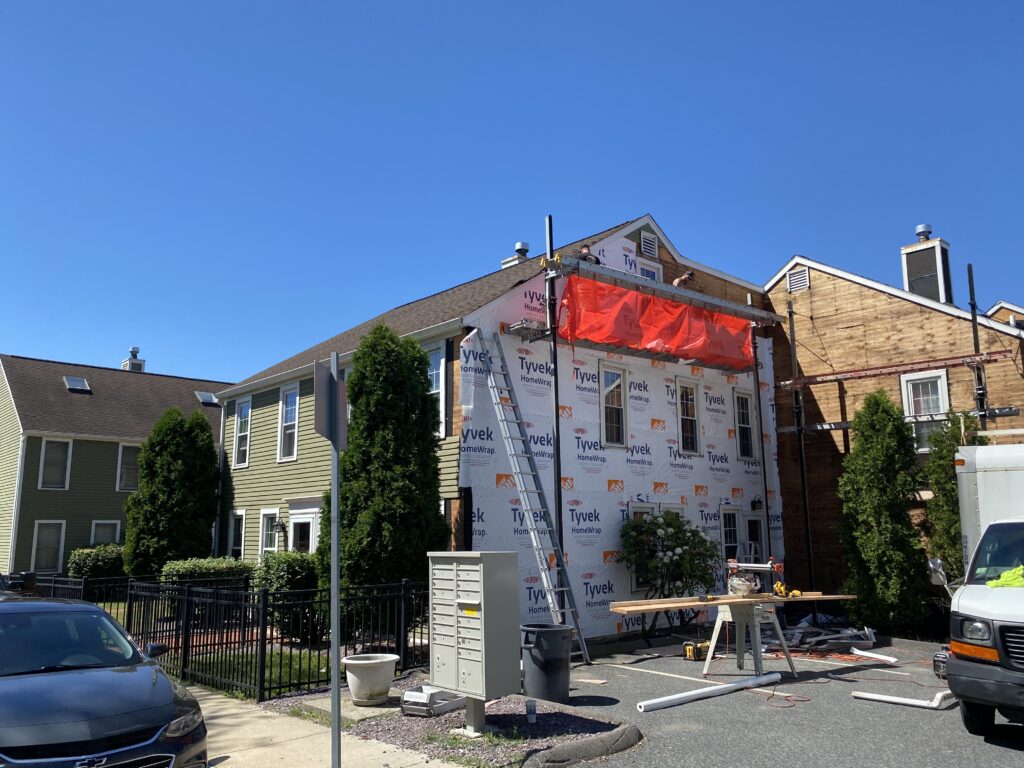
Every commercial roof job gets scoped around the fact that your building has to keep operating. For a tenant-occupied retail space or an active shop floor, that usually means staging material delivery and tear-off in sections rather than opening the whole roof at once, scheduling louder work outside business hours where that’s practical, and keeping walkways and entrances clear the entire time. For a full replacement, that’s tear-off down to a sound deck, replacing any rotted decking we find once the old membrane is off, new insulation where the R-value or drainage taper needs it, new edge metal and flashing at every parapet and penetration, and the new membrane fully adhered or mechanically fastened depending on the system and the wind exposure. For a targeted repair, we’re patching seams, resetting flashing, or correcting a drainage problem without disturbing membrane that’s still doing its job.
What it costs
Commercial flat roof work runs {PRICE_LOW} to {PRICE_HIGH} on most Amesbury buildings we quote, and the spread is wide because so much depends on the building. Total roof area and the number of penetrations, drains, and HVAC curbs all add labor. How many layers of old roofing have to come off changes both the dumpster count and the timeline. Rotted decking found once tear-off starts is the surprise nobody likes hearing about, but it’s common on older mill roofs and it gets priced as we find it, not guessed at up front. Access matters too. A single-story building off Route 150 with a loading dock is a different job than a roof three stories up over occupied retail downtown with no easy way to stage material.
How long it takes
A straightforward repair or drainage correction can be a single-day job. A full tear-off and replacement on a mid-size commercial roof usually runs several days to about two weeks depending on square footage, weather, and how we’re phasing the work around your operating hours. If we’re sectioning the roof to keep part of the building dry and operational throughout, that adds time compared to a vacant building where we can open the whole deck at once. Weather is the other variable, since membrane installation needs a dry deck and workable temperatures to bond and seam correctly.
Do you work on occupied commercial buildings or only vacant ones?
Most of our commercial roofing work happens on buildings that are open and operating. We phase tear-off and installation in sections, coordinate delivery and staging around your business hours where possible, and keep entrances and walkways clear throughout the job.
How do I know if my flat roof needs a repair or a full replacement?
It depends on what the membrane and deck look like once we're up there. If the damage is isolated to a seam, a drain, or a flashing detail and the rest of the membrane is sound, a repair is the honest answer. If there's widespread ponding damage, multiple failed layers, or deck rot, replacement is usually the better long-term move. We tell you which situation you're in before we recommend anything.
What roofing systems do you install on commercial buildings in Amesbury?
EPDM rubber, TPO, and modified bitumen, depending on the building. Older mill-style buildings with parapets often call for modified bitumen or a properly detailed EPDM system, while newer single-story commercial buildings often do well with TPO for its reflectivity and seam strength.
Why does my flat roof keep collecting standing water?
Ponding usually comes down to clogged or undersized drains, debris buildup from nearby tree cover, or a roof deck that's settled unevenly over time. Standing water accelerates membrane aging, so it's worth having the drainage checked rather than just watching it happen every time it rains.
Do you handle the permitting for commercial roof work in Amesbury?
Get an estimate
If you manage or own a commercial building in Amesbury and you’ve got a flat or low-slope roof that’s ponding, leaking at a seam, or just old enough that you’re wondering what’s underneath it, call Couture’s Construction at {PHONE}. Derek will get up there, tell you what he sees, and give you a straight recommendation before anything gets scoped or priced.