
- Home
- Services
- Locations
Amesbury, MA
Boxford, MA
Chelmsford, MA
Danvers, MA
Dracut, MA
Essex, MA
Georgetown, MA
Groveland, MA
Hamilton, MA
Haverhill, MA
Ipswich, MA
Merrimac, MA
Methuen, MA
Middleton, MA
Newbury, MA
Newburyport, MA
North Andover, MA
North Reading, MA
Peabody, MA
Rowley, MA
Salem, MA
Salisbury, MA
Tewksbury, MA
Topsfield, MA
Topsfield, MA
West Newbury, MA
Atkinson, MA
Derry, NH
East Kingston, NH
Kensington, NH
Kingston, NH
Londonderry, NH
Plaistow, NH
Salem, NH
- Company
- Contact
- Home
- Services
- Locations
Amesbury, MA
Boxford, MA
Chelmsford, MA
Danvers, MA
Dracut, MA
Essex, MA
Georgetown, MA
Groveland, MA
Hamilton, MA
Haverhill, MA
Ipswich, MA
Merrimac, MA
Methuen, MA
Middleton, MA
Newbury, MA
Newburyport, MA
North Andover, MA
North Reading, MA
Peabody, MA
Rowley, MA
Salem, MA
Salisbury, MA
Tewksbury, MA
Topsfield, MA
Topsfield, MA
West Newbury, MA
Atkinson, MA
Derry, NH
East Kingston, NH
Kensington, NH
Kingston, NH
Londonderry, NH
Plaistow, NH
Salem, NH
- Company
- Contact
Roof Replacement in Georgetown, MA
Georgetown has more roof planes per house than most towns we work in. Colonial and antique homes on the older lots come with dormers, intersecting gables, and additions bolted on over the decades, and every one of those seams is a place water can find its way in. A lot of these properties also sit back on long private drives under heavy tree cover, which changes how we plan the job before a single shingle comes off.
Roof Replacement in Georgetown
Most homeowners who call us are not sure yet if they need a repair or a full replacement, and that is the right question to start with. Here is the honest version: if the decking is sound, the leak is isolated to one flashing point or a section of damaged shingles, and the roof still has years of usable life left, a repair is the right call and we will tell you that. Replacement makes sense when the shingles are worn across the whole field, not just one slope, when you are seeing granule loss in the gutters every season, when there is soft or spongy decking under more than one area, or when the roof has already been patched more than once and the patches are not holding. On the estate-style properties common in Georgetown, replacement is also the right time to correct ventilation problems and fix places where past additions were tied into the original roofline without proper flashing.
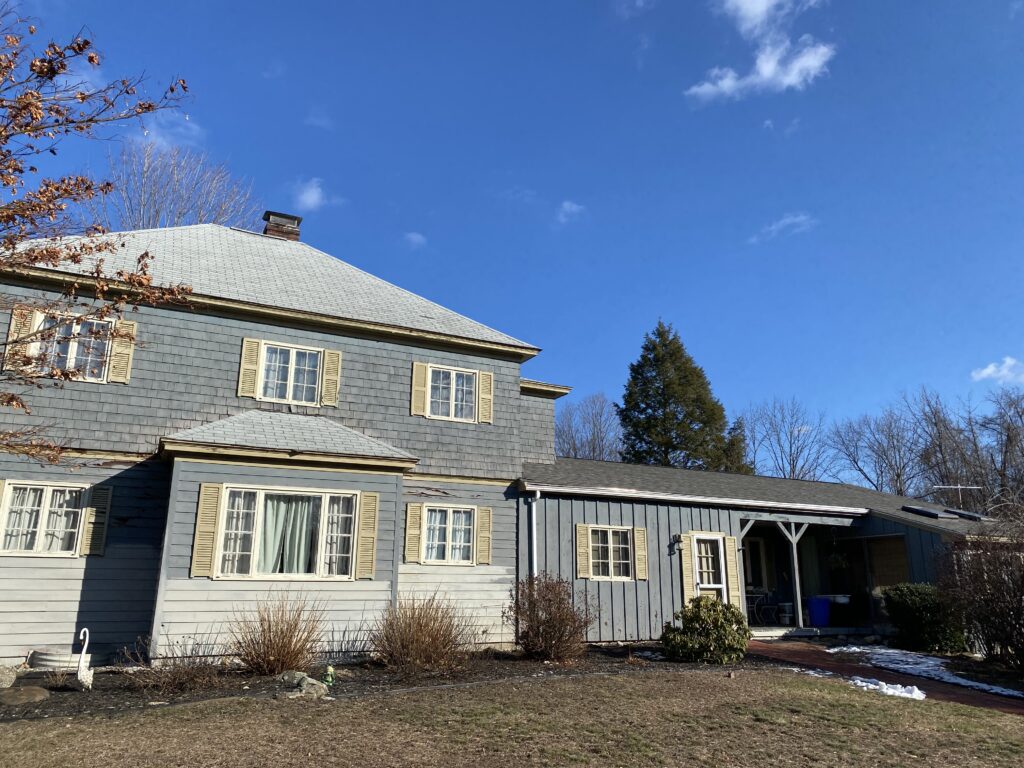
For a straightforward replacement, we typically install architectural asphalt shingles rated for high wind, ice and water shield along eaves and in valleys, and balanced ridge and soffit ventilation. On the older homes with slate or cedar sections, we talk through whether to match the original material, transition to architectural asphalt on the parts that will not be visible from the street, or keep the slate and rebuild the field around it. That decision depends on the house, the budget, and what the roofline is doing structurally.
What Georgetown roofs are up against
The tree canopy here is the first thing we look at. Large lots mean mature trees close to the house, and that means valleys and north-facing slopes collect leaves, pine needles, and moisture that a more open lot would not hold onto. That debris load slows drainage, keeps shingles wet longer than they should be, and accelerates the granule loss that shortens a roof’s life. On the shaded north slopes we also see ice dams form earlier and hold longer into the spring, because the snow above the warm attic space melts and refreezes right at the eave before it can run off.
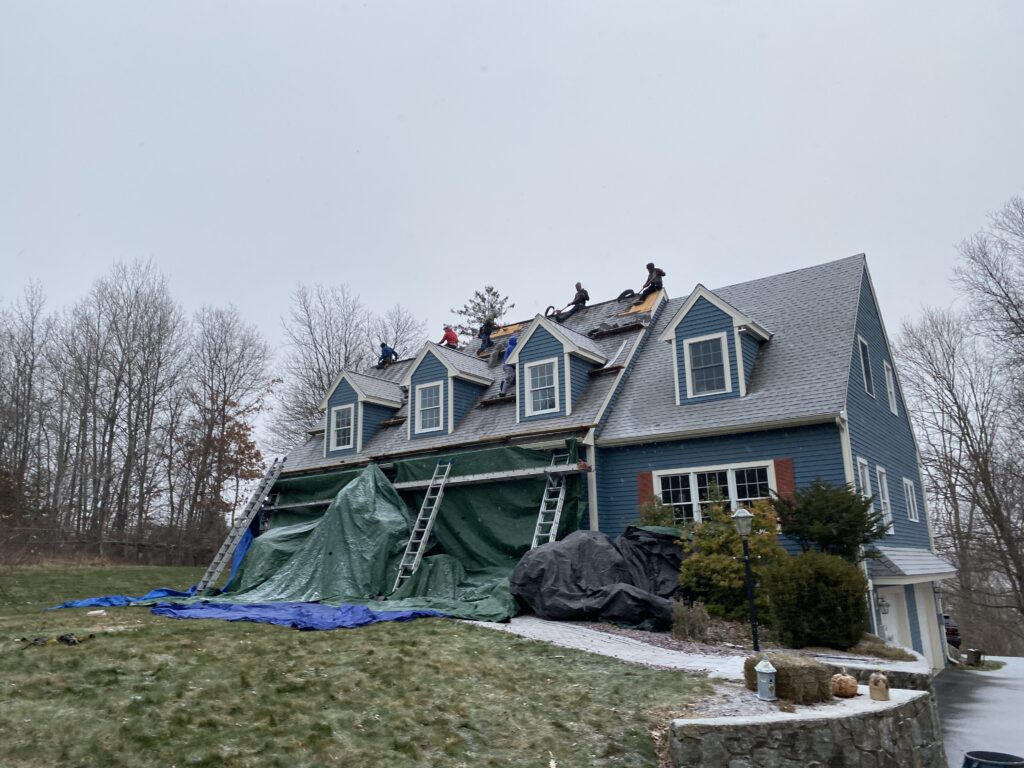
The second issue is geometry. A lot of Georgetown’s colonial and antique housing stock has steep pitches, multiple dormers, and rooflines that were added to more than once over the life of the house. Every valley, every dormer cheek wall, every place where a lower roof ties into a higher one is a flashing detail that has to be done right or it becomes the leak point five years later. On properties with outbuildings, barns, or detached garages that also need roofing, matching the pitch and material of the main house matters for the look of the property, not just the function. Access is a real planning factor too. Long private driveways and setback houses mean we have to think through dumpster placement, truck staging, and where materials get lifted before the crew ever shows up.
How we assess it
Derek walks every roof before we quote it. That means getting up on the roof itself, not just looking at it from the driveway. We check the decking for soft spots, delamination, and daylight gaps you can only see from underneath. We check every flashing point, chimneys, valleys, skylights, and any place where a lower roof plane meets a wall or a higher roof. We get into the attic and look at the underside of the decking for water staining, check insulation and existing ventilation, and measure whether the ridge and soffit vents are actually balanced or just installed for looks. On the older Georgetown homes we also check whether previous additions were properly tied into the original structure or just shingled over. You get a straight answer on what is actually happening up there before we talk about what to do about it.
What the job involves
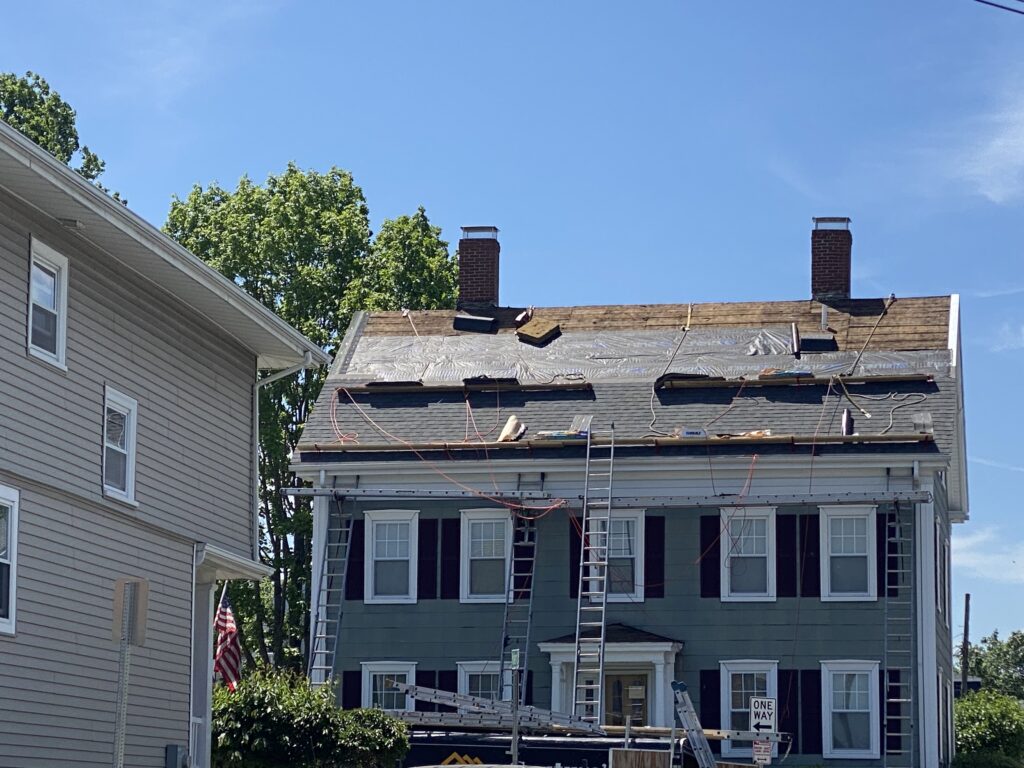
A full tear-off starts with stripping the existing roof down to the decking, which is the only way to know what condition the wood is really in. Any rotted or delaminated sheathing gets replaced before anything new goes down. We install ice and water shield along the eaves, valleys, and around penetrations, then synthetic underlayment across the rest of the field. Flashing gets rebuilt at chimneys, sidewalls, and valleys rather than reused. Shingles go down to manufacturer spec for the wind rating we are targeting, and ridge and soffit ventilation gets corrected if it was not balanced before. On multi-plane roofs, sequencing matters, we work section by section so the house is never fully open to weather overnight. Cleanup includes a magnetic sweep for nails around the house and driveway, which matters more on a property with kids, pets, or gravel drives where stray nails are hard to spot.
What it costs
A typical full roof replacement in Georgetown runs between {PRICE_LOW} and {PRICE_HIGH}, and where a specific job lands in that range depends on a handful of concrete factors. Size and pitch matter most, a steep multi-dormer colonial takes longer and needs more safety setup than a simple gable roof. The number of existing layers to strip off adds labor and disposal cost. What we find once the decking is exposed can move the number too, rotted sheathing gets replaced at an added cost per sheet, and that is something we will not know for certain until tear-off, though we will flag likely trouble spots during the assessment. Access is the other real variable on these properties, a roof at the end of a long private drive with tight staging for equipment costs more to run than one right off the street. We give you a number based on what we actually find, not a phone estimate.
How long it takes
A straightforward tear-off and replacement on a standard roof usually takes one to two days once we start. Georgetown’s larger, more complex rooflines with multiple dormers, valleys, and outbuildings typically run longer, sometimes three to four days, because of the added flashing work and the sequencing needed to keep the house weather-tight overnight. Weather is the biggest variable, we do not shingle in the rain and we will not rush a flashing detail to hit a deadline. We will give you a realistic timeline once we have seen the roof and know what we are dealing with.
How do I know if I need a repair or a full replacement?
If the damage is isolated to one section, the decking underneath is solid, and the rest of the roof still has useful life left, a repair is usually the right call. Full replacement makes more sense when shingles are worn across the whole roof, when there is soft decking in more than one spot, or when the roof has already been patched multiple times without holding.
Do you match slate or cedar roofing on older Georgetown homes?
It depends on the house and the budget. Sometimes matching the original material on visible sections while transitioning to architectural asphalt on rear or hidden slopes is the practical answer. We walk through the options during the assessment rather than assuming one answer fits every antique home.
Can you get equipment to a house with a long private driveway?
Yes, but we plan it ahead of time. We look at driveway width, turning space, and where materials and dumpsters can stage before the crew arrives, so access doesn't slow down the job once it starts.
What causes ice dams on Georgetown roofs specifically?
Heavy tree cover keeps north-facing slopes shaded and slower to shed snow, and a lot of older homes here have attic ventilation that was never properly balanced. Warm air escaping into the attic melts snow from underneath, and it refreezes at the cold eave, which is what forms the dam.
Do you handle roofing on barns or outbuildings too?
Yes. On larger Georgetown properties we often quote the main house and an outbuilding or garage together, matching pitch and material where it makes sense for how the property reads as a whole.
Request a Free Quote
If your Georgetown home needs a new roof, Couture’s Construction is ready to help. We’ll walk your property, answer your questions honestly, and put together a clear, written estimate with no pressure to sign on the spot.
Whether you’re comparing options after storm damage or planning ahead for an aging roof, we’re happy to talk through materials, timelines, and what makes sense for your specific house before you decide anything.