
- Home
- Services
- Locations
Amesbury, MA
Boxford, MA
Chelmsford, MA
Danvers, MA
Dracut, MA
Essex, MA
Georgetown, MA
Groveland, MA
Hamilton, MA
Haverhill, MA
Ipswich, MA
Merrimac, MA
Methuen, MA
Middleton, MA
Newbury, MA
Newburyport, MA
North Andover, MA
North Reading, MA
Peabody, MA
Rowley, MA
Salem, MA
Salisbury, MA
Tewksbury, MA
Topsfield, MA
Topsfield, MA
West Newbury, MA
Atkinson, MA
Derry, NH
East Kingston, NH
Kensington, NH
Kingston, NH
Londonderry, NH
Plaistow, NH
Salem, NH
- Company
- Contact
- Home
- Services
- Locations
Amesbury, MA
Boxford, MA
Chelmsford, MA
Danvers, MA
Dracut, MA
Essex, MA
Georgetown, MA
Groveland, MA
Hamilton, MA
Haverhill, MA
Ipswich, MA
Merrimac, MA
Methuen, MA
Middleton, MA
Newbury, MA
Newburyport, MA
North Andover, MA
North Reading, MA
Peabody, MA
Rowley, MA
Salem, MA
Salisbury, MA
Tewksbury, MA
Topsfield, MA
Topsfield, MA
West Newbury, MA
Atkinson, MA
Derry, NH
East Kingston, NH
Kensington, NH
Kingston, NH
Londonderry, NH
Plaistow, NH
Salem, NH
- Company
- Contact
Skylight Installation and Replacement in Kensington, NH
Kensington’s housing stock runs older and more spread out than the subdivisions you see closer to Exeter or Portsmouth, with a lot of capes and farmhouses on wooded lots that have been added onto over the decades. Tree cover sits heavy over a lot of these roofs, which means the acrylic bubble skylights installed on additions and sunrooms back in the 80s and 90s are usually dealing with decades of pine needles, shade-driven moss, and slow leaks nobody noticed until the ceiling below it started showing a ring.
Skylight Installation and Replacement in Kensington
Two different homeowners call us about skylights, and they’re not asking for the same thing. One has a bubble-style unit over the kitchen that’s gone cloudy and started sweating on the inside of the glazing in cold weather. That’s a straight replacement, and in most cases it’s the smart move to make while a reroof is already scheduled, because the roof is open anyway. The other homeowner has a dark north-facing bedroom or a stairwell with no natural light, and they want to cut a new opening where nothing has ever been. That’s a bigger decision involving framing, a light shaft, and interior finish work, and it deserves its own conversation and its own number.
We work both sides of the Massachusetts-New Hampshire line out of Methuen, and Kensington is well within our regular service area. A homeowner here has no reason to assume a Massachusetts-based crew handles New Hampshire towns, so we’ll say it plainly: we’re licensed and set up to pull permits on your side of the border, and we’re already doing this work in Derry, Windham, and Salem NH.
Deck-mounted
units fasten straight to the roof deck and use a matched step-flashing kit. This is what goes on most pitched roofs now. It sits low, looks clean and handles snow well.
Curb-mounted
units sit on a raised wood frame built on the roof. They are the right call on low-slope sections, generally below about 3 in 12, and a lot of older installs already have them.
Fixed
units let in light and nothing else. Fine over a high cathedral ceiling you will never reach.
Manual or electric venting
units open to let heat and steam out. They earn their keep in kitchens and bathrooms.
Solar-powered venting
units run off a small panel, need no wiring to the house, and close on their own when the rain sensor gets wet.
What Kensington roofs and homes are working with
A lot of Kensington’s housing sits on larger, wooded parcels, which means direct sun exposure on the roof plane varies a lot from one house to the next. That matters for skylights two ways. First, heavy shade slows down snow melt on the roof around the unit, which raises ice dam risk right at the curb where the shingle course meets the flashing. Second, needle and leaf debris builds up in the flashing channel faster than it does on an open roof, and that debris holds moisture against the metal long after the rest of the roof has dried out.
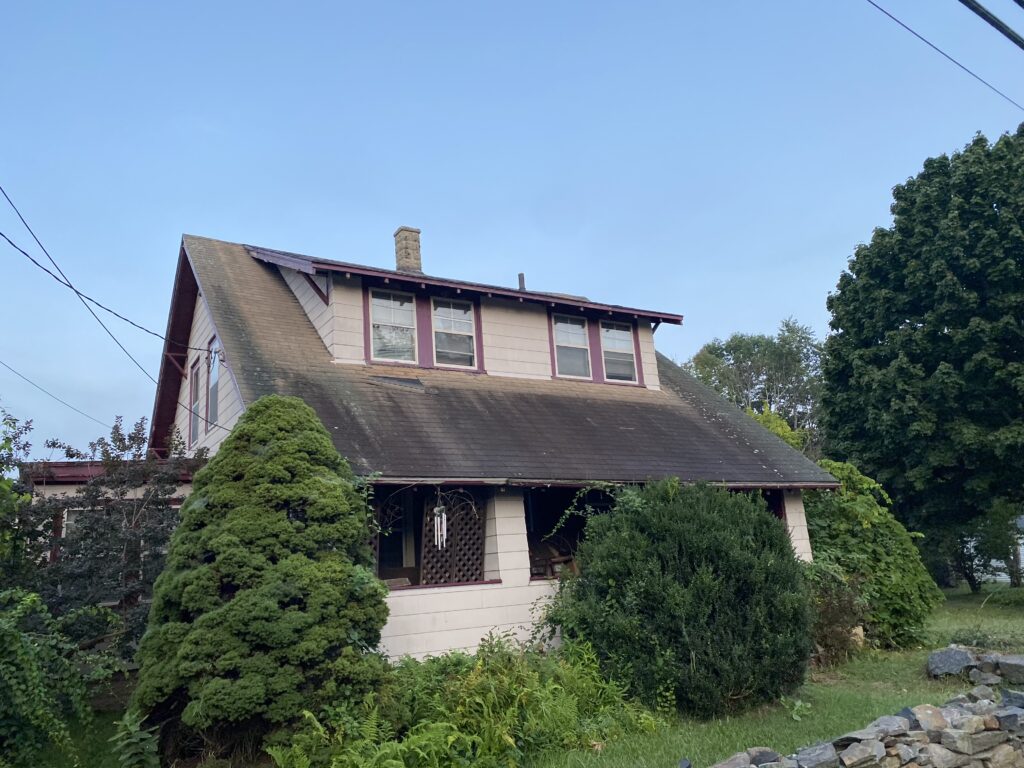
Roof pitch and framing style vary block to block here too. Older capes with low-pitch additions or shed dormers often have skylights installed into a shallower slope than you’d see on a newer build, and shallow pitch changes how water sheds around the unit and how much ice and water shield we want under the shingles nearby. Housing that dates from the same building period tends to have skylights reaching the end of their service life together, and if your neighborhood went up mostly in one stretch of decades, there’s a good chance several houses on your road are due for the same conversation you’re having right now.
How we assess it
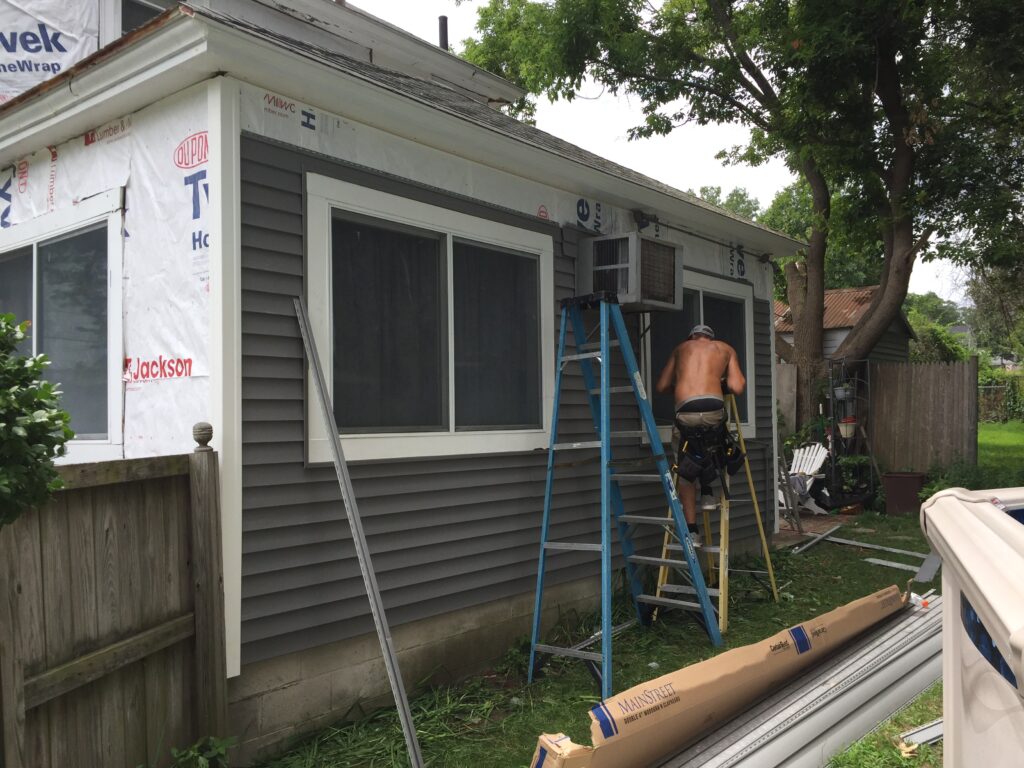
Before we quote anything, Derek or one of our crew leads gets on the roof and looks at the actual condition around the opening, not just the skylight itself. That means checking the step flashing and counter flashing for corrosion or gaps, pulling back the surrounding shingle course to see how it was tied in originally, and checking the curb or deck framing for soft spots or rot. From inside, we look at the light shaft or ceiling opening for staining, check attic ventilation near the unit, and confirm the insulation around the shaft hasn’t been compressed or left with gaps that invite condensation.
We don’t recommend a replacement or a new cut-in until we’ve seen all of that. A unit that looks fine from the ground can be sitting on a rotted curb, and a unit that looks rough up close can be salvageable if the flashing and decking underneath are still sound. The assessment tells us which one you’re dealing with before we talk numbers.
What the job involves
Replacement
We strip the shingles around the unit, pull the old skylight and flashing, repair the deck at the opening if it needs it, and set the new unit. Ice and water shield wraps up the sides and across the top, the step-flashing kit goes on, and we shingle back in. If the new unit matches the rough opening, the interior usually stays as it is. On a full roof replacement in Kensington, all of this fits inside the reroof. The shingles are already off, the deck is exposed, and the new underlayment and flashing tie in as one system.
New cut-in
We lay out the opening from inside and out, cut the deck, and frame headers between the rafters. Ventilation gets rerouted so the bays above and below the opening still breathe. Then the unit, ice and water shield, flashing and shingles. Inside, a new opening means a light shaft through the attic, drywall and paint. That interior work is part of the conversation at the estimate, and we settle who handles what before anything is scheduled.
A replacement during a reroof is the cleanest version of this job. The old unit comes out, we check and repair the curb or deck framing as needed, install new ice and water shield around the opening, set the new skylight, and integrate fresh step and counter flashing into the new shingle course. Because the roof is already stripped down to the deck, there’s no extra tear-off or re-flashing cost stacked on top of the skylight itself.
A standalone replacement on an otherwise intact roof means cutting back and removing shingles around the existing unit, replacing the flashing, and re-weaving the shingle course back in, which takes more labor per unit than doing it mid-reroof. A new cut-in is the biggest job of the three. It means opening the roof deck, framing the new opening between rafters, building a light shaft down to the ceiling, and flashing the new opening from scratch. The interior side, drywall, shaft finishing, and paint, is part of the conversation and something we plan for with you, but it’s a separate scope from the roofing work itself.
On unit type, you’re choosing between fixed, manual venting, and solar-powered venting, and between curb-mounted and deck-mounted framing. A fixed unit is the simplest and least expensive. A venting unit adds fresh air and helps clear humidity out of kitchens and bathrooms, which matters if condensation was part of why the old one failed. Solar-powered venting adds an automatic vent motor without any new wiring, which is often the easiest upgrade path for a room that never had power run to it.
What it costs
A skylight replaced during a reroof runs {PRICE_LOW} to {PRICE_HIGH} per unit in most cases, because the roof is already open and the flashing work is already part of the job. A standalone replacement on an intact roof costs more than that because of the added tear-off, shingle removal, and re-flashing labor. A new cut-in costs the most of the three, since it includes framing a new opening, building a light shaft, and flashing work that has no existing structure to build from.
What moves the number inside those ranges: the size and type of unit, whether you’re going fixed, venting, or solar-powered venting, curb-mounted versus deck-mounted framing, roof pitch and how much staging or access equipment the crew needs, and whether the decking around the opening needs repair once we get it opened up. Interior finish work on a new cut-in is priced separately from the roofing scope. We’ll never quote you a single number without seeing the roof and the attic side first.
How long it takes
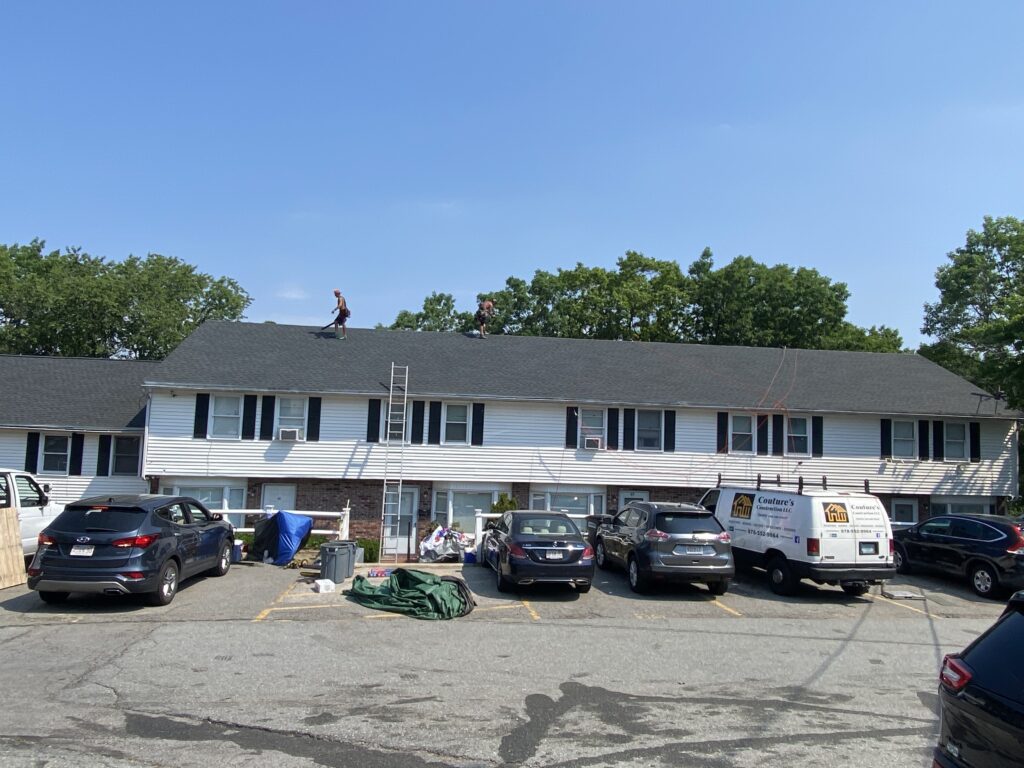
A single skylight replacement, whether it’s mid-reroof or standalone, is usually a one-day job for the crew once the roof is opened up. A new cut-in takes longer because of the framing and light shaft work, typically two to three days for the roofing and structural side, with interior finish scheduled separately depending on who’s doing that portion of the work. Weather and roof access can push timelines in either direction, and we’ll give you a realistic window once we’ve seen the site.
Get an estimate
If you’ve got a skylight that’s fogged, cracked, or just old, or a room in your Kensington house that could use one for the first time, get in touch and we’ll set up a time to look at the roof and the attic together. Call Couture’s Construction at {PHONE} or send us a message with a few details about the house and what you’re trying to fix or add.
Can a skylight be replaced without touching the roofing around it?
Yes, if the shingles around the curb are still in decent shape and you just want the unit swapped. But if you're within a few years of needing a reroof anyway, doing both together saves you money and avoids paying for tear-off and flashing work twice.
What's the difference between curb-mounted and deck-mounted skylights?
A curb-mounted skylight sits on a raised wooden frame built up from the roof deck. A deck-mounted unit sits flush against the deck itself with its own integrated flashing. Deck-mounted is more common now on newer installs because it sheds water and snow more cleanly, but a curb-mounted replacement usually has to stay curb-mounted unless you're rebuilding the opening.
Do solar-powered venting skylights actually work in New Hampshire winters?
Yes. The solar panel runs a small motor that opens the vent for airflow, which matters more in summer than winter, but the unit itself is built and flashed the same as any other venting skylight and holds up fine through a Kensington winter.
Will a new skylight leak?
Not if it's flashed correctly and the curb or deck condition was sound before install. Almost every leak we get called out for is a flashing or step-flashing failure, not a defective unit. That's why we check the opening and surrounding decking before we ever quote a job.
Can I add a skylight to a room that doesn't have one now?
Ready to talk skylights?
Reach out to Couture’s Construction and let us know if you’re replacing a leaky, aging skylight or adding a new one to bring light into a Kensington room that needs it. Mention the roof pitch and general age if you know it. We’ll arrange a visit to check the roofline and framing before laying out your options.