
- Home
- Services
- Locations
Amesbury, MA
Boxford, MA
Chelmsford, MA
Danvers, MA
Dracut, MA
Essex, MA
Georgetown, MA
Groveland, MA
Hamilton, MA
Haverhill, MA
Ipswich, MA
Merrimac, MA
Methuen, MA
Middleton, MA
Newbury, MA
Newburyport, MA
North Andover, MA
North Reading, MA
Peabody, MA
Rowley, MA
Salem, MA
Salisbury, MA
Tewksbury, MA
Topsfield, MA
Topsfield, MA
West Newbury, MA
Atkinson, MA
Derry, NH
East Kingston, NH
Kensington, NH
Kingston, NH
Londonderry, NH
Plaistow, NH
Salem, NH
- Company
- Contact
- Home
- Services
- Locations
Amesbury, MA
Boxford, MA
Chelmsford, MA
Danvers, MA
Dracut, MA
Essex, MA
Georgetown, MA
Groveland, MA
Hamilton, MA
Haverhill, MA
Ipswich, MA
Merrimac, MA
Methuen, MA
Middleton, MA
Newbury, MA
Newburyport, MA
North Andover, MA
North Reading, MA
Peabody, MA
Rowley, MA
Salem, MA
Salisbury, MA
Tewksbury, MA
Topsfield, MA
Topsfield, MA
West Newbury, MA
Atkinson, MA
Derry, NH
East Kingston, NH
Kensington, NH
Kingston, NH
Londonderry, NH
Plaistow, NH
Salem, NH
- Company
- Contact
Roof Repair in Derry, NH
Most of the roofs we get called to in Derry went up between the late 1970s and the mid-1990s, back when the town’s subdivisions off Route 28 and around Beaver Lake filled in fast. That means a lot of Derry roofs are hitting 25 to 45 years old at roughly the same time, and they’re failing the same way: cracked pipe boots, granule loss on the south-facing slope, and valleys that never had proper ice and water shield to begin with. If your roof is one of those, a repair call now is usually the right first move, not a stall tactic.
Roof Repair in Derry
We work on capes, colonials, raised ranches, and the occasional farmhouse holdover scattered through Derry’s older sections near downtown and East Derry. Roof geometry here runs from simple gable roofs on the smaller ranches to more complicated hip-and-valley layouts on the larger colonials built during the subdivision boom. Complicated rooflines mean more flashing points, more valleys, and more places for a small leak to start. We fix what’s actually broken. We don’t quote a repair and then talk you into a full tear-off before we’ve even been in your attic.
What Derry roofs are up against
Derry sits far enough inland that wind uplift isn’t the main threat the way it is closer to the coast, but ice damming is a real problem here every winter. Roofs with poor attic ventilation and minimal soffit intake build up ice at the eaves when snow melts off the warmer upper roof and refreezes at the cold overhang. That ice backs water up under the shingles, and it shows up as a stain on a bedroom ceiling in February that has nothing to do with a missing shingle. North-facing slopes and roofs shaded by mature oak and pine, which cover a lot of the older lots around Beaver Lake and Hood Park, hold snow and ice longer and see this problem worst.
The other thing we see a lot in Derry specifically is valley debris. Tree cover here is heavier than in the newer, more open subdivisions in Salem or Windham, and pine needles and oak leaves pack into open valleys every fall. That debris holds moisture against the shingles and rots the underlayment from below, so the leak often starts well before any shingle looks visibly damaged from the ground. We also see low-slope rear additions on some of the older East Derry homes, built as sunrooms or mudroom additions with roofing that was never rated for standing water the way the main roof is.
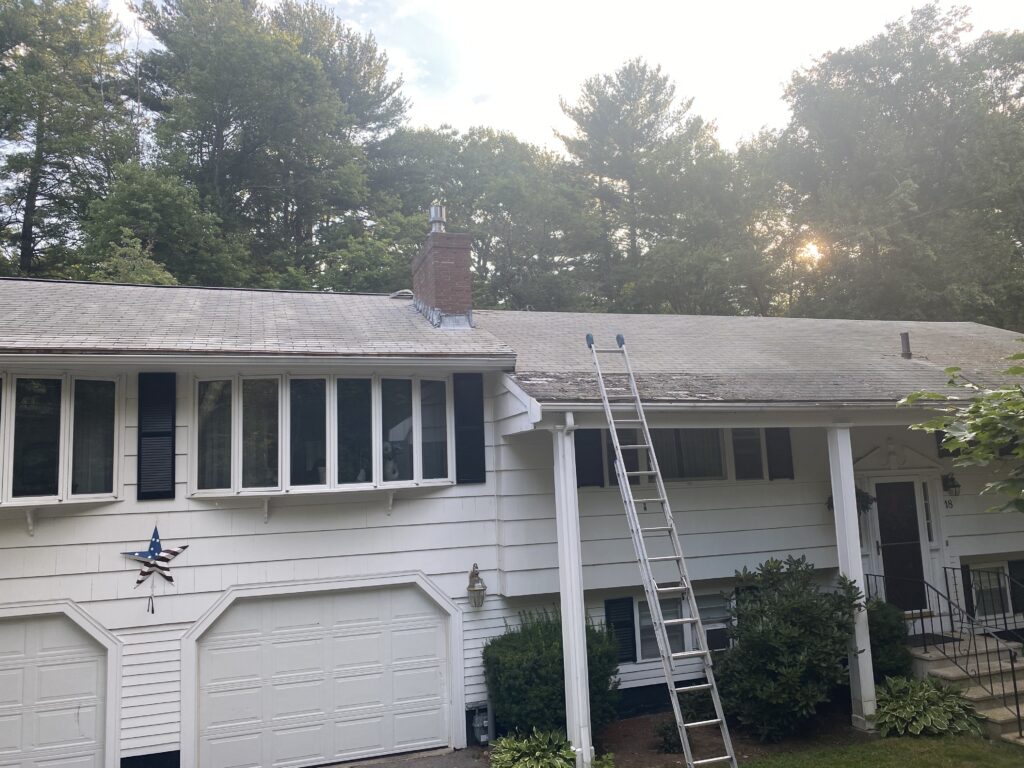
How we assess it
Derek gets on the roof before anyone quotes anything. That means checking the decking for soft spots underfoot, pulling back shingles at suspect flashing points around chimneys and valleys, and checking the ridge and soffit vents for airflow. Then we go into the attic, because that’s where you actually see what’s happening. Daylight coming through the roof deck, dark water staining on the rafters, matted or missing insulation near the eaves, all of that tells us more than a walk around the yard ever will. A real assessment happens before a real recommendation. If we can’t tell you why something is leaking, we haven’t looked hard enough yet.
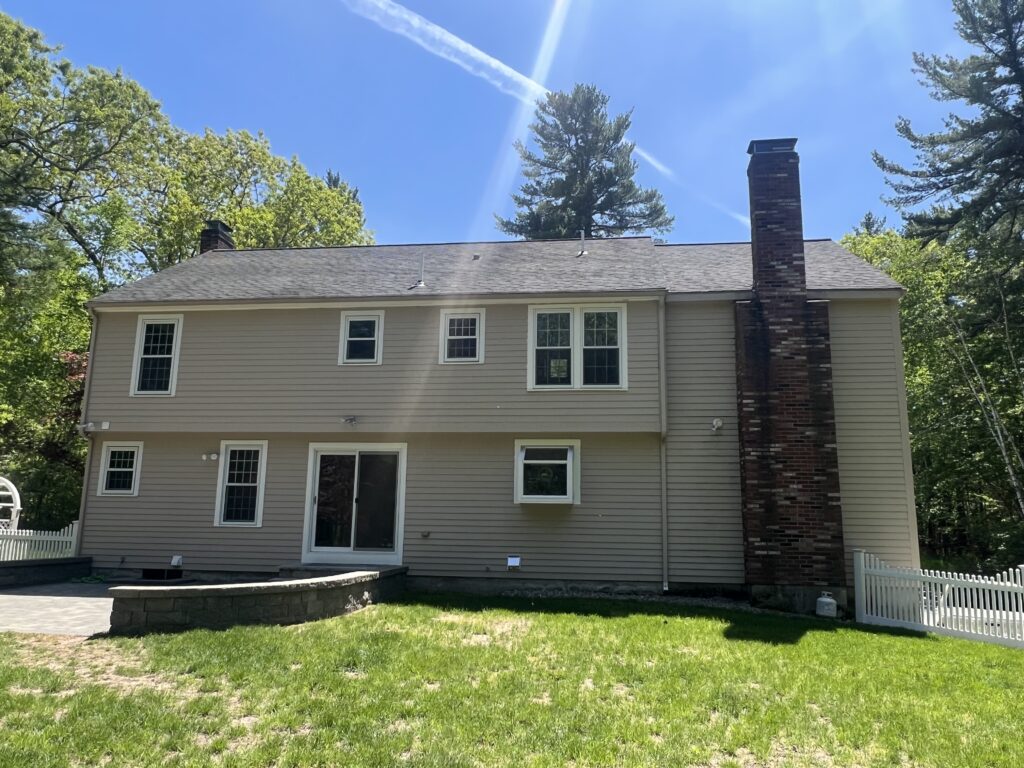
What the job involves
Repair work in Derry usually falls into a few categories. Flashing repair at chimneys, walls, and valleys is the most common, because flashing is metal and metal fails at seams and fasteners long before shingles wear out. Pipe boot replacement is another frequent one, especially on roofs from the 1980s and 90s where the original rubber boots have dried out and cracked. Localized shingle replacement after a branch strike or wind damage is straightforward if the surrounding shingles are still flexible and not too far gone. And ice dam damage repair, which usually means replacing rotted decking at the eaves and adding proper ice and water shield before new shingles go back down, so the same failure doesn’t happen again next winter.
Every repair gets matched as closely as possible to the existing shingle line and, where it matters, checked against the manufacturer’s wind rating for the shingle already on your roof.
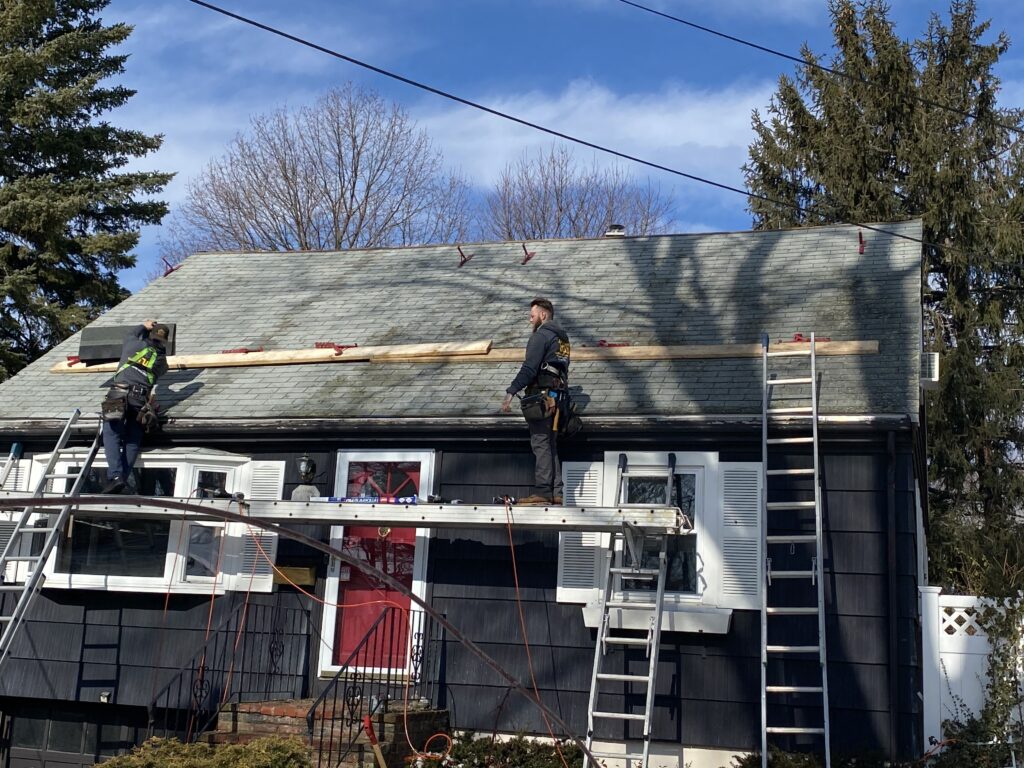
What it costs
Roof repair in Derry generally runs {PRICE_LOW} to {PRICE_HIGH}, and where you land in that range depends on a few things we can only nail down after we’re up there. Roof size and pitch matter, because a steep roof takes longer and needs more safety setup than a low-slope one. How many layers of old shingles are already on the roof matters, since stripping two layers takes longer than one. And decking condition is the real variable. If we pull back a section of flashing and find rotted plywood underneath, that’s more material and more labor than a straightforward flashing swap. Access matters too, whether it’s a simple ranch roof or a steep colonial with limited ladder placement around landscaping. We give you the range up front and the actual number once we’ve seen the roof, not a phone quote.
How long it takes
Most single-issue repairs in Derry, a flashing fix, a pipe boot swap, a section of shingles, are done in a single day, often in a few hours. Ice dam damage that requires deck replacement at the eaves takes longer, usually a full day to a day and a half depending on how much decking needs to come out. We work around Derry’s weather the same way we work around Methuen’s. Shingle work needs a dry roof and reasonable temperatures to seal properly, so we schedule around that rather than rushing a repair that won’t hold.
Do you actually serve Derry, NH, or just Massachusetts towns?
We're based in Methuen, Massachusetts, and Derry is a regular part of our coverage area. We work in southern New Hampshire towns including Derry, Londonderry, Windham, and Salem NH as often as we work in northern Massachusetts.
How do I know if I need a repair or a full roof replacement?
It comes down to decking condition and how widespread the damage is. If the deck is solid and the problem is isolated to flashing, a pipe boot, or a section of shingles, a repair is the right call. If there's rot spread across multiple areas or the shingles are past their service life across the whole roof, we'll tell you that too. We don't recommend replacement unless the roof actually needs it.
What causes ice dams on Derry roofs?
Heat escaping from the living space warms the upper roof deck, melts snow, and that water runs down and refreezes at the cold eaves where there's no heat loss underneath. Poor attic insulation and inadequate soffit or ridge ventilation are usually the root cause, not just the weather.
Do I need a permit for roof repair in Derry?
Minor repairs like flashing or shingle patches typically don't require a permit in Derry, but larger repair work involving structural decking replacement may. We'll tell you upfront if your job needs one and we'll pull it.
How fast can you get to a leak in Derry?
It depends on our schedule and the weather, but active leaks get priority. Call {PHONE} and describe what you're seeing and we'll give you a realistic timeframe, not a same-day promise we can't keep.
Get an estimate
Derry is New Hampshire, Methuen is Massachusetts, and we work both sides of that line every week. Different state, different permitting process for anything that needs a permit, but the same crew, the same assessment, and the same straight answer about whether you need a repair or something bigger. Call {PHONE} and we’ll get a time on the calendar to get up on your roof and tell you what we actually see.