
- Home
- Services
- Locations
Amesbury, MA
Boxford, MA
Chelmsford, MA
Danvers, MA
Dracut, MA
Essex, MA
Georgetown, MA
Groveland, MA
Hamilton, MA
Haverhill, MA
Ipswich, MA
Merrimac, MA
Methuen, MA
Middleton, MA
Newbury, MA
Newburyport, MA
North Andover, MA
North Reading, MA
Peabody, MA
Rowley, MA
Salem, MA
Salisbury, MA
Tewksbury, MA
Topsfield, MA
Topsfield, MA
West Newbury, MA
Atkinson, MA
Derry, NH
East Kingston, NH
Kensington, NH
Kingston, NH
Londonderry, NH
Plaistow, NH
Salem, NH
- Company
- Contact
- Home
- Services
- Locations
Amesbury, MA
Boxford, MA
Chelmsford, MA
Danvers, MA
Dracut, MA
Essex, MA
Georgetown, MA
Groveland, MA
Hamilton, MA
Haverhill, MA
Ipswich, MA
Merrimac, MA
Methuen, MA
Middleton, MA
Newbury, MA
Newburyport, MA
North Andover, MA
North Reading, MA
Peabody, MA
Rowley, MA
Salem, MA
Salisbury, MA
Tewksbury, MA
Topsfield, MA
Topsfield, MA
West Newbury, MA
Atkinson, MA
Derry, NH
East Kingston, NH
Kensington, NH
Kingston, NH
Londonderry, NH
Plaistow, NH
Salem, NH
- Company
- Contact
Roof Replacement in Salisbury, MA
Salisbury sits right where the Merrimack meets the Atlantic, and the roofs here take a beating that inland towns never see. Beach houses off Route 1A and the older neighborhoods near the town center both deal with the same problem: wind coming straight off open water with nothing to slow it down before it hits a roof deck.
If your shingles are curling at the edges, you’re finding granules in the gutters every fall, or a nor’easter peeled back a section of ridge cap this past winter, you’re not imagining a problem. You’re looking at a roof that’s telling you something. This page covers how to tell replacement from repair, what a proper job looks like on a Salisbury roof, and what it actually costs.
Roof Replacement in Salisbury
Not every bad roof needs a full tear-off. We get calls from homeowners who were told by someone else that the whole roof has to come off when really a section of flashing or a run of damaged shingles is the actual issue. Replacement makes sense when the roof is at or past its expected service life, when there’s widespread granule loss across multiple slopes, when decking is soft or delaminating in more than one spot, or when repairs would cost close to what a new roof runs anyway. If your roof is younger and the damage is isolated, we’ll tell you that too. A repair that holds is better for everyone than a replacement that wasn’t needed.
What Salisbury roofs are up against
Wind uplift is the number one issue on this stretch of coast. Standard three-tab shingles rated for 60 to 70 mph wind speeds don’t hold up well on properties within a mile or two of the beach or the river mouth, and we see the proof every time a coastal storm rolls through in the fall or winter. Architectural shingles rated to 110 mph or higher, properly nailed with the manufacturer’s high-wind pattern, are the baseline we recommend for anything near open water in Salisbury, not an upgrade option buried in a sales pitch.
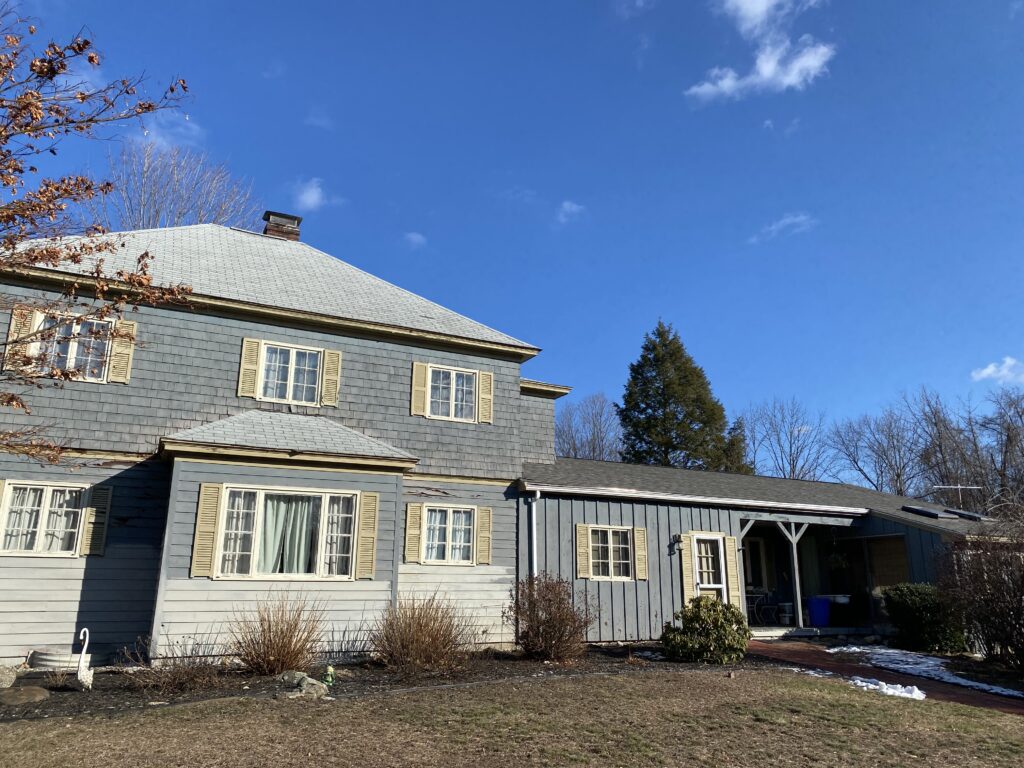
The second issue is ice damming, and it hits the north-facing slopes hardest, particularly on the older capes and ranches set back from the beach where mature trees shade the roof most of the day. Snow melts unevenly, refreezes at the eave, and backs water up under shingles that were never designed to handle standing water. Combine that with the salt air working on any exposed fasteners or flashing, and you get a roof that ages faster here than the same roof would thirty miles inland. Ice and water shield at the eaves and valleys isn’t optional on a Salisbury roof. It’s the difference between a dry attic in February and a ceiling stain you’re chasing every spring.
How we assess it
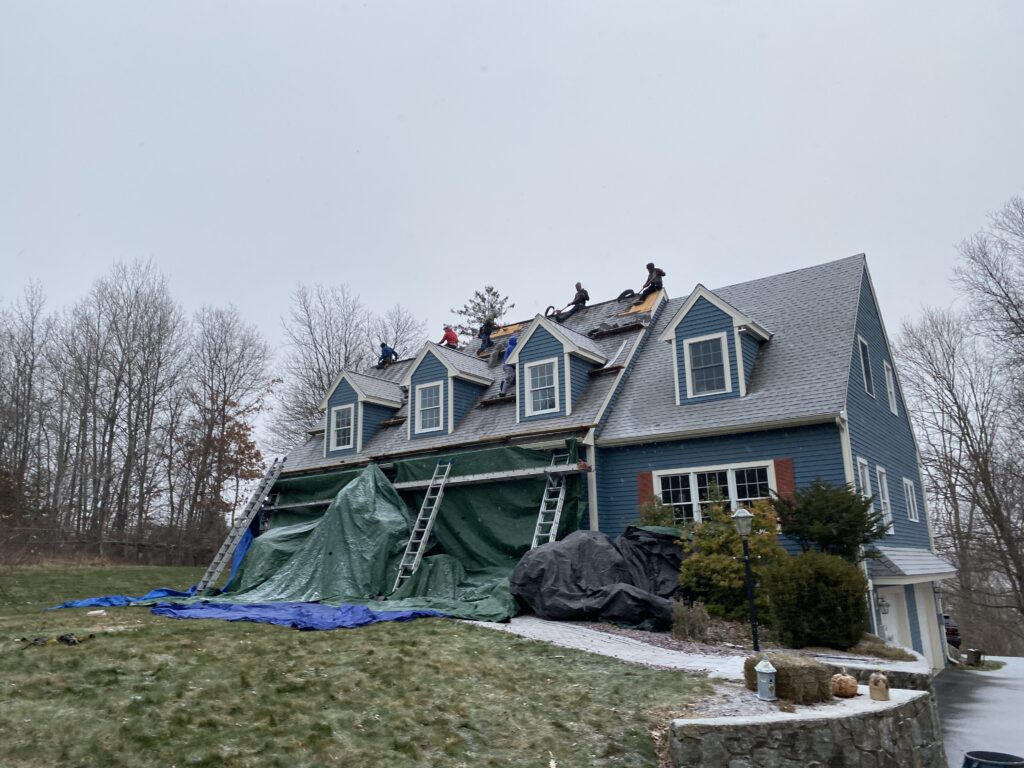
Derek walks every roof before we quote anything, and that’s not a formality. From the ground and from the roof itself, we’re checking the condition of the decking, looking for soft spots or delamination you can feel underfoot. We check flashing at every chimney, sidewall, and valley, since that’s where the majority of leaks actually start, not in the open field of shingles. We look at ridge and soffit ventilation, because a roof that can’t breathe cooks its own shingles from underneath and traps moisture that leads to rot. And we get into the attic when we can, because the underside of the roof deck tells you things the shingles never will, including old leak staining, insulation problems, and daylight where there shouldn’t be any.
You get a straight answer after that inspection, not a script. If it’s a repair, we say so. If it’s a replacement, we explain exactly why in terms you can check yourself.
What the job involves
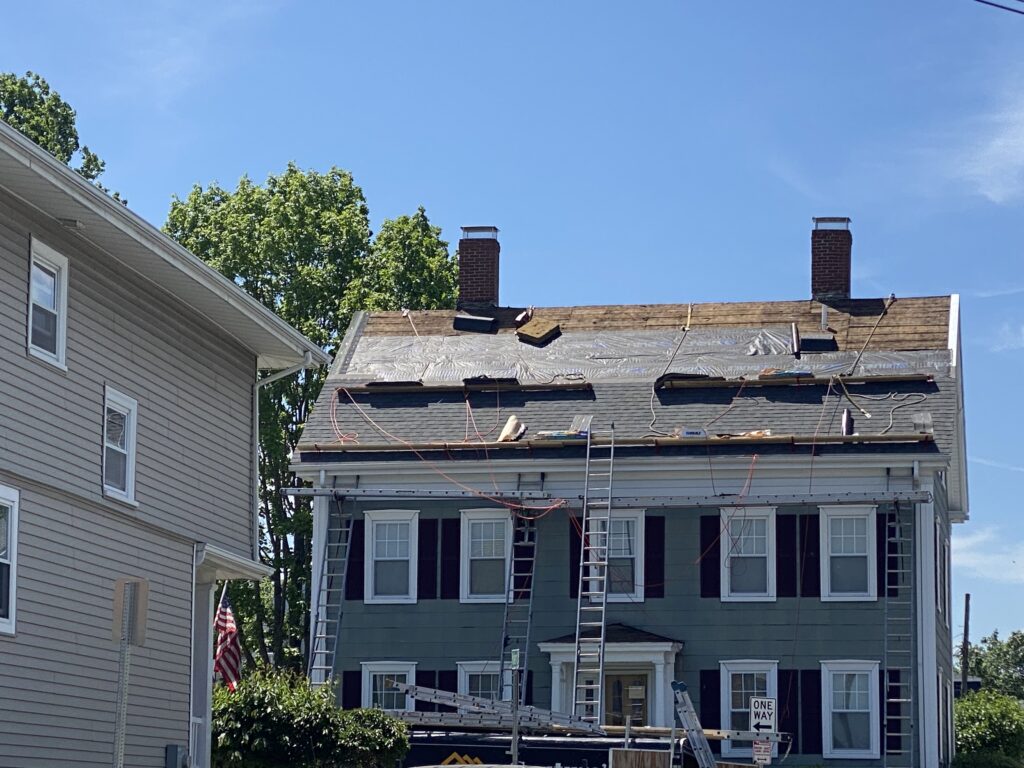
A full replacement starts with tear-off down to the deck, not a layover on top of old shingles. That lets us actually see the decking and replace any sheets that are soft, delaminated, or water-damaged instead of guessing what’s underneath. We install ice and water shield along the eaves, valleys, and around every penetration, then synthetic underlayment across the rest of the field. New flashing goes in at chimneys, walls, and valleys, no exceptions, because reusing old flashing is one of the most common shortcuts that leads to a callback in two years. Shingles go down with the fastening pattern that matches their wind rating, ridge vent and soffit venting get checked and corrected if the roof isn’t breathing right, and we clean the property thoroughly, including a magnetic sweep for nails, before we call the job finished.
What it costs
Most full roof replacements in Salisbury run between {PRICE_LOW} and {PRICE_HIGH}, and where you land in that range depends on a handful of specific things. Roof size and the number of squares matters most. Pitch matters too, since a steep roof takes longer and needs different safety setup than a low-slope ranch. If we’re stripping multiple layers of old shingles instead of one, that adds labor. Decking surprises, meaning rot or soft sheets we find once the old roof is off, add material and time. Access matters as well, since a roof tucked behind mature trees or close to a neighboring property takes longer to stage safely than one with an open driveway. We give you a real number after the inspection, not a phone estimate, and we walk you through exactly what’s driving the price before you sign anything.
How long it takes
A straightforward single-layer tear-off and replacement on an average Salisbury home usually takes one to two days, weather permitting. Larger roofs, steeper pitches, multiple layers to remove, or decking repairs discovered mid-job can push that to three or four days. We work around the coastal weather here, which means we watch wind and rain forecasts closely and won’t leave a roof open to the elements overnight if a system is moving in off the water.
How do I know if I need a repair or a full roof replacement?
It comes down to age, extent of damage, and decking condition. A roof with isolated damage, sound decking, and years of life left is usually a repair candidate. Widespread granule loss, soft decking in multiple spots, or a roof already past its expected service life points toward replacement. We give you a straight answer after inspecting it, not a default recommendation.
Why does wind rating matter more in Salisbury than other towns?
Properties near the beach and the Merrimack River mouth take direct wind off open water with nothing to break it up. Standard shingles rated for 60 to 70 mph wind speeds underperform here. We typically recommend architectural shingles rated 110 mph or higher for anything close to the coast, installed with the manufacturer's high-wind nailing pattern.
Do you replace flashing or just the shingles?
We replace flashing at chimneys, sidewalls, and valleys on every full replacement. Reusing old flashing is a common shortcut that leads to leaks within a couple years, and it's not something we do.
What causes ice dams on Salisbury roofs?
Uneven melting on shaded, north-facing slopes causes snow to melt and refreeze at the eave, backing water up under the shingles. It's most common on older homes with mature tree cover. Ice and water shield at the eaves and proper attic ventilation are the fix.
Is Couture's Construction accredited?
Yes. Couture's Construction is BBB accredited with an A plus rating, which you can verify directly with the Better Business Bureau.
Get an estimate
If you’re seeing granules in the gutters, daylight in the attic, or shingles that lifted in the last storm, call Couture’s Construction at {PHONE} and we’ll get Derek out to look at it. You’ll get a straight read on whether you need a repair or a full replacement, and a written estimate that spells out exactly what’s included. No pressure, no storm-chasing, just a local crew that’s going to explain the roof the same way we’d explain it to our own family.