
- Home
- Services
- Locations
Amesbury, MA
Boxford, MA
Chelmsford, MA
Danvers, MA
Dracut, MA
Essex, MA
Georgetown, MA
Groveland, MA
Hamilton, MA
Haverhill, MA
Ipswich, MA
Merrimac, MA
Methuen, MA
Middleton, MA
Newbury, MA
Newburyport, MA
North Andover, MA
North Reading, MA
Peabody, MA
Rowley, MA
Salem, MA
Salisbury, MA
Tewksbury, MA
Topsfield, MA
Topsfield, MA
West Newbury, MA
Atkinson, MA
Derry, NH
East Kingston, NH
Kensington, NH
Kingston, NH
Londonderry, NH
Plaistow, NH
Salem, NH
- Company
- Contact
- Home
- Services
- Locations
Amesbury, MA
Boxford, MA
Chelmsford, MA
Danvers, MA
Dracut, MA
Essex, MA
Georgetown, MA
Groveland, MA
Hamilton, MA
Haverhill, MA
Ipswich, MA
Merrimac, MA
Methuen, MA
Middleton, MA
Newbury, MA
Newburyport, MA
North Andover, MA
North Reading, MA
Peabody, MA
Rowley, MA
Salem, MA
Salisbury, MA
Tewksbury, MA
Topsfield, MA
Topsfield, MA
West Newbury, MA
Atkinson, MA
Derry, NH
East Kingston, NH
Kensington, NH
Kingston, NH
Londonderry, NH
Plaistow, NH
Salem, NH
- Company
- Contact
Commercial Roofing in Windham, NH
Windham’s commercial buildings run newer than most of what you’ll find on the Massachusetts side of the line, a lot of them built alongside the town’s residential growth from the 1980s and 1990s onward. That means a lot of low-slope rear additions, strip retail with EPDM or built-up roofing pushing thirty years old, and flat sections tucked behind pitched fronts that were never meant to be a design feature, just a way to cover square footage cheaply. Those roofs are hitting first-replacement age right around now, and most of them have never had a real assessment.
Flat and Low-Slope Commercial Roofing in Windham
Most of the commercial work we do in Windham is EPDM, TPO, or modified bitumen on a low-slope or dead-flat roof. Each material solves a different problem. EPDM has a long history on roofs with a lot of rooftop equipment, curbs, and penetrations, because the field seams and flashing details are forgiving. TPO gives you a heat-welded seam that’s stronger than a glued or taped lap, plus a reflective white membrane that can help with cooling load on a building with a lot of southern exposure. Modified bitumen still shows up on smaller flat sections and additions where a torch-down or self-adhered system makes sense over the existing structure.
We don’t sell one system across every roof. A property manager with three buildings might end up with EPDM on one and TPO on another, depending on age, equipment layout, and what the deck can support.
What Windham Roofs Are Up Against
Windham sits far enough inland that you’re not dealing with the direct wind exposure a coastal roof takes, but the tree cover here is heavy, and heavy tree cover on a flat commercial roof means debris in the drains and gutters more than it means wind damage. Leaves and pine needles collect at parapet walls and around drains, and once a drain is even partly blocked, you get standing water. Ponding water is the single biggest reason a flat commercial membrane fails early in this town, not wind and not UV.
The other piece of this town is build-era clustering. A lot of Windham’s commercial and light-industrial buildings went up in the same stretch as the surrounding residential subdivisions, which means a lot of roofs are aging out at close to the same time. If your building’s roof was installed when the property was built in the late ’80s or ’90s, it’s already past or approaching the point where most EPDM and built-up systems start showing seam failure and membrane shrinkage. We’re also seeing this same pattern on the roofs just across the line in Salem and Derry, so if your property management portfolio spans both states, the timing is probably similar on more than one building.
How We Assess It
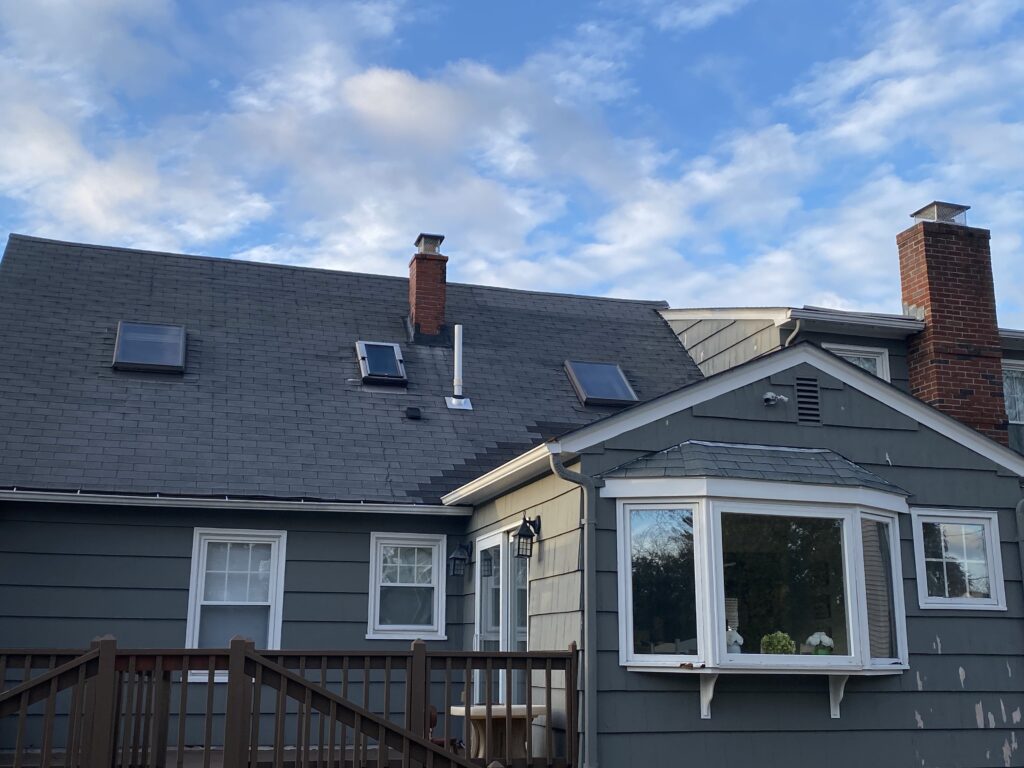
Derek walks the roof before anyone talks numbers. That means checking the membrane for shrinkage, blistering, and open seams, checking flashing at every curb, pipe boot, and parapet wall, and checking the drains and scuppers for standing water and debris. On roofs with equipment on them, we look at how the units are mounted and whether the curb flashing is doing its job, because rooftop HVAC is a common leak source that gets blamed on the roof itself.
If there’s access from below, whether that’s a drop ceiling or an accessible attic space over part of the building, we’ll look at the underside too. Water stains, rusted fasteners, and soft decking tell you things the top of the roof won’t. We give you a straight assessment before we give you a recommendation, and if a section can be repaired instead of replaced, we’ll say so.
What the Job Involves
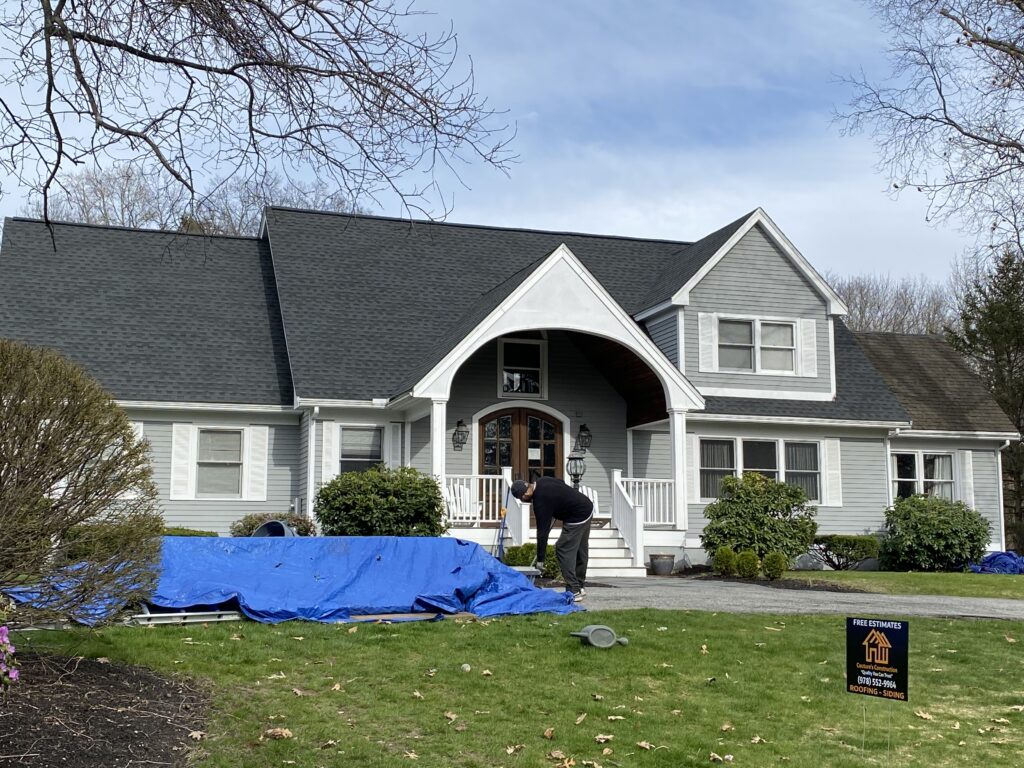
Commercial roof work is built around keeping your building operating. On an occupied retail space or office building, that means we section the roof and work one area at a time, tearing down and drying in each section before moving to the next, so the building is never open to weather overnight. Materials come off the old roof, the deck gets inspected and any rotted or delaminated sections get replaced, then new insulation, membrane, and flashing go in per the manufacturer’s system specifications.
Access matters more on commercial roofs than most people expect. A single-story strip retail building with a rear loading area is a different job than a multi-tenant building with limited crane access and a full parking lot underneath the work area. We plan the logistics before the first tear-off day, not during it.
What It Costs
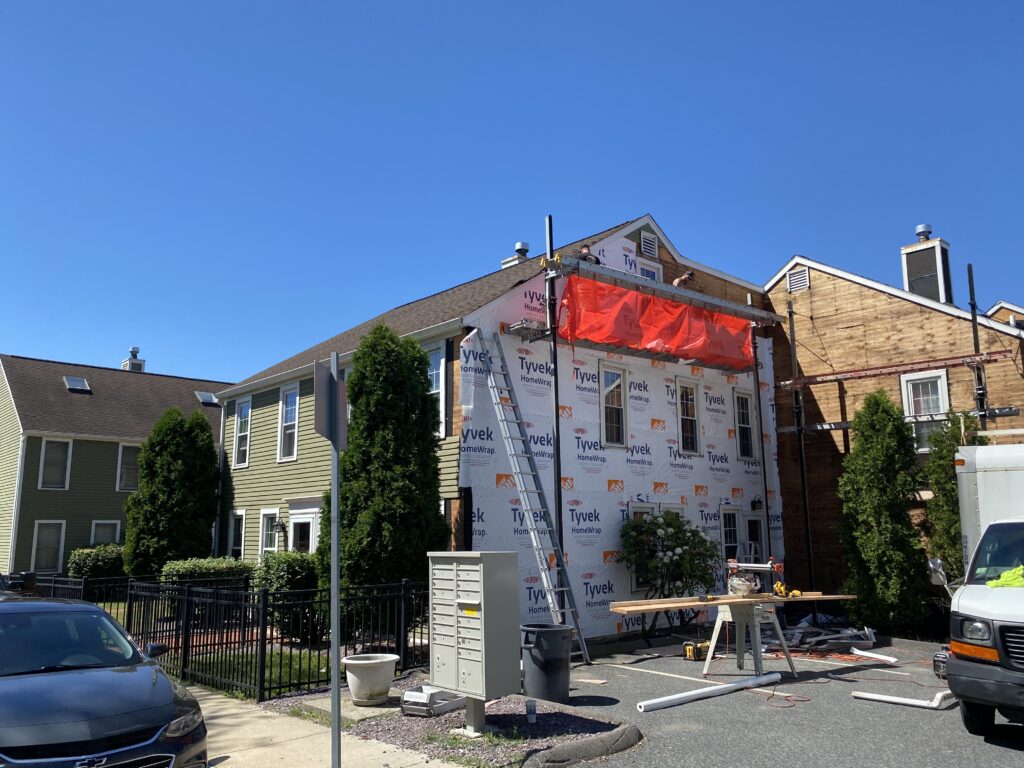
Commercial flat roofing runs {PRICE_LOW} to {PRICE_HIGH} on a straightforward re-cover or replacement, and that range moves based on a handful of specific things: total square footage, how many layers of old roofing have to come off, how much rooftop equipment has to be flashed around, whether the deck needs repair once we open it up, and how difficult access is for material staging and disposal. A single-tenant building with clean access and one layer to remove is on the low end. A multi-tenant building with multiple roof penetrations, tight access, and deck rot found mid-job costs more, and we’ll tell you as soon as we find it, not after the fact.
How Long It Takes
A phased commercial roof in Windham typically runs from a few days for a small single-section building to a couple of weeks for a larger multi-tenant property, weather permitting. Phasing adds time compared to a full open tear-off, but it’s the difference between a roof job and a building that has to shut down. We’ll give you a schedule up front, including which sections get done in which order, so you can plan around it.
Do you work on flat roofs on the New Hampshire side, or just Massachusetts?
Both. We're based in Methuen but we're on job sites in Windham, Salem, Derry and Londonderry regularly. New Hampshire commercial roofing is a normal part of our schedule, not a special trip.
What's better for a flat commercial roof, EPDM or TPO?
It depends on the roof. TPO gives you a heat-welded seam and a reflective white surface, which helps if the HVAC load matters to you. EPDM has a longer track record on low-slope roofs with a lot of penetrations, like older strip retail buildings. We'll look at your specific roof and penetrations before recommending one over the other.
Can you phase the work so we don't have to close?
Yes, on most roofs. We section the roof, tear down and dry in one section at a time, and keep the building weathertight overnight every night. We'll walk through the phasing plan with you before we start, including how it affects parking, deliveries or foot traffic near the building.
How do you handle permitting on a commercial roof in Windham?
Windham requires a permit for roof replacement and re-cover work, and the process is different from what we deal with on the Massachusetts side. We pull the permit, coordinate the inspection, and handle that paperwork as part of the job.
Is a roof repair ever the right call instead of a full replacement?
Get an Estimate
If you manage or own a commercial building in Windham with a flat or low-slope roof coming up on age, get it looked at before it’s leaking into inventory or office space. Call {PHONE} or reach out through the site to set up a walk-through. We work both sides of the Massachusetts-New Hampshire line regularly, and we handle the New Hampshire permitting directly so you don’t have to chase it down yourself.