
- Home
- Services
- Locations
Amesbury, MA
Boxford, MA
Chelmsford, MA
Danvers, MA
Dracut, MA
Essex, MA
Georgetown, MA
Groveland, MA
Hamilton, MA
Haverhill, MA
Ipswich, MA
Merrimac, MA
Methuen, MA
Middleton, MA
Newbury, MA
Newburyport, MA
North Andover, MA
North Reading, MA
Peabody, MA
Rowley, MA
Salem, MA
Salisbury, MA
Tewksbury, MA
Topsfield, MA
Topsfield, MA
West Newbury, MA
Atkinson, MA
Derry, NH
East Kingston, NH
Kensington, NH
Kingston, NH
Londonderry, NH
Plaistow, NH
Salem, NH
- Company
- Contact
- Home
- Services
- Locations
Amesbury, MA
Boxford, MA
Chelmsford, MA
Danvers, MA
Dracut, MA
Essex, MA
Georgetown, MA
Groveland, MA
Hamilton, MA
Haverhill, MA
Ipswich, MA
Merrimac, MA
Methuen, MA
Middleton, MA
Newbury, MA
Newburyport, MA
North Andover, MA
North Reading, MA
Peabody, MA
Rowley, MA
Salem, MA
Salisbury, MA
Tewksbury, MA
Topsfield, MA
Topsfield, MA
West Newbury, MA
Atkinson, MA
Derry, NH
East Kingston, NH
Kensington, NH
Kingston, NH
Londonderry, NH
Plaistow, NH
Salem, NH
- Company
- Contact
Vinyl Siding Installation in Haverhill, MA
Haverhill has some of the widest range of housing stock in the Merrimack Valley, and the siding on it reflects that. You’ve got clapboard and asbestos-shingle-over-wood on the triple-deckers near downtown and the old mill neighborhoods, aluminum siding from the 60s and 70s bolted over that in some cases, and vinyl from three different decades on the ranches and colonials further out toward Route 125. When siding fails here, it usually fails for reasons tied directly to what’s underneath it, not just the vinyl itself.
Vinyl Siding Installation in Haverhill
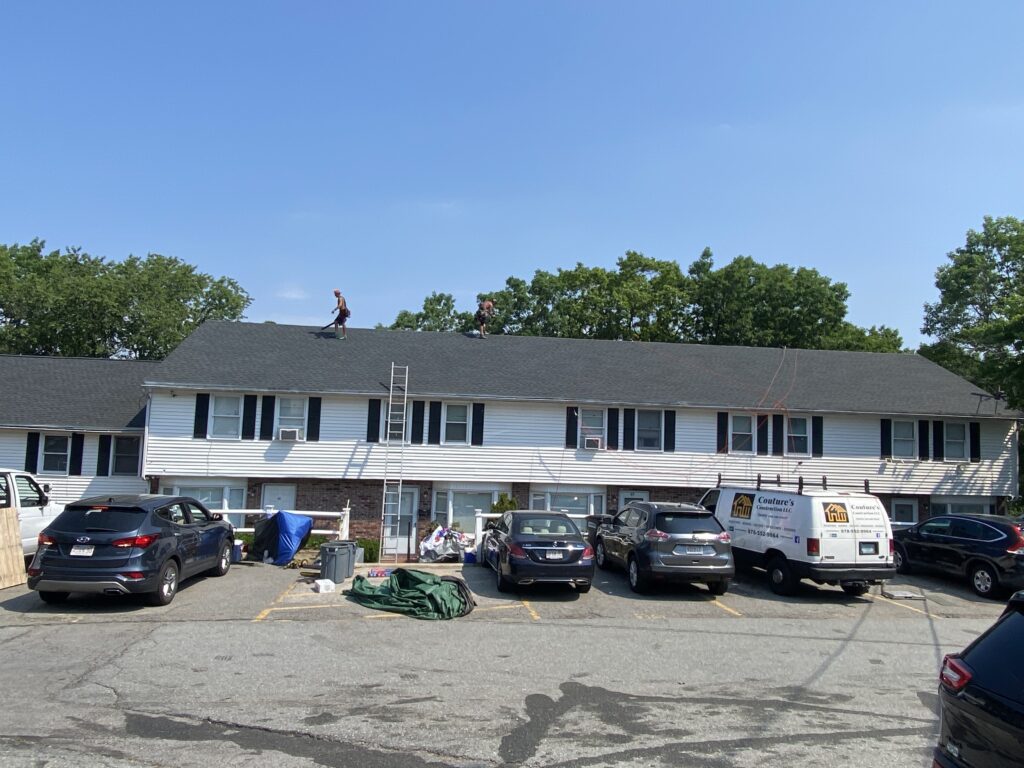
Derek and the crew get called out to Haverhill jobs almost as often for siding as for roofing at this point, and there’s a reason those two projects tend to land together. If you’re already having the roof replaced, doing the siding at the same time saves you a second mobilization, a second dumpster, and lets us flash the transitions between roof and wall correctly instead of patching around old work. We don’t push siding on every roofing call, but if your siding is cracked, bowed, or fading unevenly, we’ll say so when we’re already up there.
Deck-mounted
units fasten straight to the roof deck and use a matched step-flashing kit. This is what goes on most pitched roofs now. It sits low, looks clean and handles snow well.
Curb-mounted
units sit on a raised wood frame built on the roof. They are the right call on low-slope sections, generally below about 3 in 12, and a lot of older installs already have them.
Fixed
units let in light and nothing else. Fine over a high cathedral ceiling you will never reach.
Manual or electric venting
units open to let heat and steam out. They earn their keep in kitchens and bathrooms.
Solar-powered venting
units run off a small panel, need no wiring to the house, and close on their own when the rain sensor gets wet.
What Haverhill Homes Are Working With
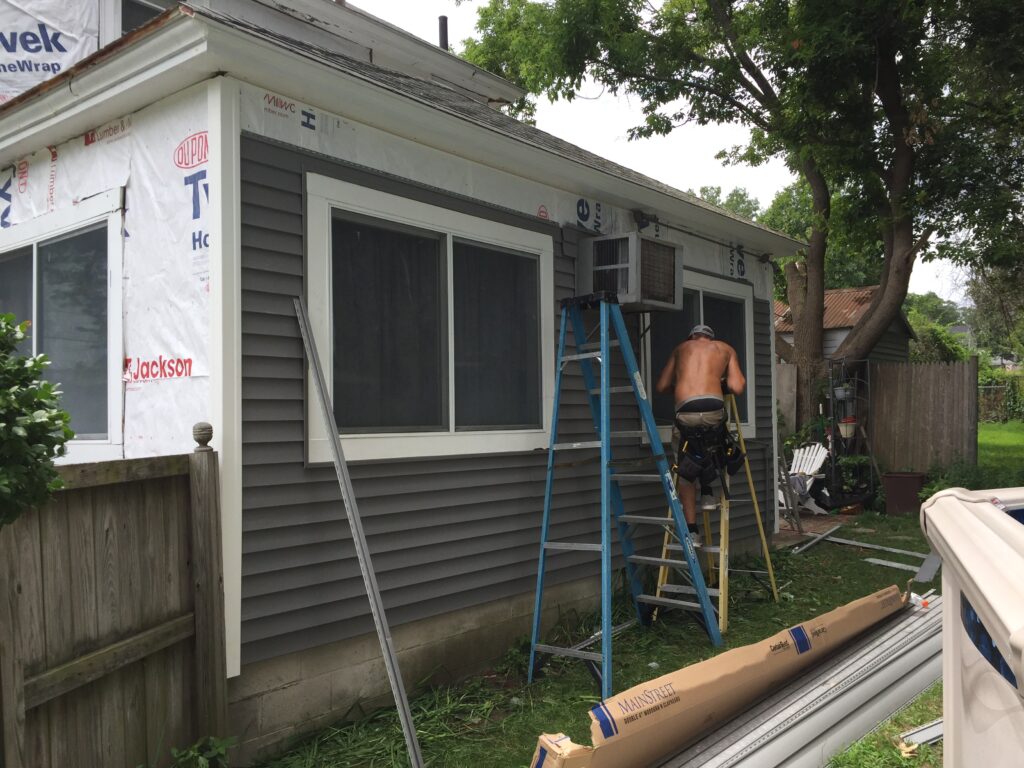
The housing stock here breaks into two rough categories, and each one has a different siding problem. The mill-era triple-deckers and older single-families close to downtown Haverhill often have layers – original wood clapboard, then an aluminum or early vinyl overlay from decades back, sometimes with minimal furring behind it. Add vinyl over that without checking what’s underneath and you trap moisture against wood sheathing that’s already marginal. We see soft spots and rot at window sills and lower corners on these houses more than anywhere else in our service area.
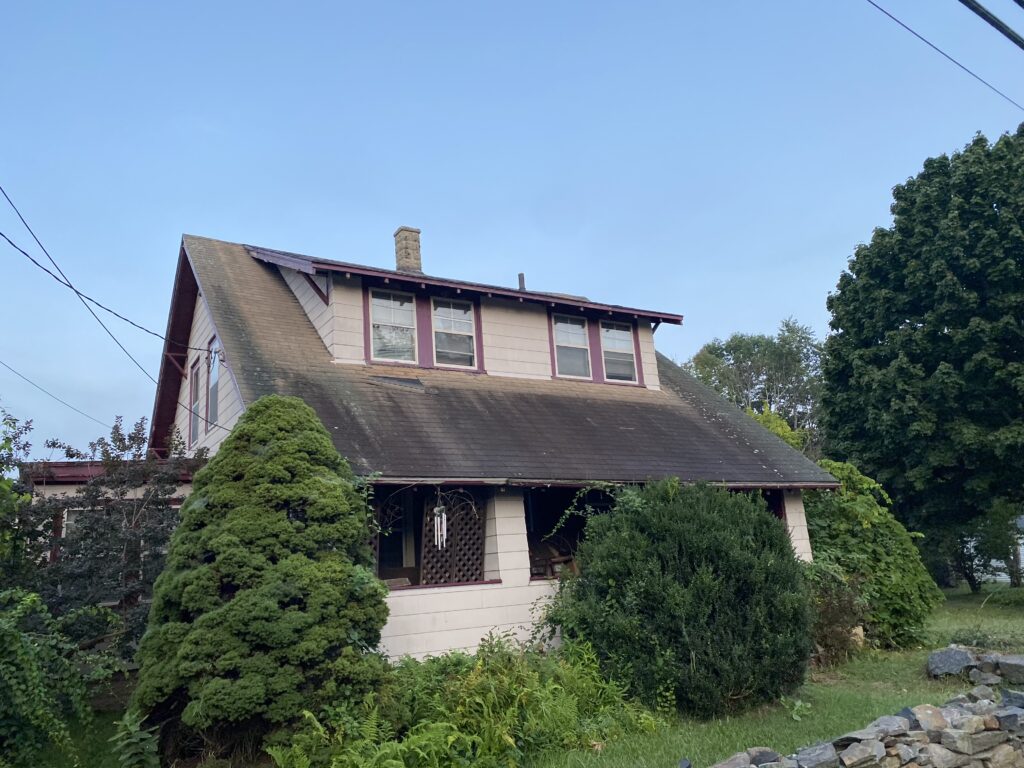
The newer subdivisions and colonials on the outskirts of Haverhill, built mostly in the 80s and 90s, are hitting a different wall. Their original vinyl is now old enough that the color has chalked out, panels have started to bow off the studs from decades of thermal cycling, and the low-nail-hem style of installation common back then leaves panels loose in high wind. Haverhill sits far enough up the Merrimack that wind exposure on open lots and hilltop streets is a real factor, not a theoretical one. We also see a fair amount of woodpecker damage on foam-backed vinyl from that era, which nobody thinks to mention until we point it out.
How We Assess It
Before we quote a siding job, someone walks the exterior and looks at what’s actually going on, not just what color the vinyl is. That means checking for soft sheathing at window and door casings, looking at how the existing siding was fastened, checking flashing where siding meets roof edges and chimneys, and looking for trapped moisture signs at the bottom courses. If there’s an attic or a crawlspace with visible exterior wall framing, we’ll look at that too, since staining or daylight gaps tell you more than the outside ever will. You get a straight answer on what needs to happen before we tell you what it costs.
What the Job Involves
Replacement
We strip the shingles around the unit, pull the old skylight and flashing, repair the deck at the opening if it needs it, and set the new unit. Ice and water shield wraps up the sides and across the top, the step-flashing kit goes on, and we shingle back in. If the new unit matches the rough opening, the interior usually stays as it is. On a full roof replacement in Haverhill, MA, all of this fits inside the reroof. The shingles are already off, the deck is exposed, and the new underlayment and flashing tie in as one system.
New cut-in
We lay out the opening from inside and out, cut the deck, and frame headers between the rafters. Ventilation gets rerouted so the bays above and below the opening still breathe. Then the unit, ice and water shield, flashing and shingles. Inside, a new opening means a light shaft through the attic, drywall and paint. That interior work is part of the conversation at the estimate, and we settle who handles what before anything is scheduled.
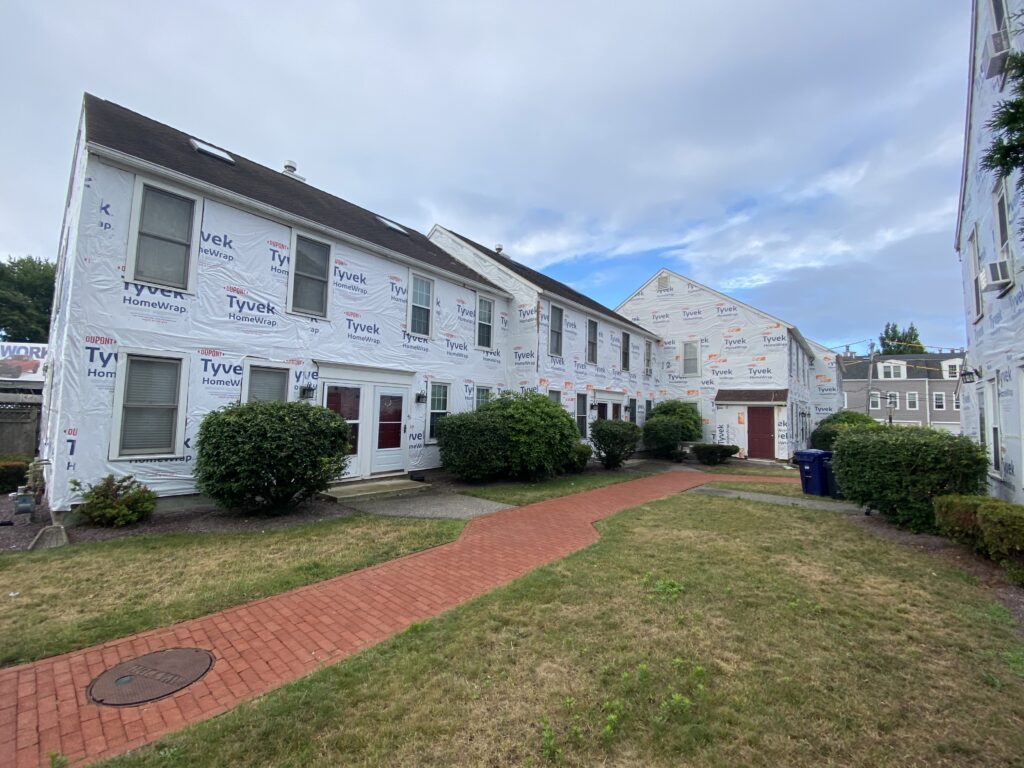
A full siding job starts with stripping the old material down to sheathing, not layering over it. That’s when we find out what the wall actually looks like – rotted band boards, missing flashing, insulation that’s been wet for years. We repair or replace damaged sheathing and trim before anything new goes up, install a proper weather-resistant barrier, and then run new vinyl with correct nailing – hung, not nailed tight, so it can expand and contract with temperature the way it’s designed to. We also handle j-channel, corner posts, and trim around windows and doors so the finished job actually looks finished, not patched.
What It Costs
Most full siding jobs in Haverhill run {PRICE_LOW} to {PRICE_HIGH}, and where you land in that range depends on a handful of things: square footage of wall, how many stories, how much trim and detail work around windows and dormers, whether we’re stripping one layer or two, and what we find once the old siding comes off. A triple-decker with three stories of tight access costs more to scaffold than a single-story ranch with a big open yard. We won’t give you a real number until someone’s looked at the house, but we’ll walk you through what’s driving the price before you sign anything.
How Long It Takes
A typical single-family siding job in Haverhill takes three to five working days once material is on site, weather cooperating. Larger homes, triple-deckers, or jobs where we find sheathing damage that needs repair before siding goes back on will run longer. We’ll give you a realistic window up front and tell you as soon as we know if something’s changed it, not after the fact.
Get an Estimate
If your siding is cracked, faded unevenly, or you’ve noticed soft spots near the bottom courses or window sills, call Couture’s Construction at {PHONE}. We’re based in Methuen and work Haverhill regularly, and we’ll come look at the house before we talk numbers. If you’re also due for a roof, ask us about doing both at once – it’s usually the more efficient way to handle it.
Do I need to replace all the siding, or can I patch a section?
If the damage is limited to one wall or a small area and the rest of the siding is sound and the same style, a patch can make sense. But if the siding is original from the 80s or 90s, matching color and profile gets hard, and we'll tell you honestly if a patch is going to look mismatched before you spend money on it.
Can vinyl siding go over my existing siding?
Sometimes, but we don't recommend it as a default. Layering over old wood or aluminum siding without checking the sheathing underneath can trap moisture against wall framing that's already vulnerable, especially on Haverhill's older triple-deckers. We'd rather strip it and tell you what we found.
Will new siding help with drafts and heating costs?
New siding installed with a proper weather-resistant barrier and correctly sealed trim will cut down on air infiltration, but it's not insulation by itself. If you want a real improvement in comfort, we can talk about adding rigid foam behind the new siding during the same job.
Does siding work affect my roof at all?
It can, especially at the transitions where siding meets roof edges, dormers, and chimneys. We check and correct flashing at those points as part of a full siding job so water doesn't find a new path in after the work is done.
Ready to Talk Siding?
Reach out and let us know a bit about your Haverhill home: roughly how old the current siding is, whether you’re seeing gaps, warping, or fading, and what look you’re after. We’ll arrange a walk-around of the exterior, check for any hidden trim or moisture issues, and talk through material choices before you commit to anything.