
- Home
- Services
- Locations
Amesbury, MA
Boxford, MA
Chelmsford, MA
Danvers, MA
Dracut, MA
Essex, MA
Georgetown, MA
Groveland, MA
Hamilton, MA
Haverhill, MA
Ipswich, MA
Merrimac, MA
Methuen, MA
Middleton, MA
Newbury, MA
Newburyport, MA
North Andover, MA
North Reading, MA
Peabody, MA
Rowley, MA
Salem, MA
Salisbury, MA
Tewksbury, MA
Topsfield, MA
Topsfield, MA
West Newbury, MA
Atkinson, MA
Derry, NH
East Kingston, NH
Kensington, NH
Kingston, NH
Londonderry, NH
Plaistow, NH
Salem, NH
- Company
- Contact
- Home
- Services
- Locations
Amesbury, MA
Boxford, MA
Chelmsford, MA
Danvers, MA
Dracut, MA
Essex, MA
Georgetown, MA
Groveland, MA
Hamilton, MA
Haverhill, MA
Ipswich, MA
Merrimac, MA
Methuen, MA
Middleton, MA
Newbury, MA
Newburyport, MA
North Andover, MA
North Reading, MA
Peabody, MA
Rowley, MA
Salem, MA
Salisbury, MA
Tewksbury, MA
Topsfield, MA
Topsfield, MA
West Newbury, MA
Atkinson, MA
Derry, NH
East Kingston, NH
Kensington, NH
Kingston, NH
Londonderry, NH
Plaistow, NH
Salem, NH
- Company
- Contact
Commercial Roofing in Londonderry, NH
Londonderry’s commercial corridor along Route 28 and out toward the airport is a mix of warehouse space, medical and professional office buildings, and retail plazas built mostly from the 1980s through the 2000s. Most of that stock carries a flat or low-slope roof system, not shingles, and a lot of it is now sitting right at the age where the original membrane is failing at seams, at rooftop unit curbs, and at drains rather than all at once across the field.
Flat and Low-Slope Commercial Roofing Services in Londonderry
We install and repair EPDM rubber, TPO, and modified bitumen systems on flat and low-slope commercial roofs. Each has a different failure pattern and a different price point, and the right one depends on your building, not on what’s easiest to sell. EPDM is the workhorse for straightforward field replacement and has a long track record on New England roofs. TPO gives you a heat-welded seam and a reflective white surface, which matters if the building runs cooling loads through summer. Modified bitumen is often the right call on smaller sections, additions, or roofs with a lot of penetrations where a torch-down or cold-applied cap sheet holds up better than a single-ply membrane.
We also handle the roofing that doesn’t get talked about as much: rooftop HVAC curb flashing, drain and scupper detail work, parapet wall caps, and the transitions where a low-slope section meets a pitched roof over an entry or office addition. Those transition points are where most commercial leaks actually start, not in the middle of the field.
What Londonderry Roofs Are Up Against
Southern New Hampshire commercial buildings deal with the same New England weather as anything across the border in Massachusetts, but the ownership and permitting side of the job is different. Londonderry runs its own commercial permitting process through the town, and the inspection sequence and code references aren’t identical to what we deal with in Methuen or Salem, Massachusetts. We work both sides of the state line regularly, and a Londonderry building owner shouldn’t assume a Methuen-based contractor doesn’t know the New Hampshire side. We do, and we pull the permits accordingly.
On the roof itself, ponding water is the number one issue we see on flat commercial sections in this town, usually where the original tapered insulation wasn’t installed correctly or has settled over twenty-plus years. Standing water breaks down membrane seams faster than anything else, and it’s often invisible from the ground. Wind uplift is a second concern on the larger, more exposed warehouse and plaza roofs out near the airport corridor, where open sightlines mean more sustained wind loading on the membrane and its fasteners. Ice damming at parapet walls and rooftop unit curbs is the third pattern, and it shows up as interior ceiling staining in office tenant spaces long before anyone notices trouble on the roof.
How We Assess It
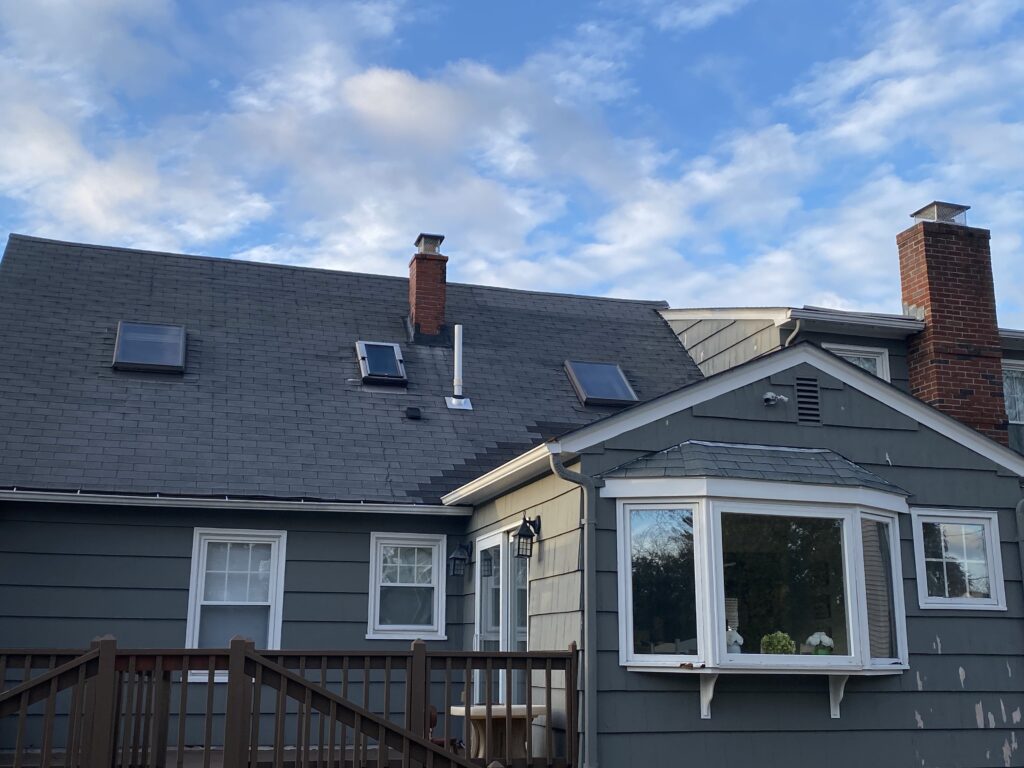
Derek walks the roof before quoting anything. That means checking the membrane for splits, blistering, and seam separation, probing for ponding areas, and pulling back flashing at every rooftop penetration to see what’s actually happening underneath, not just what’s visible on the surface. On older buildings we check insulation board condition and moisture content, because a membrane replacement over wet insulation fails again within a couple of years no matter how good the new membrane is.
We also go inside when access allows. Ceiling tile staining, rust on rooftop unit supports, and interior humidity all tell you something the roof surface doesn’t. A proper commercial assessment happens before we recommend a system, not after, and we’ll tell you plainly if what you actually need is a targeted repair rather than a full tear-off.
What the Job Involves
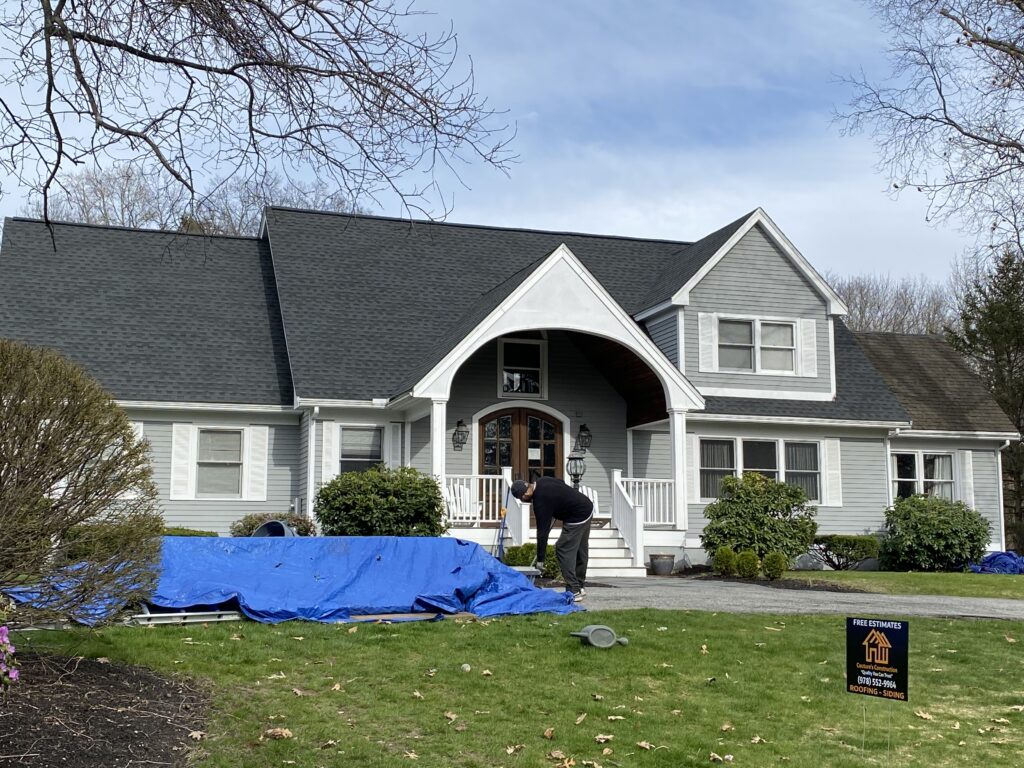
On an occupied commercial building, the work has to fit around the business, not the other way around. That means staging materials and equipment to keep drive lanes, loading docks, and customer parking open, and it means sequencing the tear-off and install in sections so the building is never fully exposed overnight. We coordinate around rooftop mechanical work, tenant schedules, and, where it applies, medical or retail hours that can’t be interrupted.
The scope itself typically includes tear-off or overlay decision, insulation repair or replacement where needed, new membrane installation with properly welded or adhered seams, flashing detail at every curb and penetration, and a final walk-through checking drains, terminations, and warranty documentation. We don’t leave a roof half-detailed because the crew ran out of daylight.
What It Costs
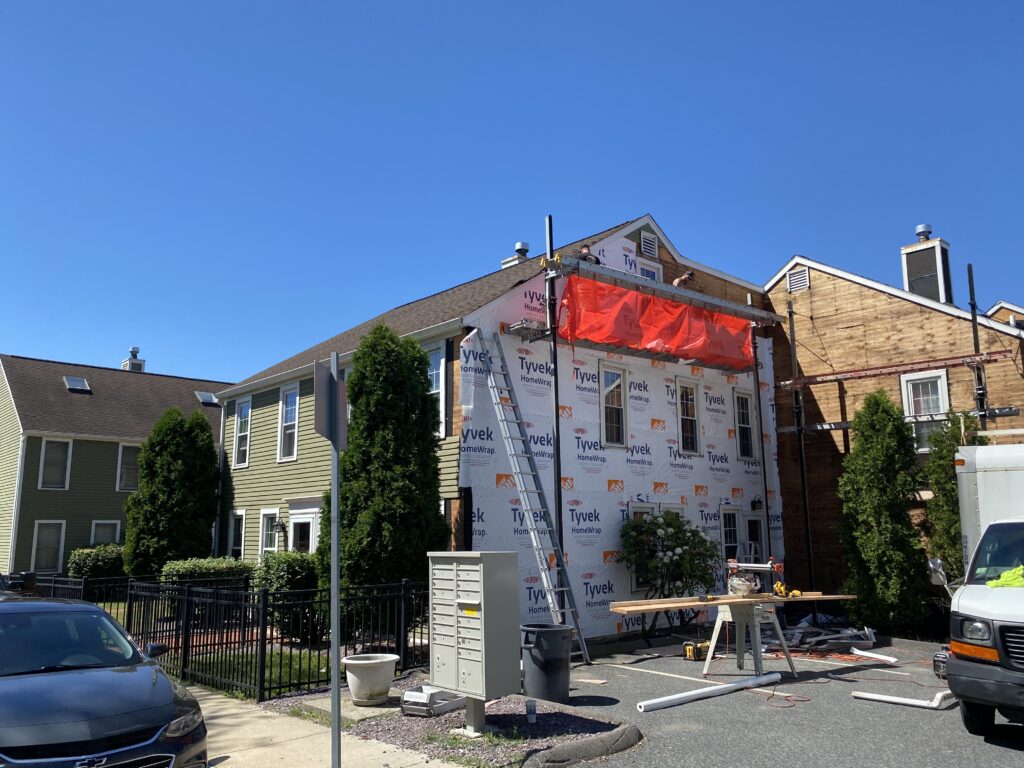
Commercial flat and low-slope roofing in this area typically runs {PRICE_LOW} to {PRICE_HIGH}, and that range moves based on roof size, how many layers need to come off, the condition of the deck and insulation underneath, and how complicated access is on the building. A single-story warehouse with clean roof access prices very differently than a multi-tenant plaza with rooftop units scattered across the field and limited crane access. We give you a real number after the walk-through, not a phone estimate, because guessing on a commercial roof wastes everybody’s time.
How Long It Takes
A straightforward EPDM or TPO replacement on a mid-size commercial building generally runs a few days to a couple of weeks, depending on roof size and how the tear-off is sectioned. Weather windows matter more on low-slope work than on pitched residential roofs, since an exposed membrane section needs dry conditions to seal properly. We build the schedule around your operating hours and tell you up front which days the roof will be open versus dried in.
Do you work on commercial buildings in New Hampshire even though you're based in Massachusetts?
Yes. We're based in Methuen, but we work both sides of the state line regularly, including Londonderry, Derry, Salem, and Windham. We handle New Hampshire commercial permitting directly and know the local inspection process.
What's the difference between EPDM, TPO, and modified bitumen?
EPDM is a rubber single-ply membrane with a long service history and it's usually the most economical field replacement. TPO is a heat-welded single-ply with a reflective white surface, useful where cooling costs matter. Modified bitumen is a cap-sheet system that handles heavy penetrations and smaller sections well. We'll tell you which fits your roof after the assessment.
Can you repair a section of our commercial roof instead of replacing the whole thing?
Often, yes. If the membrane and insulation underneath are still in reasonable shape and the failure is localized to a seam, flashing detail, or a drain, a targeted repair is the honest answer and the right one. We won't push a full tear-off when a repair will hold.
How do you keep the building operating during the work?
We section the roof and stage materials to keep drive lanes, loading docks, and parking open, and we sequence tear-off and install so the building is never left fully exposed overnight. We coordinate scheduling around tenant hours where that matters.
Do you handle rooftop HVAC curb flashing and drain work?
Get an Estimate
If you’re managing a commercial building in Londonderry and the roof is at or past the twenty-year mark, or you’re already seeing ceiling staining or rooftop ponding, call {PHONE} and we’ll set up a walk-through. We work both sides of the Massachusetts-New Hampshire line and we’ll give you a straight answer on what the roof needs before we talk about what it costs.