
- Home
- Services
- Locations
Amesbury, MA
Boxford, MA
Chelmsford, MA
Danvers, MA
Dracut, MA
Essex, MA
Georgetown, MA
Groveland, MA
Hamilton, MA
Haverhill, MA
Ipswich, MA
Merrimac, MA
Methuen, MA
Middleton, MA
Newbury, MA
Newburyport, MA
North Andover, MA
North Reading, MA
Peabody, MA
Rowley, MA
Salem, MA
Salisbury, MA
Tewksbury, MA
Topsfield, MA
Topsfield, MA
West Newbury, MA
Atkinson, MA
Derry, NH
East Kingston, NH
Kensington, NH
Kingston, NH
Londonderry, NH
Plaistow, NH
Salem, NH
- Company
- Contact
- Home
- Services
- Locations
Amesbury, MA
Boxford, MA
Chelmsford, MA
Danvers, MA
Dracut, MA
Essex, MA
Georgetown, MA
Groveland, MA
Hamilton, MA
Haverhill, MA
Ipswich, MA
Merrimac, MA
Methuen, MA
Middleton, MA
Newbury, MA
Newburyport, MA
North Andover, MA
North Reading, MA
Peabody, MA
Rowley, MA
Salem, MA
Salisbury, MA
Tewksbury, MA
Topsfield, MA
Topsfield, MA
West Newbury, MA
Atkinson, MA
Derry, NH
East Kingston, NH
Kensington, NH
Kingston, NH
Londonderry, NH
Plaistow, NH
Salem, NH
- Company
- Contact
Vinyl Siding Installation in Groveland, MA
Groveland’s older housing stock sits on big lots off the Merrimack, and a lot of it was built with clapboard-style wood siding that’s been painted a dozen times over a hundred-plus years. When that wood starts cupping, checking, or holding moisture behind old paint layers, vinyl is usually the practical fix, not because it’s trendy but because it stops the maintenance cycle for good. On properties this size, with long driveways and outbuildings, a siding job here is planned differently than a job on a quarter-acre lot in town.
Vinyl Siding Installation in Groveland
Derek doesn’t push siding on every roofing call, but on estate-belt properties like the ones common in Groveland, siding and roofing end up on the same punch list more often than not. If we’re already staging equipment for a roof replacement, doing the siding at the same time saves you a second mobilization and usually a second markup on access costs. We install manufacturer-rated vinyl siding designed to hold up in open, tree-cleared wind exposure as well as under heavy shade, and we set it correctly around the trim details that antique and colonial-era homes tend to have, like wide corner boards, deep window returns, and original frieze boards we work around rather than bury.
Deck-mounted
units fasten straight to the roof deck and use a matched step-flashing kit. This is what goes on most pitched roofs now. It sits low, looks clean and handles snow well.
Curb-mounted
units sit on a raised wood frame built on the roof. They are the right call on low-slope sections, generally below about 3 in 12, and a lot of older installs already have them.
Fixed
units let in light and nothing else. Fine over a high cathedral ceiling you will never reach.
Manual or electric venting
units open to let heat and steam out. They earn their keep in kitchens and bathrooms.
Solar-powered venting
units run off a small panel, need no wiring to the house, and close on their own when the rain sensor gets wet.
What Groveland Roofs and Homes Are Up Against
Low density and big tree canopy define most of Groveland. That’s good for privacy and bad for siding and roofs both. Constant shade on the north and east walls of these older homes keeps moisture sitting on wood siding longer after rain, which is exactly what accelerates rot behind paint that’s already failing. Combine that with long driveways that limit how close a delivery truck or lift can get, and every siding job on these lots needs a real staging plan before the first piece goes up, not after.
The other thing we see constantly in Groveland is roof geometry driving siding decisions. These antique and colonial homes have dormers, intersecting roof planes, and additions tacked on over the decades, which means a lot of wall-to-roof transitions, valleys that dump water onto side walls, and old flashing details that were never great to begin with. When we price siding here, we’re also looking at what’s happening above it, because a siding job that ignores a leaking valley or bad kickout flashing just hides a problem instead of fixing it.
How We Assess It
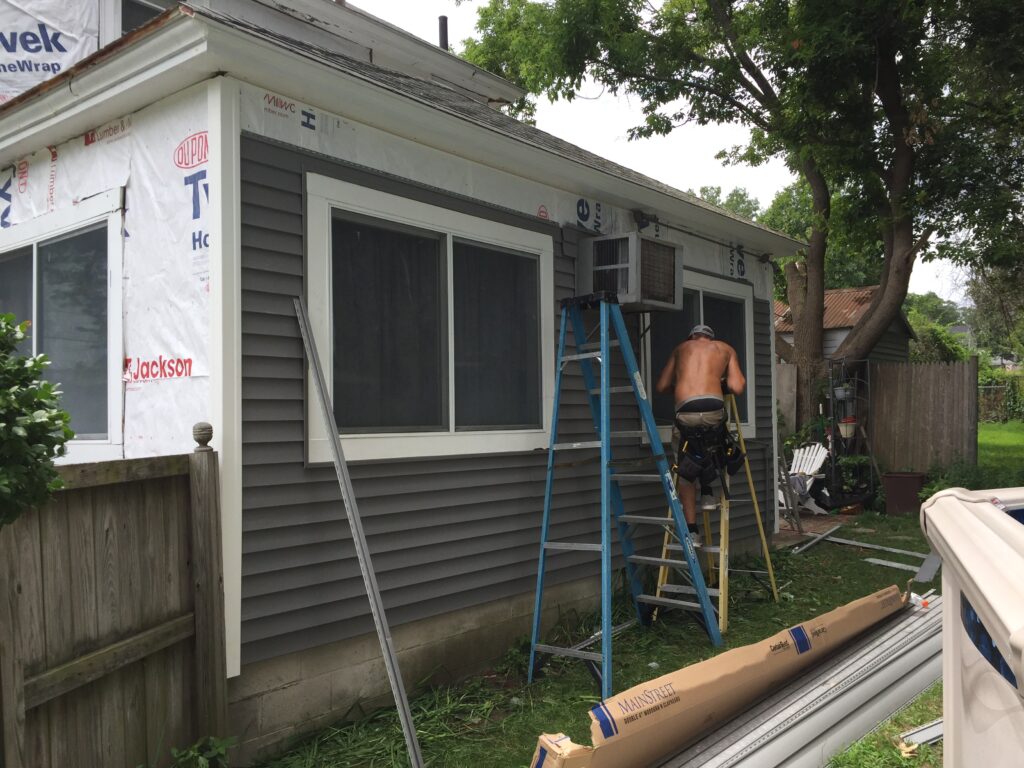
Before Derek quotes anything, he walks the exterior and looks at what’s actually driving the failure, not just what’s visible from the driveway. That means checking the sheathing behind the existing siding where it’s accessible, looking at window and door flashing, checking for soft spots at the bottom courses where splash-back rot is common, and looking up at the roof edges and valleys that dump water onto specific wall sections. On properties with outbuildings that also need work, we look at those too, since matching materials and colors across a barn and a main house matters for resale and for how the property reads as a whole. We don’t quote from a photo or a satellite measurement. Someone is on the property before you get a number.
What the Job Involves
Replacement
We strip the shingles around the unit, pull the old skylight and flashing, repair the deck at the opening if it needs it, and set the new unit. Ice and water shield wraps up the sides and across the top, the step-flashing kit goes on, and we shingle back in. If the new unit matches the rough opening, the interior usually stays as it is. On a full roof replacement in Groveland, MA, all of this fits inside the reroof. The shingles are already off, the deck is exposed, and the new underlayment and flashing tie in as one system.
New cut-in
We lay out the opening from inside and out, cut the deck, and frame headers between the rafters. Ventilation gets rerouted so the bays above and below the opening still breathe. Then the unit, ice and water shield, flashing and shingles. Inside, a new opening means a light shaft through the attic, drywall and paint. That interior work is part of the conversation at the estimate, and we settle who handles what before anything is scheduled.
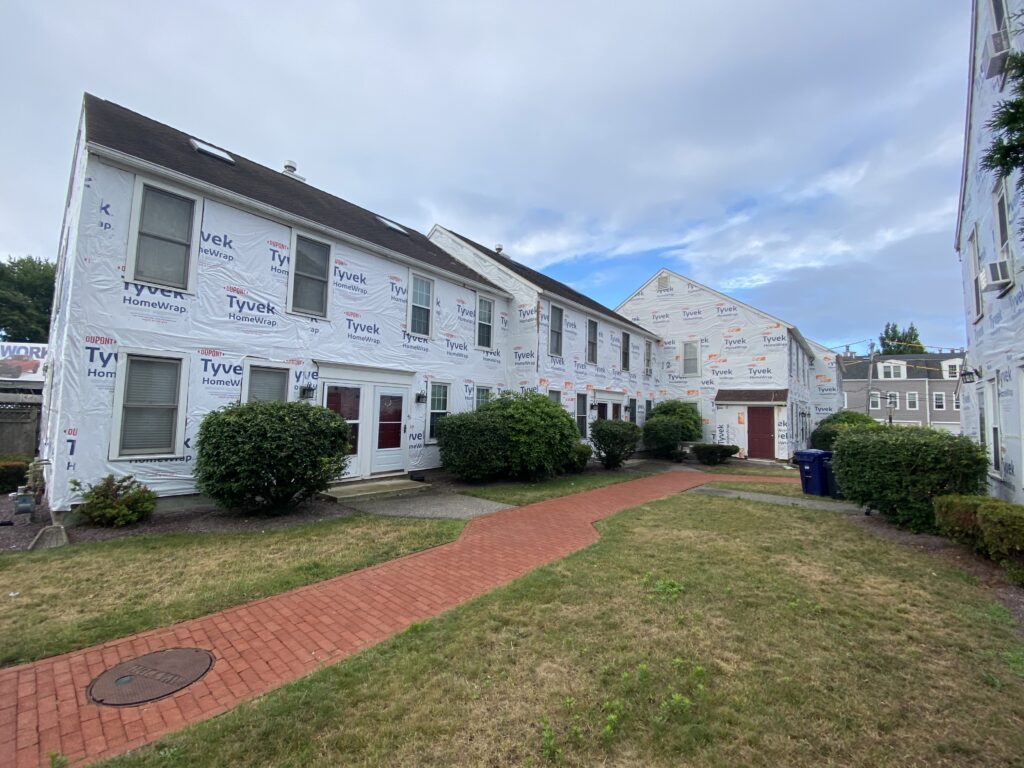
A full siding install starts with stripping the old material down to the sheathing, not covering over it. That lets us check for rot, soft wood, and any hidden moisture damage before it’s sealed behind new siding. We install a weather-resistant barrier, correct trim and flashing at every window, door, and roof intersection, and then the vinyl panels themselves, fastened to allow for the normal expansion and contraction New England temperature swings put on the material. On estate-belt homes with detailed trim, we spend extra time on corner posts, soffit and fascia transitions, and matching the reveal so the finished look doesn’t read as a generic vinyl box slapped on an old house. If a roof valley or flashing detail is feeding water into a wall, we flag it before closing the wall back up, not after.
What It Costs
Most full-house vinyl siding jobs in Groveland run between {PRICE_LOW} and {PRICE_HIGH}, and where you land in that range depends on square footage, how many stories, how much trim detail there is to work around, and whether we find rotted sheathing once the old siding comes off. Long driveways and limited staging area on some of these lots can add a bit to labor time too, since equipment can’t always park right at the house. We give you a number after the walkthrough, not before, and if we find something during demo that changes the price, we tell you before we keep going, not after the invoice.
How Long It Takes
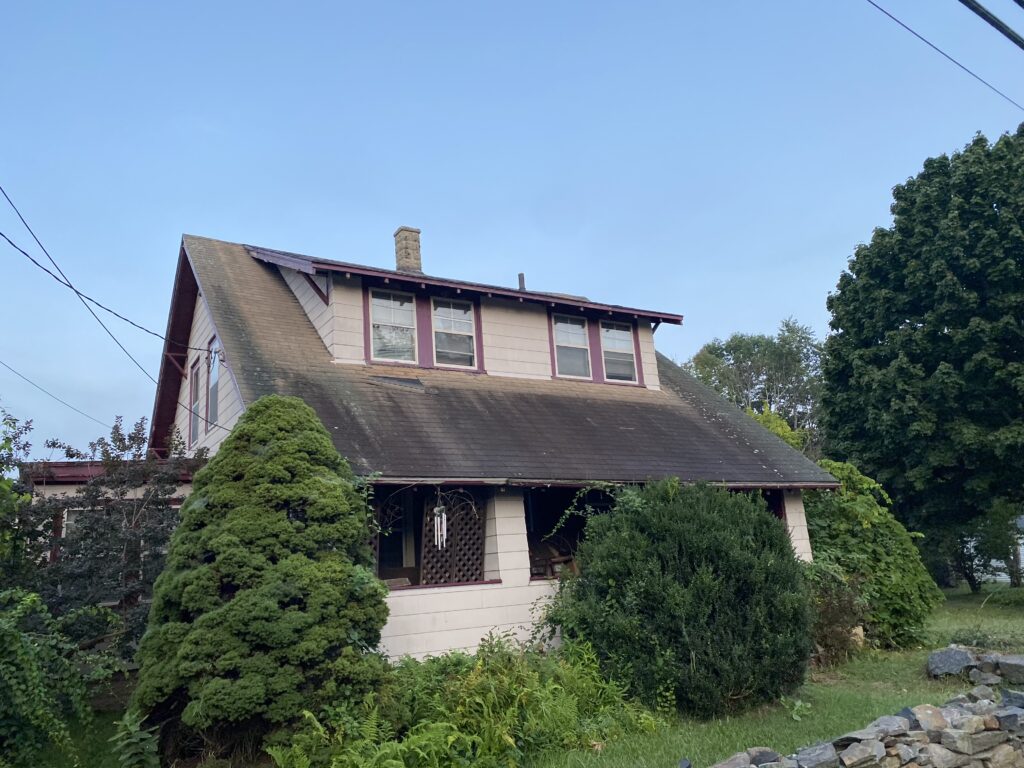
A typical single-family siding job in Groveland takes anywhere from four days to two weeks depending on house size and trim complexity. Homes with a lot of dormers, additions, or outbuilding work stretch that timeline out, and weather can push it further since vinyl installation has a minimum temperature range it shouldn’t go below. We’ll give you a realistic window once we’ve seen the property, and we tell you up front if anything about the site, like driveway access or a septic system near the foundation, is going to affect scheduling.
Questions About Your Siding Project
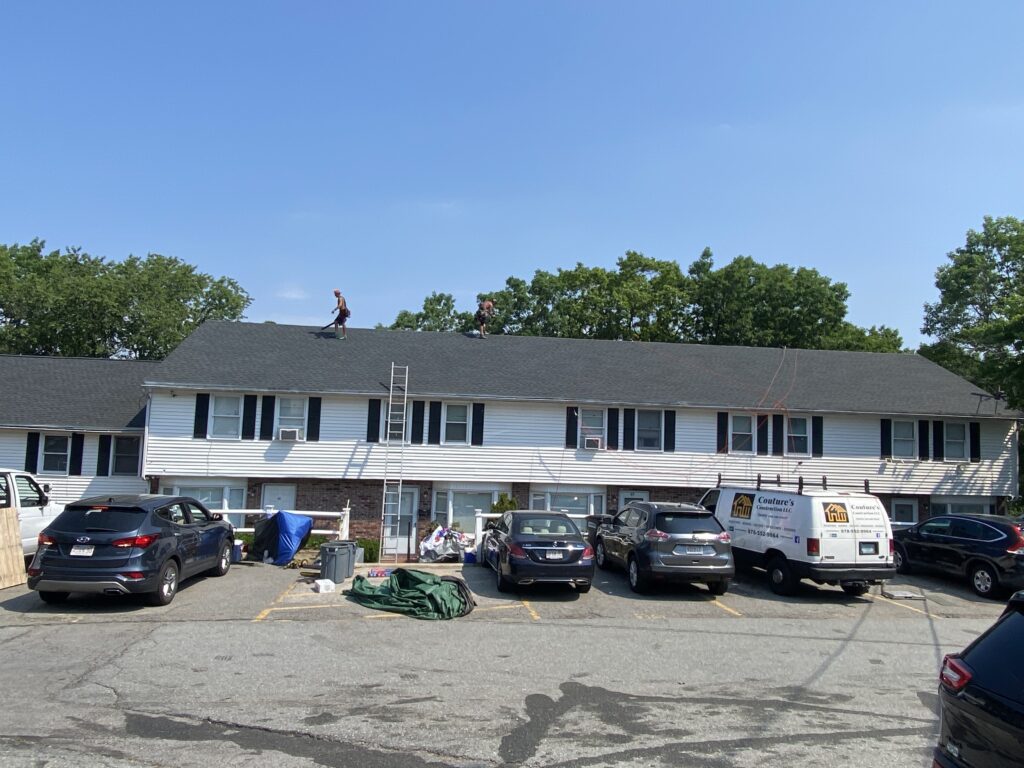
Homeowners in Groveland often have questions before committing to a vinyl siding installation, from material choices to how weather may affect scheduling. We’re happy to walk through details specific to your property and help you feel confident in the process.
- What siding styles and colors work best for my home?
- Will old siding need to be removed first?
- How does insulation factor into the installation?
Reach out anytime with your questions.
Should siding and roofing be done at the same time in Groveland?
If both need work in the next few years, doing them together usually saves money on staging and equipment access, especially on properties with long driveways where getting a lift or dumpster truck onto the site takes real planning. It's not required, but on estate-belt lots it's worth discussing at the estimate.
Will new vinyl siding match my antique home's trim style?
Yes, but it takes attention to detail. We keep original trim proportions like wide corner boards and deep window returns wherever possible, and we choose panel profiles and colors that read correctly on a colonial-era house rather than looking like a modern retrofit.
What if you find rot behind my old siding?
We stop, show you what we found, and give you options before covering anything up. Sometimes it's a small section of sheathing replacement, sometimes it's tied to a roof flashing issue that needs its own fix. Either way you see it and approve it before we move forward.
Does tree cover around my property affect the siding job?
It affects moisture exposure more than the installation itself. Heavy shade keeps walls damp longer, which is often why older wood siding fails faster on the north and east sides of a house. Vinyl handles that better long-term, but we still check for existing rot before installing.
Do you handle siding on barns and outbuildings too?
Ready to Talk Siding?
Reach out to Couture’s Construction to start your vinyl siding project in Groveland. Let us know the age of your current siding, any problem areas you’ve noticed, and the style or color you’re considering. We’ll arrange a visit to walk the exterior, check the sheathing underneath, and review your options before putting together a plan.