
- Home
- Services
- Locations
Amesbury, MA
Boxford, MA
Chelmsford, MA
Danvers, MA
Dracut, MA
Essex, MA
Georgetown, MA
Groveland, MA
Hamilton, MA
Haverhill, MA
Ipswich, MA
Merrimac, MA
Methuen, MA
Middleton, MA
Newbury, MA
Newburyport, MA
North Andover, MA
North Reading, MA
Peabody, MA
Rowley, MA
Salem, MA
Salisbury, MA
Tewksbury, MA
Topsfield, MA
Topsfield, MA
West Newbury, MA
Atkinson, MA
Derry, NH
East Kingston, NH
Kensington, NH
Kingston, NH
Londonderry, NH
Plaistow, NH
Salem, NH
- Company
- Contact
- Home
- Services
- Locations
Amesbury, MA
Boxford, MA
Chelmsford, MA
Danvers, MA
Dracut, MA
Essex, MA
Georgetown, MA
Groveland, MA
Hamilton, MA
Haverhill, MA
Ipswich, MA
Merrimac, MA
Methuen, MA
Middleton, MA
Newbury, MA
Newburyport, MA
North Andover, MA
North Reading, MA
Peabody, MA
Rowley, MA
Salem, MA
Salisbury, MA
Tewksbury, MA
Topsfield, MA
Topsfield, MA
West Newbury, MA
Atkinson, MA
Derry, NH
East Kingston, NH
Kensington, NH
Kingston, NH
Londonderry, NH
Plaistow, NH
Salem, NH
- Company
- Contact
Commercial Roofing in Ipswich, MA
Ipswich doesn’t have a business park. What it has is Depot Square, Route 1A, the working buildings around the harbor and the marshes, a handful of churches and municipal buildings with flat rear sections, and older colonial-era structures that got a low-slope addition tacked on at some point in the last hundred years. Commercial roofing here means small footprint, low-slope, and usually a business that can’t afford to close for a week while the work happens.
Flat and Low-Slope Commercial Roofing in Ipswich
Most of the commercial and mixed-use roofing we see in Ipswich is EPDM rubber, TPO membrane, or modified bitumen, sometimes all three on the same building because of additions built at different times. We install and repair all three systems. EPDM is still a solid, economical choice for a small flat roof. TPO gives you a reflective white surface and heat-welded seams, which matters if the building has any exposure to direct sun over a retail space or office below. Modified bitumen is often what’s already on an older building above a store or a converted barn, and it can usually be repaired or recoated rather than torn off completely if the decking underneath is sound.
We also handle barns, outbuildings, and detached garages on larger Ipswich properties that get used for storage, a small business, or a rental unit. Those buildings often have roofs nobody has looked at in twenty years, and low-slope sections tend to be where the trouble starts.
What Ipswich Roofs Are Up Against
Ipswich sits close enough to the water that wind is a real design factor, not an afterthought. Storms coming off the Atlantic and up the Ipswich Bay push wind loads that a lot of older membrane systems were never rated for. On a flat commercial roof, that shows up as lifted seams at the perimeter and corners first, because that’s where uplift forces concentrate. If you’re re-covering a roof out here, the fastening pattern and the membrane’s wind uplift rating both need to account for that exposure, not just meet the minimum code requirement.
The other issue specific to Ipswich is the age and mix of the building stock. A lot of the commercial and mixed-use structures in town are additions or conversions attached to First Period and colonial-era buildings, which means the low-slope section is often newer than the main structure but was built to whatever standard was in fashion at the time, not necessarily to hold up to current wind and rain loads. Ponding water on an under-pitched flat roof, clogged internal drains, and flashing where the low-slope section meets the older pitched roof are the three things that fail first on these buildings.
How We Assess It
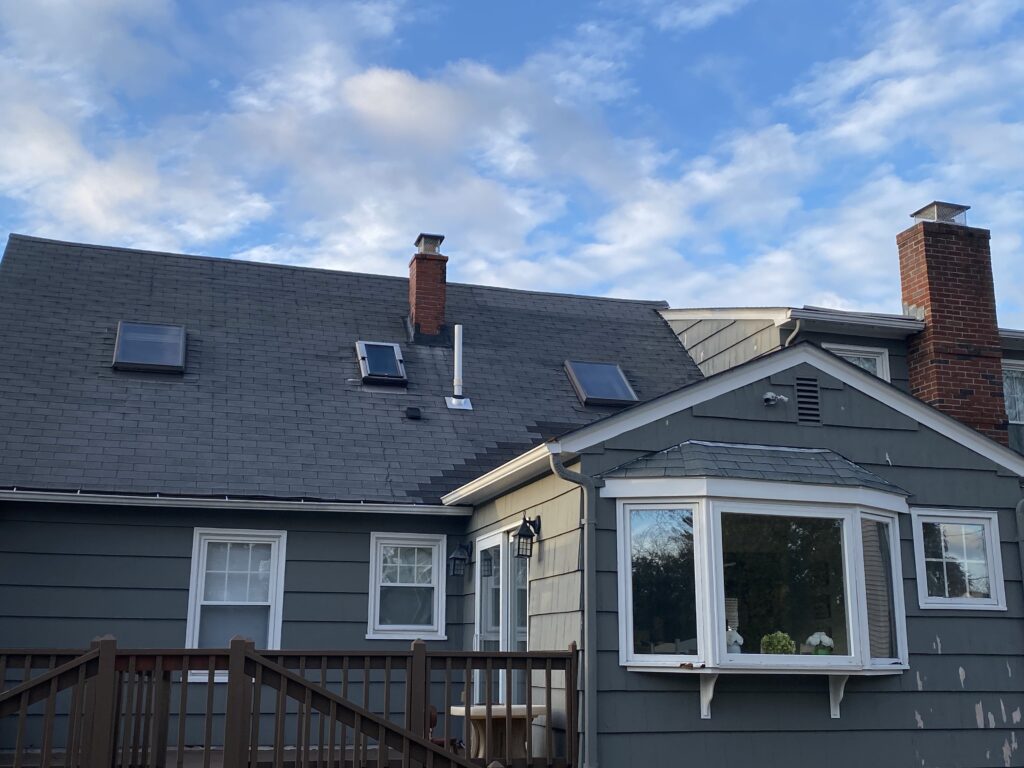
We don’t quote a commercial roof from the ground or from a photo. Derek gets on the roof, checks the membrane for splits, blistering, and open seams, and checks the flashing at every parapet wall, drain, and roof-to-wall transition. If there’s access to the underside, whether that’s a drop ceiling or an open storage area, we look at the decking from below for staining, soft spots, or daylight coming through anywhere it shouldn’t. Ponding water gets marked and measured, not just noted, because how long water sits and how deep it pools tells you whether you’re dealing with a slope problem or a drainage problem.
You get a real recommendation after that, not a standard package. Sometimes the honest answer for a small commercial roof is a targeted repair and a maintenance plan. Sometimes it’s a full re-cover. We tell you which one you actually need before we talk price.
What the Job Involves
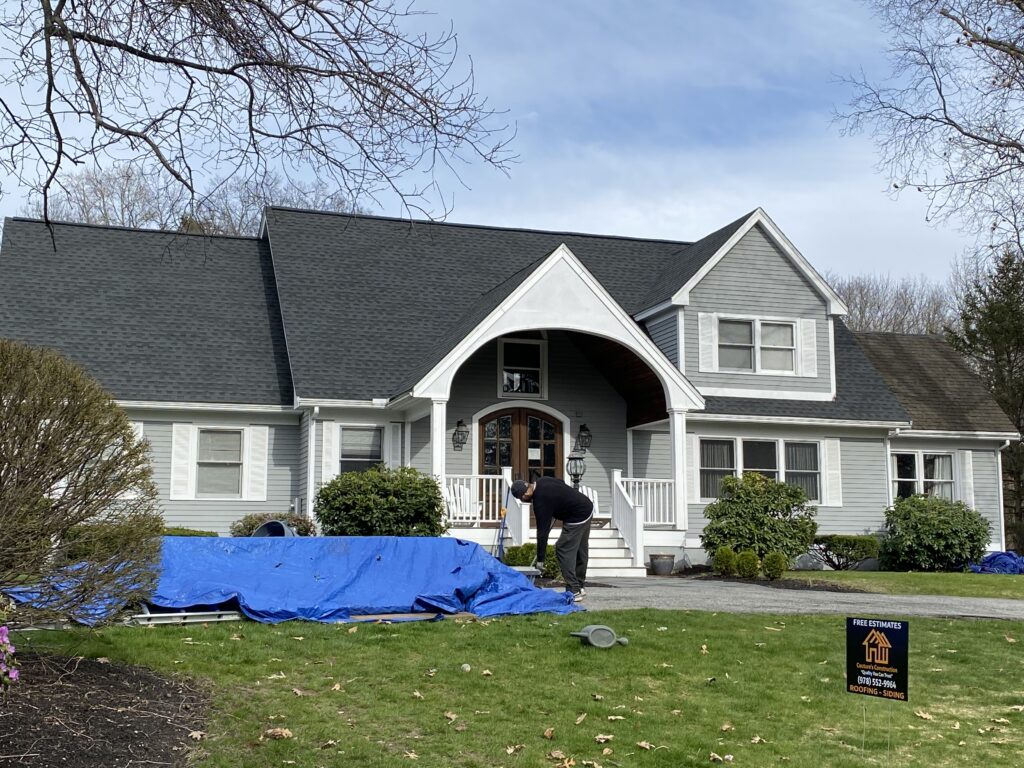
On a repair, we’re patching or heat-welding the membrane at the failure point, resealing flashing, and clearing or repairing drains so water has somewhere to go. On a full re-cover or replacement, the sequence is tear-off down to the deck if the existing system won’t support a re-cover, decking repair where needed, new flashing at every penetration and wall transition, then the new membrane, mechanically fastened or fully adhered depending on the wind exposure and roof design. Rooftop units, vents, and drains all get new flashing boots and collars, since reusing old ones on a new membrane is where re-covers commonly fail within a couple of years.
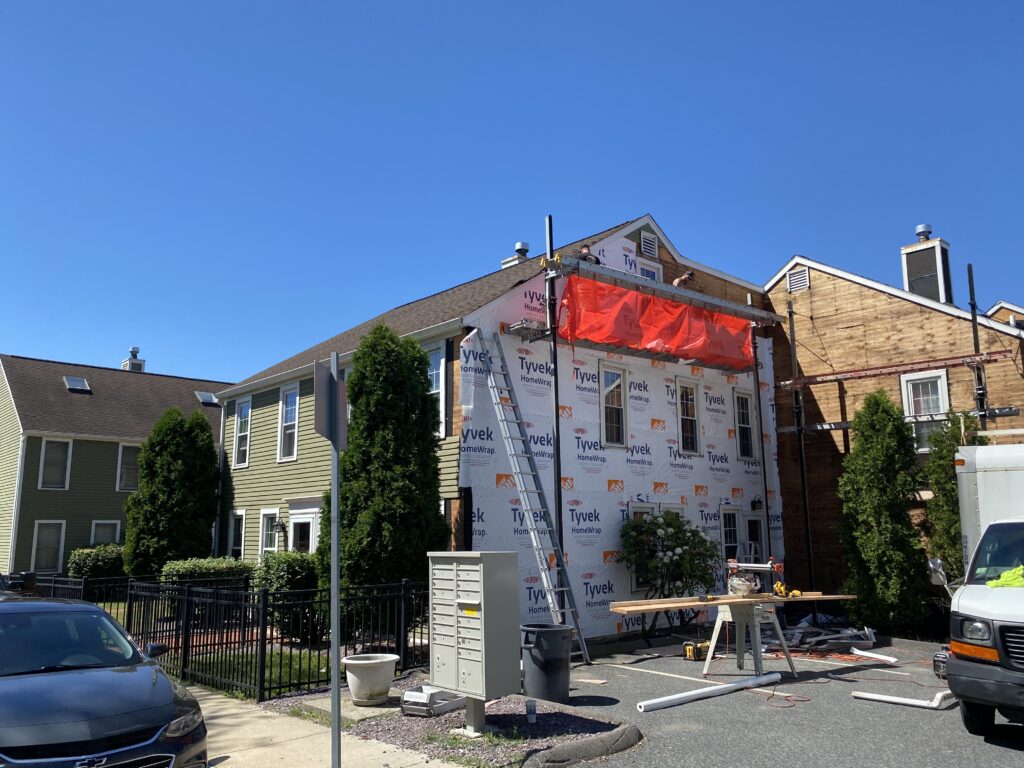
Because most of Ipswich’s commercial buildings are occupied businesses or working properties, we phase the job. That can mean working in sections so half the roof stays weathertight at all times, scheduling around business hours, or doing the noisy tear-off work early and the quieter finish work later in the day. We work that out with you before the crew shows up, not on the fly.
What It Costs
Commercial flat roof work in Ipswich typically runs {PRICE_LOW} to {PRICE_HIGH}, and the range is wide because commercial roofs vary more than residential ones. What moves the number: total square footage, how many layers of old roofing need to come off, whether the decking underneath is sound or needs repair, how many rooftop penetrations there are (HVAC units, vents, drains all add flashing labor), and access. A roof over a storefront on 1A with limited staging area costs more to work on than the same size roof on a standalone building with a parking lot around it. We give you a number after the assessment, not before it.
How Long It Takes
A straightforward repair is usually a single day. A full re-cover or replacement on a small commercial building runs anywhere from two days to about a week, depending on square footage, whether tear-off is required, and how the job is phased around your operating hours. Weather matters more on flat roofing than on shingles, since membrane installation and adhesives both have temperature and moisture requirements. We’ll give you a realistic window up front, including what happens if a rain day pushes the schedule.
Do you work on small commercial and mixed-use buildings, not just houses?
Yes. A lot of our Ipswich work is exactly that: a flat roof over a storefront, a church or municipal building, a converted barn, or a rental unit above a business. We size the crew and schedule to the job, not the other way around.
Can you keep my business open during the roof work?
In most cases, yes. Flat and low-slope roofing can usually be phased in sections so part of the roof stays sealed while we work on the rest. We plan that with you before the job starts, based on your hours and how the building is laid out.
EPDM, TPO, or modified bitumen: which is right for my building?
It depends on the roof's exposure, slope, and what's already up there. TPO gives you reflective white membrane and welded seams, EPDM is a proven, economical rubber system, and modified bitumen is often the right call when it's already on the building and the decking is sound. We'll tell you which fits after the assessment.
Is a repair ever the right answer instead of a full replacement?
Often, yes, especially on a smaller commercial roof with one clear failure point and sound decking underneath. We don't push a full re-cover when a targeted repair and a maintenance plan will actually hold.
How does wind exposure near the water affect the roofing system you'd recommend?
Get an Estimate
Ready to find out what your Ipswich commercial roof actually needs? Couture’s Construction provides straightforward, on-site assessments rather than rough phone quotes. We look at the existing roofing system, note problem areas, and give you a clear written estimate before any work begins.
Whether you manage a retail building, warehouse, or office property in Ipswich, we’ll walk the roof with you and explain your options plainly, no pressure, no guesswork, just an honest look at what the job requires.