
- Home
- Services
- Locations
Amesbury, MA
Boxford, MA
Chelmsford, MA
Danvers, MA
Dracut, MA
Essex, MA
Georgetown, MA
Groveland, MA
Hamilton, MA
Haverhill, MA
Ipswich, MA
Merrimac, MA
Methuen, MA
Middleton, MA
Newbury, MA
Newburyport, MA
North Andover, MA
North Reading, MA
Peabody, MA
Rowley, MA
Salem, MA
Salisbury, MA
Tewksbury, MA
Topsfield, MA
Topsfield, MA
West Newbury, MA
Atkinson, MA
Derry, NH
East Kingston, NH
Kensington, NH
Kingston, NH
Londonderry, NH
Plaistow, NH
Salem, NH
- Company
- Contact
- Home
- Services
- Locations
Amesbury, MA
Boxford, MA
Chelmsford, MA
Danvers, MA
Dracut, MA
Essex, MA
Georgetown, MA
Groveland, MA
Hamilton, MA
Haverhill, MA
Ipswich, MA
Merrimac, MA
Methuen, MA
Middleton, MA
Newbury, MA
Newburyport, MA
North Andover, MA
North Reading, MA
Peabody, MA
Rowley, MA
Salem, MA
Salisbury, MA
Tewksbury, MA
Topsfield, MA
Topsfield, MA
West Newbury, MA
Atkinson, MA
Derry, NH
East Kingston, NH
Kensington, NH
Kingston, NH
Londonderry, NH
Plaistow, NH
Salem, NH
- Company
- Contact
Roof Repair in Windham, NH
Most of Windham’s roofs went up during the same twenty-year stretch, from the big subdivisions off Range Road and North Lowell Road to the newer construction near Golden Brook. That means a lot of Windham roofs are hitting thirty to forty years old at roughly the same time, and a lot of homeowners are calling about the same handful of problems: a stain on the ceiling after a nor’easter, missing shingles after a windy week, or a soft spot near a skylight that wasn’t there last fall.
Professional Roof Repair for Windham Homes
We work both sides of the Massachusetts and New Hampshire line. Couture’s Construction is based in Methuen, about twenty minutes south, and we’ve been doing roof work on this side of the border for years, not just running a service area page that says we will. Windham has its own building department, its own permitting process, and its own inspection requirements, and we handle that paperwork the same way we do in every town we work, whether that’s a straightforward repair permit or something that needs a closer look from the town.
A repair call doesn’t automatically turn into a replacement pitch here. If a section of roof can be fixed properly and it will hold, we tell you that and we fix it. If the roof is past the point where a patch makes sense, we tell you that too, and we explain exactly why.
What Windham Roofs Are Up Against
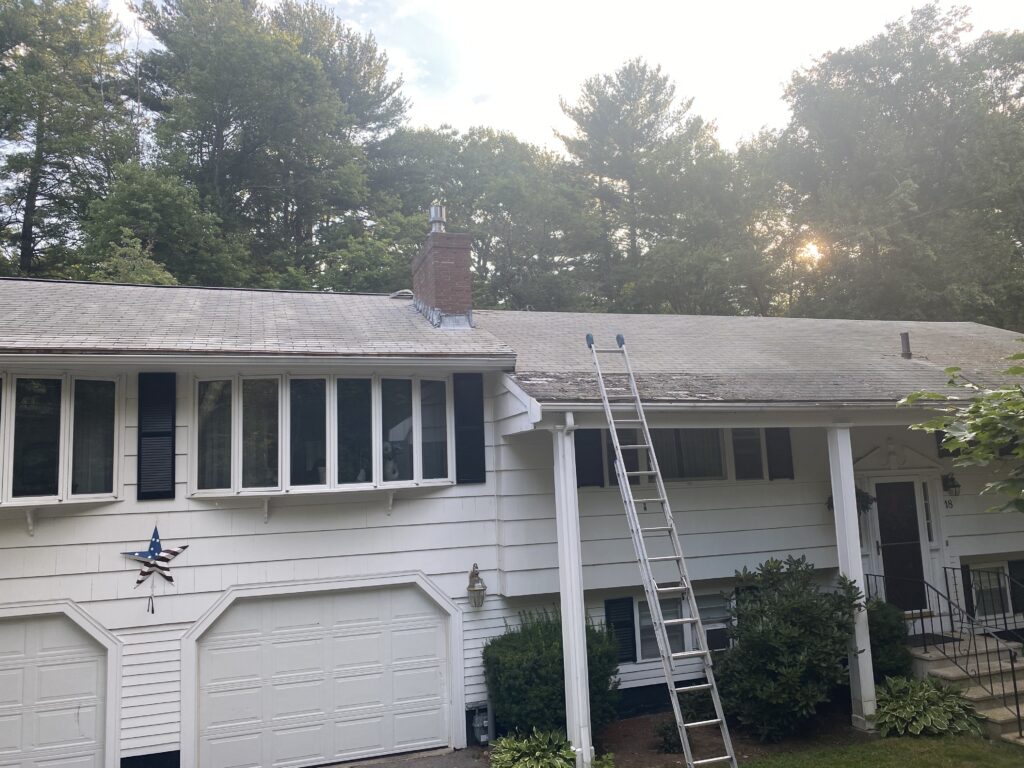
Windham has more tree cover than a lot of the towns we work in, especially around Cobbetts Pond and the wooded lots off Fellows Road and Searles Road. That means valleys and roof-to-wall intersections collect pine needles and leaf litter faster than they do on an open lot, and clogged valleys hold water against the shingles long after a storm has passed. We see granule loss and early valley failure on shaded roofs years before the rest of the shingle field shows any wear.
Because so much of Windham’s housing stock was built in one general era, we’re also seeing roofs reach first-replacement age in clusters, entire streets built by the same developer in the same year with the same shingle package. That original shingle is usually a standard three-tab or an early architectural product, not rated for the wind gusts we get off open fields near Windham Depot and the airport corridor. North-facing slopes and shaded rear additions are where ice dams show up first in winter, since the snow doesn’t melt evenly and meltwater backs up under the shingle edge. If your attic runs warm and your soffit vents look painted over or blocked, that’s usually part of the story too.
How We Assess It
Before Derek recommends anything, he gets on the roof. That means checking the decking for soft spots, especially around any leak history, checking flashing at every chimney, skylight, and sidewall for gaps or rusted-through metal, and checking the valleys for granule wash and standing debris. He also gets into the attic, because the underside of the roof tells you things the top side doesn’t: dark staining on the sheathing, nail points showing frost in winter, insulation packed against the soffit blocking airflow. Ridge and soffit ventilation gets checked as a system, not as an afterthought, because a roof with poor airflow will keep having ice dam and moisture problems no matter how many shingles you replace.
Only after that walk-through do we talk about what the roof actually needs. Sometimes that’s a section of decking and a few courses of shingle. Sometimes it’s a full tear-off. We say which one out loud, with the reasons, before any number gets discussed.
What the Job Involves
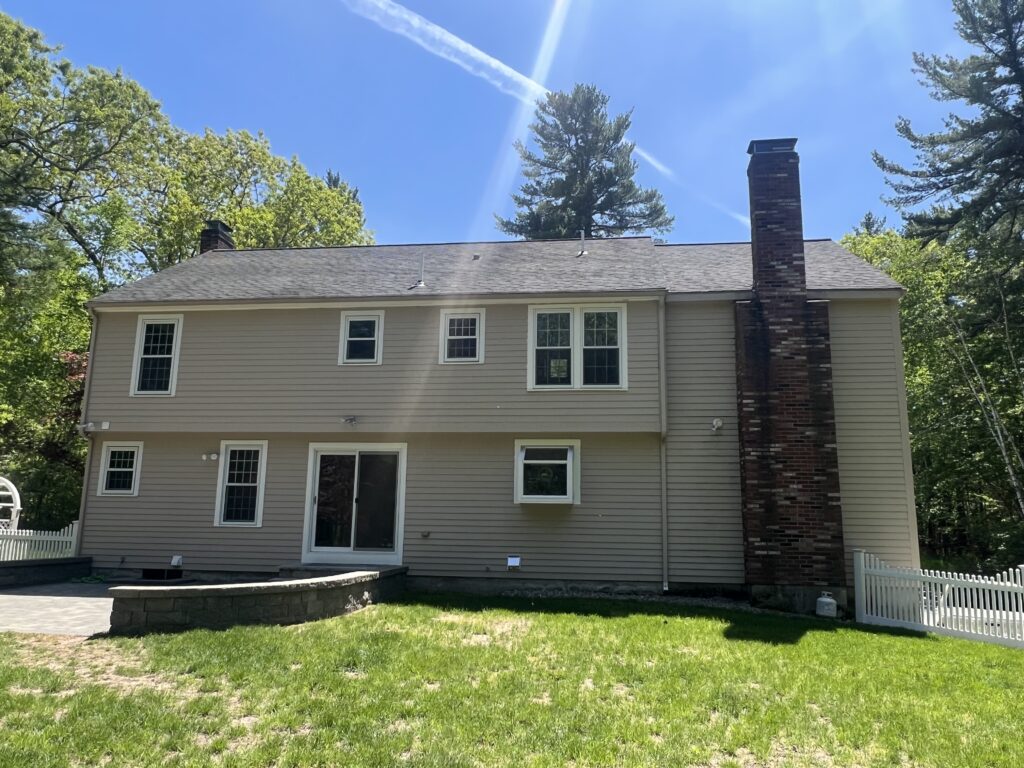
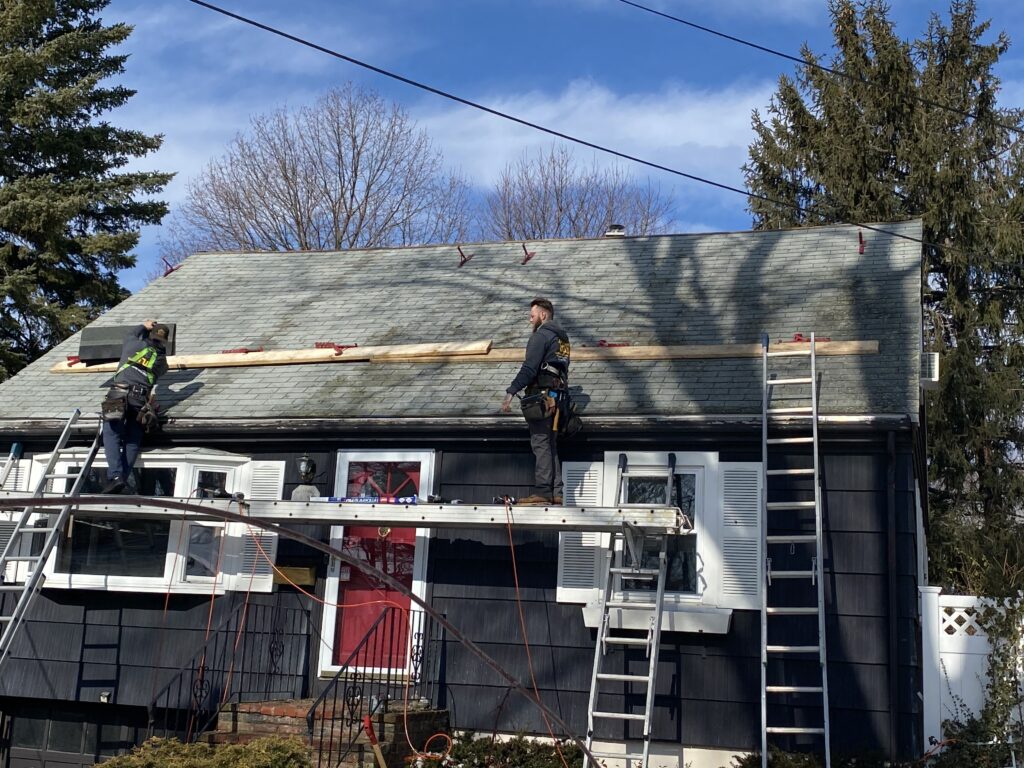
A straightforward repair usually means removing the damaged shingles and the surrounding course, checking the decking underneath for rot or soft spots, replacing any bad plywood, and reinstalling with new ice and water shield at the repair zone before the shingle goes back down. Flashing repairs at a chimney or valley get rebuilt with new step flashing and counterflashing rather than a bead of sealant over the old metal, since sealant-only fixes fail again within a season or two. If the issue is a ventilation problem causing ice dams, we address the soffit and ridge airflow as part of the fix, not as a separate upsell later.
We match shingle color and profile as closely as the manufacturer’s current line allows, though on an older roof with a discontinued shingle, a repaired section may show a slight color difference until the whole slope weathers evenly.
What It Costs
A typical shingle and flashing repair in Windham runs {PRICE_LOW} to {PRICE_HIGH}, and where you land in that range depends on the size of the damaged area, the pitch of the roof, how many layers of old shingle are already up there, and how easy the roof is to access. A single-story ranch with one layer of shingle and good access is a quicker, cheaper job than a steep two-story roof with limited ladder access or a valley that needs rebuilding. Decking surprises move the number too. We won’t know if there’s rot under a leak until we open it up, and we tell you before we go further, not after.
How Long It Takes
Most single-area repairs are a one-day job, sometimes finished in a few hours if the decking underneath is sound. A repair that involves rebuilding a valley or replacing a run of decking can stretch to a day and a half. We don’t leave a roof open overnight without protection, and if weather is closing in, we’ll tarp and secure the area rather than rush a finish that won’t hold up.
Do I actually need a full roof replacement, or will a repair hold?
That depends entirely on decking condition, how widespread the damage is, and the age of the shingle field. Plenty of Windham roofs get another five to ten years out of a targeted repair. We'll tell you honestly which situation you're in after we've been on the roof, not before.
Does Couture's Construction work in New Hampshire, or just Massachusetts?
Both. We're based in Methuen, but we work regularly on this side of the border in Windham, Derry, Londonderry, Salem, and the surrounding towns. We handle New Hampshire's permitting process the same way we handle Massachusetts.
Why do I keep getting ice dams on the same part of my roof?
Usually it's a ventilation issue on that slope, not just an ice problem. If soffit or ridge airflow is blocked, heat builds up in the attic, melts snow unevenly, and the meltwater refreezes at the colder eave. We check ventilation as part of every repair assessment for this reason.
How do I know if my shingles are just old or actually failing?
Granule loss in the gutters, curling or cupped shingle edges, and cracked shingles on south-facing slopes are all signs of age. Active leaks, soft decking, or shingles blowing off in normal wind are signs the roof needs attention now rather than later.
Do you handle the permit with the Town of Windham?
Yes. Windham has its own permitting requirements separate from Massachusetts towns, and we take care of that paperwork as part of the job.
Get an Estimate
If you’re seeing a stain on the ceiling, a shingle in the yard after a windy night, or ice building up along the eaves in winter, get it looked at before it turns into a bigger repair. Call {PHONE} or send us a message with a few photos and we’ll get someone out to Windham to take a real look, on the roof and in the attic, and give you a straight answer about what it needs.