
- Home
- Services
- Locations
Amesbury, MA
Boxford, MA
Chelmsford, MA
Danvers, MA
Dracut, MA
Essex, MA
Georgetown, MA
Groveland, MA
Hamilton, MA
Haverhill, MA
Ipswich, MA
Merrimac, MA
Methuen, MA
Middleton, MA
Newbury, MA
Newburyport, MA
North Andover, MA
North Reading, MA
Peabody, MA
Rowley, MA
Salem, MA
Salisbury, MA
Tewksbury, MA
Topsfield, MA
Topsfield, MA
West Newbury, MA
Atkinson, MA
Derry, NH
East Kingston, NH
Kensington, NH
Kingston, NH
Londonderry, NH
Plaistow, NH
Salem, NH
- Company
- Contact
- Home
- Services
- Locations
Amesbury, MA
Boxford, MA
Chelmsford, MA
Danvers, MA
Dracut, MA
Essex, MA
Georgetown, MA
Groveland, MA
Hamilton, MA
Haverhill, MA
Ipswich, MA
Merrimac, MA
Methuen, MA
Middleton, MA
Newbury, MA
Newburyport, MA
North Andover, MA
North Reading, MA
Peabody, MA
Rowley, MA
Salem, MA
Salisbury, MA
Tewksbury, MA
Topsfield, MA
Topsfield, MA
West Newbury, MA
Atkinson, MA
Derry, NH
East Kingston, NH
Kensington, NH
Kingston, NH
Londonderry, NH
Plaistow, NH
Salem, NH
- Company
- Contact
Commercial Roofing in Andover, MA
Andover’s commercial roofs are a mixed bag. You’ve got office parks off Route 28 with low-slope EPDM roofs from the original build, retail strips with rear additions patched over and over, and older brick buildings near the center converted to office or mixed use with roof systems nobody’s touched in a decade. Flat and low-slope work here comes with real constraints most residential crews never deal with: an operating business underneath, tenants who need dry space during the job, and a roof deck that’s usually hiding more than one layer of history.
Flat and Low-Slope Commercial Roofing Services in Andover
We work on EPDM (rubber membrane), TPO, and modified bitumen systems, plus the flashing, drain, and parapet detail work that actually causes most flat roof leaks. That covers new installations, tear-offs and full replacements, and section repairs where only part of a roof has failed. We also handle roof coatings where a membrane still has service life left but needs protection, and we’ll tell you plainly when that’s not a real option and a replacement is the honest answer.
Most of our Andover commercial work is either a straight EPDM replacement on an aging office or warehouse roof, or repair and partial recover work on a retail or mixed-use building where the roof has been patched by multiple contractors over the years and needs to be brought back to one consistent system.
What Andover roofs are up against
Commercial low-slope roofs in Andover fail for a small number of predictable reasons, and almost none of them are dramatic. Ponding water sits in low spots because the original slope wasn’t built into the deck correctly, and standing water breaks down membrane seams years before the field material wears out. Parapet wall flashing and roof drains are the other weak point – they’re where movement, age, and poor original detailing show up first, usually as a slow leak that a tenant reports long after the water’s already gotten into the insulation below.
Andover adds its own wrinkle. A lot of the commercial building stock here is older brick and block construction converted from other uses, which means roof decks that were never designed for today’s rooftop HVAC units, and drainage systems that were adequate for the original footprint but not for additions built on later. Heavy tree cover around some of the office park sites also means gutter and drain debris is a recurring maintenance issue, not a one-time fix. We see it building to building – two roofs put on by the same contractor in the same year, one holding up fine and the other failing early, because the drainage and the deck underneath were never the same to begin with.
How we assess it
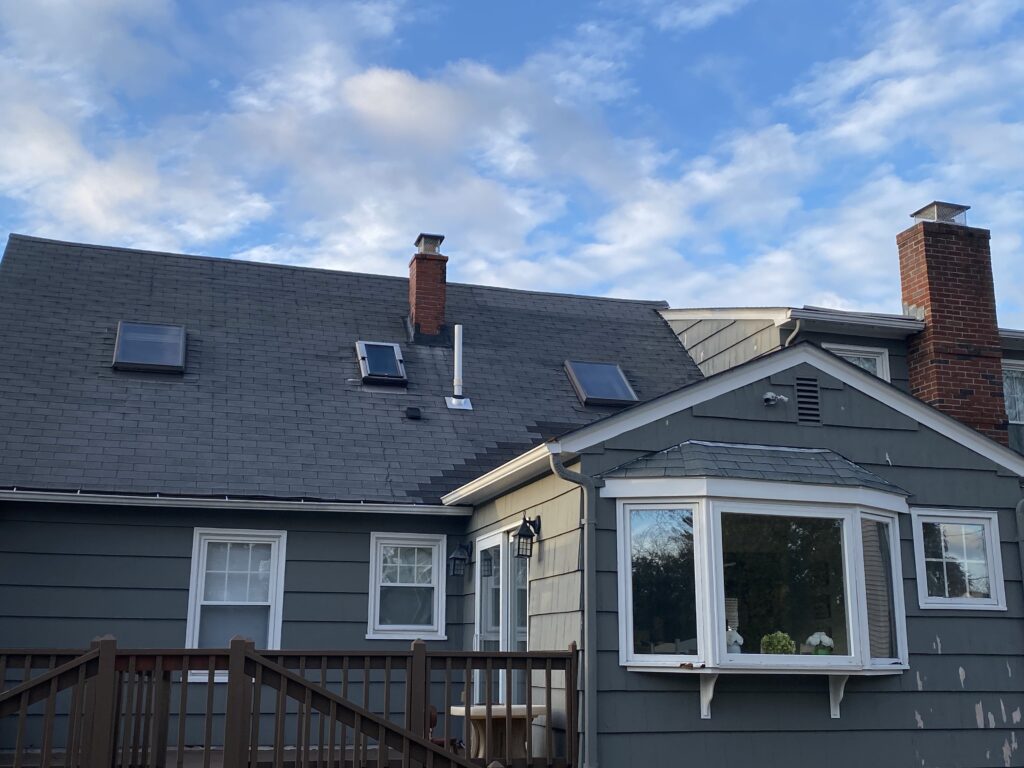
Derek gets on the roof before anyone recommends anything. That means walking the field, checking membrane seams and flashing at every penetration and parapet, and finding out where water is actually collecting rather than guessing from the ground. We check the deck condition from inside where we can get access – a break room ceiling stain or a warehouse rack area with water marks tells you more than the roof surface does. We also look at how the building is used: loading dock traffic, rooftop equipment, tenant hours, because those things determine how the job gets phased, not just what materials go down.
You get a straight answer before you get a proposal. If a section repair solves the actual problem, that’s what we recommend. If the membrane is past the point where patching makes sense, we’ll explain why and what the alternative looks like, with real numbers attached.
What the job involves
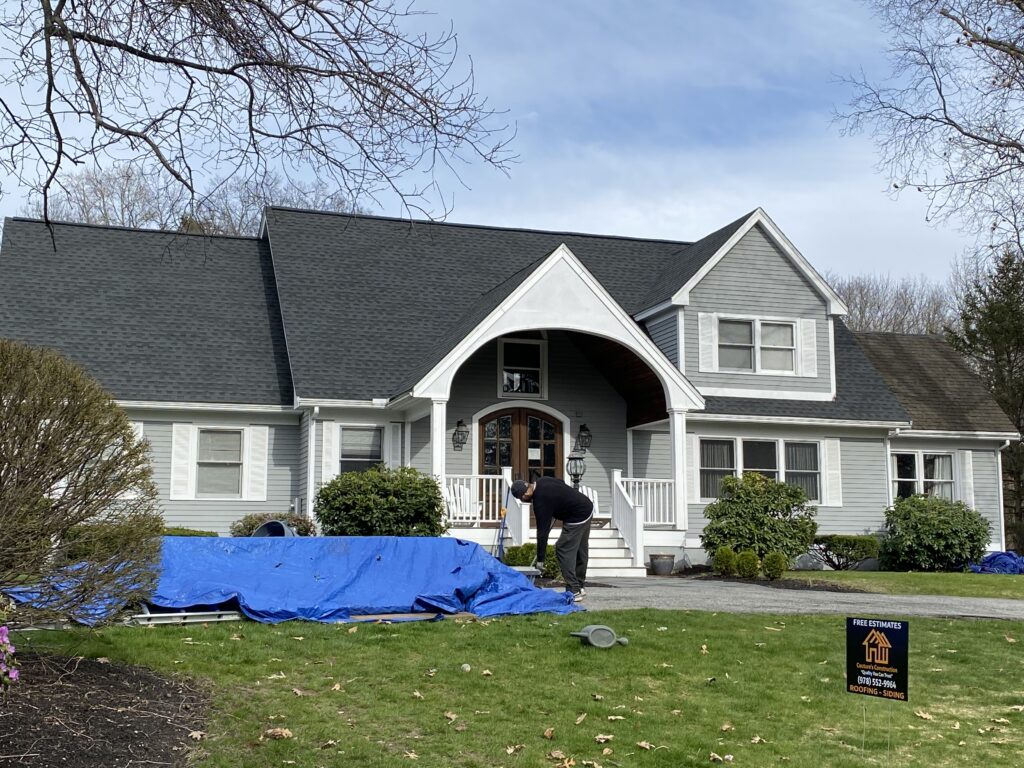
On a full tear-off and replacement, we strip the existing membrane and insulation down to the deck, inspect and repair or replace any rotted decking, then rebuild the system: insulation for the R-value your building needs, new membrane (EPDM, TPO, or modified bitumen depending on the building and budget), and new flashing at every parapet, curb, and penetration. Drains and scuppers get rebuilt or replaced, not just caulked. On a phased job, we section the roof and work area by area so the rest of the building stays dry and operational the whole time.
Access and staging get worked out before the crew shows up, not on day one. Loading docks, parking, and tenant schedules all factor into how we sequence the work, especially on a building that can’t afford downtime.
What it costs
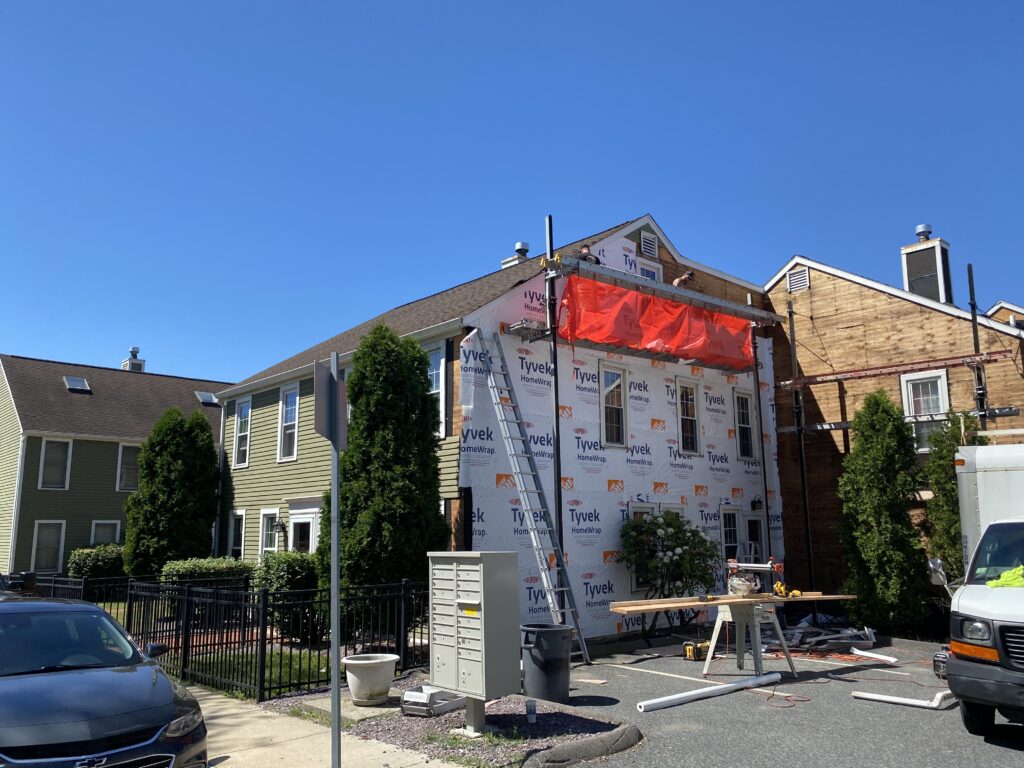
Commercial flat roof work runs {PRICE_LOW} to {PRICE_HIGH}, and the spread is wide because the variables are wide. Roof size and the number of penetrations, curbs, and parapet walls all add labor. Insulation condition matters too – wet insulation under an old membrane has to come out and get replaced, and you don’t know how much of it is wet until the tear-off starts. Decking surprises are the other big swing factor, especially on older converted buildings where the original deck wasn’t built to current commercial standards. Access also matters: a single-story retail building with ground-level staging costs less to work on than a building requiring crane access or extensive rooftop equipment protection.
We give you a number after the assessment, not before it, and we explain what’s driving that number line by line.
How long it takes
A straightforward EPDM or TPO replacement on a mid-size commercial building typically runs a few days to a week depending on size and weather. Phased work on an occupied building takes longer because we’re sequencing around tenant hours and keeping sections watertight overnight, every night, until the whole roof is done. We’ll give you a realistic schedule before the job starts, including what happens if weather pushes a section back, and we keep the building owner or property manager updated as the work moves along rather than going quiet until it’s finished.
Do you work on occupied commercial buildings without shutting the business down?
Yes. Most commercial roofing jobs in Andover happen while the building stays open. We phase the work in sections, keep everything watertight overnight, and coordinate access and staging with the property manager or tenants ahead of time.
EPDM, TPO, or modified bitumen - which is right for my building?
It depends on your roof's slope, existing system, budget, and how the building is used. We'll walk you through the tradeoffs after we've assessed the actual roof rather than recommending a system before we've seen the building.
Can a leak be repaired instead of replacing the whole roof?
Often, yes. If the membrane and deck are still in reasonable condition and the failure is isolated to flashing, a seam, or a drain, a section repair is the honest recommendation. We only recommend full replacement when the roof actually needs it.
How do you handle drainage issues on older Andover buildings?
We check where water is actually collecting during the assessment, not just where the roof looks worn. On older or converted buildings, we often rebuild drains and correct low spots as part of the job rather than just replacing the membrane over the same drainage problem.
Get an estimate
If you manage or own a commercial building in Andover and the roof is past due for attention, call Couture’s Construction at {PHONE}. We’ll walk the roof, tell you what we find, and put together a real assessment and a real number before any work is scheduled. No pressure to sign on the spot, and no recommendation that isn’t backed up by what we actually saw on your roof.