
- Home
- Services
- Locations
Amesbury, MA
Boxford, MA
Chelmsford, MA
Danvers, MA
Dracut, MA
Essex, MA
Georgetown, MA
Groveland, MA
Hamilton, MA
Haverhill, MA
Ipswich, MA
Merrimac, MA
Methuen, MA
Middleton, MA
Newbury, MA
Newburyport, MA
North Andover, MA
North Reading, MA
Peabody, MA
Rowley, MA
Salem, MA
Salisbury, MA
Tewksbury, MA
Topsfield, MA
Topsfield, MA
West Newbury, MA
Atkinson, MA
Derry, NH
East Kingston, NH
Kensington, NH
Kingston, NH
Londonderry, NH
Plaistow, NH
Salem, NH
- Company
- Contact
- Home
- Services
- Locations
Amesbury, MA
Boxford, MA
Chelmsford, MA
Danvers, MA
Dracut, MA
Essex, MA
Georgetown, MA
Groveland, MA
Hamilton, MA
Haverhill, MA
Ipswich, MA
Merrimac, MA
Methuen, MA
Middleton, MA
Newbury, MA
Newburyport, MA
North Andover, MA
North Reading, MA
Peabody, MA
Rowley, MA
Salem, MA
Salisbury, MA
Tewksbury, MA
Topsfield, MA
Topsfield, MA
West Newbury, MA
Atkinson, MA
Derry, NH
East Kingston, NH
Kensington, NH
Kingston, NH
Londonderry, NH
Plaistow, NH
Salem, NH
- Company
- Contact
Vinyl Siding Installation in Kingston, NH
Kingston’s housing stock runs heavy on split-levels and colonials built through the 1970s, 80s, and 90s around Great Pond and the lots off Route 125, and a lot of that original siding is now old enough to be brittle, faded, or pulling loose at the corners. Add in the tree cover along the back roads near Danville and Sandown, and you’ve got siding that’s spent thirty-plus years catching wet leaves, pollen, and freeze-thaw cycles it was never built to handle this long.
Vinyl Siding Installation in Kingston
We install vinyl siding as its own project or bundled with a roof replacement, since a lot of Kingston homes are hitting first-replacement age on both at once. Derek runs the sales side and works directly with the crews, so the person who looks at your house is the person who’s accountable for the job. We’re based in Methuen, Massachusetts, but Kingston and the rest of southern Rockingham County are part of our regular route, not a special trip across the border. We know New Hampshire’s permitting and inspection process is different from Massachusetts, and we handle that difference as a normal part of scheduling the job, not something we figure out after we’ve already started.
Deck-mounted
units fasten straight to the roof deck and use a matched step-flashing kit. This is what goes on most pitched roofs now. It sits low, looks clean and handles snow well.
Curb-mounted
units sit on a raised wood frame built on the roof. They are the right call on low-slope sections, generally below about 3 in 12, and a lot of older installs already have them.
Fixed
units let in light and nothing else. Fine over a high cathedral ceiling you will never reach.
Manual or electric venting
units open to let heat and steam out. They earn their keep in kitchens and bathrooms.
Solar-powered venting
units run off a small panel, need no wiring to the house, and close on their own when the rain sensor gets wet.
What Kingston Roofs and Homes Are Working With
Southern New Hampshire is a different competitive field from the Massachusetts towns we work in, and it’s also a different housing pattern. Kingston, along with Derry, Londonderry, Windham, and Salem NH, saw a wave of subdivision construction that’s now clustered together in age, meaning a lot of siding and roofing on these streets is failing in the same window. If your neighbor just had their house re-sided, there’s a decent chance your siding is the same vintage and heading the same direction.
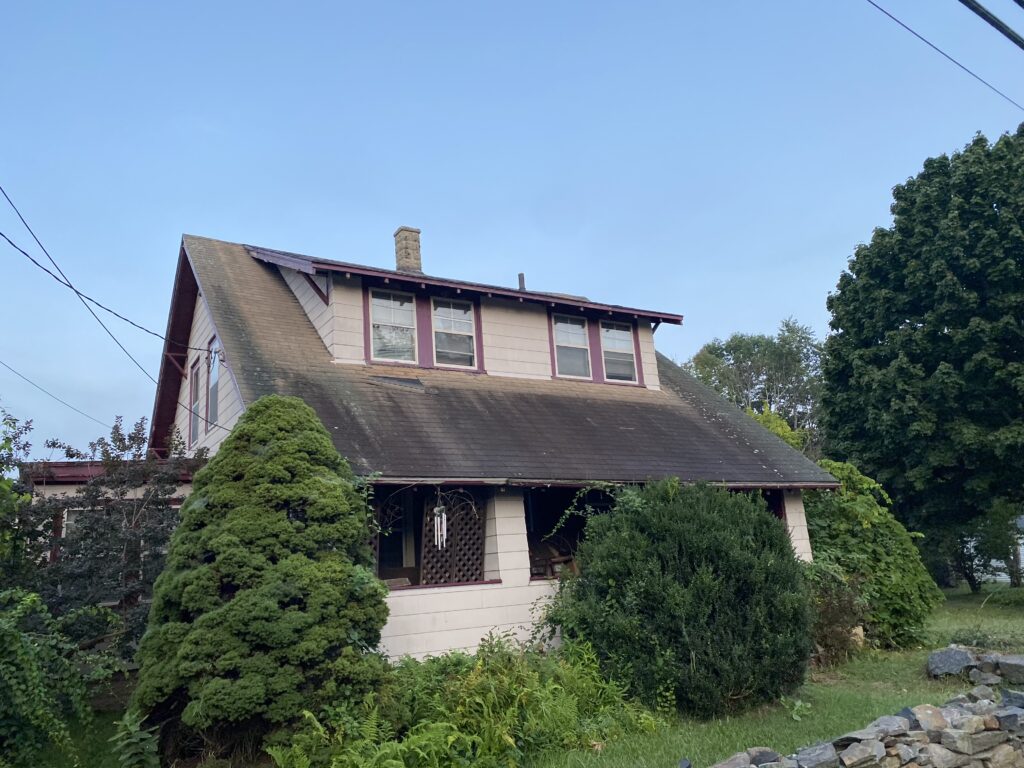
Locally, the specific pressure points are moisture and wind. Homes tucked into wooded lots near the pond or along the tree-lined sections of Route 111 hold onto damp air longer, which speeds up warping and mildew staining on older vinyl, especially on north-facing walls that don’t get much sun to dry out. Homes on more open lots, particularly near the water, take harder wind loading, and we’ve pulled plenty of siding off Kingston houses where thin panels had cracked or blown loose at the bottom starter strip because they weren’t rated for the exposure. Older aluminum or wood clapboard underneath original vinyl is also common here, and that substrate condition changes what we can do with a new install.
How We Assess It
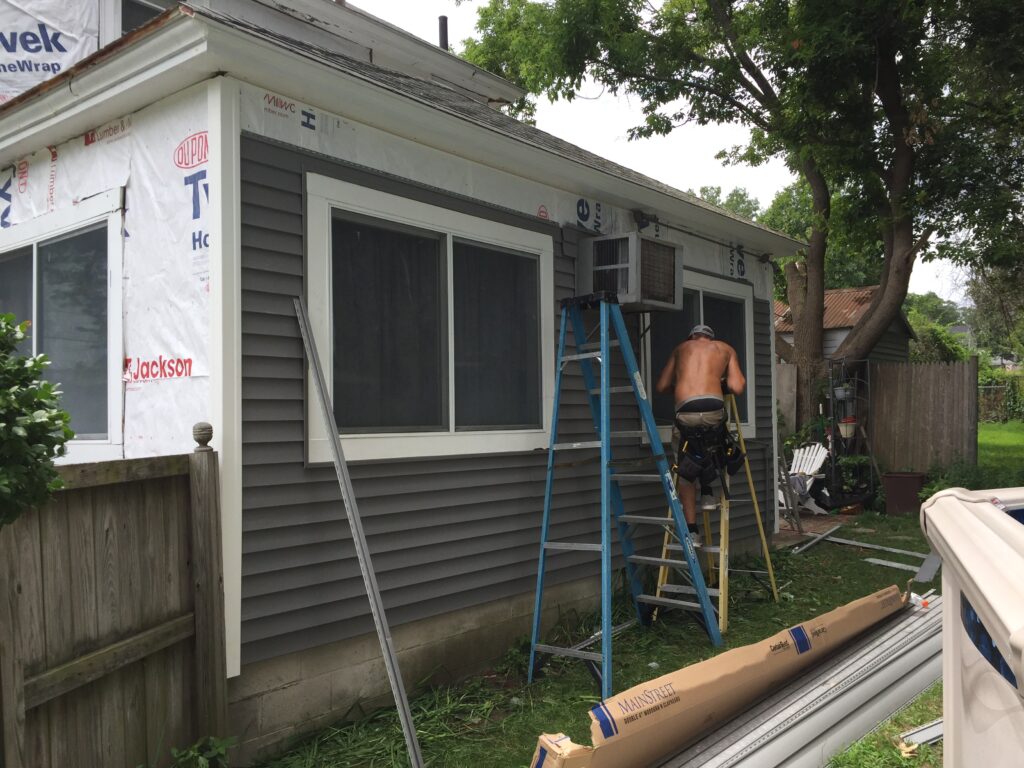
We don’t quote siding off a drive-by. Before we recommend anything, we walk the full exterior and look at what’s actually happening at the wall: how the current siding is fastened, whether panels are buckling from improper nailing, where moisture is tracking in around windows and corner posts, and what condition the sheathing is in underneath. If there’s staining or soft spots, we’ll open a section up to look before we ever write a proposal. We also check how your existing trim, fascia, and soffit tie in, because siding that doesn’t match up cleanly with those details ends up looking patched instead of finished. If you’re doing a roof at the same time, we look at both together, since flashing, drip edge, and siding all meet at the same lines around the house.
What the Job Involves
Replacement
We strip the shingles around the unit, pull the old skylight and flashing, repair the deck at the opening if it needs it, and set the new unit. Ice and water shield wraps up the sides and across the top, the step-flashing kit goes on, and we shingle back in. If the new unit matches the rough opening, the interior usually stays as it is. On a full roof replacement in Kingston, NH, all of this fits inside the reroof. The shingles are already off, the deck is exposed, and the new underlayment and flashing tie in as one system.
New cut-in
We lay out the opening from inside and out, cut the deck, and frame headers between the rafters. Ventilation gets rerouted so the bays above and below the opening still breathe. Then the unit, ice and water shield, flashing and shingles. Inside, a new opening means a light shaft through the attic, drywall and paint. That interior work is part of the conversation at the estimate, and we settle who handles what before anything is scheduled.
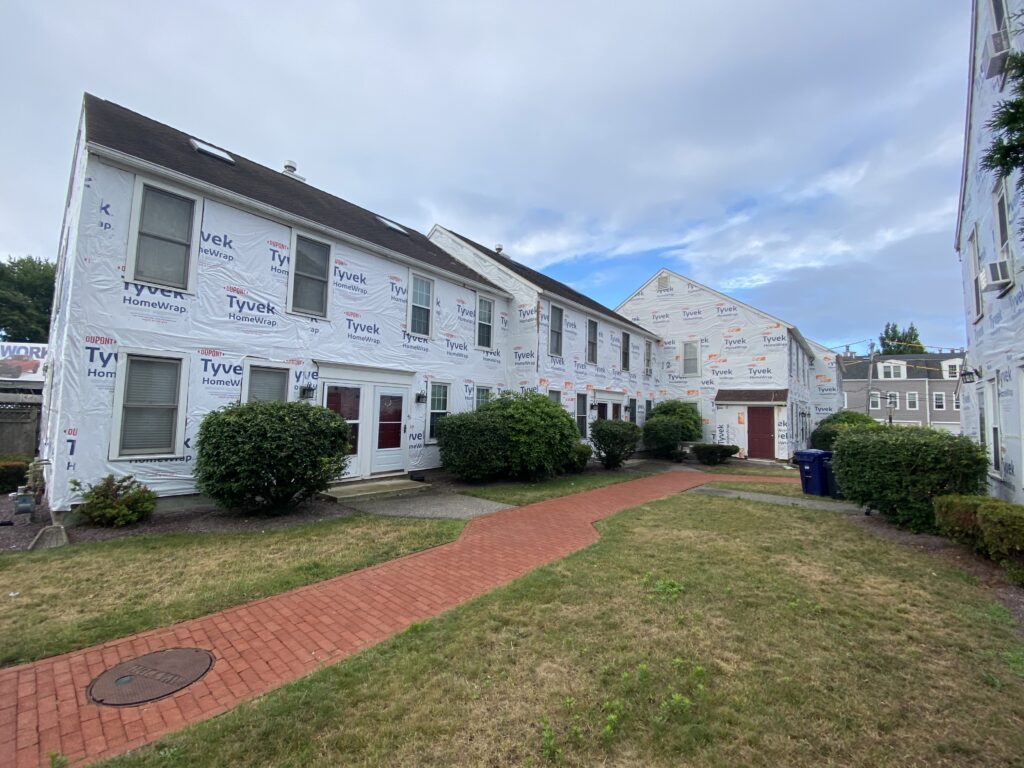
Most Kingston jobs start with stripping the old siding down to the sheathing, not installing over it, because installing new vinyl over failing old siding just traps the same problems behind a fresh face. From there we check and repair any damaged sheathing, install house wrap for a proper moisture and air barrier, and set new starter strip, corner posts, and J-channel before the panels go up. We pay close attention to fastening pattern and expansion gap, since vinyl needs room to move with temperature swings, and siding nailed too tight is one of the most common failures we see on homes that were re-sided cheaply a decade or two ago. Trim, soffit, and fascia get addressed as part of the same job when they need it, not treated as a separate upsell after the fact.
What It Costs
A full vinyl siding installation in Kingston typically runs {PRICE_LOW} to {PRICE_HIGH}, and where you land in that range depends on the size and shape of your house, how many stories, and how much trim detail you’ve got around windows, dormers, and gables. Houses with a lot of corners and cutouts take more labor per square foot than a simple rectangular ranch. If the sheathing underneath turns out to be soft or rotted once we open it up, that’s an added cost we’ll show you before we proceed, not something buried into the final invoice. Access also matters. A house with a tight side yard or a deck built up against the wall takes longer than open, easy-access siding.
How Long It Takes
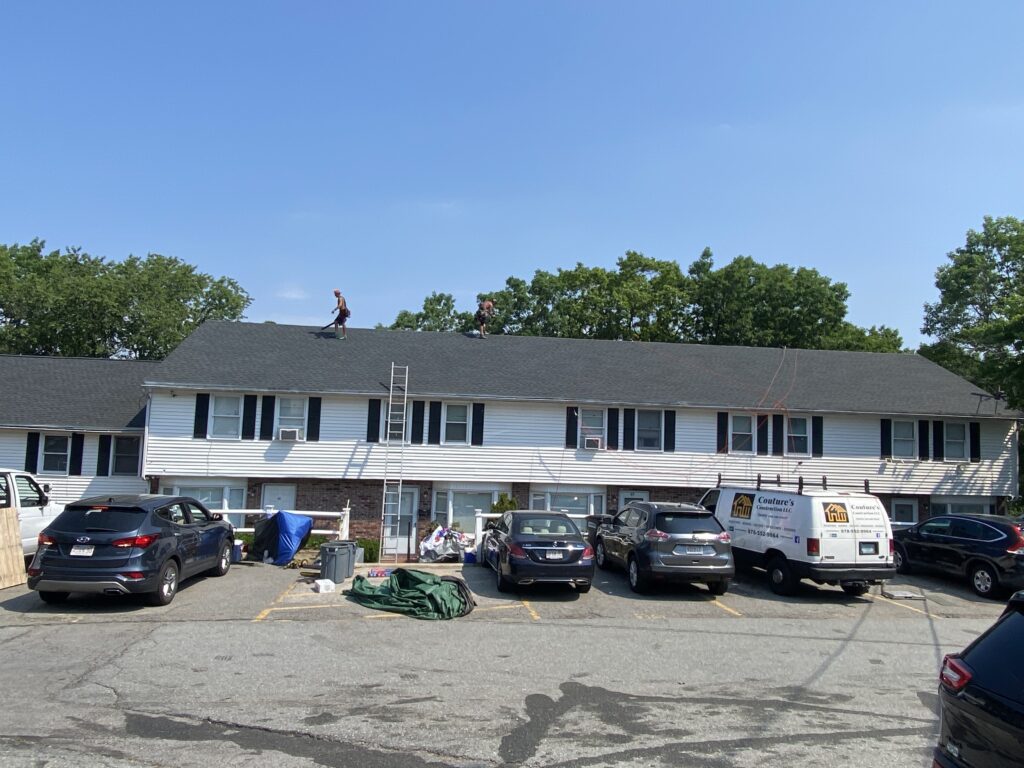
A standard single-family vinyl siding job in Kingston generally takes a few days to about a week for the crew to complete, weather permitting. Larger homes, jobs with extensive trim work, or projects where we uncover sheathing repairs will run longer. If you’re bundling siding with a roof replacement, we sequence the two so materials and crew time overlap where it makes sense, which usually shortens your total disruption compared to doing them as two separate projects months apart.
Questions Kingston Homeowners Ask Us
Every siding project comes with its own set of questions, and homeowners throughout Kingston often have similar concerns before work begins. Here are a few we hear most:
- Will new siding hold up through New Hampshire winters? Yes, materials and installation methods are chosen specifically for our region’s weather swings.
- Can you match my home’s existing style? We offer a range of colors and profiles to fit your property.
- Do I need to be home during installation? Not necessarily, though we’re happy to walk through details together.
Have another question? Reach out and we’ll get you a straight answer.
Does Couture's Construction install vinyl siding in New Hampshire, or just Massachusetts?
Both. We're based in Methuen, but we work both sides of the state line regularly. Kingston, Sandown, Danville, and the rest of southern Rockingham County are inside our normal service area, not a special trip. We know NH's permitting process is different from Massachusetts, and we handle that as part of the job.
Will new siding fix drafts and high heating bills?
Partly. New siding with a proper house wrap and correctly installed insulation board can noticeably cut air infiltration, especially on homes built before the mid-1990s. But if your attic insulation and air sealing are poor, siding alone won't solve a heating bill problem. We'll tell you honestly if that's a bigger factor than the siding itself.
How do I know if my siding needs replacing or just repair?
Localized damage, a few cracked panels from a storm, or a section behind a deck that took impact damage, that's usually a repair. Widespread warping, panels pulling away from the wall, moisture staining on the sheathing underneath, or siding older than 25 to 30 years across the whole house, that's a replacement conversation. We'll look at what's actually there before we tell you which one you need.
Can you do siding and roofing at the same time?
Yes, and a lot of Kingston homeowners do exactly that, especially when both are original to a 1980s or 1990s build and hitting the same age. Combining the two projects usually means one mobilization, one dumpster, one disruption to your yard and driveway instead of two separate ones.
What vinyl siding thickness and wind rating should I look for in this area?
Ready to Talk Siding?
Reach out to Couture’s Construction and let us know a bit about your Kingston home: how old the current siding is, whether you’re seeing rot or gaps, and what look you’re after. We’ll set up a visit, walk the exterior with you, and talk through colors, styles, and next steps before any work is scheduled.