
- Home
- Services
- Locations
Amesbury, MA
Boxford, MA
Chelmsford, MA
Danvers, MA
Dracut, MA
Essex, MA
Georgetown, MA
Groveland, MA
Hamilton, MA
Haverhill, MA
Ipswich, MA
Merrimac, MA
Methuen, MA
Middleton, MA
Newbury, MA
Newburyport, MA
North Andover, MA
North Reading, MA
Peabody, MA
Rowley, MA
Salem, MA
Salisbury, MA
Tewksbury, MA
Topsfield, MA
Topsfield, MA
West Newbury, MA
Atkinson, MA
Derry, NH
East Kingston, NH
Kensington, NH
Kingston, NH
Londonderry, NH
Plaistow, NH
Salem, NH
- Company
- Contact
- Home
- Services
- Locations
Amesbury, MA
Boxford, MA
Chelmsford, MA
Danvers, MA
Dracut, MA
Essex, MA
Georgetown, MA
Groveland, MA
Hamilton, MA
Haverhill, MA
Ipswich, MA
Merrimac, MA
Methuen, MA
Middleton, MA
Newbury, MA
Newburyport, MA
North Andover, MA
North Reading, MA
Peabody, MA
Rowley, MA
Salem, MA
Salisbury, MA
Tewksbury, MA
Topsfield, MA
Topsfield, MA
West Newbury, MA
Atkinson, MA
Derry, NH
East Kingston, NH
Kensington, NH
Kingston, NH
Londonderry, NH
Plaistow, NH
Salem, NH
- Company
- Contact
Vinyl Siding Installation in Georgetown, MA
Older homes near Georgetown Center and along North Street often show their age through faded, warped, or cracked siding that no longer holds up against New England winters. Vinyl siding gives these homes a fresh, durable exterior without the upkeep that wood or aluminum demands.
Couture’s Construction installs vinyl siding built to handle coastal winds and heavy snow loads common to this part of Essex County. We work with a range of colors and profiles to match the character of Georgetown’s mix of colonials, capes, and farmhouses.
- Improved insulation and energy efficiency
- Low-maintenance, long-lasting exterior
- Styles suited to Georgetown’s older housing stock
Signs Your Georgetown Home Needs New Siding
Georgetown’s mix of coastal humidity, snow, and seasonal swings puts real wear on exterior siding over time. Homeowners typically reach out to us for one of two reasons.
The first is visible damage: warped or cracked panels, fading that won’t buff out, or boards that have started to bow away from the wall. These are signs that moisture has worked its way behind the surface, and waiting only lets rot spread to the sheathing underneath.
The second is a home that simply feels drafty or costs too much to heat and cool. Old siding often has little to no insulation value, and gaps around panels let air slip through year-round.
- Cracking, warping, or loose panels
- Fading, chalking, or discoloration
- Rising energy bills
- Soft spots or signs of moisture behind panels
Deck-mounted
units fasten straight to the roof deck and use a matched step-flashing kit. This is what goes on most pitched roofs now. It sits low, looks clean and handles snow well.
Curb-mounted
units sit on a raised wood frame built on the roof. They are the right call on low-slope sections, generally below about 3 in 12, and a lot of older installs already have them.
Fixed
units let in light and nothing else. Fine over a high cathedral ceiling you will never reach.
Manual or electric venting
units open to let heat and steam out. They earn their keep in kitchens and bathrooms.
Solar-powered venting
units run off a small panel, need no wiring to the house, and close on their own when the rain sensor gets wet.
What Georgetown Homes Bring to a Siding Project
Georgetown’s housing stock spans a lot of ground, from antique capes and colonials near the town common to ranch and split-level homes built during the mid-century growth years, plus newer construction out toward the edges of town. Each of these brings its own quirks to a siding job. The older homes often have irregular framing, original trim details, and sometimes clapboard or shingle siding hiding decades of patchwork repairs underneath. Getting a clean, flat surface for new vinyl panels usually means addressing that old sheathing first rather than covering problems up.
Newer homes in Georgetown tend to have straighter walls and more consistent framing, but they often come with builder-grade siding that hasn’t held up well against New England weather. Wind-driven rain, freeze-thaw cycles, and the humidity that settles in around the wooded lots common throughout town all take a toll on lower-grade panels faster than most homeowners expect.
Whichever type of home you have, the details matter just as much as the panels themselves. Proper flashing around windows and doors, correctly vented soffits, and attention to how siding meets trim and rooflines all affect how the job performs over time. A siding installation that accounts for the specific construction of your Georgetown home, rather than a one-size-fits-all approach, is what keeps the results looking good and functioning well for years.
How We Evaluate Your Siding Project
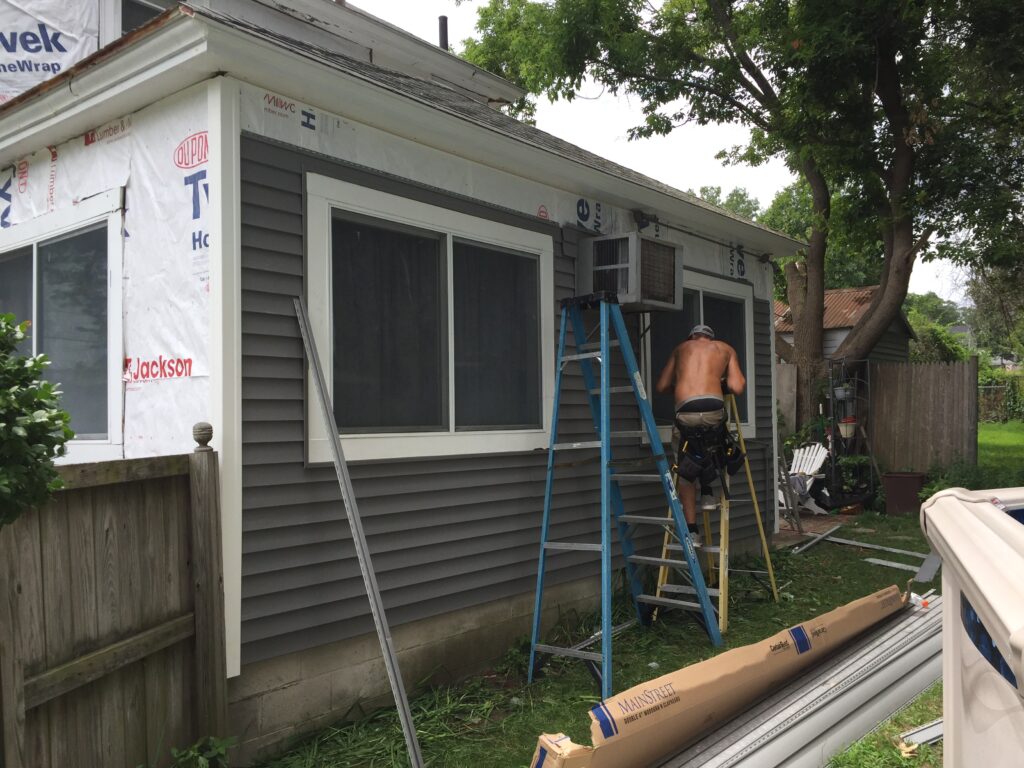
Before we quote any siding job in Georgetown, we take a close look at what’s actually going on beneath the surface. A crew lead will walk the exterior and check:
- The condition of the existing sheathing, looking for soft spots, rot, or water staining that needs attention before new panels go up.
- Corners, window trim, and door casings, to determine what needs new capping or flashing.
- The house wrap or building paper underneath, and whether it still provides a proper moisture barrier.
- Areas prone to wind exposure, given how Georgetown’s open lots and tree lines affect siding performance over time.
- Existing insulation levels, since siding replacement is often the right moment to add a layer of rigid foam.
We won’t recommend a full install until we know exactly what’s underneath. That’s how we keep the job accurate and avoid surprises once we start.
What the Job Involves
Replacement
We strip the shingles around the unit, pull the old skylight and flashing, repair the deck at the opening if it needs it, and set the new unit. Ice and water shield wraps up the sides and across the top, the step-flashing kit goes on, and we shingle back in. If the new unit matches the rough opening, the interior usually stays as it is. On a full roof replacement in Georgetown, MA, all of this fits inside the reroof. The shingles are already off, the deck is exposed, and the new underlayment and flashing tie in as one system.
New cut-in
We lay out the opening from inside and out, cut the deck, and frame headers between the rafters. Ventilation gets rerouted so the bays above and below the opening still breathe. Then the unit, ice and water shield, flashing and shingles. Inside, a new opening means a light shaft through the attic, drywall and paint. That interior work is part of the conversation at the estimate, and we settle who handles what before anything is scheduled.
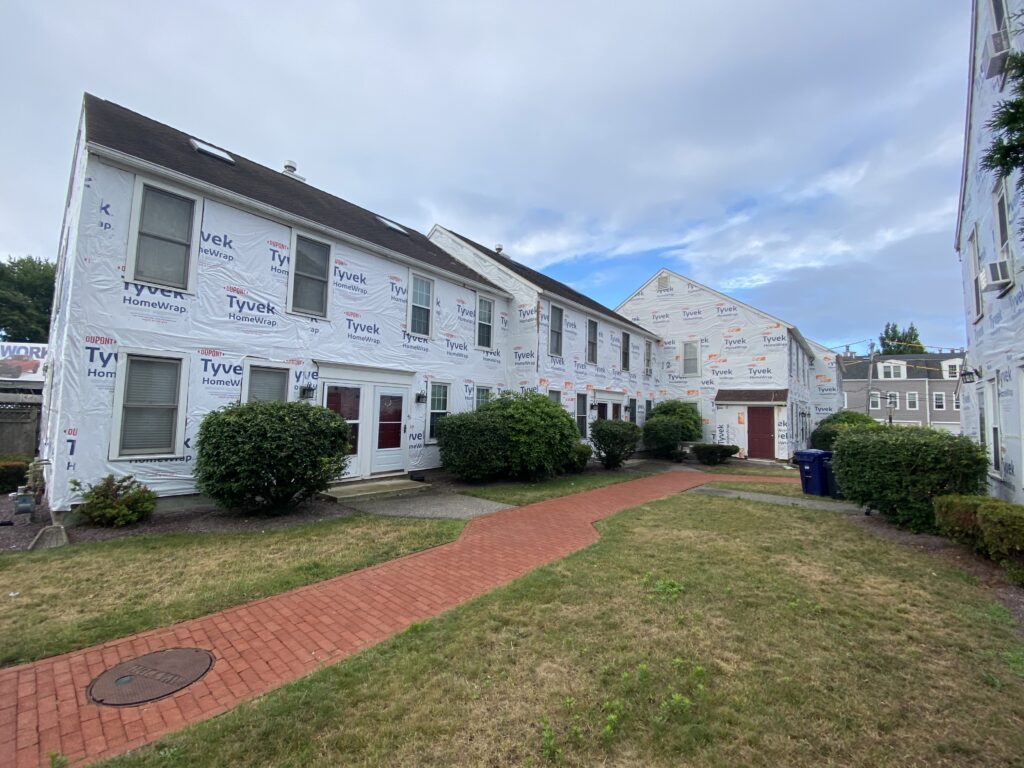
A vinyl siding installation in Georgetown starts with removing old siding down to the sheathing, checking for hidden rot or moisture damage, and repairing any weak spots before new material goes up. We install house wrap for weather protection, then fit vinyl panels, trim, and corner pieces to match your home’s design.
- Full tear-off and disposal of old siding
- Sheathing repair as needed
- House wrap and moisture barrier installation
- Panel, trim, and corner fitting
What It Costs
Every Georgetown home is different, so siding costs vary based on a few key factors we walk through during your estimate:
- Size of the home and number of stories, which affects material and labor.
- Siding profile and thickness, from standard to insulated panels.
- Condition of the sheathing underneath, and whether repairs are needed before installation.
- Trim work around windows, corners, and rooflines.
- Removal and disposal of old siding versus installing over an existing layer.
- Color and style choices, since some premium finishes carry a higher cost.
We know Georgetown homeowners want a clear picture before committing to a project this size. That’s why we measure your home, inspect the current siding, and talk through your goals before putting anything in writing. You’ll get a detailed, itemized estimate that spells out materials and labor, with no vague allowances or surprise add-ons once the crew arrives.
How Long Installation Takes
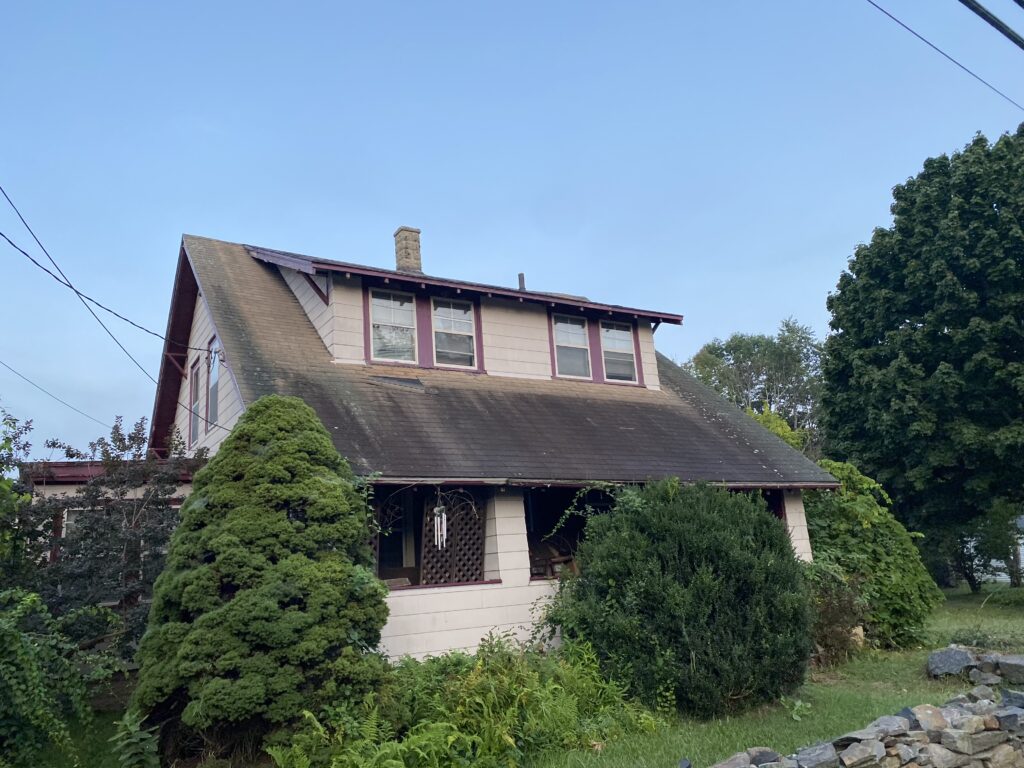
Most Georgetown homes are fully sided within a few days, depending on size and complexity. A single-story ranch may wrap up in two to three days, while larger colonials or homes with trim detail and multiple corners can take a bit longer.
- Prep and old siding removal: half a day to a day
- Installation: two to four days
- Weather delays possible during winter months
Questions Georgetown Homeowners Ask Us
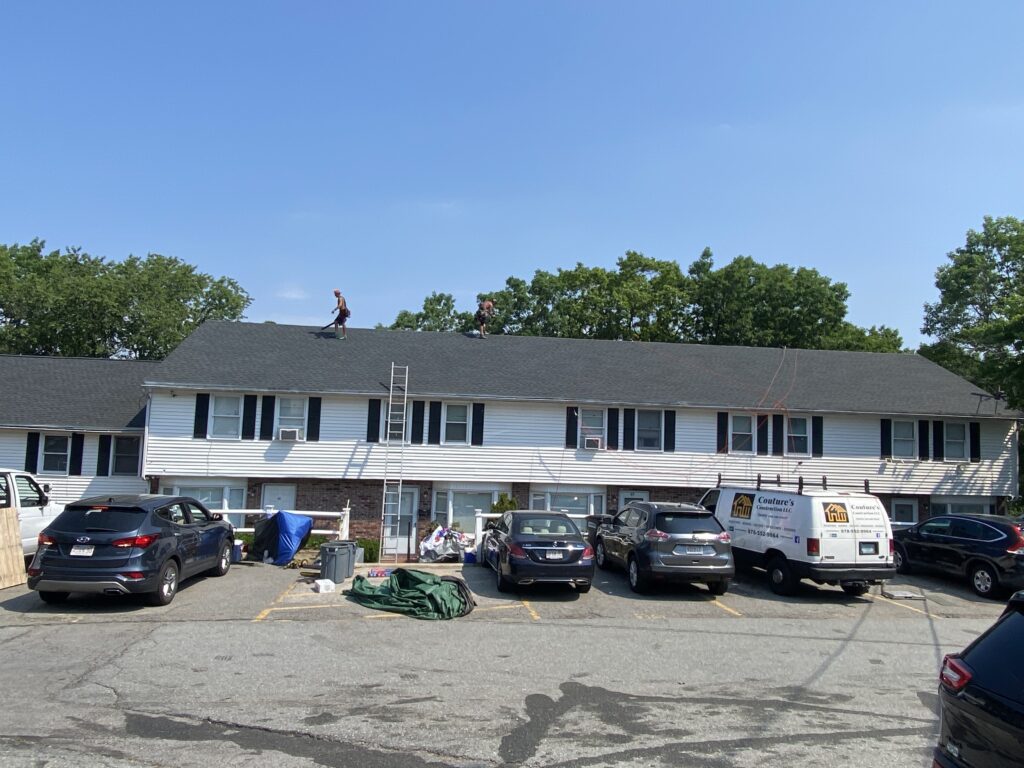
Every siding project comes with its own set of questions, especially for homes throughout Georgetown dealing with New England weather and older exteriors. Below are a few things clients often want clarified before we get started.
- Can new siding go over existing siding, or does it need to be removed first?
- Will installation disrupt landscaping or driveways?
- What maintenance does vinyl siding require after installation?
Have a different question? We’re happy to walk through the details with you directly.
Can I replace a skylight without replacing the roof?
Yes. We shingle back in around the new unit. If the roof is near the end of its life, doing both together usually costs less overall.
Should I get a venting unit?
In a kitchen or bathroom, yes. Over a ceiling you cannot reach, fixed is fine.
Can I get rid of a skylight instead?
Yes. We frame and deck over the opening and shingle it in. The ceiling inside will need patching.
Will a new skylight cause ice dams?
Not if it is wrapped, flashed and vented correctly. Placement on a shaded north slope is something we look at closely.
Get an Estimate
Ready to talk siding for your Georgetown home? Reach out and share a bit about your house: its age, current siding material, and any problem areas you’ve noticed. We’ll schedule a visit to walk the exterior with you, measure the space, and review siding styles and colors that suit your home before putting together a written estimate.