
- Home
- Services
- Locations
Amesbury, MA
Boxford, MA
Chelmsford, MA
Danvers, MA
Dracut, MA
Essex, MA
Georgetown, MA
Groveland, MA
Hamilton, MA
Haverhill, MA
Ipswich, MA
Merrimac, MA
Methuen, MA
Middleton, MA
Newbury, MA
Newburyport, MA
North Andover, MA
North Reading, MA
Peabody, MA
Rowley, MA
Salem, MA
Salisbury, MA
Tewksbury, MA
Topsfield, MA
Topsfield, MA
West Newbury, MA
Atkinson, MA
Derry, NH
East Kingston, NH
Kensington, NH
Kingston, NH
Londonderry, NH
Plaistow, NH
Salem, NH
- Company
- Contact
- Home
- Services
- Locations
Amesbury, MA
Boxford, MA
Chelmsford, MA
Danvers, MA
Dracut, MA
Essex, MA
Georgetown, MA
Groveland, MA
Hamilton, MA
Haverhill, MA
Ipswich, MA
Merrimac, MA
Methuen, MA
Middleton, MA
Newbury, MA
Newburyport, MA
North Andover, MA
North Reading, MA
Peabody, MA
Rowley, MA
Salem, MA
Salisbury, MA
Tewksbury, MA
Topsfield, MA
Topsfield, MA
West Newbury, MA
Atkinson, MA
Derry, NH
East Kingston, NH
Kensington, NH
Kingston, NH
Londonderry, NH
Plaistow, NH
Salem, NH
- Company
- Contact
Vinyl Siding Installation in Essex, MA
Essex sits on the marsh side of Cape Ann, and a lot of the housing stock here is older wood-frame construction with clapboard-style exteriors that were never meant to last forever against wind off the water. Add in the shipbuilding-era homes near the causeway and the newer construction back toward the Route 133 corridor, and you get two very different siding problems on the same short stretch of road.
Vinyl Siding Installation in Essex
We install vinyl siding in Essex as its own project or bundled with roof work, since the two often come due around the same time on a house this age. A roof replacement disturbs flashing, trim, and fascia anyway, so doing siding at the same time saves you a second round of staging and a second crew showing up in your driveway. Derek walks the whole exterior before quoting either job, not just the roof or just the walls, because what’s happening at the wall-roof intersection usually explains what’s failing.
Deck-mounted
units fasten straight to the roof deck and use a matched step-flashing kit. This is what goes on most pitched roofs now. It sits low, looks clean and handles snow well.
Curb-mounted
units sit on a raised wood frame built on the roof. They are the right call on low-slope sections, generally below about 3 in 12, and a lot of older installs already have them.
Fixed
units let in light and nothing else. Fine over a high cathedral ceiling you will never reach.
Manual or electric venting
units open to let heat and steam out. They earn their keep in kitchens and bathrooms.
Solar-powered venting
units run off a small panel, need no wiring to the house, and close on their own when the rain sensor gets wet.
What Essex roofs and homes are up against
Essex is close enough to open water that wind uplift is not a theoretical concern. We see siding panels that have loosened or blown off entirely on homes near the marsh and the river, and it’s almost always because the original installation used standard nailing and lower wind-rated panels that were fine inland but undersized for this exposure. Salt-laden air also accelerates fading and chalking on older vinyl faster than you’d expect a few miles inland, and it works into any gap in the J-channel or trim over time.
On the roof side, a lot of Essex homes have complex rooflines with additions and dormers tacked on over the decades, which means more valleys, more flashing points, and more places for ice dams to form on north-facing slopes in a hard winter. Heavy tree cover on the wooded lots off Southern Ave and John Wise Ave means valley debris is a recurring issue too, which backs up water at exactly the joints that are hardest to reach and hardest to seal right the first time.
How we assess it
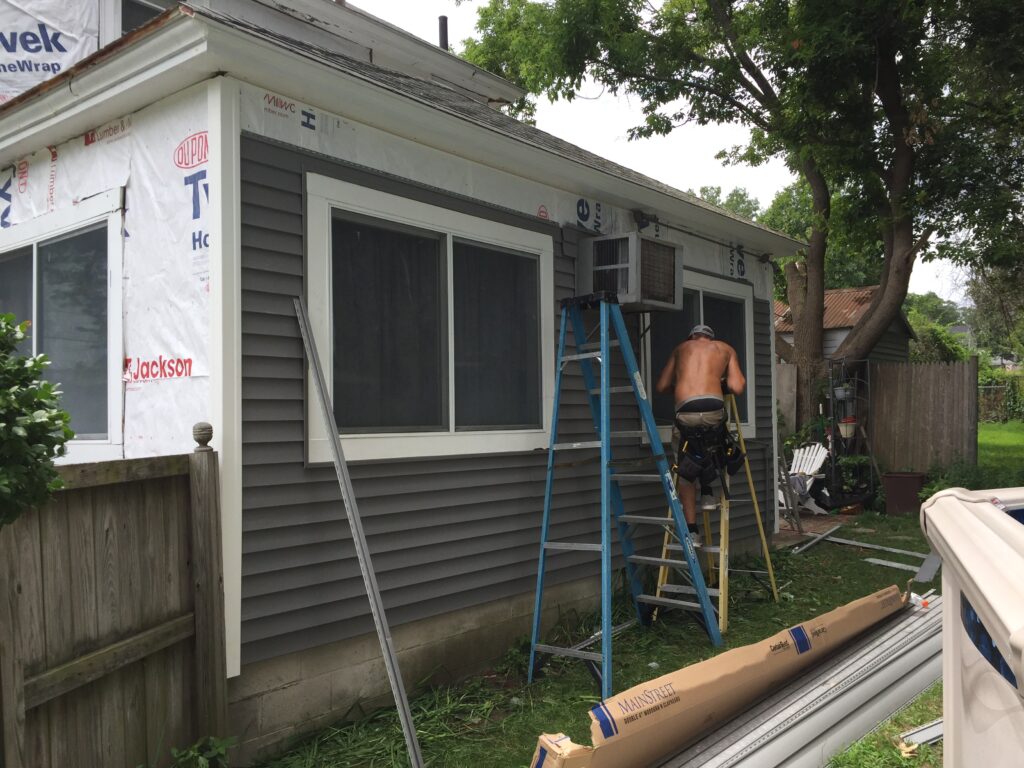
Before we recommend anything, Derek gets on the roof and looks at the decking condition, the flashing around chimneys and valleys, and whether the ridge and soffit ventilation are actually working or just present. For siding, that means checking the sheathing underneath for rot or soft spots, especially around window and door trim, and looking at how the existing panels were fastened and flashed at corners and butt joints. We also get into the attic when we can, because what the underside of the roof deck looks like tells you more about moisture history than anything visible from the ground. You get a real recommendation after that walk-through, not a guess based on a drive-by.
What the job involves
Replacement
We strip the shingles around the unit, pull the old skylight and flashing, repair the deck at the opening if it needs it, and set the new unit. Ice and water shield wraps up the sides and across the top, the step-flashing kit goes on, and we shingle back in. If the new unit matches the rough opening, the interior usually stays as it is. On a full roof replacement in Essex, MA, all of this fits inside the reroof. The shingles are already off, the deck is exposed, and the new underlayment and flashing tie in as one system.
New cut-in
We lay out the opening from inside and out, cut the deck, and frame headers between the rafters. Ventilation gets rerouted so the bays above and below the opening still breathe. Then the unit, ice and water shield, flashing and shingles. Inside, a new opening means a light shaft through the attic, drywall and paint. That interior work is part of the conversation at the estimate, and we settle who handles what before anything is scheduled.
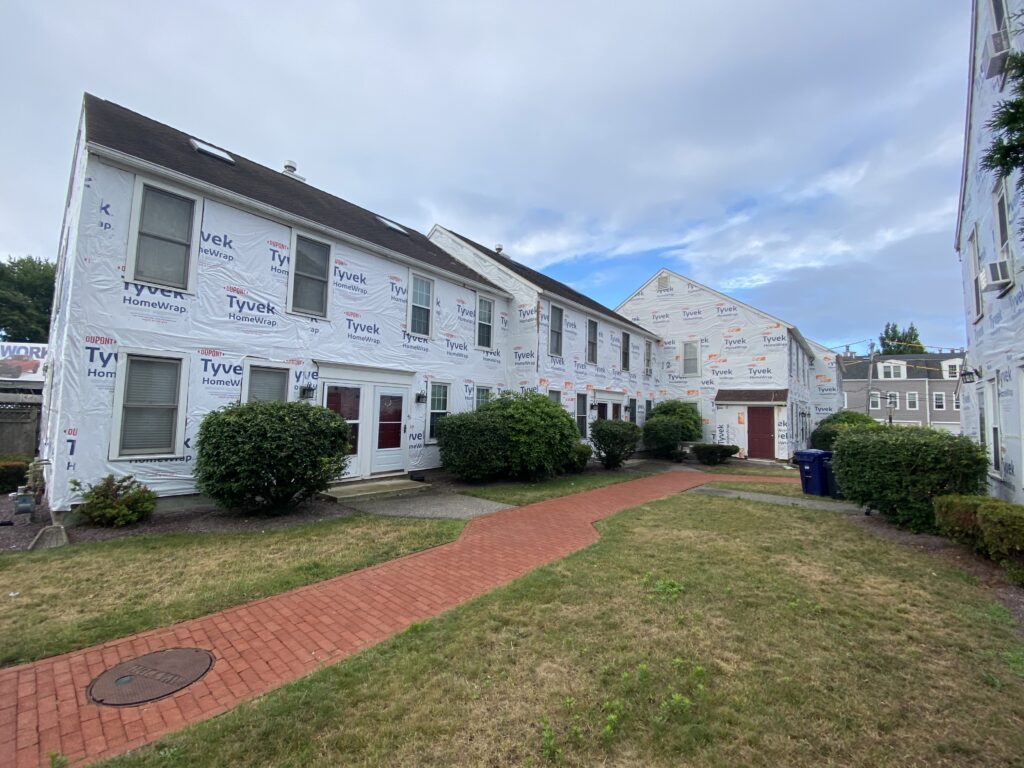
A vinyl siding job starts with stripping the old siding down to the sheathing, checking for rot or water damage, and replacing any bad boards before anything new goes up. We install a weather-resistant barrier, then the new panels with proper nailing for the wind exposure this close to the coast, along with new J-channel, corner posts, and trim around windows and doors. If we’re doing roof and siding together, we sequence the work so flashing and trim tie in cleanly at the roofline instead of getting patched around after the fact.
What it costs
Vinyl siding installation in Essex generally runs {PRICE_LOW} to {PRICE_HIGH}, and where you land in that range depends on the size and shape of the house, how much of the existing sheathing needs repair once we open it up, how many corners and window returns there are to trim out, and access around the property. A simple rectangular Cape costs less to side than a house with multiple additions, dormers, and a lot of trim detail. We won’t give you a number without seeing the house, but we’ll tell you honestly what’s driving the price once we have.
How long it takes
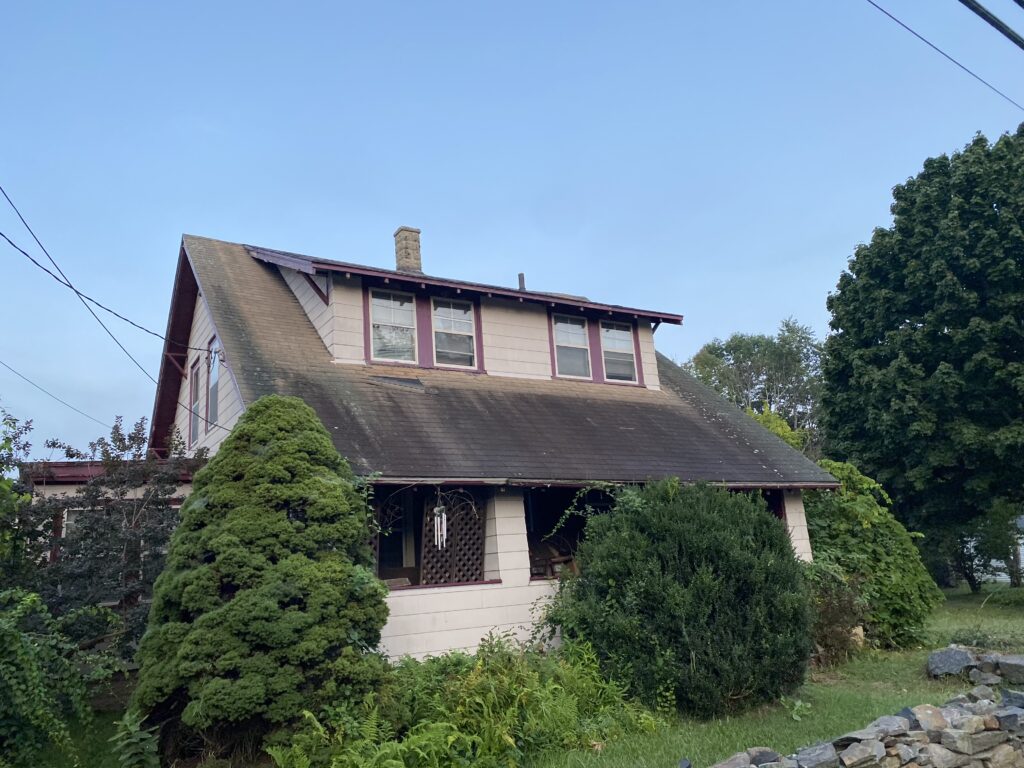
Most single-family siding jobs in Essex take three to five working days from tear-off to final trim, weather depending. That timeline stretches if we find sheathing damage that needs repair before new siding can go up, or if the house has enough trim and corner detail to slow the crew down. If it’s a combined roof and siding project, we’ll walk you through a realistic sequence up front so you know what to expect week to week.
Questions Essex Homeowners Ask Us
Still weighing your options for new siding? Here are a few things Essex homeowners commonly want to know before scheduling their vinyl siding installation.
- Will you match my home’s existing trim and style? We work with your home’s architecture and coastal surroundings to keep everything cohesive.
- Can you handle older or uneven siding? Yes, our team preps and corrects underlying issues before installation.
Don’t see your question? Just reach out and ask.
Does vinyl siding hold up against wind this close to the water?
It can, but only if it's rated and installed for the exposure. We use panels and fastening patterns suited to coastal wind loads rather than the standard inland spec, which is often what failed on the siding you're replacing.
Can you do my roof and siding at the same time?
Yes, and for a lot of Essex homes it makes sense. Doing both together means flashing and trim at the roofline get tied in properly the first time instead of patched around later.
Will you replace all my siding even if only part of it is damaged?
Not automatically. If a section is damaged from a storm or a leak and matching panels are available, a partial replacement can be the honest answer. We'll tell you when a full re-side isn't necessary.
What happens if you find rot under the old siding?
We stop and show you before covering anything up. Any soft or rotted sheathing gets repaired or replaced before new siding goes on, which we'll price out separately as part of the job.
Do you serve the whole Essex area?
Ready to talk siding?
Give us a call and tell us a bit about your Essex home: how old the current siding is, whether you’re seeing gaps, warping, or fading, and what look you’re after. We’ll set up a time to walk the exterior with you, measure what’s needed, and talk through material and color options before putting anything in writing.