
- Home
- Services
- Locations
Amesbury, MA
Boxford, MA
Chelmsford, MA
Danvers, MA
Dracut, MA
Essex, MA
Georgetown, MA
Groveland, MA
Hamilton, MA
Haverhill, MA
Ipswich, MA
Merrimac, MA
Methuen, MA
Middleton, MA
Newbury, MA
Newburyport, MA
North Andover, MA
North Reading, MA
Peabody, MA
Rowley, MA
Salem, MA
Salisbury, MA
Tewksbury, MA
Topsfield, MA
Topsfield, MA
West Newbury, MA
Atkinson, MA
Derry, NH
East Kingston, NH
Kensington, NH
Kingston, NH
Londonderry, NH
Plaistow, NH
Salem, NH
- Company
- Contact
- Home
- Services
- Locations
Amesbury, MA
Boxford, MA
Chelmsford, MA
Danvers, MA
Dracut, MA
Essex, MA
Georgetown, MA
Groveland, MA
Hamilton, MA
Haverhill, MA
Ipswich, MA
Merrimac, MA
Methuen, MA
Middleton, MA
Newbury, MA
Newburyport, MA
North Andover, MA
North Reading, MA
Peabody, MA
Rowley, MA
Salem, MA
Salisbury, MA
Tewksbury, MA
Topsfield, MA
Topsfield, MA
West Newbury, MA
Atkinson, MA
Derry, NH
East Kingston, NH
Kensington, NH
Kingston, NH
Londonderry, NH
Plaistow, NH
Salem, NH
- Company
- Contact
Roof Replacement in North Reading, MA
Walk a street off Park Street or up near the Ipswich River in North Reading and you will see the same roof problem over and over: dark streaking on the north-facing slope and a valley packed with pine needles and oak leaves that never fully dries out. The trees that make these lots private are the same trees shortening the life of the shingles underneath them. If your roof is more than fifteen years old and backs up to woods, the conversation about replacement usually starts with what is growing on the shingles, not what is missing from them.
Roof Replacement in North Reading
Roof replacement means stripping the roof down to the deck, fixing anything the old roof was hiding, and installing a new system built for how this property actually sits. That is different from a repair, which patches a specific failure and leaves the rest of the roof alone. The decision point is usually one of these: shingles cupping or losing granules across most of the field, more than one layer already on the roof, soft spots in the decking you can feel underfoot, or a north slope so covered in moss and algae streaking that cleaning it would just buy you another year or two before the same rot underneath catches up. If your roof has one bad valley or a single flashing leak and the rest of the field is sound, that is a repair. We will tell you that on the roof, not talk you into a full tear-off you do not need yet.
What North Reading roofs are up against
North Reading’s lots run larger and wooded than the towns closer to 93, and that changes what fails first. Overhanging limbs drop needles and leaf litter into valleys and behind chimneys all season, and that debris holds moisture against the shingles long after a rainstorm has passed. On the north-facing slopes, especially on homes with a heavy tree canopy on that side, you get moss colonies and algae streaking well before the shingle itself is worn out. That streaking is usually the first thing that gets a homeowner to call us, and it is a real signal, not just a cosmetic issue, because moss holds water and works its way under shingle tabs over a few winters.
The other North Reading-specific issue is ice damming. A lot of the homes in the older sections near the center have simple gable roofs with tight eave overhangs and, in some cases, added-on rear sections with a lower pitch that were never built with real ice and water protection. When heat escapes from the attic and melts snow on the upper roof, that water refreezes at the cold eave and backs up under the shingles. On a wooded, shaded lot the roof never gets a clean melt-off in February the way an open, sunny roof would, so ice sits longer and the risk window is wider. Combine that with soffit ventilation that is often undersized on homes built before the 1990s and you get attics that run warmer than they should, which speeds up the melt-refreeze cycle from the inside.
How we assess it
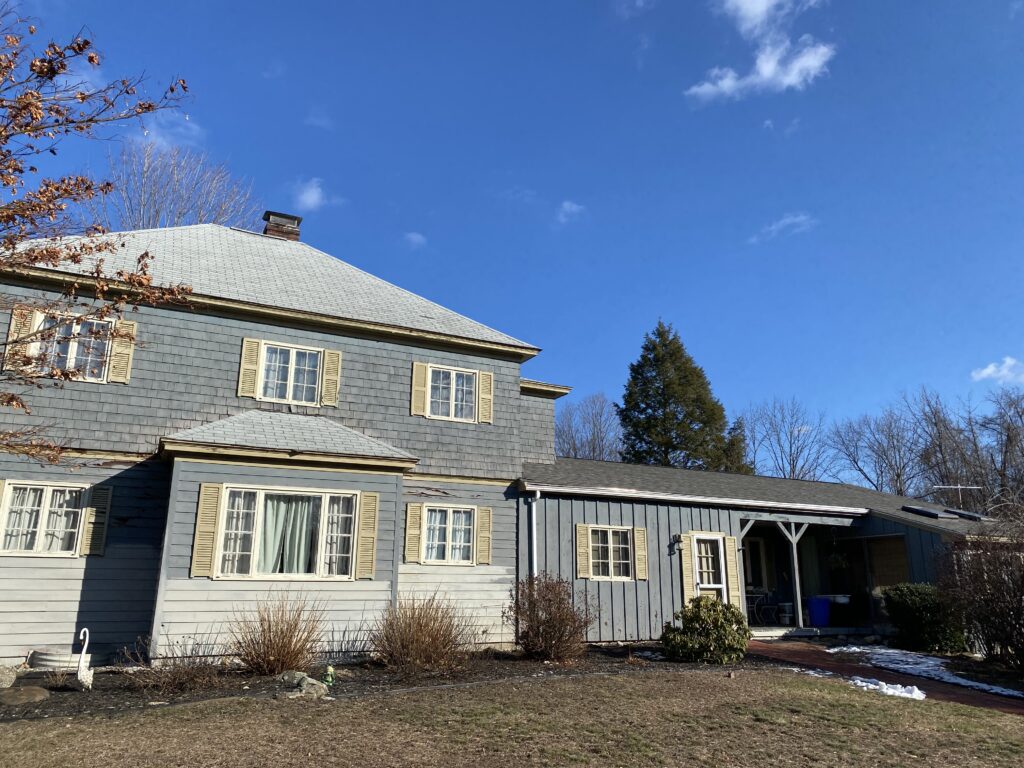
We do not price a roof replacement from the driveway. Derek gets on the roof and checks the decking for soft spots, delamination, and any place water has already been getting through. We check flashing at every chimney, sidewall, and valley, because that is where roofs actually leak, not usually in the open field of shingles. We look at ridge and soffit ventilation, since a roof that cannot breathe properly bakes shingles from underneath and makes ice damming worse. Then we get into the attic, if there is access, and look at the underside of the deck for staining, daylight gaps, or insulation that has been pushed against the soffit vents and choked off the airflow. You get a straight answer on what stage the roof is actually at before we talk about a number.
What the job involves
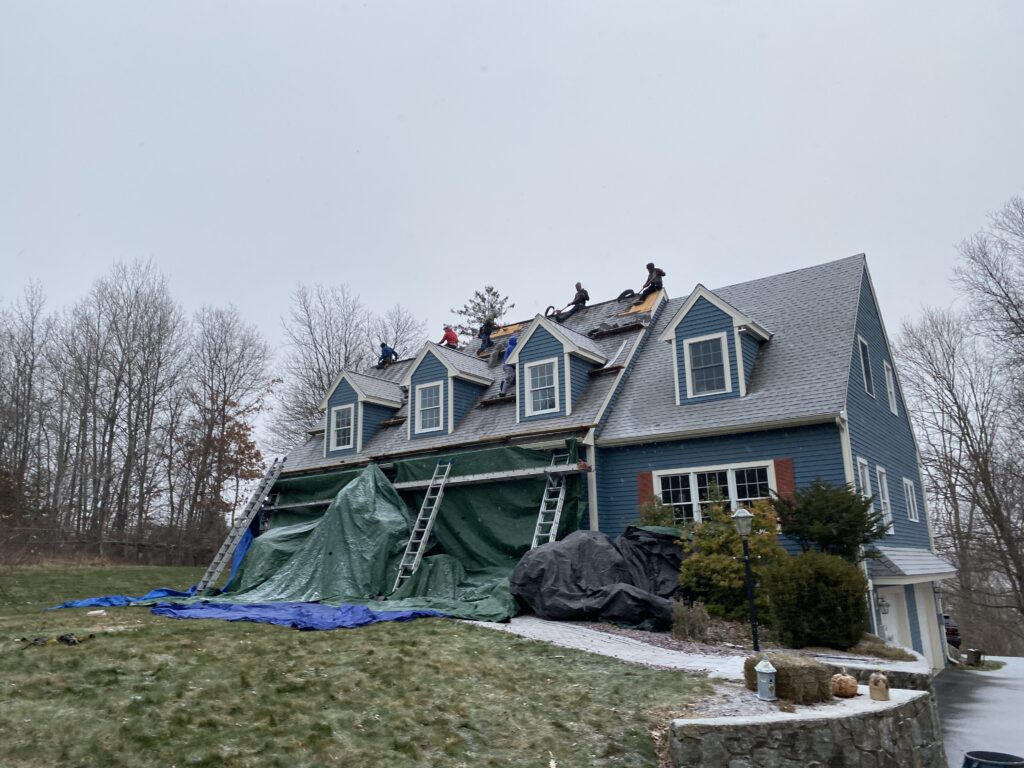
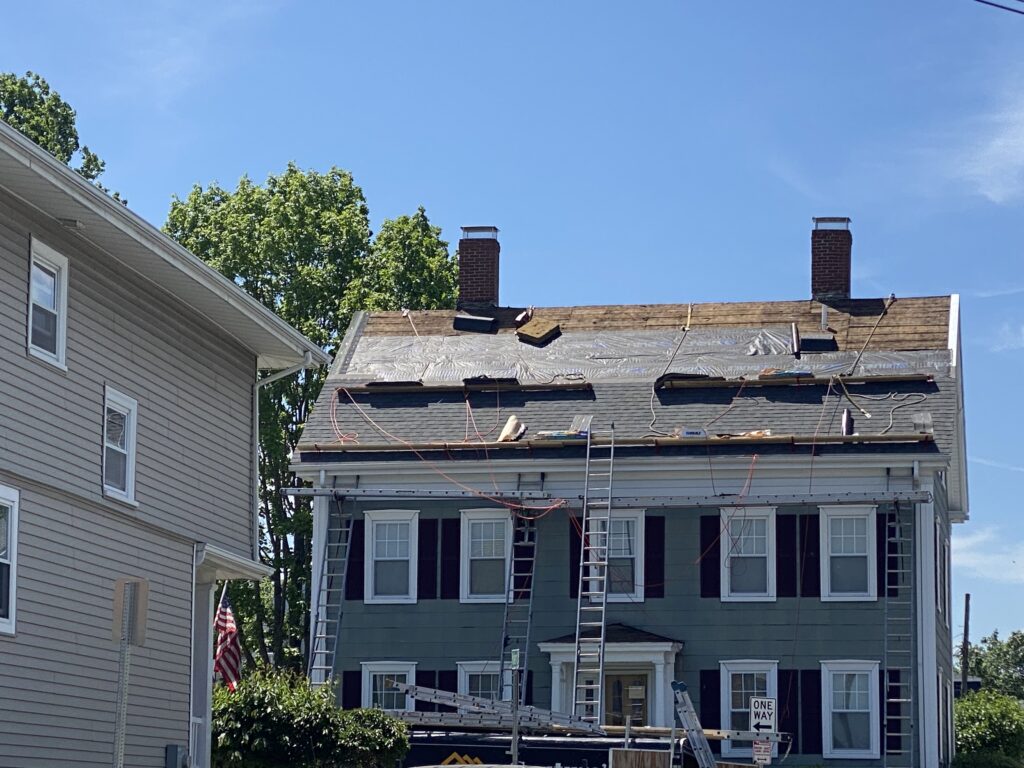
A full replacement starts with tear-off down to the deck, including any old layers, so we can see the wood underneath and not guess at it. Any rotted or delaminated decking gets cut out and replaced before anything else goes down. From there we install ice and water shield along the eaves and in every valley, which matters more here than in a town without the tree cover and shade holding moisture and ice against the roof. Flashing at chimneys, sidewalls, and any roof-to-wall transitions gets rebuilt, not just caulked over. We install architectural asphalt shingles rated for high wind, matched to ridge and soffit ventilation sized correctly for the attic, then finish with ridge cap and a full cleanup, including a magnetic sweep of the yard and driveway for nails.
What it costs
Most North Reading roof replacements run between {PRICE_LOW} and {PRICE_HIGH}, and where a specific roof falls in that range depends on a handful of things we check during the assessment. Total roof size and how many facets and valleys it has changes labor time directly, since every valley under tree cover needs ice and water shield and careful flashing work. Pitch matters too, both for how long the job takes and for the safety equipment the crew needs on a steep roof. If there is more than one layer of shingles already on the house, that adds a tear-off step. Decking surprises, meaning rot or soft spots found once the old shingles come off, are the one variable we cannot price until the roof is actually open, and we will show you what we find before we replace it. Access, like a roof that backs right up to woods with no room for a dumpster near the house, can also add time.
How long it takes
A straightforward single-layer tear-off and replacement on a typical North Reading roof usually takes one to two days, weather permitting. Add a day if there is a second layer to strip, extensive decking replacement, or if the roof has a lot of valleys and chimney flashing to rebuild carefully. We work around rain, not through it, since a partially opened roof left exposed overnight is not a risk worth taking on a wooded lot where the next storm can roll through fast.
How do I know if my North Reading roof needs replacement instead of a repair?
If the problem is limited to one area, a single flashing leak or a damaged section from a fallen limb, that is usually a repair. If shingles are cupping or losing granules across most of the roof, if there is more than one layer already installed, or if the decking has soft spots in more than one place, replacement is the more honest answer. We will tell you which one applies after we are actually on the roof.
Why does the north-facing slope of my roof turn dark and streaky?
That is algae and moss growth, and it is common on shaded, tree-covered slopes in North Reading that do not get enough direct sun to dry out after rain or snow melt. It is not just cosmetic. Moss holds moisture against the shingle surface and can work under the tabs over a few seasons, which shortens the roof's life.
Do overhanging trees actually shorten a roof's lifespan?
Yes. Constant leaf and needle debris in the valleys holds water against the shingles longer than an open roof would ever see, and shaded slopes stay damp longer after storms. On heavily wooded North Reading lots, we regularly see roofs showing wear ten years before their rated lifespan because of this.
What causes ice dams on North Reading roofs specifically?
A combination of shaded, slow-melting roof surfaces and attic ventilation that was often undersized when the home was built. Heat escaping the attic melts snow on the upper roof, that water runs down and refreezes at the cold eave, and it backs up under the shingles. Proper ridge and soffit ventilation along with ice and water shield at the eaves are how we address it during a replacement.
Will you replace my roof if a repair is all I actually need?
No. We assess the roof first and tell you honestly which one it needs. A roof with isolated damage and sound decking gets a repair recommendation from us, not a replacement pitch.
Get an estimate
If your roof is streaking on the north slope, holding moss, or you have noticed granules collecting in the gutters, get it looked at before winter puts ice behind those shingles. Call Couture’s Construction at {PHONE} for a roof assessment in North Reading. We are based in Methuen, BBB accredited with an A plus rating, and we will tell you honestly whether you need a replacement or a repair.