
- Home
- Services
- Locations
Amesbury, MA
Boxford, MA
Chelmsford, MA
Danvers, MA
Dracut, MA
Essex, MA
Georgetown, MA
Groveland, MA
Hamilton, MA
Haverhill, MA
Ipswich, MA
Merrimac, MA
Methuen, MA
Middleton, MA
Newbury, MA
Newburyport, MA
North Andover, MA
North Reading, MA
Peabody, MA
Rowley, MA
Salem, MA
Salisbury, MA
Tewksbury, MA
Topsfield, MA
Topsfield, MA
West Newbury, MA
Atkinson, MA
Derry, NH
East Kingston, NH
Kensington, NH
Kingston, NH
Londonderry, NH
Plaistow, NH
Salem, NH
- Company
- Contact
- Home
- Services
- Locations
Amesbury, MA
Boxford, MA
Chelmsford, MA
Danvers, MA
Dracut, MA
Essex, MA
Georgetown, MA
Groveland, MA
Hamilton, MA
Haverhill, MA
Ipswich, MA
Merrimac, MA
Methuen, MA
Middleton, MA
Newbury, MA
Newburyport, MA
North Andover, MA
North Reading, MA
Peabody, MA
Rowley, MA
Salem, MA
Salisbury, MA
Tewksbury, MA
Topsfield, MA
Topsfield, MA
West Newbury, MA
Atkinson, MA
Derry, NH
East Kingston, NH
Kensington, NH
Kingston, NH
Londonderry, NH
Plaistow, NH
Salem, NH
- Company
- Contact
Roof Replacement in Middleton, MA
Middleton lots run big and the tree canopy runs right up against the roofline. That combination shows up on the shingles before it shows up anywhere else: heavy moss on the north slopes, granule buildup in the valleys, and limbs that drop debris on the same three feet of roof year after year. If you’re standing in your driveway looking up at streaking or a soft spot near a valley, you’re not imagining it. This is what a wooded lot does to a roof over time.
Roof Replacement in Middleton
Not every problem on a Middleton roof means a full tear-off. A cracked pipe boot, a section of lifted shingles from a limb strike, a chimney flashing leak – those are repairs, and we’ll tell you that straight if that’s what we find. Replacement becomes the right call when the shingles are cupping or losing granules across large sections, when there’s more than one layer already under the current roof, when decking has gone soft in spots, or when the roof is old enough that a repair just buys you another season before the next leak shows up somewhere else. We’ll give you our honest read either way before anything gets scheduled.
What Middleton roofs are up against
The tree cover is the whole story here. Overhanging oak and pine limbs keep valleys wet and shaded, which speeds up granule loss and gives moss and algae a place to take hold, especially on north-facing slopes that never get direct sun to dry out. That debris load also clogs valleys and gutters faster than it would on an open lot, and standing organic matter under shingles is one of the more common ways a roof fails early on a wooded property, well before it hits its rated lifespan.
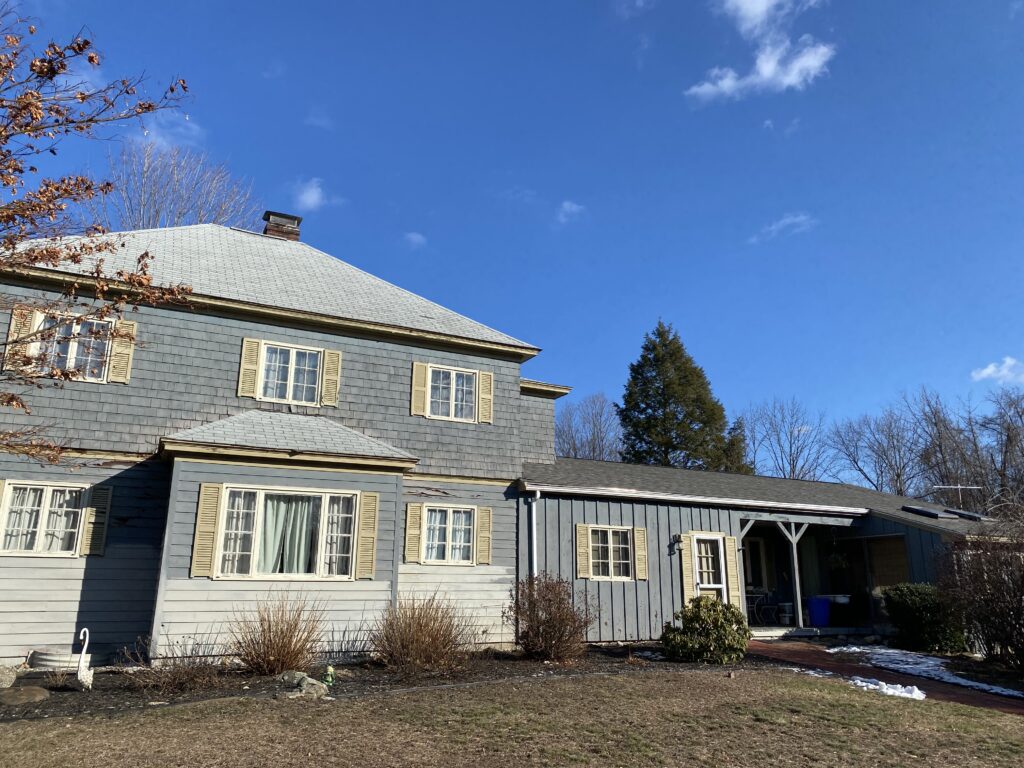
Middleton also has a mix of housing stock, from older farmhouse-era homes with additions tacked on over the decades to newer subdivision-built colonials on larger cleared lots. The older homes often carry a low-slope rear addition roof that was never detailed with the right underlayment, and those sections are usually the first place we find soft decking or a slow leak that’s been tracking down a wall for longer than the homeowner realized. On the newer builds, the issue is usually simpler: heavier limb overhang planted or left standing right at the roof edge, which means constant debris load and shortened shingle life on that side of the house.
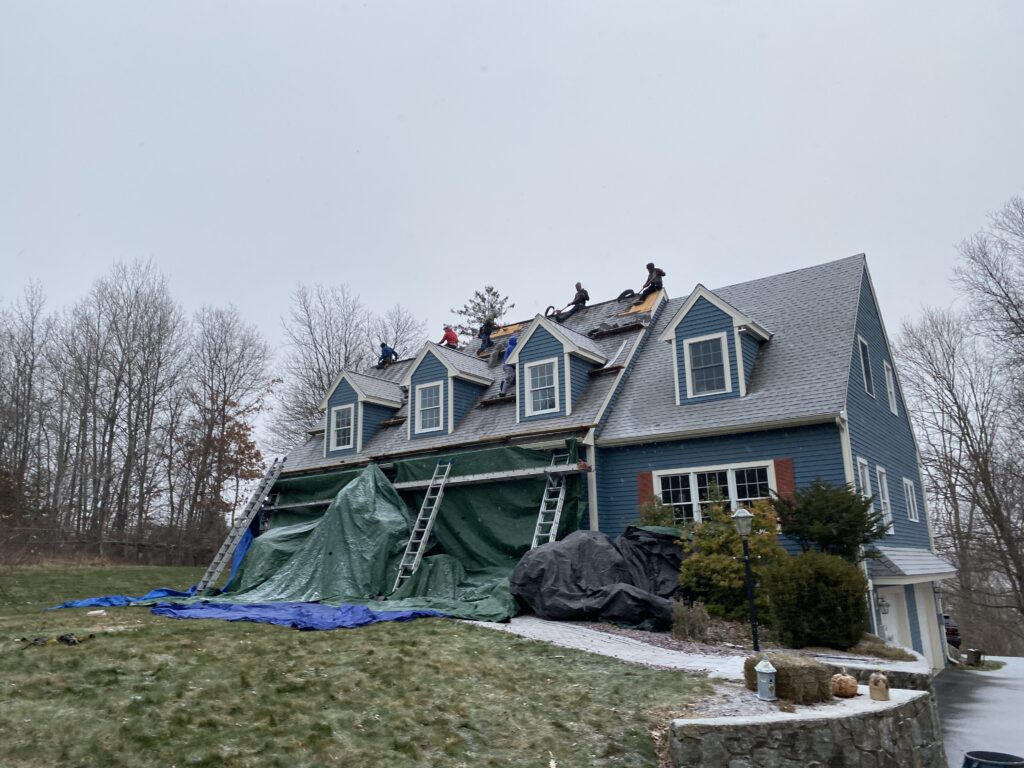
How we assess it
Derek walks the roof before anyone talks about a number. That means checking the decking for soft spots underfoot, looking at flashing where it meets the chimney and at every valley, and checking how the ridge and soffit vents are actually performing, not just whether they’re present. We go into the attic too, because that’s where you see the real story: daylight where there shouldn’t be any, dark staining on the underside of the decking, or insulation that’s been compressed or wet from an ice dam the previous winter. A recommendation only gets made after all of that, not before.
What the job involves
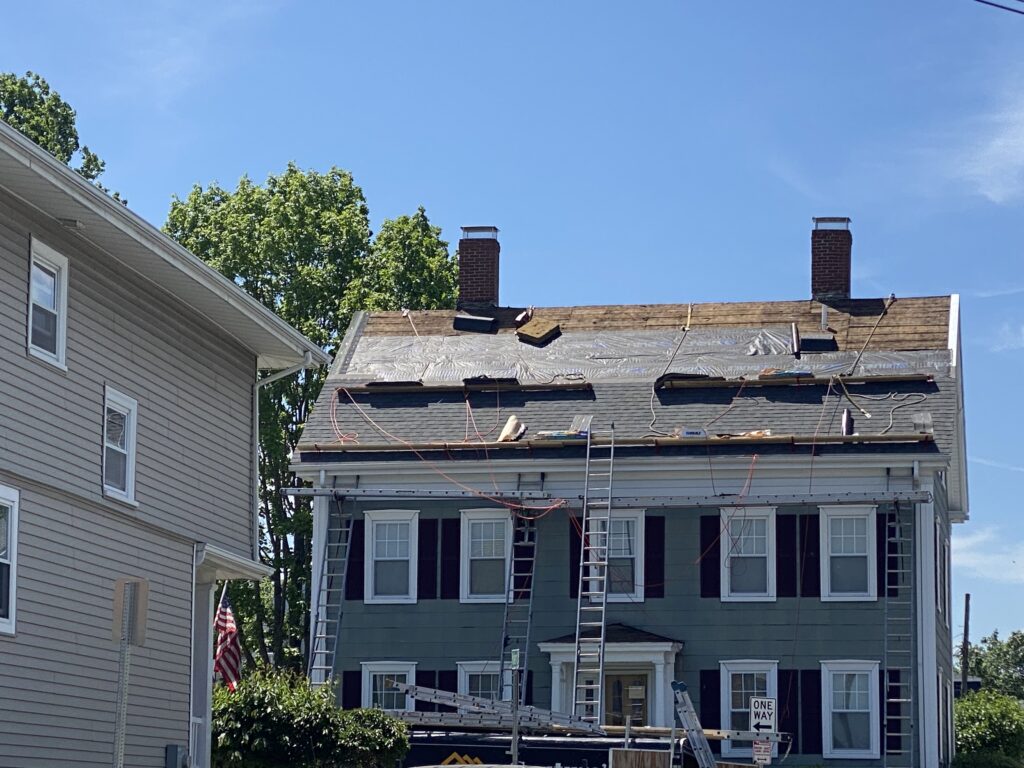
A full replacement starts with tearing off the existing roofing down to the decking, then replacing any decking that’s soft, delaminated, or damaged, which is almost always a per-sheet cost we can’t know until the old roof is off. From there we install ice and water shield along the eaves and in every valley, which matters more in Middleton than in a lot of towns because of how much debris and moisture those valleys hold under tree cover. New flashing goes in at the chimney, sidewalls, and any roof penetrations. Shingles go down next, matched to the pitch and wind exposure of your roof, and we finish with ridge venting tied into proper soffit intake so the attic can actually breathe instead of trapping heat and moisture that leads to ice dams the following winter.
What it costs
Most Middleton roof replacements land between {PRICE_LOW} and {PRICE_HIGH}, and where you fall in that range depends on a handful of things we can only pin down once we’re on the roof: total square footage, how steep the pitch is, how many layers of old roofing need to come off, whether decking needs to be replaced and how much, and how tricky access is on a lot with mature trees close to the house. We’ll walk you through what’s driving the number before you sign anything, not after.
How long it takes
A standard single-family roof replacement in Middleton typically runs one to three days once we’re on site, weather permitting. Homes with a lot of dormers, valleys, or a low-slope addition take longer because there’s more flashing detail work involved. Tree-heavy lots can also add time for setup and cleanup, since we’re working around limbs and keeping debris out of gutters and landscaping as we go.
How do I know if I need a repair or a full roof replacement in Middleton?
If the damage is isolated – a flashing leak, a small area of wind-lifted shingles, a cracked vent boot – it's usually a repair. If shingles are cupping or losing granules across most of the roof, there's more than one layer already down, or decking has gone soft, replacement is the more honest recommendation. We'll tell you which one it is after walking the roof, not before.
Why does my north-facing slope stain and streak more than the rest of the roof?
North slopes stay shaded and don't dry out between rains, which gives algae and moss a place to take hold. It's cosmetic at first, but over time trapped moisture under that growth shortens the life of the shingles on that side of the roof faster than the rest of the house.
Do overhanging trees actually shorten a roof's life?
Yes. Constant leaf and needle debris in valleys holds moisture against the shingles, and limb contact during wind and storms causes granule loss and small impact damage over years. A roof under heavy tree cover often needs attention well before its rated lifespan, especially in the valleys.
What causes ice dams on Middleton roofs?
Ice dams form when attic heat escapes unevenly and melts snow on the roof, which then refreezes at the colder eaves. Poor ventilation and inadequate insulation are usually the root cause. Proper ridge and soffit ventilation, along with ice and water shield at the eaves, are how we address it during a replacement.
How long does a roof replacement take on a wooded lot like mine?
Most single-family roofs take one to three days once work starts, but tree-heavy lots can add time for access, setup, and cleanup around limbs. We'll give you a realistic timeline before the crew arrives, not just a best-case number.
Get an estimate
If you’re seeing staining on a north slope, moss building up in a valley, or you just want an honest read on where your roof stands, call {PHONE} or reach out through the site. Derek will come look at the roof in person before recommending anything, and you’ll get a straight answer about whether you’re looking at a repair or a full replacement.