
- Home
- Services
- Locations
Amesbury, MA
Boxford, MA
Chelmsford, MA
Danvers, MA
Dracut, MA
Essex, MA
Georgetown, MA
Groveland, MA
Hamilton, MA
Haverhill, MA
Ipswich, MA
Merrimac, MA
Methuen, MA
Middleton, MA
Newbury, MA
Newburyport, MA
North Andover, MA
North Reading, MA
Peabody, MA
Rowley, MA
Salem, MA
Salisbury, MA
Tewksbury, MA
Topsfield, MA
Topsfield, MA
West Newbury, MA
Atkinson, MA
Derry, NH
East Kingston, NH
Kensington, NH
Kingston, NH
Londonderry, NH
Plaistow, NH
Salem, NH
- Company
- Contact
- Home
- Services
- Locations
Amesbury, MA
Boxford, MA
Chelmsford, MA
Danvers, MA
Dracut, MA
Essex, MA
Georgetown, MA
Groveland, MA
Hamilton, MA
Haverhill, MA
Ipswich, MA
Merrimac, MA
Methuen, MA
Middleton, MA
Newbury, MA
Newburyport, MA
North Andover, MA
North Reading, MA
Peabody, MA
Rowley, MA
Salem, MA
Salisbury, MA
Tewksbury, MA
Topsfield, MA
Topsfield, MA
West Newbury, MA
Atkinson, MA
Derry, NH
East Kingston, NH
Kensington, NH
Kingston, NH
Londonderry, NH
Plaistow, NH
Salem, NH
- Company
- Contact
Roof Replacement in Methuen, MA
Drive down most streets in Methuen and you can tell a roof’s age from the sidewalk. The triple-deckers and mill-era two-families near downtown are carrying flat or low-slope rear additions that were never built for a forty-year lifespan, and the ranches and colonials built during the subdivision boom are sitting right at the twenty-to-twenty-five-year mark on their original architectural shingles. Both situations are showing up in our calls right now, and they need different answers.
Roof Replacement in Methuen
Not every worn roof needs to come off. But there’s a point where patching stops making sense, and most Methuen homeowners hit it around the same time their shingles do: granule loss that’s gone past cosmetic, shingles cupping or cracking across the whole field instead of one spot, soft decking you can feel underfoot in the attic, or a chimney flashing repair that’s the third one in five years. If you’re seeing daylight through the ridge, staining on interior ceilings after every heavy rain, or ice dams that keep coming back no matter how much you rake the roof, that’s replacement territory, not repair territory. We’ll tell you straight which one you’re actually looking at.
What Methuen roofs are up against
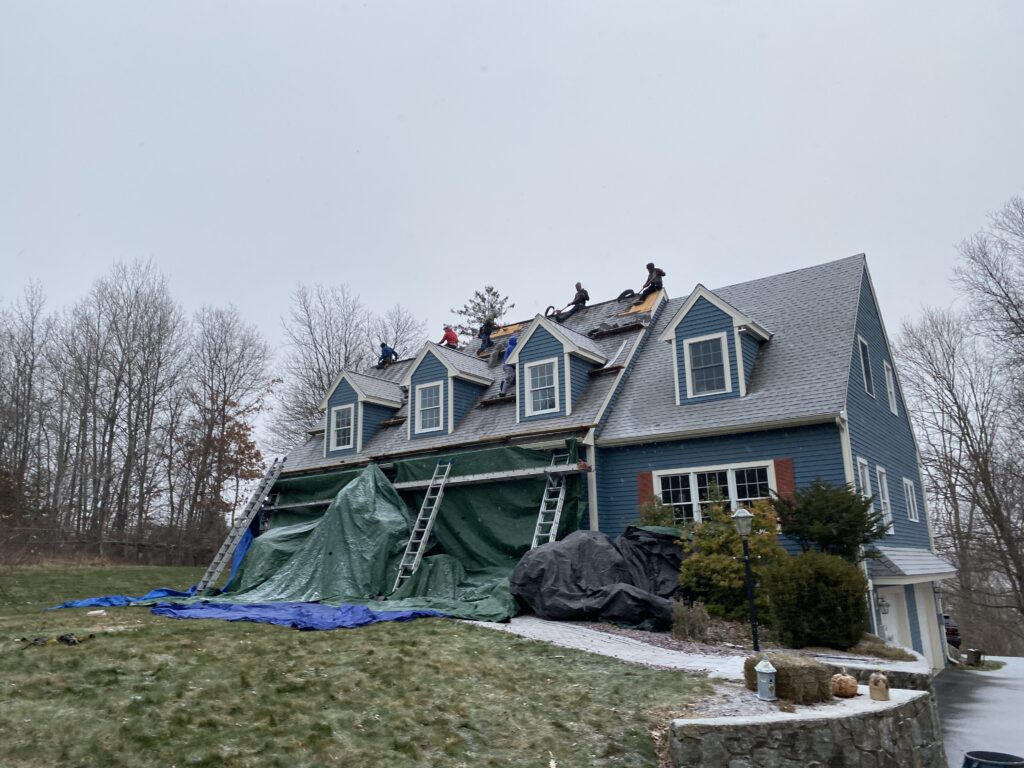
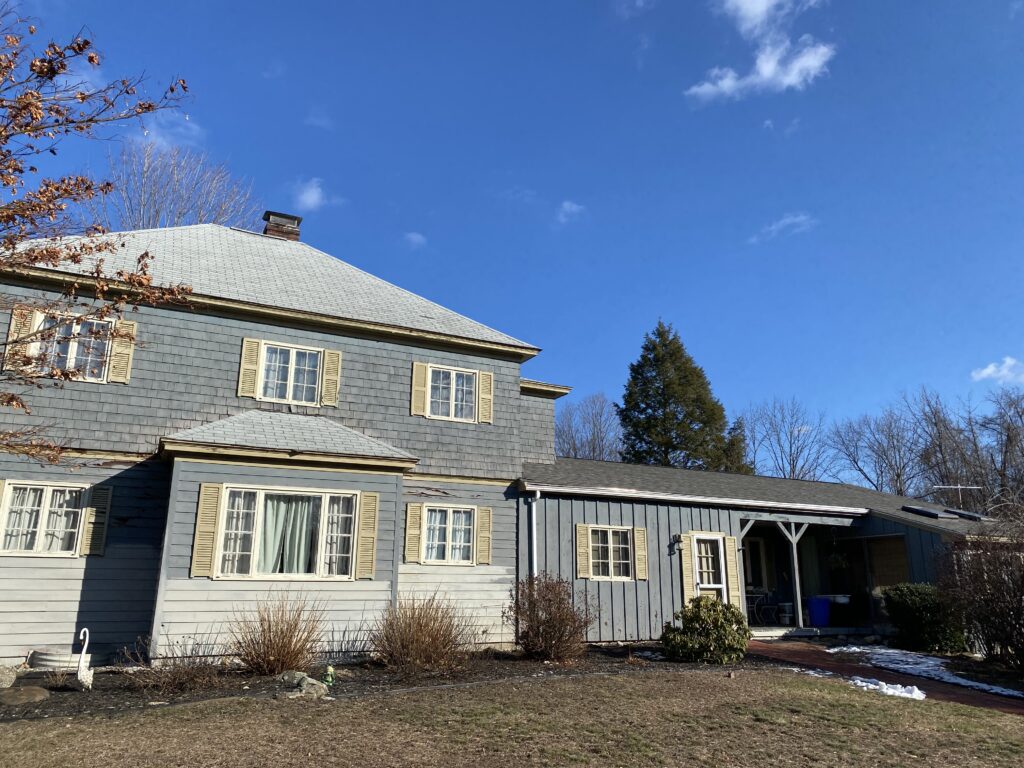
Two things drive most of the roof replacement calls we get in this part of the Merrimack Valley. First, age clustering. Neighborhoods built through the 1990s and early 2000s all went up with the same builder-grade architectural shingles, and those roofs are now failing within a couple years of each other. If your neighbor just had a roof done, yours is probably close behind. Second, the older mill-city housing stock, the triple-deckers and converted two- and three-families concentrated around downtown Methuen, carries a lot of low-slope rear additions and porch roofs. Those sections use different materials than the main roof and they fail years before the main field does, usually from ponding water or membrane cracking rather than shingle wear.
Add in the tree cover along the older residential streets, which drops leaves and pine debris into valleys and behind chimneys where it holds moisture against the shingles, and the ice dam risk on north-facing slopes that don’t get afternoon sun in January. A roof with poor ridge and soffit ventilation will build up attic heat in winter, melt snow from underneath, and refreeze at the eaves, backing water up under the shingles. We see that pattern on a lot of homes here that still have the original passive ventilation from when they were built, which usually wasn’t sized right in the first place.
How we assess it
Derek gets on the roof before we quote anything. That means walking the field to check shingle condition and granule loss, checking flashing at every chimney, sidewall, and valley, and pressing on the decking at eaves and around any past leak points to feel for soft spots. Then he goes into the attic, because that’s where a roof tells the truth. Water staining on the sheathing, daylight around vent boots, insulation packed against the soffits blocking airflow, and rusted nail tips all tell you things you can’t see from a ladder. We also check what’s already there for ridge and soffit ventilation balance, since a new roof installed over bad ventilation will have the same ice dam problems in three winters.
You get a written recommendation based on what we actually found, not a standard pitch. If a roof is twelve years old with isolated flashing failure and sound decking, we’ll say so and price the repair instead of pushing a full tear-off.
What the job involves
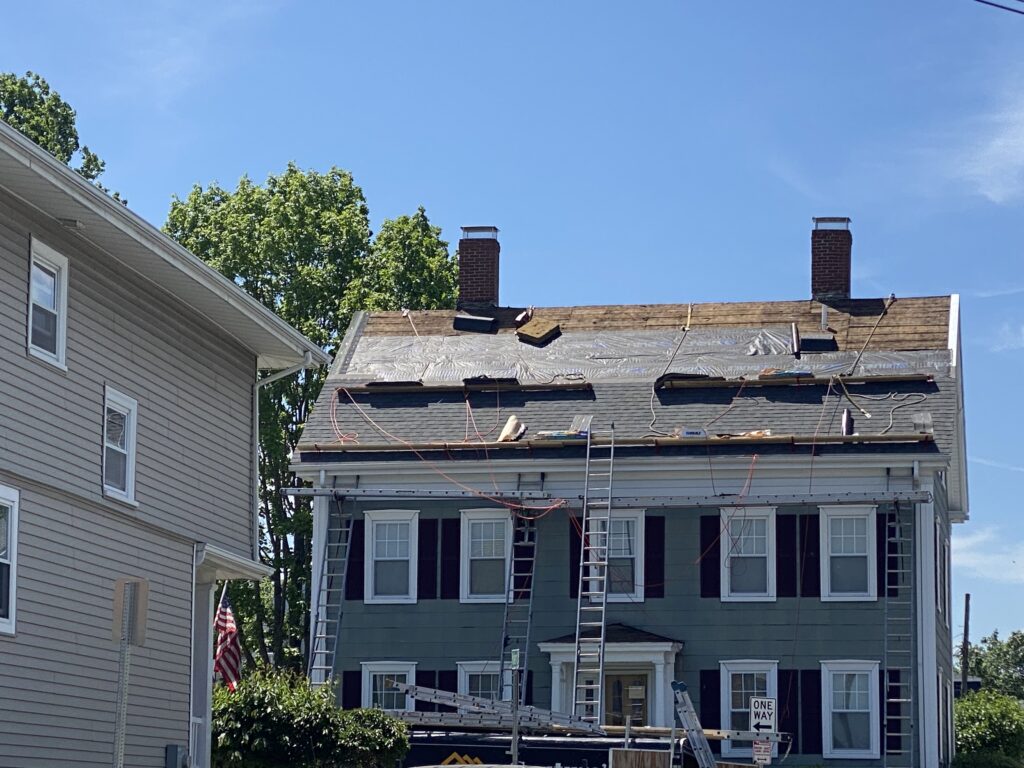
A full replacement on a typical Methuen home starts with tear-off down to the decking, not a layover, so we can check every square foot of sheathing and swap any rotted or delaminated boards before anything goes back down. Ice and water shield goes along the eaves, in every valley, and around penetrations, which matters more here than in a lot of towns given how many roofs deal with ice damming every winter. We install synthetic underlayment across the field, new flashing at chimneys, walls, and valleys rather than reusing old metal, and architectural shingles rated for wind speeds that hold up through nor’easters, not just a base-grade three-tab. Ridge vent and soffit intake get balanced so the attic actually breathes. On the low-slope additions common on older mill-city housing, we use a membrane system built for flat and near-flat pitches instead of trying to shingle a roof that isn’t steep enough to shed water properly.
What it costs
Most full roof replacements in Methuen run between {PRICE_LOW} and {PRICE_HIGH}, and where a job lands in that range depends on real variables, not guesswork. Roof size and the number of squares matter most. Steep pitches take longer and need more safety setup than a simple gable roof. If we’re stripping two or three layers of old shingles instead of one, that adds labor and disposal cost. Decking surprises, soft or rotted sheathing found once tear-off starts, add material and time, and we’ll show you the actual boards before replacing them, not just tell you it’s needed. Access matters too. A roof with tight setbacks, mature trees over the house, or a rear addition that’s hard to stage material to will run higher than a straightforward open lot. You’ll get a number based on your roof, not a phone estimate.
How long it takes
A standard single-family roof replacement in Methuen typically takes one to two days once we’re on site, weather permitting. Homes with a lot of dormers, complex valleys, or a low-slope addition tacked onto the back take longer because those sections need separate detail work. We schedule around New England weather rather than pushing a tear-off when rain is coming, since an open roof deck overnight is not a risk worth taking on your house.
How do I know if I need a roof replacement or just a repair?
Look at how widespread the problem is. A single leak at one flashing point, a handful of cracked shingles, or storm damage to one section can usually be repaired. Granule loss across the whole roof, soft decking in multiple spots, recurring ice dams, or a roof past 20 years old with visible wear everywhere usually means repair is a short-term fix on a roof that's already failing. We'll tell you which one you're looking at after an actual inspection.
What shingle types do you install?
Architectural asphalt shingles are the standard for most homes here, with wind ratings built for New England weather rather than base-grade three-tab shingles. For low-slope rear additions common on older Methuen housing, we use a membrane roofing system instead of shingles, since standard asphalt doesn't shed water properly below a certain pitch.
Do you handle the permit for a roof replacement in Methuen?
Yes. Methuen requires a building permit for roof replacement work, and we pull it as part of the job so you don't have to deal with the town yourself.
Will a new roof fix my ice dam problem?
A new roof with proper ice and water shield along the eaves and valleys, combined with balanced ridge and soffit ventilation, addresses both symptoms of ice damming: water backing up under shingles and attic heat melting snow unevenly. If the ventilation isn't corrected at the same time, the risk doesn't fully go away, which is why we check attic airflow during the assessment, not just the shingles.
How long will my new roof last?
Lifespan depends on the material, ventilation, and how well the installation is done, more than any single number we could quote you up front. What we can tell you is what a properly ventilated, correctly flashed roof needs to hold up through Merrimack Valley winters, and we build every job to that standard.
Request your estimate
Ready to move forward with a roof replacement at your Methuen property? Couture’s Construction will walk your roof, talk through your options, and put together a clear, honest estimate before any work begins. No pressure, no guesswork, just a straightforward look at what your home actually needs.
- On-site inspection of your current roof
- Written estimate with material options
- Straightforward answers to your questions
Reach out to schedule your visit.