
- Home
- Services
- Locations
Amesbury, MA
Boxford, MA
Chelmsford, MA
Danvers, MA
Dracut, MA
Essex, MA
Georgetown, MA
Groveland, MA
Hamilton, MA
Haverhill, MA
Ipswich, MA
Merrimac, MA
Methuen, MA
Middleton, MA
Newbury, MA
Newburyport, MA
North Andover, MA
North Reading, MA
Peabody, MA
Rowley, MA
Salem, MA
Salisbury, MA
Tewksbury, MA
Topsfield, MA
Topsfield, MA
West Newbury, MA
Atkinson, MA
Derry, NH
East Kingston, NH
Kensington, NH
Kingston, NH
Londonderry, NH
Plaistow, NH
Salem, NH
- Company
- Contact
- Home
- Services
- Locations
Amesbury, MA
Boxford, MA
Chelmsford, MA
Danvers, MA
Dracut, MA
Essex, MA
Georgetown, MA
Groveland, MA
Hamilton, MA
Haverhill, MA
Ipswich, MA
Merrimac, MA
Methuen, MA
Middleton, MA
Newbury, MA
Newburyport, MA
North Andover, MA
North Reading, MA
Peabody, MA
Rowley, MA
Salem, MA
Salisbury, MA
Tewksbury, MA
Topsfield, MA
Topsfield, MA
West Newbury, MA
Atkinson, MA
Derry, NH
East Kingston, NH
Kensington, NH
Kingston, NH
Londonderry, NH
Plaistow, NH
Salem, NH
- Company
- Contact
Roof Replacement in Ipswich, MA
Ipswich has more First Period houses than almost anywhere else in the country, and a lot of that housing stock has been re-roofed two or three times over without anyone dealing with what’s underneath. Steep original pitches, additions tacked on at odd angles, and roofs that back up to salt marsh or sit a half mile from the water. That combination is why a roof that looks fine from the street can be down to bare wood in the valleys and nobody’s noticed yet.
Complete Residential Roof Replacement in Ipswich
We handle full tear-offs and re-roofs for the range of houses you see around Ipswich – center-chimney colonials near the historic center, capes and farmhouses out toward County Road, and newer construction closer to Route 1. That means asphalt shingle systems built for wind exposure, low-slope work on rear additions and porch roofs, and the flashing detail that older chimneys and dormers actually need. We don’t sell the same roof to every house. A First Period colonial with a steep original pitch and a modern rear addition often needs two different approaches on the same job.
Every replacement includes a full tear-off to the decking, not a layover. We check the deck as we go, replace anything soft or delaminated, install ice and water shield at the eaves and valleys, and lay synthetic underlayment across the field. Ridge and soffit ventilation gets addressed as part of the job, not as an afterthought, because a shingle warranty depends on the attic breathing correctly underneath it.
What Ipswich Roofs Are Up Against
Ipswich sits close enough to open water and marsh that wind uplift is a real design factor, not a sales talking point. We spec shingles rated for sustained coastal wind rather than a standard suburban product, particularly on roofs facing Plum Island Sound or the open stretches along the Ipswich River. Salt air also accelerates the breakdown of cheaper flashing and fasteners, so we don’t cut corners there even when it adds a little to the bid.
The other pattern we see constantly in this town is tree cover meeting old roof geometry. A lot of these houses have valleys that collect leaf litter and pine debris under heavy shade, which holds moisture against the shingle and rots the decking from above long before anyone sees a stain on the ceiling. Add in the low-slope rear additions common on older Ipswich homes, and you get a spot where standard shingle underlayment just isn’t enough. North-facing slopes here also build real ice dams in a cold snap, and if a roof doesn’t have proper ice and water shield at the eaves, that’s where the water finds its way into the wall cavity, not the attic.
How We Assess It
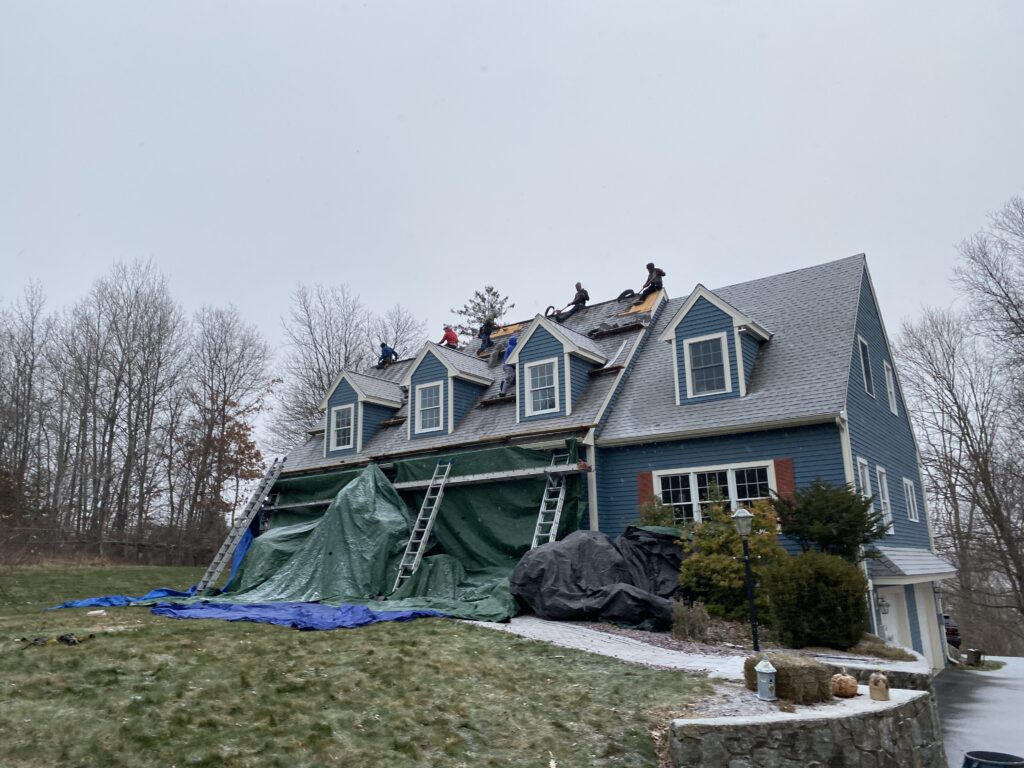
Derek gets on the roof before anyone quotes a price. That means checking the decking for soft spots and delamination, looking at flashing at every chimney, skylight, and valley, and pulling a look at the underside from the attic to see if there’s already staining, mold, or daylight coming through anywhere it shouldn’t. We look at the ventilation setup too, because a roof with no real airflow will cook a shingle warranty in half the time regardless of what brand you put up there.
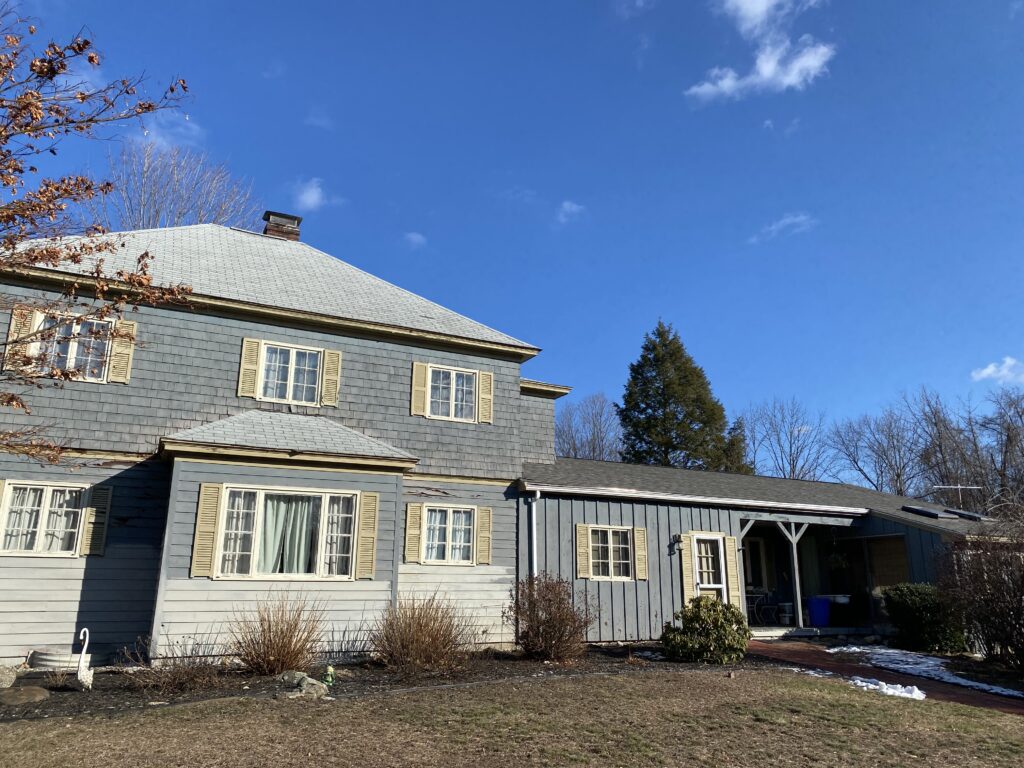
If a roof genuinely needs a repair instead of a full replacement, we say so. A localized flashing failure, a handful of wind-lifted shingles, or a chimney cricket that was never built right the first time are repair jobs, not replacement jobs, and we’re not going to talk you into more roof than you need. Replacement makes sense when the decking has widespread rot, when the shingles are past their functional life across the whole field, or when repeated repairs on an old roof are starting to cost more than doing it right once.
What the Job Involves
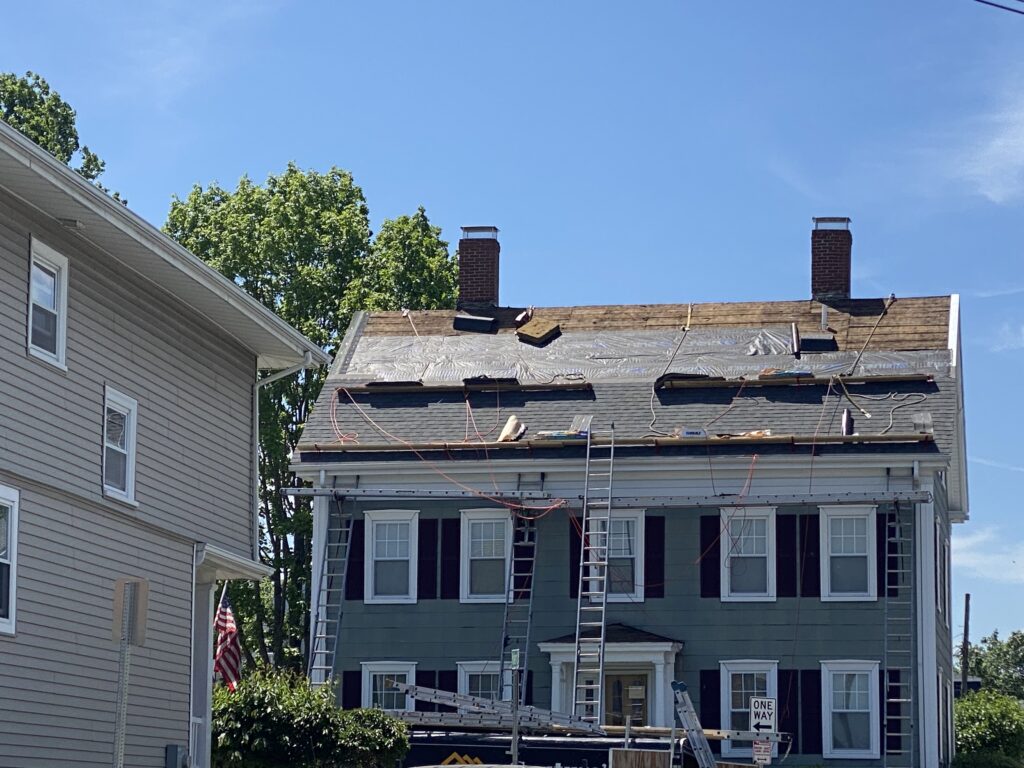
A typical Ipswich replacement runs full tear-off to bare decking, replacement of any compromised sheathing, ice and water shield at eaves and valleys, synthetic underlayment, new flashing at all penetrations and chimneys, ridge and soffit ventilation, and the shingle system itself. On homes near the water or in exposed spots, that shingle choice leans toward a higher wind-rated product rather than a standard builder-grade shingle. We haul debris off site as we go and do a final walk of the property, including a magnetic sweep for nails, before we call it done.
Access matters more in Ipswich than in a lot of towns nearby. Narrow driveways near the historic district, mature trees close to the house, and setbacks that limit where a dumpster or a lift can sit all factor into how we stage the job. We plan that out before the crew shows up, not on the morning of.
What It Costs
Most full roof replacements in Ipswich run between {PRICE_LOW} and {PRICE_HIGH}, and where a specific job lands in that range depends on roof size, pitch, how many layers of old shingle need to come off, what we find once the decking is exposed, and how hard the house is to access. A simple gable roof on a level lot costs less to do than a steep, cut-up roofline with multiple valleys and a driveway a truck can barely turn into. We give you a real number after the assessment, not a phone estimate, because guessing on an old Ipswich roof is how contractors end up with change orders.
How Long It Takes
Most residential tear-offs and re-roofs take one to three days once the crew is on site, weather permitting. A straightforward cape or colonial roof with good access can be done in a day. Add complexity, layers, or a difficult driveway and it stretches to two or three. We’ll give you a realistic window before we start and let you know if weather is going to move it.
How do I know if I need a roof replacement instead of a repair?
If the damage is localized, like a section of lifted shingles or a single flashing failure, a repair is usually the right call. Replacement makes sense when the decking has widespread rot, the shingles are aged out across the whole roof, or you're patching the same areas repeatedly. A proper inspection from the attic and the roof surface will tell you which situation you're in.
Do coastal wind conditions in Ipswich actually affect shingle choice?
Yes. Homes closer to the water or in open, unshielded spots benefit from a higher wind-rated shingle than a standard product built for inland suburban conditions. We factor proximity to open water and marsh into the shingle recommendation, not just the house style.
Will a historic or older Ipswich home limit what roofing materials I can use?
It can, particularly for homes near the historic center or on a lot with tight access. We work within whatever material or appearance constraints apply and plan around narrow driveways, mature trees, and tight setbacks before the crew arrives, not on the day of.
What causes ice dams on Ipswich roofs and can a new roof prevent them?
Ice dams form when heat escaping through the attic melts snow on the roof, which then refreezes at the colder eaves. Proper ridge and soffit ventilation combined with ice and water shield at the eaves is what actually addresses it. A new roof done right reduces the risk significantly, though attic insulation plays a role too.
Do you handle the debris and cleanup after a tear-off?
Yes. Full tear-off debris is hauled off site, and we do a magnetic nail sweep of the property as part of the final walkthrough before we consider the job complete.
Get an Estimate
If your roof is showing granule loss in the gutters, daylight in the attic, or shingles curling at the edges, it’s worth getting a real look before another New England winter tests it. Call Couture’s Construction at {PHONE} and Derek will come out, get on the roof, and tell you straight whether you’re looking at a repair or a replacement.