
- Home
- Services
- Locations
Amesbury, MA
Boxford, MA
Chelmsford, MA
Danvers, MA
Dracut, MA
Essex, MA
Georgetown, MA
Groveland, MA
Hamilton, MA
Haverhill, MA
Ipswich, MA
Merrimac, MA
Methuen, MA
Middleton, MA
Newbury, MA
Newburyport, MA
North Andover, MA
North Reading, MA
Peabody, MA
Rowley, MA
Salem, MA
Salisbury, MA
Tewksbury, MA
Topsfield, MA
Topsfield, MA
West Newbury, MA
Atkinson, MA
Derry, NH
East Kingston, NH
Kensington, NH
Kingston, NH
Londonderry, NH
Plaistow, NH
Salem, NH
- Company
- Contact
- Home
- Services
- Locations
Amesbury, MA
Boxford, MA
Chelmsford, MA
Danvers, MA
Dracut, MA
Essex, MA
Georgetown, MA
Groveland, MA
Hamilton, MA
Haverhill, MA
Ipswich, MA
Merrimac, MA
Methuen, MA
Middleton, MA
Newbury, MA
Newburyport, MA
North Andover, MA
North Reading, MA
Peabody, MA
Rowley, MA
Salem, MA
Salisbury, MA
Tewksbury, MA
Topsfield, MA
Topsfield, MA
West Newbury, MA
Atkinson, MA
Derry, NH
East Kingston, NH
Kensington, NH
Kingston, NH
Londonderry, NH
Plaistow, NH
Salem, NH
- Company
- Contact
Roof Replacement in Hamilton, MA
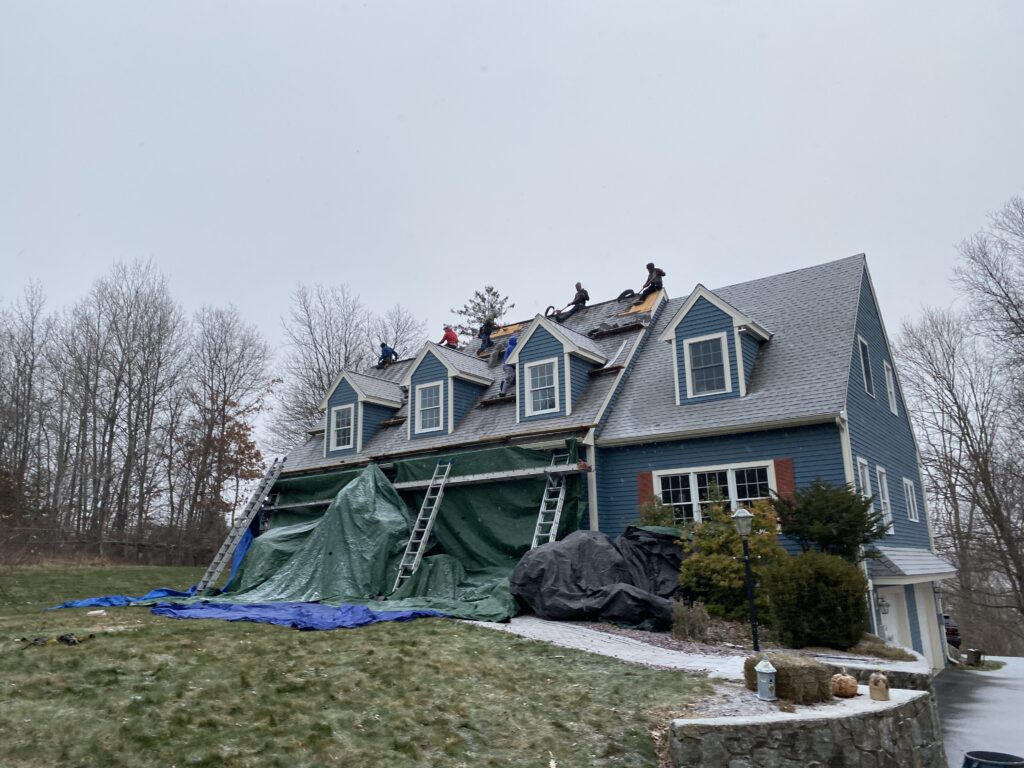
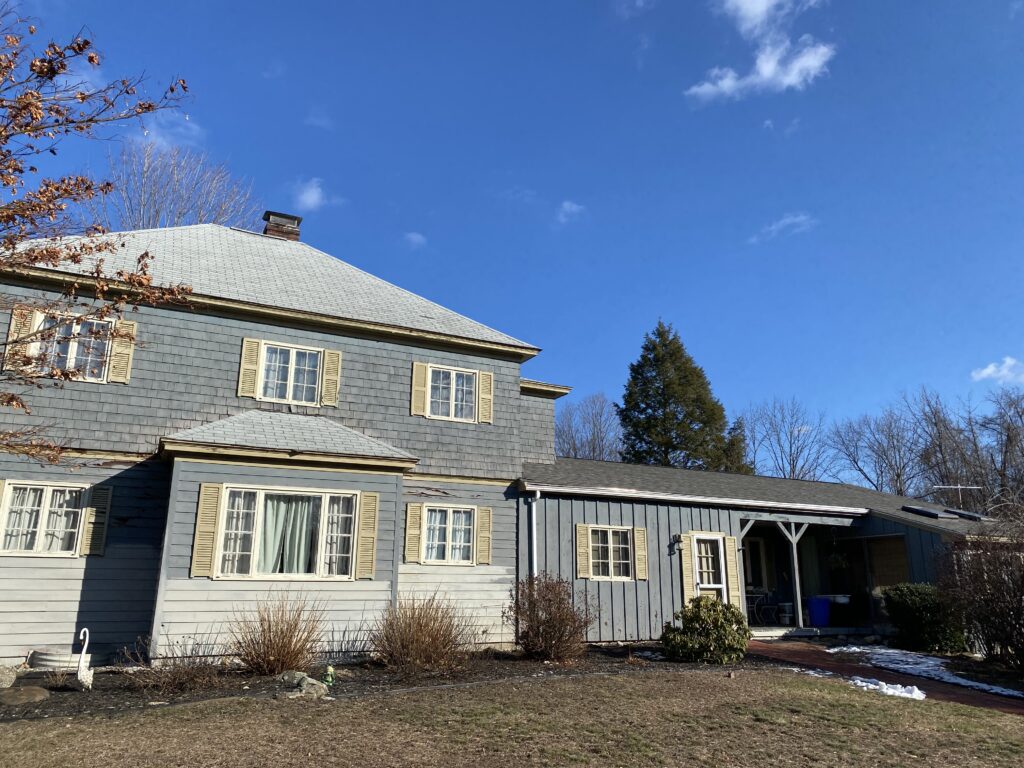
A lot of the roofs we see in Hamilton were never meant to be simple. Antique colonials and old farmhouses on Bay Road and Asbury Street were built with steep pitches, multiple dormers, and rooflines that changed direction three or four times before they got to the eaves. Add heavy tree cover and two-acre lots with a barn or a detached garage that also needs a roof, and you have a different job than the ranch on a quarter-acre subdivision lot ten minutes away.
Roof Replacement in Hamilton
Replacement and repair are not the same decision, and the line between them is usually clearer than homeowners think once you know where to look. If your roof is losing granules by the handful, has shingles cupping or cracking across more than one slope, or has soft spots in the decking you can feel from the attic, patching it is a short-term fix on a roof that is done. If the trouble is one flashing detail, a handful of wind-lifted shingles after a storm, or a single failed valley, repair is the honest answer and we will tell you that. Hamilton’s older housing stock complicates this a little because a lot of these roofs have already had one layer added over the original, which limits repair options and pushes the math toward full replacement sooner than it would on a newer house.
What Hamilton roofs are up against
Tree cover is the first issue. Big lots with mature oak and pine canopy mean valleys and low-slope sections stay wet and collect debris longer after every rain and snow event, which accelerates granule loss and shortens the life of the shingle underneath. North-facing slopes on these same properties, shaded most of the day in winter, are where we see the worst ice damming – water backs up under the shingle line and finds its way into the decking and the ceiling below before anyone notices a drip.
The second issue is geometry. A roof with four or five intersecting planes has that many more valleys, that many more chimney and skylight flashing details, and that many more places for water to find a way in if the original work was done to a lower standard than the house deserves. Some of Hamilton’s oldest homes sit in areas where historic district guidelines shape what materials and profiles are acceptable on a street-facing roof, so matching the existing roofline and, where required, the shingle profile or slate look, matters as much as the underlying wind rating and warranty. This is not a neighborhood where you show up with one shingle color and one plan for every house.
How we assess it
Derek walks the roof and the attic before anyone talks about a number. On the roof, that means checking the decking for soft spots, pulling back shingles at the valleys and chimney flashing to see what is actually happening underneath, and looking at how the ridge and soffit vents are working together, or not working together, which is a huge factor in ice dam risk on a shaded northern slope. From the attic, we look at the underside of the decking for water staining, check insulation depth, and see whether moisture is getting trapped where it shouldn’t be. On properties with a barn, garage, or outbuilding also needing work, we look at those separately since older secondary structures often have different decking and framing conditions than the main house. You get a straight recommendation after that walk-through, not before it.
What the job involves
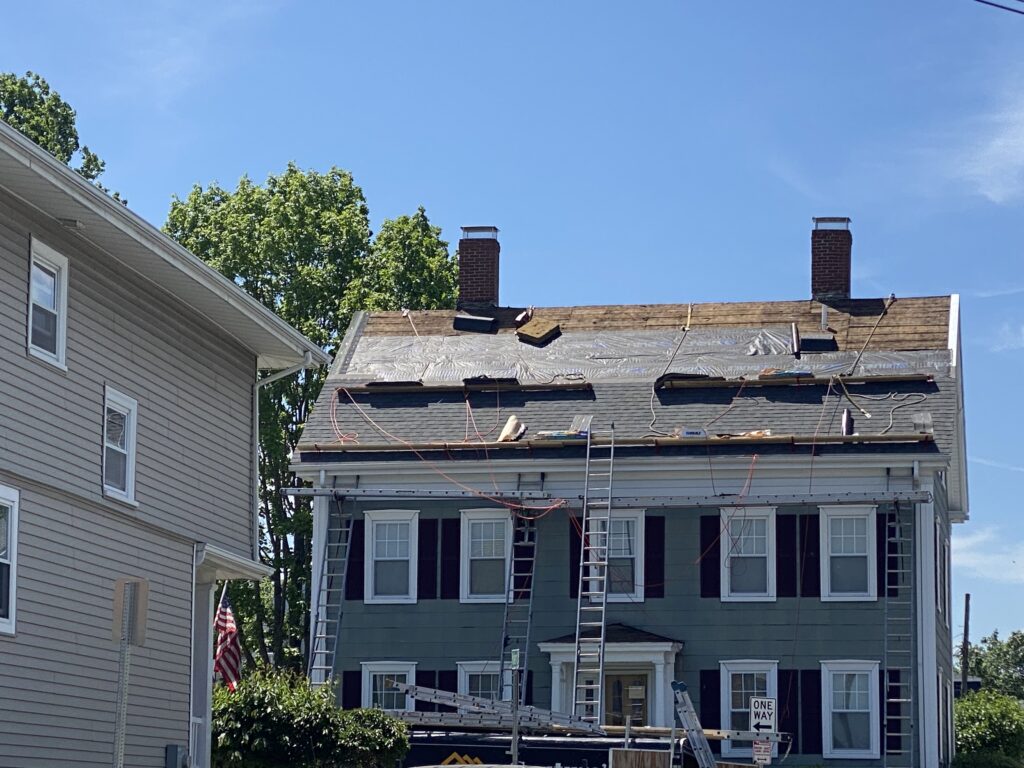
A full tear-off starts with stripping the existing roofing down to the decking, which is when layered roofs and old fastening patterns show themselves. Any rotted or delaminated decking gets replaced board by board, not skipped over. Ice and water shield goes down along the eaves, valleys, and around every penetration, which matters more here than in flatter neighborhoods because of how much valley and dormer work these roofs carry. New flashing gets installed at chimneys, skylights, and wall intersections rather than reused, since old flashing is one of the most common places a roof fails again within a few years. Shingles are architectural asphalt in most cases, chosen for wind rating appropriate to an open, tree-adjacent property, though slate or cedar shake matching is sometimes the right call on the oldest homes here. Ridge and soffit ventilation gets corrected as part of the job wherever the existing setup is undersized, which it often is on houses built before modern ventilation standards.
What it costs
Roof replacement in Hamilton runs from about {PRICE_LOW} to {PRICE_HIGH}, and the properties here tend to land at the higher end of any range we quote in the territory. Size and pitch are the biggest drivers – a steep colonial with dormers takes more time and more material than a simple gable roof of the same square footage. Layers to strip add cost, since a second layer means more disposal and more time on decking inspection. Decking surprises, meaning rot found once the old roofing comes off, are billed separately and we walk you through it before any work continues, never after. Access is its own line item on these estate lots – a long private driveway, a detached structure, or limited staging space for a dumpster and material delivery all affect labor time in ways a tract-house roof simply doesn’t.
How long it takes
A straightforward tear-off and replacement on a single-plane roof takes a day, sometimes two. The multi-plane roofs common in Hamilton, with several valleys and dormers, usually run two to four days depending on complexity and weather. Add a barn or outbuilding to the scope and you’re looking at additional time scheduled either concurrently with a second crew or immediately after, depending on access. We give you a realistic window up front based on what we see during the assessment, not a generic estimate meant to get the contract signed.
How do I know if my Hamilton roof needs replacement instead of repair?
Look at the shingles across the whole roof, not just one spot. Granule loss over multiple slopes, cracked or cupped shingles in several areas, soft decking felt from the attic, or a roof that's already carrying two layers all point toward replacement. A single damaged valley or a flashing leak is usually a repair. We'll tell you honestly which one your roof needs.
Why does ice damming seem worse on some parts of my roof than others?
North-facing slopes and sections shaded by tree cover stay colder, so snow melts unevenly and refreezes at the eaves, backing water up under the shingles. This is common on Hamilton's larger, tree-covered lots and it's a ventilation and ice-and-water-shield issue as much as a shingle issue.
Can you match the roofline on an older or historic Hamilton home?
Yes. We look at the existing profile, pitch, and material before recommending anything, and on homes in areas with historic district guidelines we work within what's required for street-facing sections while still fixing the underlying performance issues.
Do you also handle the roof on a barn or detached garage?
We do, and we assess it separately from the main house since outbuildings often have different decking age and framing than the primary structure. It can be scoped as part of the same project or handled on its own timeline.
What affects how long a roof replacement takes on a property like mine?
Roof complexity is the biggest factor – the number of valleys, dormers, and intersecting planes on Hamilton's older colonials adds real time compared to a simple gable roof. Long driveways and limited staging space can also affect how quickly material and equipment move in and out.
Get an estimate
If you’re looking at a Hamilton roof that’s shedding granules, showing daylight in the attic, or has ice damming every winter along the same stretch, get it looked at before another season goes by. Call {PHONE} or reach out through the site and Derek will walk the roof with you directly.