
- Home
- Services
- Locations
Amesbury, MA
Boxford, MA
Chelmsford, MA
Danvers, MA
Dracut, MA
Essex, MA
Georgetown, MA
Groveland, MA
Hamilton, MA
Haverhill, MA
Ipswich, MA
Merrimac, MA
Methuen, MA
Middleton, MA
Newbury, MA
Newburyport, MA
North Andover, MA
North Reading, MA
Peabody, MA
Rowley, MA
Salem, MA
Salisbury, MA
Tewksbury, MA
Topsfield, MA
Topsfield, MA
West Newbury, MA
Atkinson, MA
Derry, NH
East Kingston, NH
Kensington, NH
Kingston, NH
Londonderry, NH
Plaistow, NH
Salem, NH
- Company
- Contact
- Home
- Services
- Locations
Amesbury, MA
Boxford, MA
Chelmsford, MA
Danvers, MA
Dracut, MA
Essex, MA
Georgetown, MA
Groveland, MA
Hamilton, MA
Haverhill, MA
Ipswich, MA
Merrimac, MA
Methuen, MA
Middleton, MA
Newbury, MA
Newburyport, MA
North Andover, MA
North Reading, MA
Peabody, MA
Rowley, MA
Salem, MA
Salisbury, MA
Tewksbury, MA
Topsfield, MA
Topsfield, MA
West Newbury, MA
Atkinson, MA
Derry, NH
East Kingston, NH
Kensington, NH
Kingston, NH
Londonderry, NH
Plaistow, NH
Salem, NH
- Company
- Contact
Roof Repair in West Newbury, MA
West Newbury still has a lot of roofs that were built for a different climate expectation than the one we get now. Steep farmhouse pitches near the center of town, additions tacked onto the back of older capes with a much shallower slope, and mature tree canopy along Main Street and up toward the Pipestave Hill area that keeps valleys and eaves shaded most of the day. That combination is exactly what causes the calls we get from this town: ice damming on the low-slope additions, and granule loss or valley leaks under the tree cover where the roof never fully dries out between rains.
Roof Repair in West Newbury
Most people call us about a stain on a bedroom ceiling, a soft spot they found walking the attic, or a shingle they found in the yard after a windy night. That is the right instinct. A repair call now is almost always cheaper and less disruptive than waiting until water has been getting into the decking for two winters. We work on asphalt shingle roofs of every age in West Newbury, from newer subdivision builds off Route 113 to the older homes closer to the river where the roof framing itself may be original to the house.
We do not treat every repair call as a chance to sell a new roof. Plenty of roofs in this town have another five, ten, even fifteen years in them if the right section gets fixed correctly. We will tell you that on the phone before we even schedule a look, and we will tell you again standing on your roof if that is what the roof shows us.
What West Newbury roofs are up against
The building stock here splits into two clear groups, and each one fails differently. In and around the town center you have a good number of eighteenth and nineteenth century homes with steep, complex rooflines, multiple valleys, and chimneys that were flashed decades ago with materials and methods that would not pass inspection today. Those roofs lose the fight at the flashing first, not the shingles. Water finds its way in at the chimney saddle, at a valley where debris has piled up under tree cover, or at a dormer where the step flashing was never properly integrated with the siding.
Out toward the newer development on the edges of town, roofs are simpler in shape but younger in age, usually 20 to 40 years old, and the common failure there is ventilation. A lot of these homes have ridge vents that were never paired with enough intake at the soffit, or insulation that has crept up and blocked the soffit entirely. That imbalance bakes the shingles from underneath in summer and builds ice dams in winter on north-facing slopes that never get direct sun. West Newbury’s river-valley location also means damp, still air sits longer here than in more open terrain, which is one more reason algae streaking and moss in shaded valleys shows up earlier than you would expect on a 15-year-old roof.
How we assess it
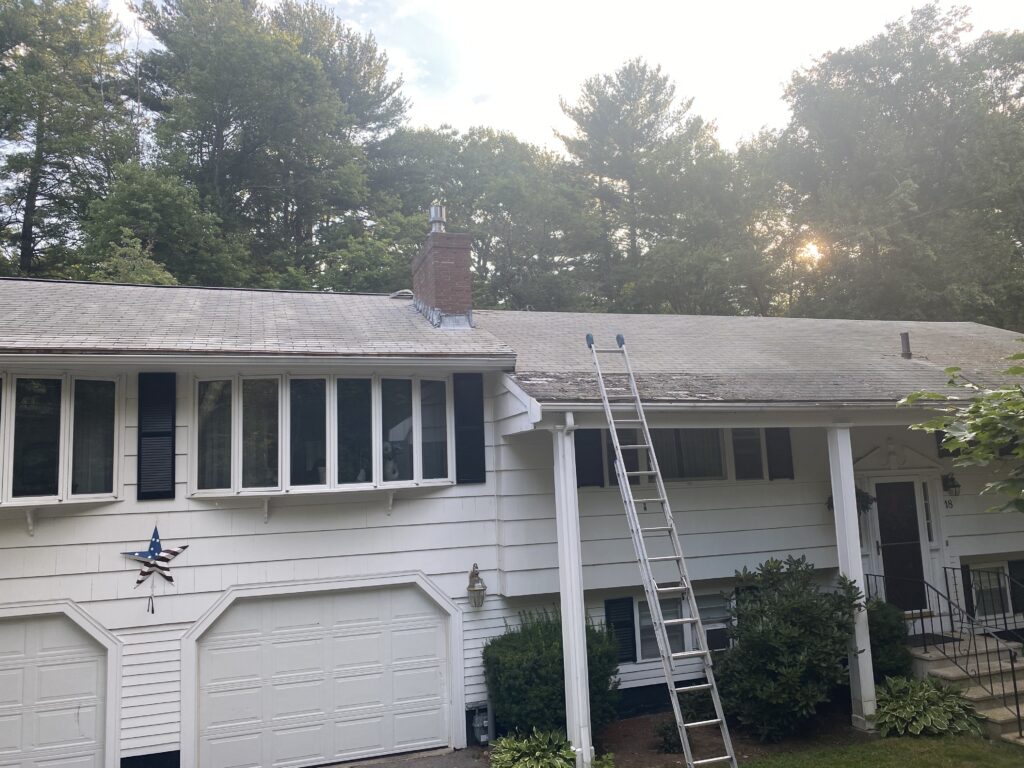
Before Derek or one of our crew leads tells you anything about repair versus replacement, we get on the roof and in the attic. That is not a sales step, it is the only way to actually know what is going on. On the roof we check the decking for soft spots underfoot, pull back shingles at the suspect area to look at the felt or ice and water shield underneath, and check every flashing point separately, chimney, valley, sidewall, and any roof-to-wall transition. In the attic we look at the underside of the decking for staining or daylight, check for proper baffle installation at the soffit, and see whether the insulation has choked off airflow.
We put that together and give you a straight answer. If the problem is contained, isolated flashing, a section of damaged shingles, a valley that needs to be rebuilt, we say so and we price the repair. If the decking is soft over a wide area or the shingles are failing across the whole roof rather than in one spot, we say that too. Either way, you get the assessment findings, not a pitch.
What the job involves
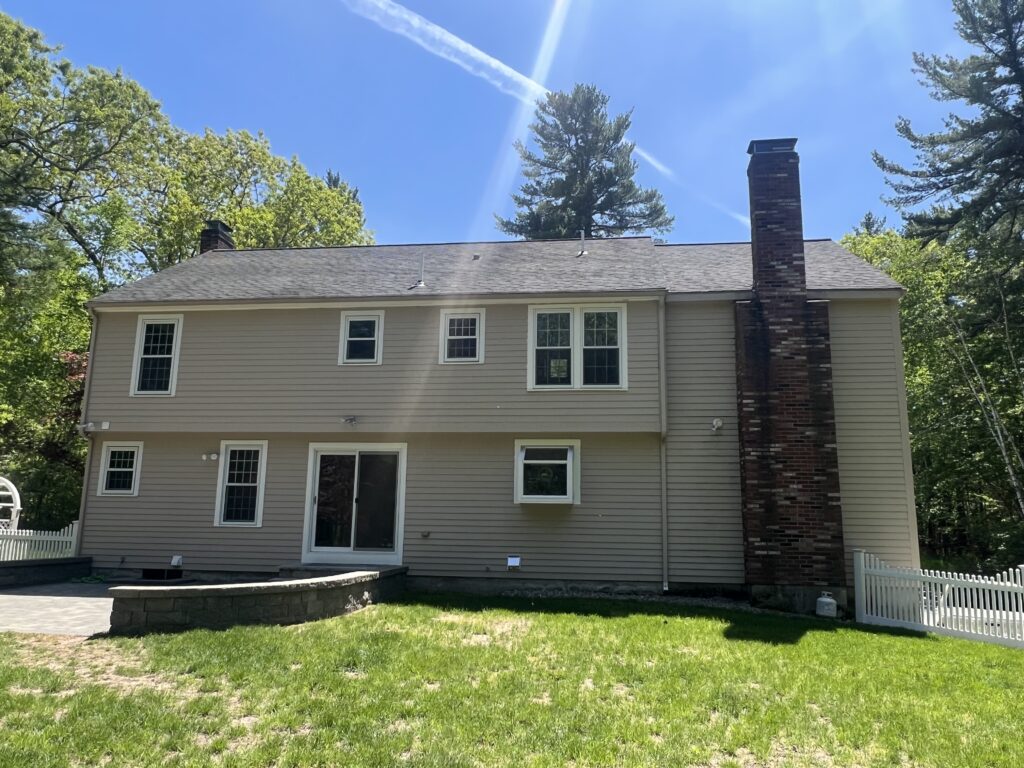
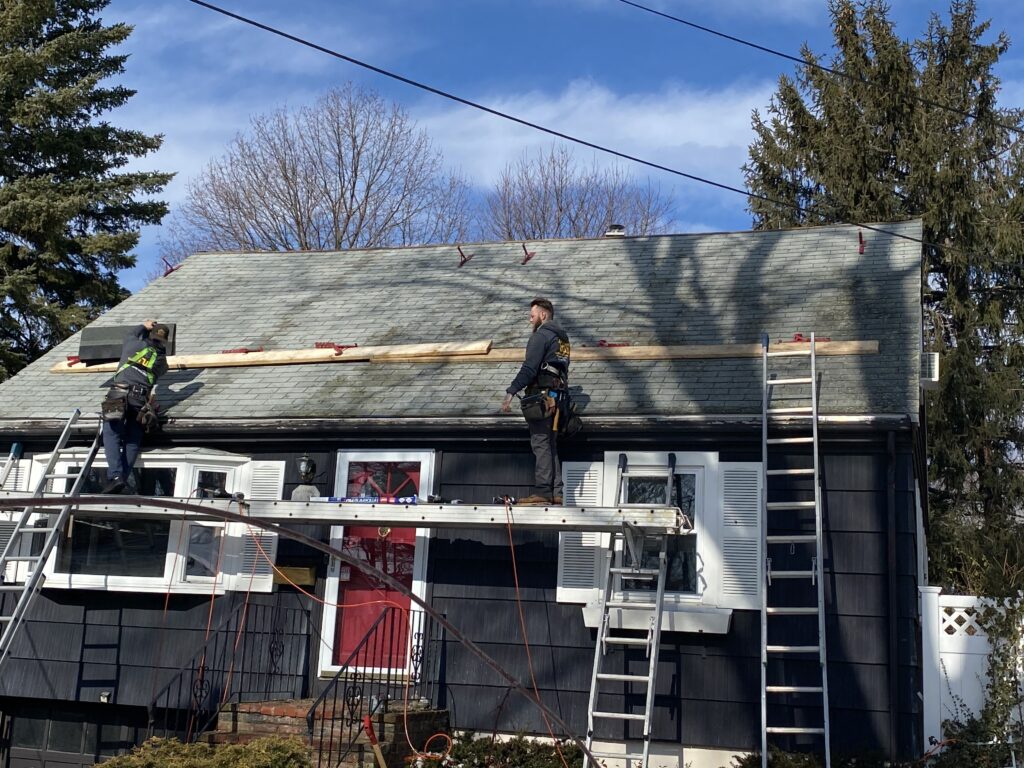
A typical West Newbury repair starts with stripping the damaged section down to decking. If we find rot, we replace that decking before anything else goes back down, that is not optional and it is not an upsell, it is the part of the job that actually stops the leak from coming back. From there we install ice and water shield at the repaired section, particularly critical on north-facing slopes and anywhere near a valley or chimney given what we see failing in this town. New flashing goes in at any point that was compromised, formed and stepped correctly rather than smeared over with sealant, which is a shortcut we see a lot on older West Newbury homes from past repairs. Matching shingles go back down last, and we make a real effort to match the existing color and profile so the repair does not stand out from the street.
What it costs
Most straightforward repairs in West Newbury run in the {PRICE_LOW} to {PRICE_HIGH} range, but that spread exists for real reasons. A single flashing repair on a simple gable roof costs less than a valley rebuild with rotted decking underneath it. Roof pitch matters, a 10/12 farmhouse roof takes longer and needs more safety setup than a moderate ranch pitch. Access matters too, a roof surrounded by mature trees or tight to a neighboring structure slows the work down. If we open up the area and find decking damage beyond what was visible from the ground, we stop, show you what we found, and price that separately before doing anything. You are never billed for a surprise you did not agree to.
How long it takes
A single-section repair, one valley or one flashing area, is usually a one-day job for our crew, weather permitting. Repairs involving decking replacement or multiple problem areas can run two days. We do not rush flashing work to hit a timeline, a flashing detail done in a hurry is the reason a lot of these calls happen in the first place.
Can my roof actually be repaired, or do I need a full replacement?
It depends on how much of the roof is affected and what shape the decking is in underneath. If the problem is isolated, one valley, one flashing point, a section of storm-damaged shingles, a repair is usually the right call. We only recommend replacement when the damage is spread across the whole roof field or the decking is compromised in multiple areas.
Why do I have leaks near my chimney but nowhere else?
Chimney flashing is one of the most common failure points on older West Newbury homes. It is often original to a past re-roof and was never properly stepped and counter-flashed, sometimes just sealed over with roofing cement that eventually cracks and lets water in.
What causes ice dams on my back addition but not the front of the house?
Low-slope additions with less insulation and less ventilation than the main roof are the classic ice dam spot, especially on north-facing sections that stay colder and hold snow longer. It is a ventilation and insulation issue as much as a roofing one.
Will you match my existing shingles?
We do our best to match color and profile as closely as the manufacturer's current lineup allows. On older roofs with discontinued shingle styles, an exact match is not always possible, and we will tell you that upfront rather than after the work is done.
Do I need a permit for a roof repair in West Newbury?
Smaller repairs typically do not require a permit, but larger repairs involving significant decking replacement may. We handle that conversation with the town as part of the job when it applies.
Get an estimate
If you have a stain, a soft spot, or shingles in the yard after a windy stretch, call us before it turns into a bigger repair. We will look at the roof, look at the attic, and tell you honestly what West Newbury weather and tree cover have actually done to it. Call {PHONE} or reach out through the site to get a repair estimate scheduled.