
- Home
- Services
- Locations
Amesbury, MA
Boxford, MA
Chelmsford, MA
Danvers, MA
Dracut, MA
Essex, MA
Georgetown, MA
Groveland, MA
Hamilton, MA
Haverhill, MA
Ipswich, MA
Merrimac, MA
Methuen, MA
Middleton, MA
Newbury, MA
Newburyport, MA
North Andover, MA
North Reading, MA
Peabody, MA
Rowley, MA
Salem, MA
Salisbury, MA
Tewksbury, MA
Topsfield, MA
Topsfield, MA
West Newbury, MA
Atkinson, MA
Derry, NH
East Kingston, NH
Kensington, NH
Kingston, NH
Londonderry, NH
Plaistow, NH
Salem, NH
- Company
- Contact
- Home
- Services
- Locations
Amesbury, MA
Boxford, MA
Chelmsford, MA
Danvers, MA
Dracut, MA
Essex, MA
Georgetown, MA
Groveland, MA
Hamilton, MA
Haverhill, MA
Ipswich, MA
Merrimac, MA
Methuen, MA
Middleton, MA
Newbury, MA
Newburyport, MA
North Andover, MA
North Reading, MA
Peabody, MA
Rowley, MA
Salem, MA
Salisbury, MA
Tewksbury, MA
Topsfield, MA
Topsfield, MA
West Newbury, MA
Atkinson, MA
Derry, NH
East Kingston, NH
Kensington, NH
Kingston, NH
Londonderry, NH
Plaistow, NH
Salem, NH
- Company
- Contact
Roof Repair in Middleton, MA
Middleton lots run big and the trees run close to the house. Walk half the streets off Route 62 and you’ll see it: oak and pine canopy hanging over the roofline, valleys packed with needles by October, and a north slope that never sees direct sun from November through March. That combination is what brings most Middleton roof repair calls to us, not wind and not age on their own.
Roof Repair in Middleton
We fix roofs in Middleton the same way we’d want a roofer to work on our own house: figure out what’s actually failing before anyone talks about a full tear-off. Repair is the right first question for almost every roof that isn’t already at the end of its shingle life, and a big share of the calls we get here end in a repair, not a replacement.
What separates Middleton from a tighter-lot town like Peabody or Danvers is tree load. Roofs here take more physical debris, more standing moisture in shaded areas, and more granule loss from moss and algae holding water against the shingle surface. That shows up as leaks and staining well before the shingles themselves are actually worn out.
What Middleton roofs are up against
Heavy tree cover changes how a roof ages. Needles and leaves pack into valleys and behind chimneys, and that debris holds water against the shingles instead of letting it run off. Over a few seasons that trapped moisture works granules loose, softens the mat underneath, and opens small gaps at the valley metal that let water track sideways into the decking. It’s slow and quiet until the ceiling below shows a stain.
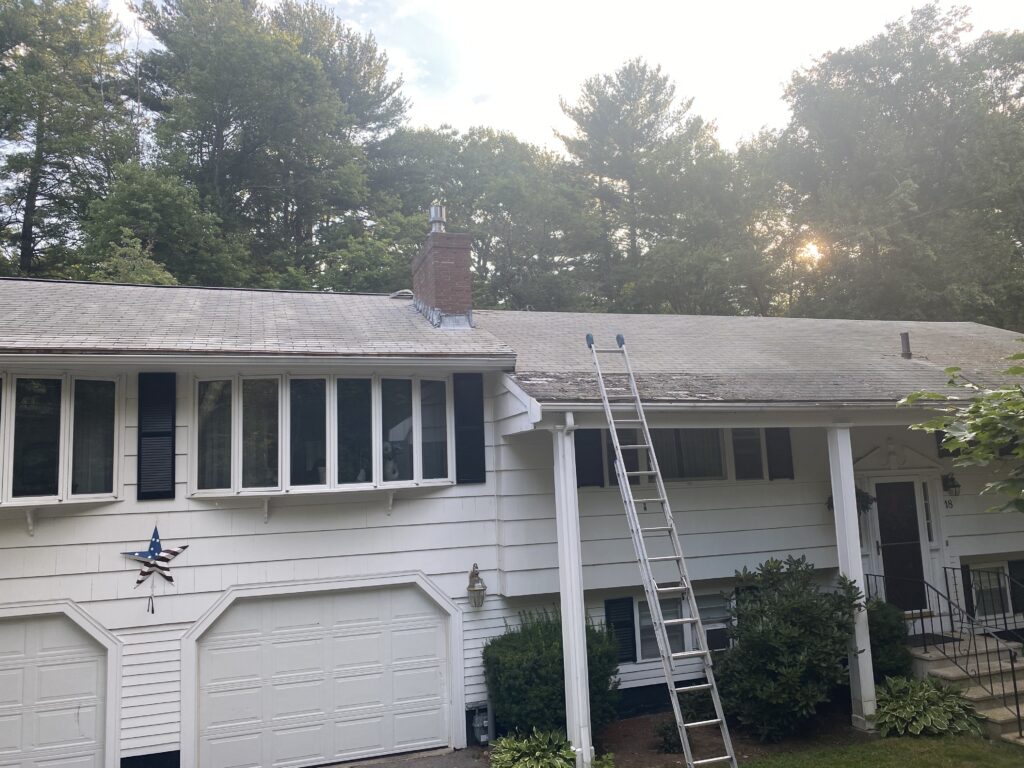
North-facing slopes on the larger, more shaded Middleton lots deal with something different: moss and black algae streaking that most homeowners notice long before they notice a leak. That streaking isn’t just cosmetic. Moss holds moisture, freezes and thaws through the winter, and lifts shingle edges enough for ice to get underneath. Combine that with overhanging limbs that keep a slope colder and wetter than the rest of the roof, and you get ice dams forming on north sections while the south side of the same roof is bone dry. We also see a fair number of older Middleton homes with a low-slope rear addition, often over a kitchen or family room, and those sections fail on their own schedule regardless of what the main roof is doing.
How we assess it
Derek doesn’t quote a repair off a photo or a drive-by. A real assessment means getting on the roof and looking at the decking, the flashing at every chimney and valley, and the condition of the ridge and soffit ventilation, because a roof that can’t breathe properly cooks itself from underneath even when the shingles look fine from the driveway. It also means going into the attic. Daylight through the decking, dark staining on the rafters, or damp insulation tells us more about what’s actually happening than the shingle surface ever will.
We tell you what we find in plain terms. If the decking is solid, the flashing is intact, and the damage is isolated to a valley or a section of ridge, a repair holds and we say so. If we find soft decking spreading across multiple slopes, or shingles that are brittle and cracking on contact, we’ll tell you that too, and explain why a patch there is a short-term fix at best. The goal is an honest answer, not a longer sales conversation.
What the job involves
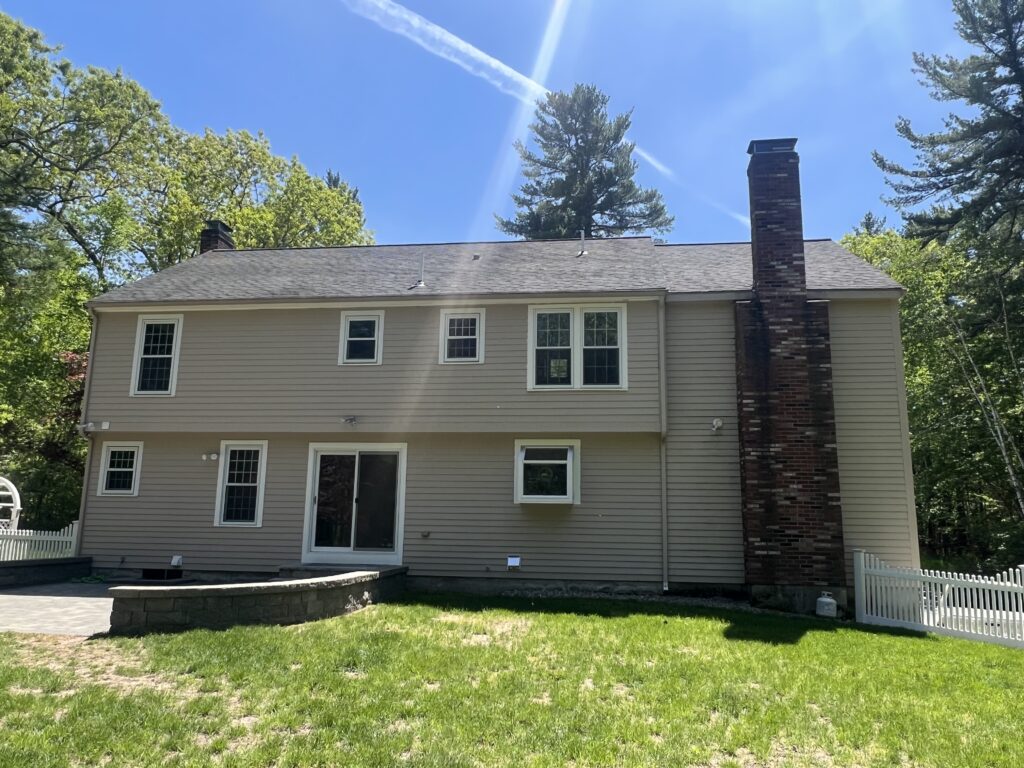
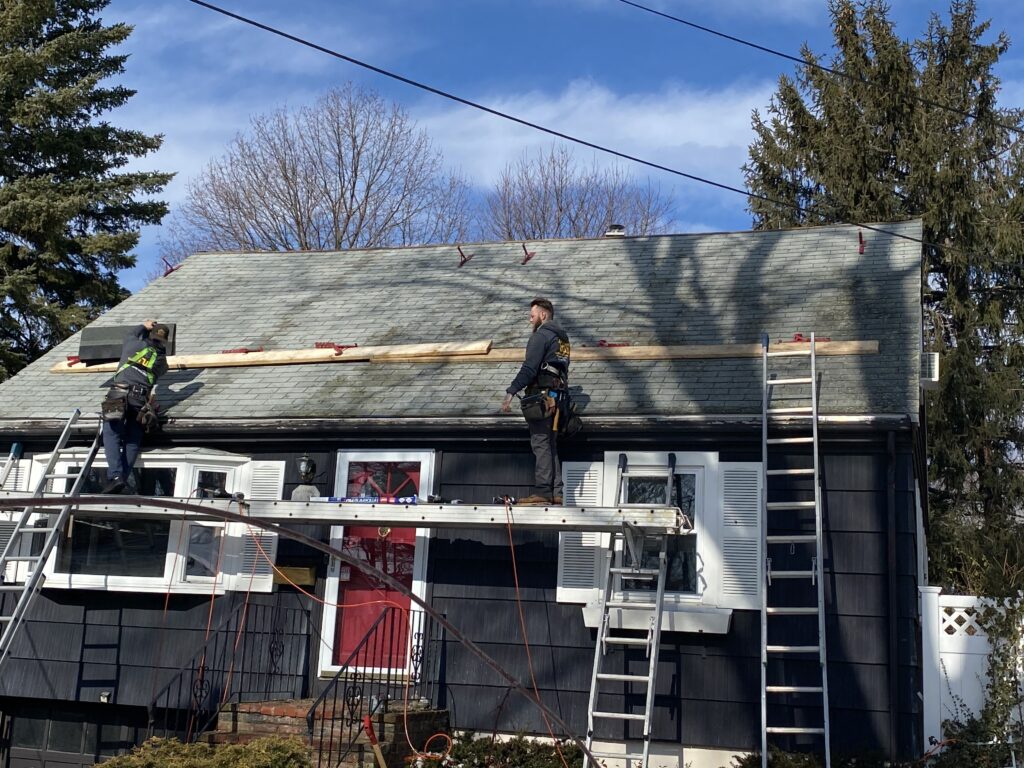
A typical Middleton repair starts with clearing debris out of valleys and off the roof deck so we can actually see what we’re working with. From there it usually involves pulling and replacing damaged shingles, resetting or replacing valley and chimney flashing, and treating or removing moss on the affected slope so it doesn’t just come back in a season. If ice damming has already caused damage, we’ll add or extend ice and water shield along the eaves and in the problem valley, since that membrane is what actually stops the next backup from reaching your decking. Any section of rotted decking we find gets cut out and replaced before new shingles go down, never covered over.
What it costs
Most Middleton roof repairs run between {PRICE_LOW} and {PRICE_HIGH}. Where you land in that range depends on the size of the affected area, the pitch of the roof, how many layers of shingle are already on it, and what we find once we open things up. Rotted decking, hidden flashing damage, or a repair that turns out to involve more than one slope all move the number. Access matters too. A roof buried under limbs and hard to stage a ladder against takes longer than a straightforward walk-up job. We give you the range and the reasons behind it before any work starts, not after.
How long it takes
A straightforward valley or flashing repair is usually a one-day job. If moss removal, ice and water shield installation, or deck replacement are involved, plan on one to two days depending on weather and how much of the roof is affected. We don’t rush a repair to hit a schedule, and we don’t stage a job around your trees dropping needles on fresh work either. Fall and early spring, after leaf drop and before the next heavy pollen and needle season, tend to be the cleanest windows for repair work on a wooded Middleton lot.
Can a leak under a shaded north slope always be repaired, or does it mean I need a new roof?
It depends on how long the moisture has been sitting there. If we catch moss and staining before the decking has softened, a targeted repair and moss treatment usually solves it. If the decking underneath has been wet for multiple seasons, that section may need to be replaced even if the rest of the roof is fine.
Do overhanging trees actually shorten a roof's life?
Yes. Constant shade keeps shingles damp longer after rain, encourages moss and algae growth, and debris buildup in valleys traps water against the shingle surface. A shaded, tree-covered roof commonly shows wear years before an identical roof with open sun exposure.
Will you push me toward a full roof replacement even if I only called about a repair?
No. We assess the roof first and tell you what we actually find. Plenty of Middleton roofs we look at need a repair and nothing more. We'll only talk replacement if the decking, flashing, or shingle condition genuinely warrants it.
What causes ice dams on Middleton roofs specifically?
Shaded north slopes stay colder than the rest of the roof, so snow melts unevenly and refreezes at the eaves. Combine that with poor ridge or soffit ventilation and you get water backing up under the shingles. Ice and water shield at the eaves and proper attic ventilation are the two fixes that actually address the cause.
Do I need to remove overhanging branches before you can do the repair?
Not always, but if limbs are resting directly on the roof or blocking safe access to the work area, we'll flag that during the assessment. Trimming back branches that touch the roof also helps prevent the same debris and moss problem from coming right back.
Get an estimate
If you’ve got streaking on a north slope, a stain spreading across a ceiling, or a valley that never seems to dry out, call Couture’s Construction at {PHONE}. We’re based in Methuen and work throughout Middleton and the surrounding towns. We’ll get on the roof, tell you honestly whether it’s a repair or something bigger, and give you a real number before we touch a shingle.