
- Home
- Services
- Locations
Amesbury, MA
Boxford, MA
Chelmsford, MA
Danvers, MA
Dracut, MA
Essex, MA
Georgetown, MA
Groveland, MA
Hamilton, MA
Haverhill, MA
Ipswich, MA
Merrimac, MA
Methuen, MA
Middleton, MA
Newbury, MA
Newburyport, MA
North Andover, MA
North Reading, MA
Peabody, MA
Rowley, MA
Salem, MA
Salisbury, MA
Tewksbury, MA
Topsfield, MA
Topsfield, MA
West Newbury, MA
Atkinson, MA
Derry, NH
East Kingston, NH
Kensington, NH
Kingston, NH
Londonderry, NH
Plaistow, NH
Salem, NH
- Company
- Contact
- Home
- Services
- Locations
Amesbury, MA
Boxford, MA
Chelmsford, MA
Danvers, MA
Dracut, MA
Essex, MA
Georgetown, MA
Groveland, MA
Hamilton, MA
Haverhill, MA
Ipswich, MA
Merrimac, MA
Methuen, MA
Middleton, MA
Newbury, MA
Newburyport, MA
North Andover, MA
North Reading, MA
Peabody, MA
Rowley, MA
Salem, MA
Salisbury, MA
Tewksbury, MA
Topsfield, MA
Topsfield, MA
West Newbury, MA
Atkinson, MA
Derry, NH
East Kingston, NH
Kensington, NH
Kingston, NH
Londonderry, NH
Plaistow, NH
Salem, NH
- Company
- Contact
Roof Repair in Essex, MA
Essex sits right where the Great Marsh meets the tree line, and that combination shows up on roofs here in a specific way. You’ve got salt air rolling off the estuary, heavy oak and pine canopy over a lot of the older lots along Western Avenue and John Wise Avenue, and a housing stock that mixes antique capes near the center with newer builds further out toward the Manchester line. Wind and shade don’t usually cause the same kind of damage, but in Essex they team up. That’s the roof we get called out on.
Roof Repair in Essex
Most repair calls in Essex start with a stain on a ceiling, a shingle in the yard after a nor’easter, or a spot behind a chimney that’s been damp for two winters running. We treat every one of those as a repair call first. That means we go up, we look, and we tell you what’s actually happening before anyone talks about a new roof.
Couture’s Construction is based in Methuen and works this whole stretch of the coast, but we don’t treat Essex like a stop on the way to Gloucester. The marsh grass smell, the salt on the trim nails, the tree cover on the west-facing lots – it’s a different roof problem than what we see forty minutes inland, and we assess it that way.
What Essex roofs are up against
Salt air is the first thing working against an Essex roof. It doesn’t dissolve shingles overnight, but it accelerates corrosion on exposed fasteners, drip edge, and flashing, especially on the sides of a roof that face open water or the marsh. If your flashing is old galvanized steel instead of aluminum or a coated metal, that’s usually the first thing to fail, and it fails quietly – a slow leak at a chimney or sidewall long before anyone sees a shingle problem on the surface.
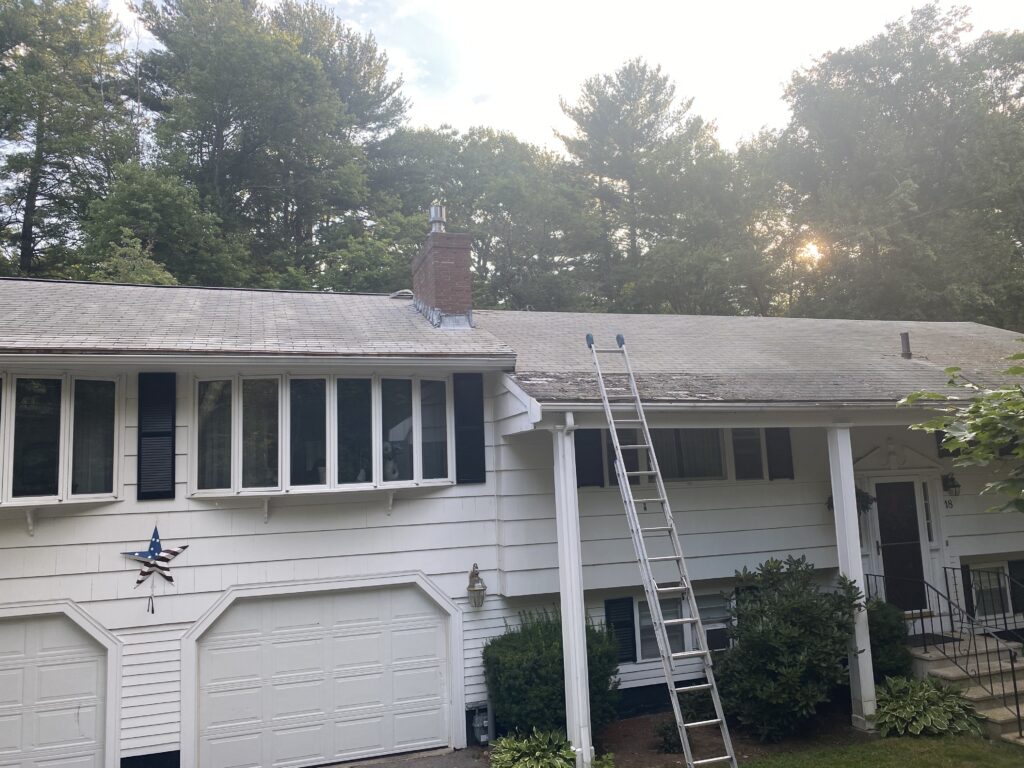
The second thing is tree cover. A lot of Essex lots, particularly the older parcels back from the water, sit under heavy oak and pine. Needles and leaf litter pack into valleys and behind chimneys, hold moisture against the shingle mat, and rot decking from the top down in spots you can’t see from the ground. Combine that with a north-facing slope that doesn’t get much winter sun and you’ve got real ice dam risk – the snow melts from attic heat loss, refreezes at the cold eave, and backs water up under the shingles. This is the single most common repair driver we see town to town on the North Shore, and Essex’s shade cover makes it worse than most.
How we assess it
Derek doesn’t quote a repair off a photo. Before we recommend anything, someone gets on the roof and looks at what’s actually there: the condition of the decking (soft spots mean rot, not just a shingle problem), the flashing at every chimney, sidewall, and valley, the state of the ridge and soffit ventilation, and the granule loss pattern across the field of the roof. Then we go into the attic, because that’s where a leak usually tells the real story – staining, dark decking, or daylight where there shouldn’t be any.
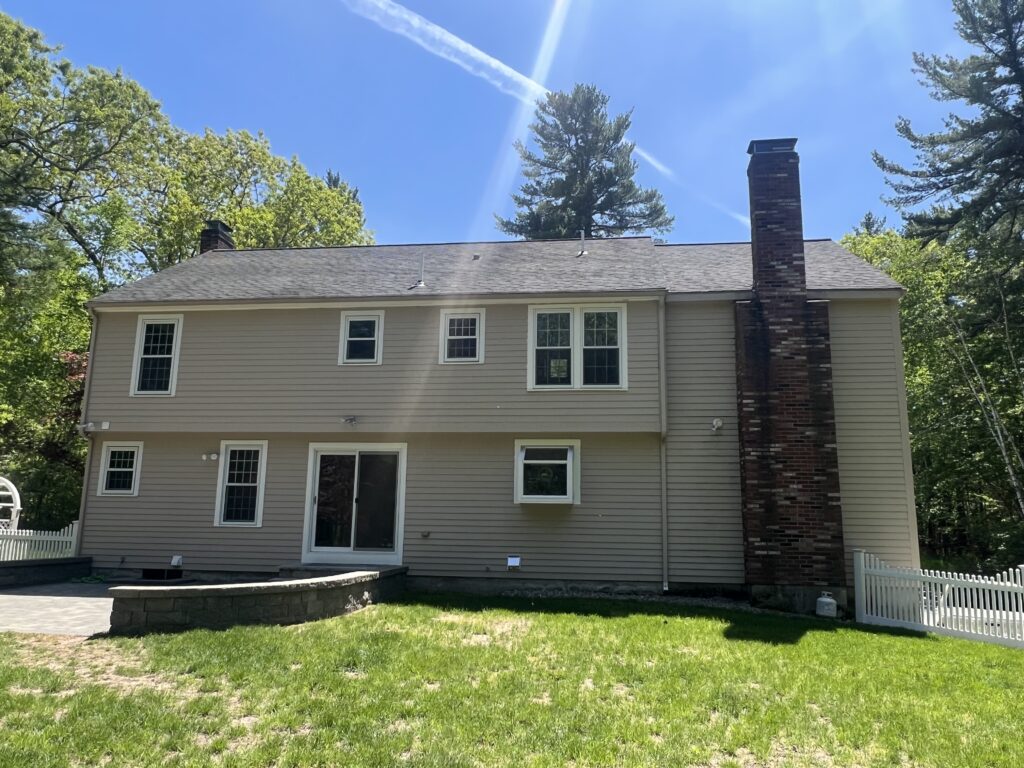
We’ll also check what’s holding the roof together at the fastener level, especially near the water where corrosion runs ahead of what you’d expect from the shingle’s age. A roof that looks fine from the driveway can have flashing that’s given up. A roof that looks rough up close can still have twenty years of life left in the field shingles with the right targeted fix. You don’t know which one you’ve got until someone actually checks.
What the job involves
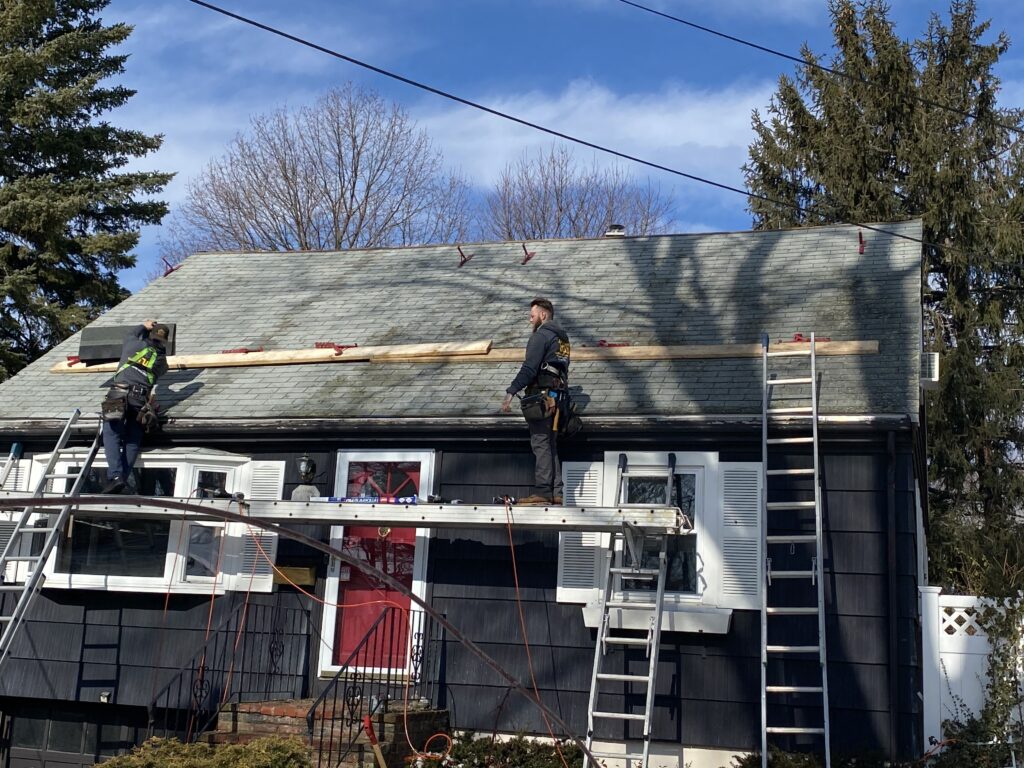
A genuine repair, done right, isn’t a tube of caulk and a prayer. If it’s flashing, we strip the shingles back far enough to install new step and counter-flashing correctly, tied into ice and water shield underneath so the next storm can’t find the same path in. If it’s a section of rotted decking from years of trapped moisture under leaf litter, we cut it out to solid wood and rebuild that section before any shingle goes back down. If the issue is ventilation – a ridge vent that’s undersized or soffit vents packed shut with old paint and insect nests – we correct the airflow, because a roof that can’t breathe will keep making ice dams no matter how many shingles you replace.
What we don’t do is patch over a symptom and call it fixed. If three shingles are cracked from wind but the decking underneath is sound and the flashing is good, that’s a straightforward, honest repair and we’ll say so.
What it costs
Most Essex repairs run somewhere between {PRICE_LOW} and {PRICE_HIGH}, and where you land in that range depends on a handful of things: how much of the roof is affected, the pitch and how safely we can access it, whether we’re dealing with one flashing detail or several, and what we find once decking is exposed. A single chimney flashing rebuild is a different job than a valley that’s been leaking long enough to rot sheathing underneath. We won’t give you a number worth trusting until we’ve actually been up there. Anyone quoting a flat repair price sight unseen is guessing, and on a coastal roof with hidden corrosion, guessing gets expensive later.
How long it takes
A single flashing or vent repair is usually a one-day job, weather permitting. If we’re rebuilding a section of decking or handling multiple trouble spots – say a chimney and a valley both failing from years of trapped moisture – plan on one to two days. We work around Essex’s tighter, tree-lined lots carefully; access and safe staging near the marsh edge or under heavy canopy sometimes takes longer to set up than the repair itself takes to complete.
Is roof repair ever the wrong call for an older Essex home?
Not automatically. Plenty of Essex's antique capes and colonials have field shingles or slate with plenty of life left, and the problem is isolated to flashing or a vent. We repair what can honestly be repaired. Replacement only comes up if the decking is widely compromised or the roof is at the end of its material life across most of its surface, and we'll show you why before we say it.
Why does salt air matter for a roof repair here?
Salt-laden air speeds up corrosion on exposed metal – drip edge, flashing, fasteners – faster than it degrades the shingles themselves. On Essex homes near the marsh or open water, we specifically check flashing material and condition, because that's often where the leak starts long before the shingles show visible wear.
Can you repair a roof with heavy tree cover and leaf debris in the valleys?
Yes, and it's one of the most common calls we get in Essex. We clear the debris, check the decking underneath for rot, and address the valley flashing or underlayment as needed. If the tree cover is going to keep dumping debris every fall, we'll also talk through simple ways to reduce how much collects there.
Do you handle emergency leak repairs after a coastal storm?
Yes. After a nor'easter or high-wind event, we prioritize active leaks. We'll get a tarp or temporary fix on if needed to stop water intrusion, then schedule the permanent repair once we can properly assess flashing and decking condition.
How do I know if it's a repair or if I need a new roof?
The honest answer is you often can't tell from the ground. Isolated damage – a section of flashing, a handful of storm-damaged shingles, one soft spot in decking – is almost always a repair. Widespread granule loss, multiple leak points, or decking rot across a large area starts pointing toward replacement. We'll walk you through exactly what we find either way.
Get an estimate
If you’ve got a stain, a leak, or shingles in the yard after the last blow off the water, call it in before it turns into a decking problem. We’ll come out, get on the roof, and tell you straight whether it’s a repair, and if it is, exactly what that repair involves. Call {PHONE} or reach out through the site to get on the schedule.