
- Home
- Services
- Locations
Amesbury, MA
Boxford, MA
Chelmsford, MA
Danvers, MA
Dracut, MA
Essex, MA
Georgetown, MA
Groveland, MA
Hamilton, MA
Haverhill, MA
Ipswich, MA
Merrimac, MA
Methuen, MA
Middleton, MA
Newbury, MA
Newburyport, MA
North Andover, MA
North Reading, MA
Peabody, MA
Rowley, MA
Salem, MA
Salisbury, MA
Tewksbury, MA
Topsfield, MA
Topsfield, MA
West Newbury, MA
Atkinson, MA
Derry, NH
East Kingston, NH
Kensington, NH
Kingston, NH
Londonderry, NH
Plaistow, NH
Salem, NH
- Company
- Contact
- Home
- Services
- Locations
Amesbury, MA
Boxford, MA
Chelmsford, MA
Danvers, MA
Dracut, MA
Essex, MA
Georgetown, MA
Groveland, MA
Hamilton, MA
Haverhill, MA
Ipswich, MA
Merrimac, MA
Methuen, MA
Middleton, MA
Newbury, MA
Newburyport, MA
North Andover, MA
North Reading, MA
Peabody, MA
Rowley, MA
Salem, MA
Salisbury, MA
Tewksbury, MA
Topsfield, MA
Topsfield, MA
West Newbury, MA
Atkinson, MA
Derry, NH
East Kingston, NH
Kensington, NH
Kingston, NH
Londonderry, NH
Plaistow, NH
Salem, NH
- Company
- Contact
Commercial Roofing in Kingston, NH
Kingston doesn’t have a skyline of flat-roofed warehouses, and we’re not going to pretend it does. What it has is a Route 125 corridor with a handful of strip retail buildings, some municipal and church roofs around the older village center, and a lot of pole barns and outbuildings on the larger residential lots that still make up most of the town. Those buildings mostly carry a low-slope roof somewhere on them, even if the front of the building looks pitched, and that’s the roof that usually fails first.
If you own or manage one of those buildings, you’re dealing with a different roof system than your neighbor’s asphalt shingles. EPDM rubber, TPO membrane, or modified bitumen, usually with a mechanical unit or two sitting on top of it. We work on those systems on both sides of the Massachusetts and New Hampshire line, and Kingston is close enough to our Methuen base that we’re out here regularly.
Flat and Low-Slope Commercial Roofing in Kingston
Most of the low-slope roofing we see in Kingston falls into three categories. EPDM rubber is common on older strip retail and the flat sections tacked onto pitched-roof buildings, it’s inexpensive and durable but the seams and flashing are where it fails. TPO is the newer standard for a reason: heat-welded seams instead of glued laps, better reflectivity, and a stronger track record against ponding water. Modified bitumen shows up on some of the older municipal and church additions, torched or cold-applied in layers, and it’s often past its service life by the time we get a call.
None of these are homeowner-grade materials, and none of them get fixed with a tube of roofing cement and good intentions. We size the system to the building, the drainage, and the rooftop equipment, not to whatever’s cheapest that week.
What Kingston Roofs Are Up Against
Kingston sits inland with heavy tree cover on most of its side streets, which means the flat sections tucked behind pitched roofs collect leaves and pine debris around drains and scuppers all season. On a low-slope roof, a clogged drain doesn’t just make a mess. It ponds water, and ponding water is the single fastest way to age a membrane past its rated life, EPDM or TPO. We see it on the smaller retail buildings near the center where nobody’s climbing up to clear a drain until water’s already coming through the ceiling tile.
The other pattern here is building age clustering. A lot of Kingston’s commercial and municipal stock, plus the outbuildings on larger properties, went up in the same rough window as the surrounding residential subdivisions. That means a good number of these low-slope roofs are approaching the end of a typical membrane’s service life at roughly the same time. Wind exposure is a secondary concern here compared to towns closer to open water, but a poorly terminated membrane edge will still lift in a strong nor’easter regardless of where you are.
How We Assess It
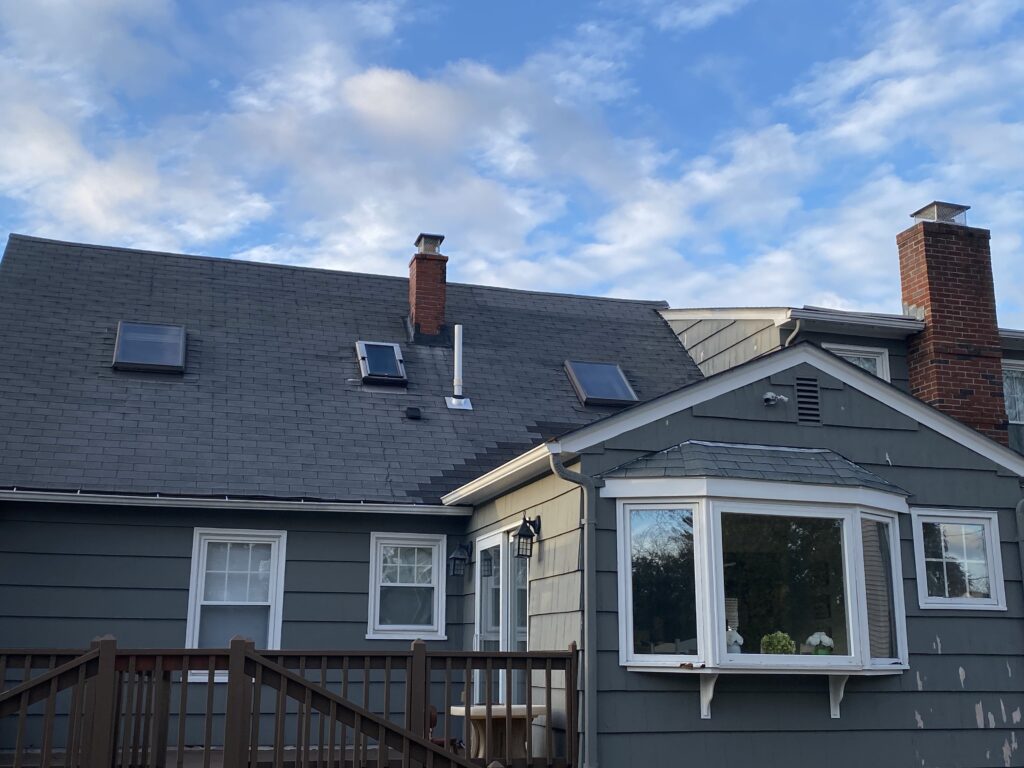
Derek walks the roof before anyone quotes a system. On a flat or low-slope building that means checking for ponding water, checking how the membrane is terminated at parapet walls and roof edges, and pulling back flashing detail at drains, pipe boots, and any rooftop unit curbs. Those are the spots that fail first, almost always before the field of the membrane itself gives out.
Where we can get access, we’ll look at the underside from inside the building too. Water staining on a ceiling tile or in a mechanical room tells you more about where a roof is actually leaking than anything visible from the top. We’re not recommending a full membrane replacement because a roof is old. We’re recommending it because we found something specific that tells us the current system won’t hold, and we’ll show you what that is before we write a proposal.
What the Job Involves
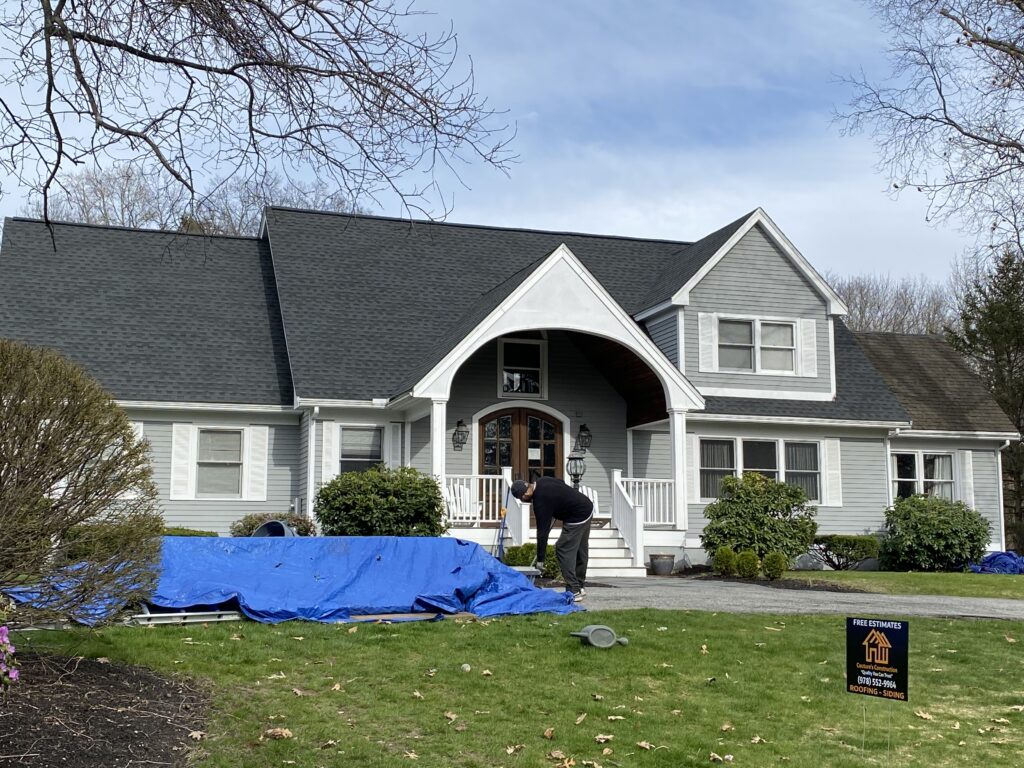
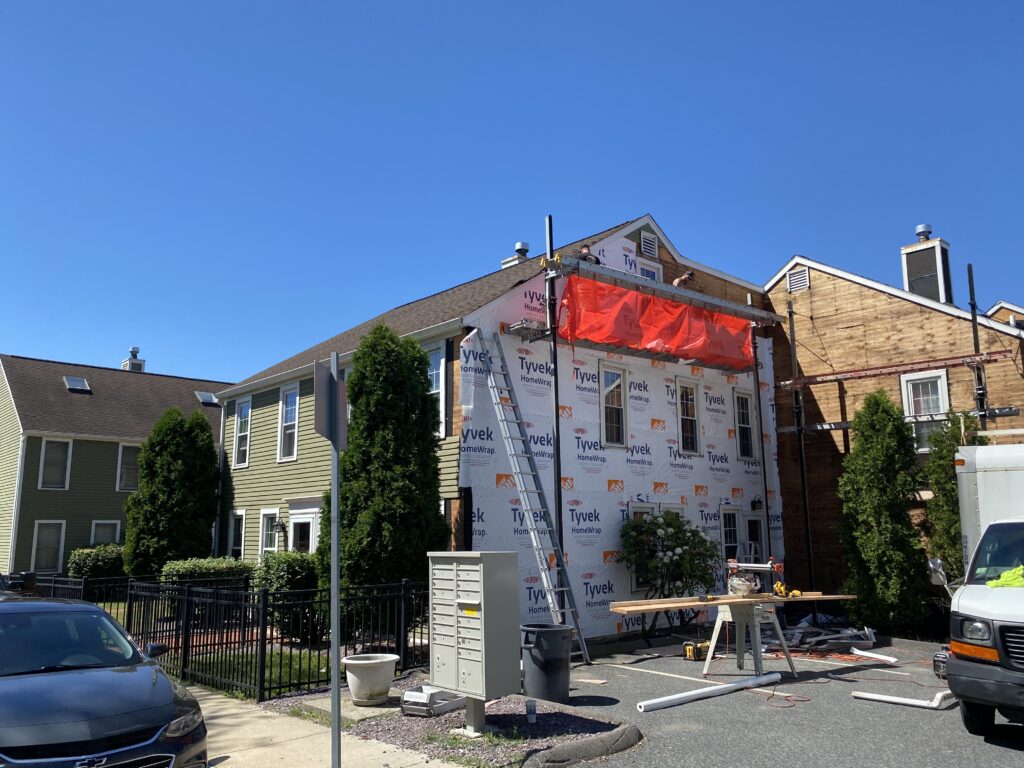
A commercial roof project in Kingston has to work around whatever’s happening inside the building, and for most of the buildings here that means an active retail space, a municipal office, or a church with a regular schedule. We phase the tear-off and new membrane installation to minimize the time the roof deck is exposed, and we coordinate the noisiest work around your operating hours where that’s possible.
The scope usually includes tear-off of the failed membrane down to the deck, repair of any rotted decking we find underneath, new insulation board where the R-value or drainage slope needs improving, and a fully adhered or mechanically fastened membrane with properly flashed penetrations at every drain, pipe, and rooftop unit. On modified bitumen re-roofs we sometimes recover over a sound existing layer instead of a full tear-off, and we’ll tell you honestly when that’s a legitimate option versus a shortcut.
What It Costs
Commercial low-slope roofing runs {PRICE_LOW} to {PRICE_HIGH} on the buildings we typically see in Kingston, and the real number depends on square footage, how many roof penetrations and rooftop units we have to flash around, whether we’re tearing off one layer or several, and how the existing decking looks once we open it up. A straightforward TPO recover on a small retail box costs a lot less than an EPDM tear-off with rotted decking and three HVAC curbs to re-flash. We’ll give you a number based on what we actually find on your roof, not a phone estimate.
How Long It Takes
Most of the low-slope commercial jobs we see in Kingston run a few days to just over a week, depending on square footage and weather. A small strip retail roof or a single outbuilding can move fast. A larger municipal or church roof with multiple sections and rooftop equipment takes longer, and we’ll build the schedule around your building’s use so you’re not shutting down operations for the whole job.
Does Couture's Construction actually work in New Hampshire, or just Massachusetts?
Both. We're based in Methuen, but we work across the state line regularly, and southern New Hampshire towns like Kingston are close enough that we're out here often. Don't assume a Massachusetts-based company won't cross the border. We do.
My building's flat roof is only leaking in one spot. Do I need a full replacement?
Not necessarily. If the membrane is otherwise sound and the leak traces back to one bad flashing detail or a clogged drain, a targeted repair is usually the right call. We only recommend a full replacement when the assessment shows the membrane itself has failed, not just one detail.
What roofing system is right for a small commercial building in Kingston?
It depends on the building. TPO is a strong default for most low-slope roofs now because of the welded seams and reflectivity. EPDM is still a solid, lower-cost option on smaller buildings. Modified bitumen fits some retrofit situations. We'll look at your building before recommending one.
Can you work around our business hours?
Yes. We phase tear-off and installation to keep the roof deck exposed for as little time as possible, and we'll coordinate the noisier parts of the job around your operating schedule where the work allows for it.
Do you handle permitting for commercial roofing in Kingston, NH?
Request a Roof Estimate
Ready to find out what your Kingston property actually needs? Couture’s Construction provides straightforward commercial roofing estimates built on an in-person inspection, not a quick guess from the street. We’ll walk the roof, check the membrane, flashing, and drainage, and give you a written scope before any work begins.
- On-site evaluation
- Clear, itemized proposal
- No pressure, no obligation