
- Home
- Services
- Locations
Amesbury, MA
Boxford, MA
Chelmsford, MA
Danvers, MA
Dracut, MA
Essex, MA
Georgetown, MA
Groveland, MA
Hamilton, MA
Haverhill, MA
Ipswich, MA
Merrimac, MA
Methuen, MA
Middleton, MA
Newbury, MA
Newburyport, MA
North Andover, MA
North Reading, MA
Peabody, MA
Rowley, MA
Salem, MA
Salisbury, MA
Tewksbury, MA
Topsfield, MA
Topsfield, MA
West Newbury, MA
Atkinson, MA
Derry, NH
East Kingston, NH
Kensington, NH
Kingston, NH
Londonderry, NH
Plaistow, NH
Salem, NH
- Company
- Contact
- Home
- Services
- Locations
Amesbury, MA
Boxford, MA
Chelmsford, MA
Danvers, MA
Dracut, MA
Essex, MA
Georgetown, MA
Groveland, MA
Hamilton, MA
Haverhill, MA
Ipswich, MA
Merrimac, MA
Methuen, MA
Middleton, MA
Newbury, MA
Newburyport, MA
North Andover, MA
North Reading, MA
Peabody, MA
Rowley, MA
Salem, MA
Salisbury, MA
Tewksbury, MA
Topsfield, MA
Topsfield, MA
West Newbury, MA
Atkinson, MA
Derry, NH
East Kingston, NH
Kensington, NH
Kingston, NH
Londonderry, NH
Plaistow, NH
Salem, NH
- Company
- Contact
Commercial Roofing in Kensington, NH
Kensington doesn’t have a business district in the way a lot of towns do. What you’ve got instead is a scattered handful of low-slope roofs that matter a great deal to the people who own them: the addition behind the general store, the roof over the fire station or town office, the barn-turned-workshop on a larger lot, the flat section tacked onto a church hall. These roofs get less attention than a shingled house roof because there are fewer of them and nobody’s driving past making mental notes. That’s exactly why they tend to get neglected until a ceiling tile stains or water starts tracking down an interior wall.
Flat and Low-Slope Commercial Roofing Services in Kensington
We install and repair EPDM rubber, TPO membrane, and modified bitumen systems, which cover almost everything you’ll find on a low-slope roof in this part of New Hampshire. EPDM is the black rubber membrane most older flat roofs already have. TPO is the white heat-welded membrane that’s become the standard for new low-slope work because the welded seams hold up better than glued ones over time. Modified bitumen shows up on smaller sections and additions, torched or cold-applied over a base layer. We work on all three, and we’ll tell you which one makes sense for your building instead of pushing whatever we happen to stock.
This also covers the practical side of small commercial work: a metal roof over a pole barn, a mixed low-slope and pitched combination over a converted farmhouse now used as an office, or a rubber roof over a rear addition on an older building that started life as a house. We size the crew and the approach to the actual building in front of us, not to a template built for a strip mall.
What Kensington roofs are up against
Kensington sits in that stretch of southern New Hampshire where housing and small commercial buildings skew newer than what we see on the Massachusetts side. Towns like Derry, Londonderry, Windham, and Salem, NH built out heavily after 1980, and a lot of those subdivisions and the small commercial and mixed-use buildings that came with them are hitting first-replacement age at roughly the same time. Kensington itself is quieter and more rural, with fewer commercial parcels, but the same age clustering applies to the town and church buildings that have been standing since the 60s and 70s and never had a full roof system replacement, just patches.
The specific failure points on a low-slope roof here are predictable once you know what to look for. Ponding water on a roof with inadequate slope breaks down membrane and seams faster than anything else. Flashing around HVAC curbs, vent stacks, and parapet walls is where leaks actually start, almost never in the middle of a flat field of membrane. Tree cover on a wooded lot means debris builds up in low spots and around drains, holding moisture against the roof surface. And on any building with a mix of low-slope and pitched sections, the transition point where they meet is a chronic weak spot if it wasn’t flashed correctly the first time.
How we assess it
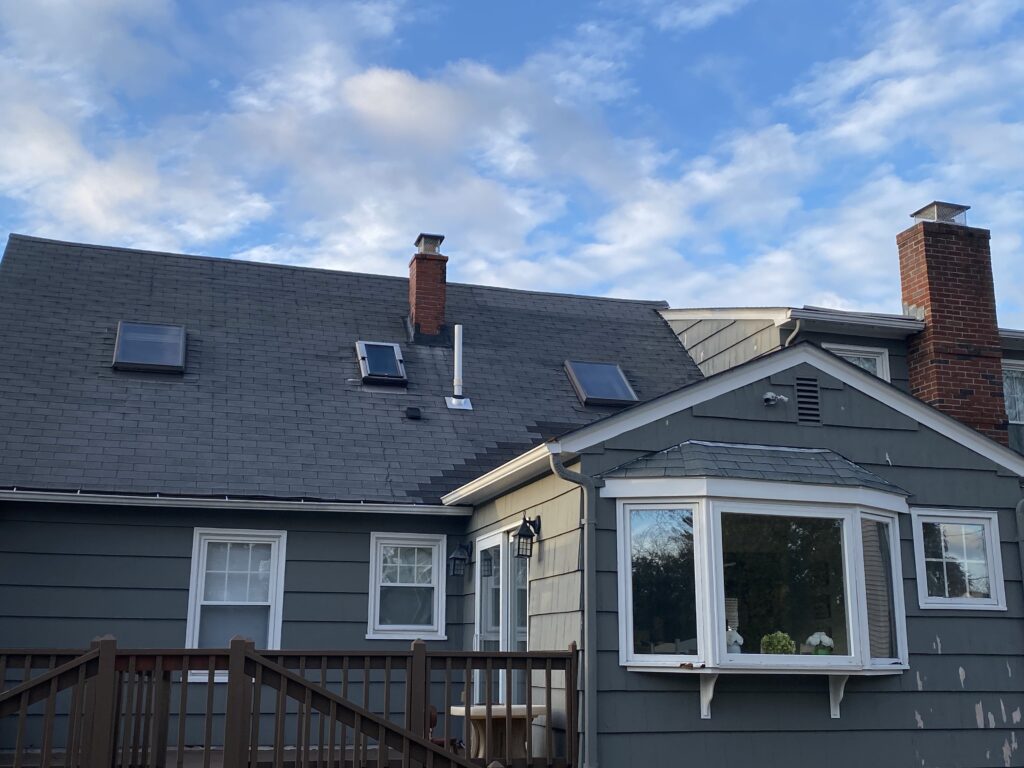
Derek walks the roof before he tells you anything. That means checking the membrane surface for splits, blistering, and ponding, checking every flashing point around curbs, stacks, and walls, and looking at the drains to see whether water is actually leaving the roof the way it’s supposed to. If there’s access from below, he’ll check the underside for staining, rot, or soft decking, because that tells you more about how long a problem has been going on than the surface does.
We give you a straight answer based on what’s actually there. If a roof needs a seam repair and a good cleaning, that’s what we recommend. If the membrane is past its working life and water has gotten into the insulation board underneath, we’ll show you why and explain what a full re-cover or tear-off involves. No recommendation gets made before the roof gets walked.
What the job involves
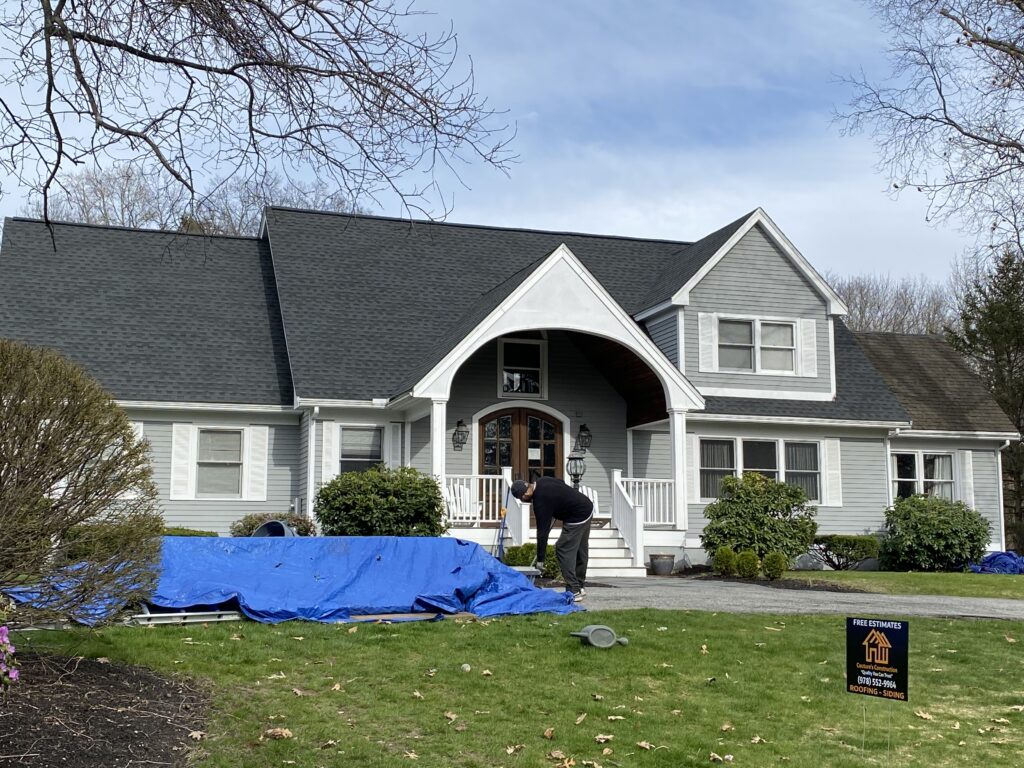
Small commercial and municipal work means working around a building that’s in use. We phase sections so a store, office, or town building doesn’t have to close, and we coordinate staging, noise, and access with whoever runs the building day to day. On a church or municipal roof, that often means working around a meeting or service schedule rather than our own.
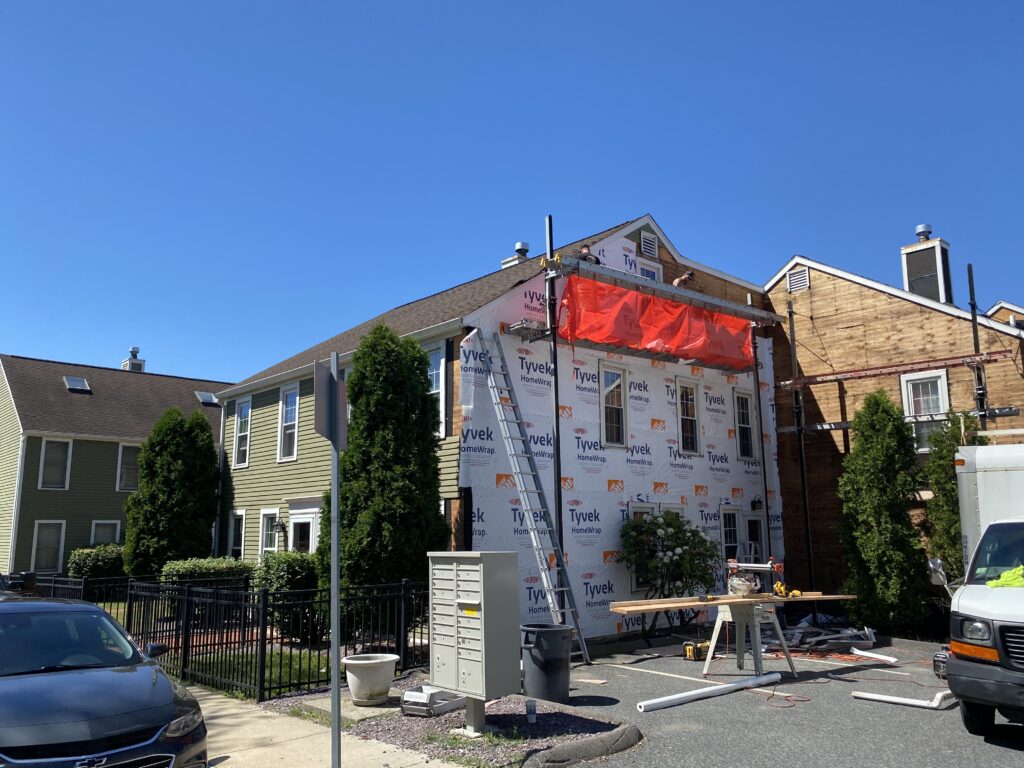
The physical work itself follows the same order regardless of size: remove or prep the old surface, address any wet insulation or damaged decking underneath, install the new membrane and properly weld or seal every seam, then flash every penetration and edge detail. Flashing and seams are where a low-slope roof succeeds or fails, and we don’t rush that part to hit a schedule.
What it costs
Commercial low-slope work runs roughly {PRICE_LOW} to {PRICE_HIGH}, and the range is wide because the buildings are so different from each other. A small re-cover over sound decking on a straightforward roof costs a lot less than a full tear-off that turns up wet insulation board or rotted decking once we open it up. Roof size, the number of penetrations and flashing points, how many layers need to come off, and how the crew gets equipment onto the roof all move the number. We’ll give you a real figure after the assessment, not before.
How long it takes
Most small commercial or municipal roofs in this size range take a few days to a week once material is on site, weather cooperating. Phasing around an occupied building adds time compared to an empty structure, and any decking repair found once the old surface comes off will add a day or more depending on how much of it there is. We give you a realistic window up front and tell you as soon as anything changes it.
Does Couture's Construction handle commercial roofing on the New Hampshire side?
Yes. We work both sides of the Massachusetts-New Hampshire line regularly. Kensington falls under a different permitting process and inspection setup than our Methuen home base, and we're set up to handle that, including any town or state paperwork the project requires.
What's the difference between EPDM and TPO for a small commercial building?
EPDM is a black rubber membrane that's been used for decades and holds up well if it's installed and seamed correctly. TPO is a newer white membrane, heat-welded rather than glued at the seams, and it reflects heat better. For a small mixed-use building or municipal roof, the right call usually comes down to the existing roof's condition and how the seams and flashing were done last time, not just which material is trendier.
Can you repair a section of a flat roof instead of replacing the whole thing?
Often, yes, if the membrane is sound everywhere else and the failure is localized to one seam, one penetration, or one area of ponding. We'll tell you honestly when a patch or a seam repair is the right move. We don't push replacement on a roof that doesn't need it.
How do you keep a business or municipal building open during roofing work?
We phase the work, section by section, and coordinate access, noise, and material staging around your operating hours where possible. For a church or town building with scheduled events, we'll work around the calendar rather than around our own convenience.
Do you carry insurance for commercial jobs?
Get an estimate
If you manage or own a commercial, municipal, or church building in Kensington with a flat or low-slope section that’s due for a look, call {PHONE}. We’re based in Methuen, Massachusetts, and we work both sides of the state line as a matter of routine, so the fact that Kensington falls under New Hampshire’s permitting process rather than Massachusetts’ doesn’t slow anything down on our end. Derek will walk the roof, tell you what’s actually going on, and give you a straight recommendation before any work gets scheduled.