
- Home
- Services
- Locations
Amesbury, MA
Boxford, MA
Chelmsford, MA
Danvers, MA
Dracut, MA
Essex, MA
Georgetown, MA
Groveland, MA
Hamilton, MA
Haverhill, MA
Ipswich, MA
Merrimac, MA
Methuen, MA
Middleton, MA
Newbury, MA
Newburyport, MA
North Andover, MA
North Reading, MA
Peabody, MA
Rowley, MA
Salem, MA
Salisbury, MA
Tewksbury, MA
Topsfield, MA
Topsfield, MA
West Newbury, MA
Atkinson, MA
Derry, NH
East Kingston, NH
Kensington, NH
Kingston, NH
Londonderry, NH
Plaistow, NH
Salem, NH
- Company
- Contact
- Home
- Services
- Locations
Amesbury, MA
Boxford, MA
Chelmsford, MA
Danvers, MA
Dracut, MA
Essex, MA
Georgetown, MA
Groveland, MA
Hamilton, MA
Haverhill, MA
Ipswich, MA
Merrimac, MA
Methuen, MA
Middleton, MA
Newbury, MA
Newburyport, MA
North Andover, MA
North Reading, MA
Peabody, MA
Rowley, MA
Salem, MA
Salisbury, MA
Tewksbury, MA
Topsfield, MA
Topsfield, MA
West Newbury, MA
Atkinson, MA
Derry, NH
East Kingston, NH
Kensington, NH
Kingston, NH
Londonderry, NH
Plaistow, NH
Salem, NH
- Company
- Contact
Commercial Roofing in Salisbury, MA
Salisbury doesn’t have an industrial park or a row of office parks. What it has is a handful of small commercial buildings near the beach and along Route 1, some mixed-use blocks with an apartment or office over a storefront, a few municipal and church roofs, and outbuildings on larger properties that back up toward the marsh. Most of it is flat or low-slope, most of it takes wind straight off the water, and most of it was built or re-roofed without much thought for what a nor’easter does to a membrane that’s already past its service life.
Flat and Low-Slope Commercial Roofing in Salisbury
If you own or manage a building here, you’re almost certainly dealing with a flat or low-slope roof, not a shingle field. That means EPDM rubber, TPO, or modified bitumen, not architectural shingles. We install and repair all three, and we’ll tell you straight which one fits your building instead of pushing whichever one we happen to have on the truck.
EPDM has a long track record on low-slope commercial roofs and is a reasonable, economical choice on a building that isn’t fighting a lot of ponding water. TPO gives you a heat-welded seam and a reflective white surface, which matters if the building has real cooling load in summer. Modified bitumen is often the right call on an older roof with a lot of penetrations – vents, stacks, HVAC curbs – because it handles detail work around those better than a single-ply membrane does. On a building this close to open water, wind uplift resistance is not a spec sheet detail you can skip. We check what the membrane and attachment method are rated for and what the building actually faces.
What Salisbury roofs are up against
Wind and salt drive most of the commercial roofing work we see in Salisbury. This town sits close enough to the water that uplift ratings on a membrane or a mechanically attached system genuinely matter, not as a marketing point but as the thing that decides whether the roof is still attached after the next coastal storm. Salt air also accelerates corrosion on flashing, fasteners, and any exposed metal edge detail faster than it would twenty miles inland.
Salisbury’s commercial buildings are also small and mixed-use, which creates its own problems. A flat roof over a storefront with an apartment above it often has multiple penetrations added over the years – a new HVAC unit here, a vent stack there – each one a potential leak point if it wasn’t properly flashed when it went in. Municipal and church buildings tend to have older roofs that have been patched more than once, and outbuildings on larger properties near the marsh often get skipped entirely until something’s visibly wrong. We see ponding water on roofs with inadequate slope to drains, and we see membrane seams that were never properly sealed failing at year eight or nine instead of lasting out their expected service life.
How we assess it
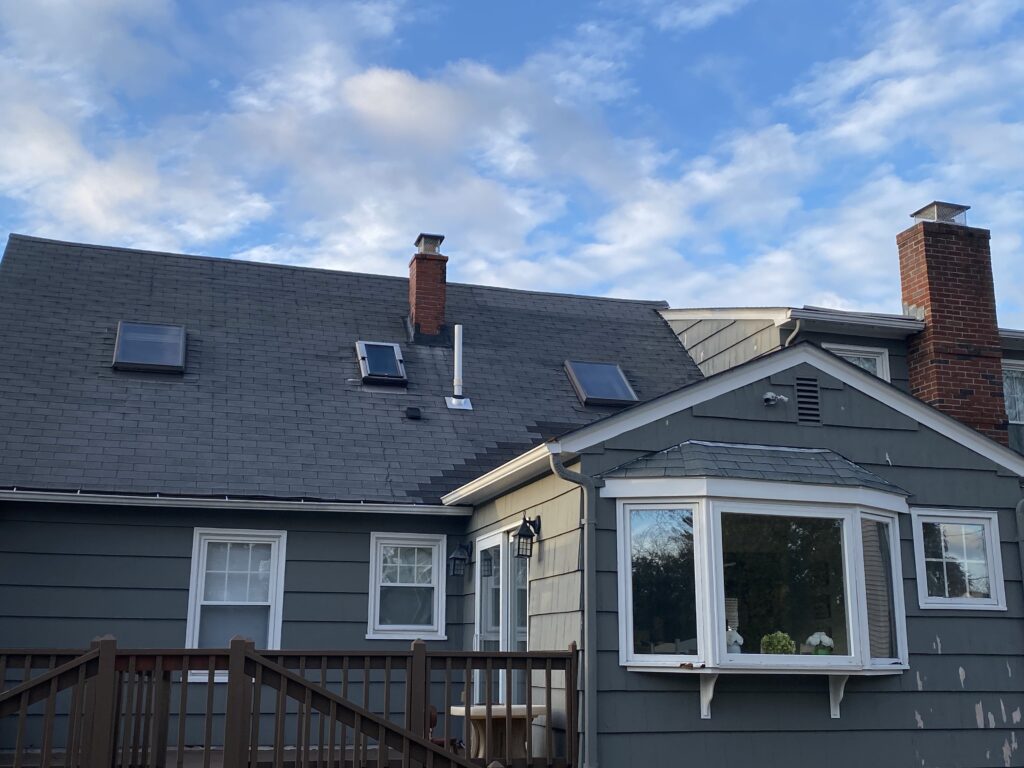
Derek doesn’t quote a commercial roof from a photo or a satellite image. A real assessment means getting on the roof and walking the whole field, not just the visible problem area. We check the membrane condition and seam integrity, look at every penetration and how it was flashed, check drains and scuppers for ponding evidence, and look at the perimeter edge metal, which is usually the first thing wind gets a grip on.
Where we can get access, we look at the deck from underneath too – in an attic, a mechanical space, or a drop ceiling below the roof. Soft or discolored decking tells you there’s been a leak, sometimes one nobody’s reported yet. We’ll also ask about the building’s use, because a roof over an occupied storefront has different tolerance for downtime than a roof over storage space. You get a straight answer on what’s actually wrong before you get a recommendation, not the other way around.
What the job involves
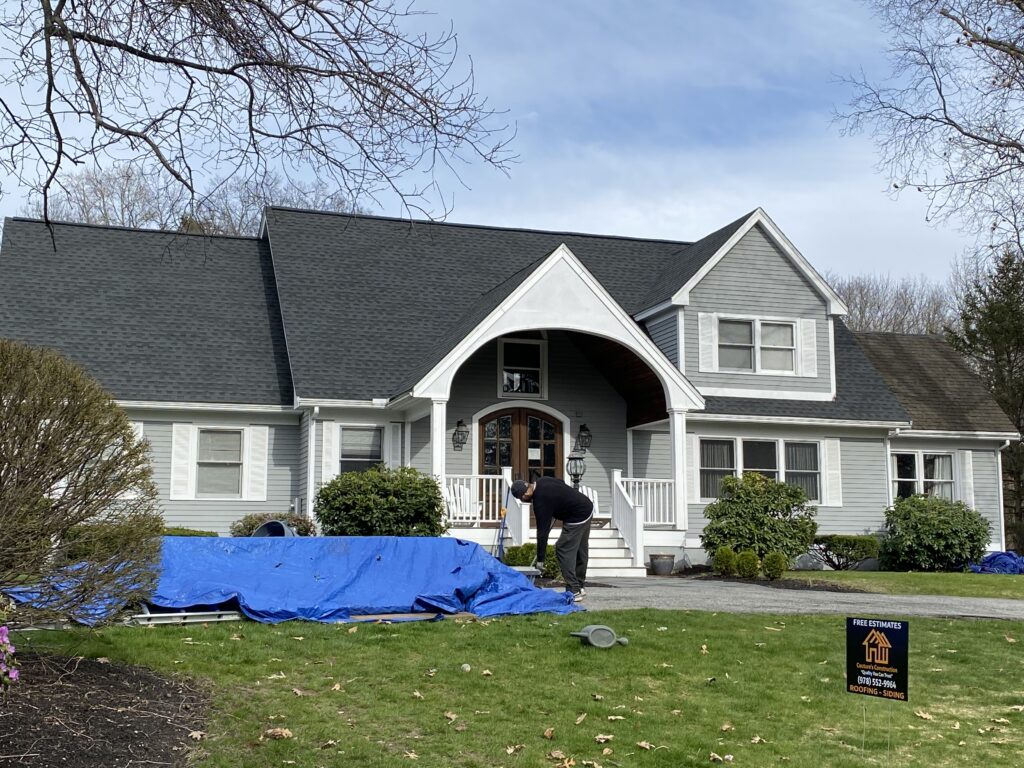
A commercial roof job in Salisbury usually starts with tear-off of the failed membrane down to sound decking, unless the existing system genuinely qualifies for a recover, which isn’t common on buildings this age. We check and repair or replace decking as needed, then install new insulation if the board is compressed or waterlogged, then the new membrane – EPDM, TPO, or modified bitumen depending on what the assessment calls for.
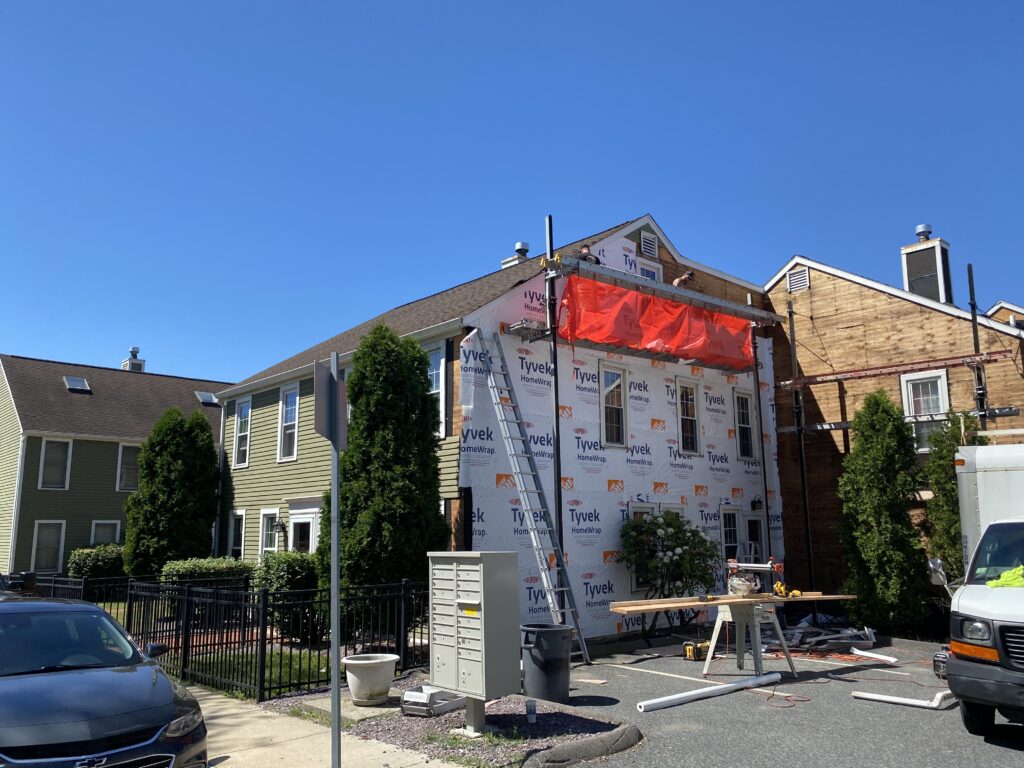
Flashing at every penetration, wall termination, and edge detail gets rebuilt, not just re-caulked. On a mixed-use building with a business operating underneath, we phase the work to keep the space usable – staging materials off to one side, sequencing tear-off in sections rather than opening the whole roof at once, and coordinating access so deliveries and customers aren’t blocked mid-project. On a church or municipal building, we work around whatever schedule of use the building has, services, meetings, events, and plan the noisy or disruptive parts of the job around it.
What it costs
Commercial low-slope roofing runs {PRICE_LOW} to {PRICE_HIGH} in this area, and the spread is wide because commercial buildings vary more than houses do. Roof size and the number of penetrations move the number the most. A simple rectangular roof with two roof drains costs a lot less per square foot than a roof crowded with HVAC curbs, vents, and old satellite mounts, each one needing its own flashing detail.
Decking condition is the other variable that can change a quote mid-job. If we open the membrane and find rotten or delaminated deck underneath, that gets replaced, and we’ll tell you before we do it, not after. Access matters too – a roof reachable by a straight ladder off a parking lot is a different job than one behind a building on the water side with limited staging room. We give you a number based on what we find on your roof, not a phone estimate.
How long it takes
Most small commercial roofs in Salisbury – the kind of building stock this town actually has – run a few days to about a week and a half depending on size and how much decking work turns up. A straightforward EPDM or TPO install on a building with a couple thousand square feet of roof and minimal deck repair can move fast once the crew is on site. A larger or more complicated roof, or one where we’re phasing around an occupied business, takes longer because we’re sequencing the work in sections instead of opening it all at once. Weather matters more on flat roofs than on pitched ones, since membrane installation needs a dry deck and reasonable temperatures to seal properly, so we build some flexibility into the schedule rather than promise a date we can’t guarantee.
Does Salisbury have much commercial building stock at all?
Not a lot. This is a small coastal town with a handful of commercial buildings near the beach and along Route 1, some mixed-use buildings with retail below and living space above, plus municipal and church roofs and outbuildings on larger properties. We size our approach to that reality rather than treating every job like it's a warehouse roof.
What roofing systems do you install on flat commercial roofs?
EPDM rubber, TPO, and modified bitumen, depending on the building. We'll tell you which one fits your roof's slope, penetrations, and use rather than defaulting to one system for everything.
Can you repair a commercial roof instead of replacing it?
Often, yes. If the membrane is sound and the problem is isolated to a flashing detail, a seam, or a drain, a repair is the honest answer and that's what we'll recommend. Replacement makes sense when the membrane is past its service life or decking underneath has failed.
How do you handle roof work over an occupied business?
We phase the job in sections, stage materials to keep access clear, and plan disruptive work around your operating hours where we can. We talk through the sequence with you before we start so there are no surprises mid-job.
Do wind ratings actually matter for a building this close to the water?
Get an Estimate
If you own or manage a commercial building in Salisbury and you’re not sure whether you’re looking at a repair or a full re-roof, get someone on the roof before you decide. Call {PHONE} and Derek will come out, look at the actual roof, and give you a straight answer on condition and options. No pressure, no inflated urgency, just what we find and what it means for your building.