
- Home
- Services
- Locations
Amesbury, MA
Boxford, MA
Chelmsford, MA
Danvers, MA
Dracut, MA
Essex, MA
Georgetown, MA
Groveland, MA
Hamilton, MA
Haverhill, MA
Ipswich, MA
Merrimac, MA
Methuen, MA
Middleton, MA
Newbury, MA
Newburyport, MA
North Andover, MA
North Reading, MA
Peabody, MA
Rowley, MA
Salem, MA
Salisbury, MA
Tewksbury, MA
Topsfield, MA
Topsfield, MA
West Newbury, MA
Atkinson, MA
Derry, NH
East Kingston, NH
Kensington, NH
Kingston, NH
Londonderry, NH
Plaistow, NH
Salem, NH
- Company
- Contact
- Home
- Services
- Locations
Amesbury, MA
Boxford, MA
Chelmsford, MA
Danvers, MA
Dracut, MA
Essex, MA
Georgetown, MA
Groveland, MA
Hamilton, MA
Haverhill, MA
Ipswich, MA
Merrimac, MA
Methuen, MA
Middleton, MA
Newbury, MA
Newburyport, MA
North Andover, MA
North Reading, MA
Peabody, MA
Rowley, MA
Salem, MA
Salisbury, MA
Tewksbury, MA
Topsfield, MA
Topsfield, MA
West Newbury, MA
Atkinson, MA
Derry, NH
East Kingston, NH
Kensington, NH
Kingston, NH
Londonderry, NH
Plaistow, NH
Salem, NH
- Company
- Contact
Commercial Roofing in Peabody, MA
Walk the retail strips and light-industrial parks off Route 1 and Route 128 in Peabody and you see the same roof over and over: a low-slope membrane over a strip mall, a warehouse, or a converted mill building, patched in places, original in others, and rarely inspected until something drips onto inventory or a tenant’s ceiling tile. Peabody’s commercial building stock skews older and flatter than the towns around it, which means more seams, more roof penetrations for HVAC curbs and vents, and more roofs that were never designed with today’s rooftop equipment load in mind.
That combination is exactly what a flat-roof contractor needs to understand before quoting anything. Couture’s Construction is based in Methuen and works commercial low-slope systems across the North Shore, including a fair number of jobs in Peabody’s business parks and downtown retail buildings.
Flat and Low-Slope Commercial Roofing Services in Peabody
Most of the commercial work we do in Peabody falls into three membrane systems. EPDM rubber is still the most common system on older strip retail and warehouse roofs in town, and it’s a reasonable, durable choice when it’s installed and seamed correctly. TPO has become the default for new installs and full tear-offs because of its reflectivity and heat-welded seams, which hold up better than adhered EPDM seams over time. Modified bitumen shows up on smaller additions, mechanical penthouses, and transition areas where a torch-down or cold-adhesive application makes more sense than a full membrane roll.
We also handle the parts that get ignored until they leak: pitch pockets around rooftop conduit, curb flashing at HVAC units, and drain bowls that have been patched with roof cement instead of properly re-flashed. On a commercial building, those details fail long before the field membrane does.
What Peabody roofs are up against
Peabody’s commercial stock is older on average than what you’ll find in the newer business parks further inland, and a lot of it sits close to tree lines or shares walls with adjacent buildings, which limits access and drainage options. Flat roof drainage is the recurring problem here. Older buildings were built with fewer drains than current code would call for, so ponding water sits on the membrane longer after a storm, and ponding is what ages EPDM and modified bitumen faster than sun exposure alone. We see it most on rear additions and single-story sections tacked onto older buildings downtown, where the roof was clearly an afterthought to the original structure.
Wind is the other factor, and Peabody’s mix of open commercial lots and tighter downtown parcels means uplift exposure varies block to block. A membrane that’s mechanically fastened and properly terminated at the perimeter holds up fine in open exposure. One that was installed with minimal fastening because it was the cheaper bid does not, and we’ve re-done more than a few roofs in town that failed at the edge metal and parapet flashing before the field membrane ever gave out.
How we assess it
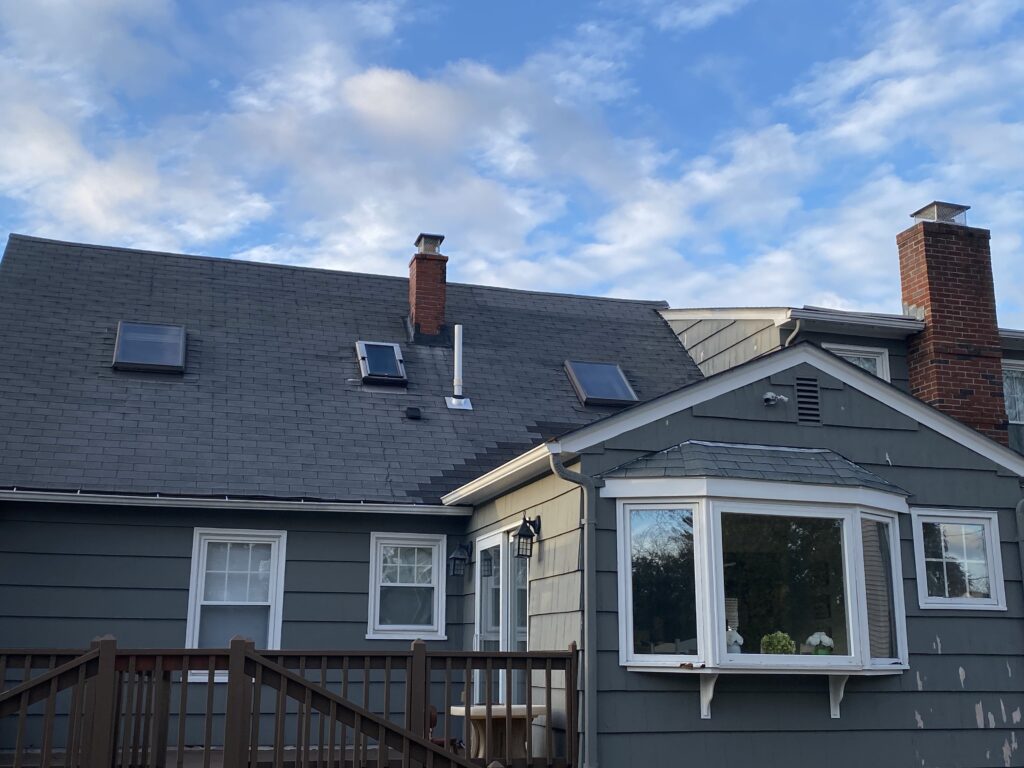
Derek walks the roof before anyone quotes a number. That means checking the deck from underneath if there’s ceiling access, pulling back membrane at seams and terminations to see what the fastening pattern actually looks like, checking drains and scuppers for standing water and slope problems, and looking at every roof penetration – HVAC curbs, exhaust stacks, conduit runs – because that’s where commercial roofs actually fail. We also check the insulation layer where we can get to it, since wet insulation under an intact-looking membrane is one of the more expensive surprises on a commercial tear-off.
You get a written assessment with photos before you get a recommendation. If the roof has ten good years left and just needs the drains cleared and a few seams re-sealed, we’ll tell you that. A full commercial re-roof is a real capital expense, and we’re not going to push you into one on the strength of a sales pitch instead of an inspection.
What the job involves
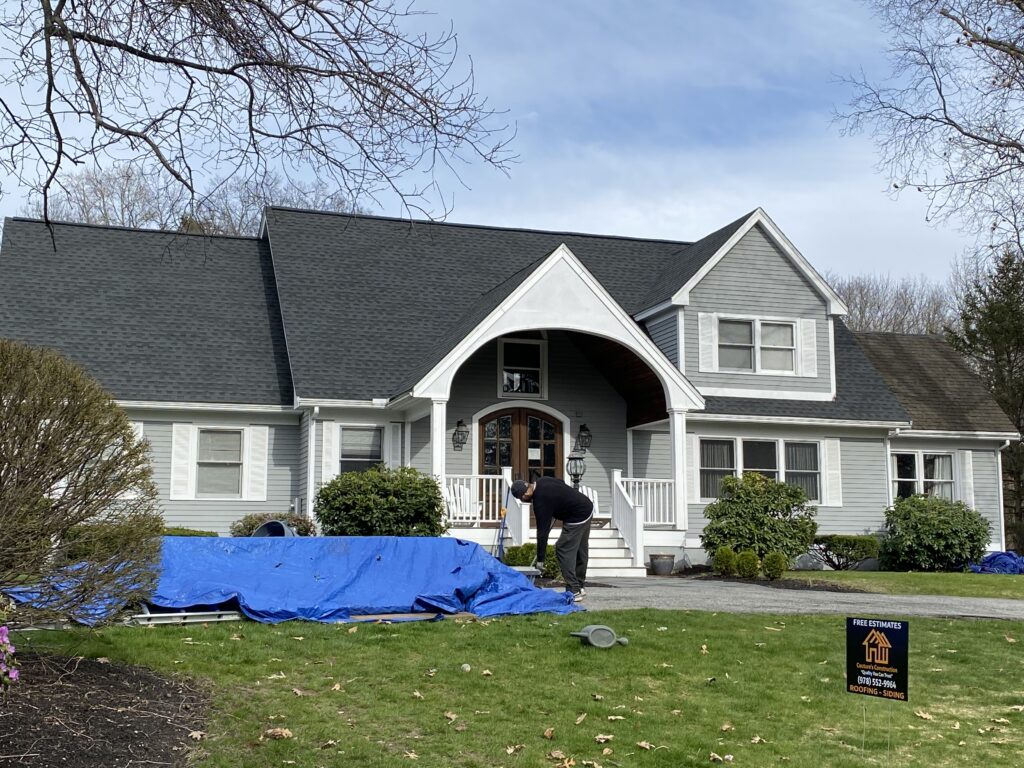
Every commercial roof project starts with scope: full tear-off to deck, or overlay/recover over an existing membrane that’s still structurally sound. Tear-offs let us fix wet insulation and re-slope problem drainage areas, which recovers can’t do. Once decking and insulation are confirmed dry and sound, we install the new membrane system – mechanically fastened or fully adhered depending on the building and wind exposure – then flash every penetration, terminate the perimeter with proper edge metal, and set or re-set roof drains to actual working slope.
On an occupied building, phasing matters as much as the roofing itself. We section the roof and schedule work so your business keeps operating, protect interior spaces below active work zones, and coordinate around loading docks, deliveries, and tenant hours instead of around our own convenience. That’s the difference between a contractor who’s done commercial work and one who’s only done houses.
What it costs
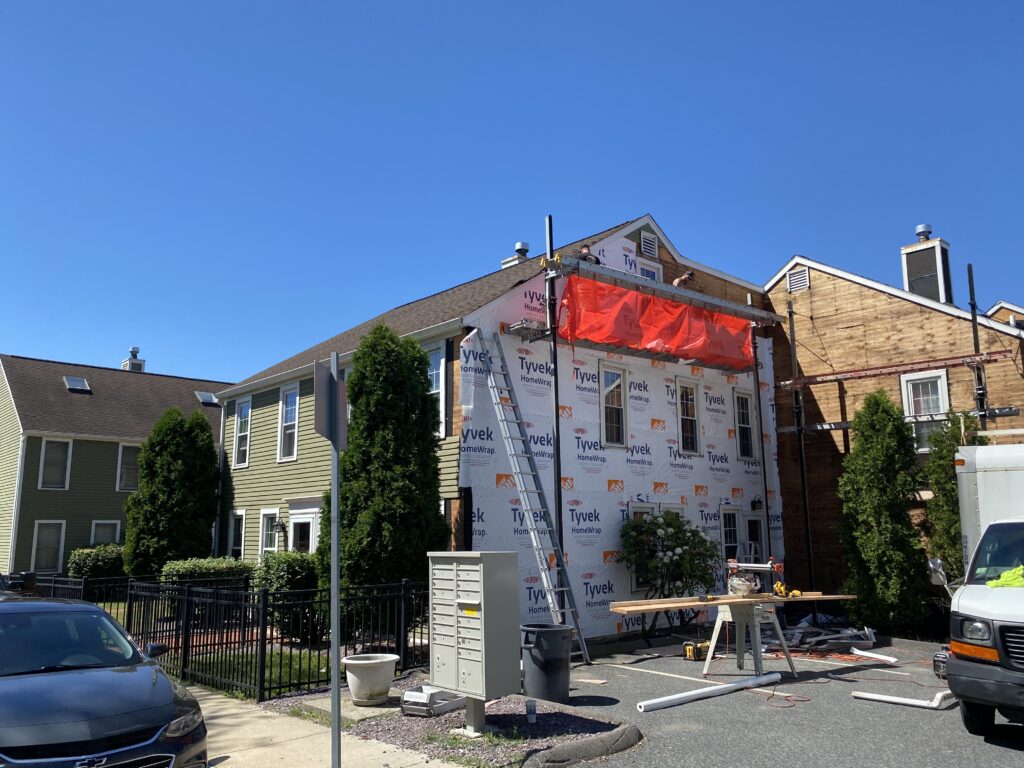
Commercial low-slope roofing in Peabody typically runs {PRICE_LOW} to {PRICE_HIGH}, and the spread is wide because commercial roofs vary more than residential ones. Total roof area and number of roof levels drive the base cost. Drainage work – adding drains, re-sloping, tapered insulation – adds cost but often prevents the exact ponding problems that shorten membrane life. Number of existing layers to strip, wet insulation discovered once we open the deck, and rooftop equipment that needs to be lifted, protected, or temporarily relocated all move the number. Access also matters more on commercial buildings: a roof with a straightforward hoist point costs less to work than one requiring a crane pick over a building or careful staging around an active parking lot.
We give you a real number after the assessment, broken into what’s driving each part of the cost, not a phone-quote estimate.
How long it takes
A straightforward TPO or EPDM recover on a mid-size commercial building typically takes a few days to a week and a half depending on square footage and weather windows. A full tear-off with deck repairs and re-flashing at every penetration runs longer, and phased work around an operating business adds time by design, since we’re deliberately not doing the whole roof at once. We’ll give you a schedule up front, including how many days the roof will be open to weather at any point, so you can plan around it rather than find out mid-job.
Do you work on occupied commercial buildings without shutting the business down?
Yes. We phase the roof in sections and schedule around your operating hours, deliveries, and tenant needs. Most commercial roofing in Peabody happens while the building stays open.
Is EPDM or TPO better for a Peabody commercial building?
It depends on the building. TPO's heat-welded seams and reflectivity make it the more common choice for new installs and full tear-offs now. EPDM is still a solid, proven system, especially on buildings where it's already installed and performing well. We'll tell you which makes sense for your specific roof rather than pushing one system across the board.
How do I know if I need a recover or a full tear-off?
If the existing deck and insulation are dry and sound, a recover can work and costs less. If there's wet insulation, drainage problems, or multiple existing layers already on the roof, a tear-off is the honest answer even though it costs more upfront. We check this during the assessment, not after we've already quoted a number.
What causes most commercial roof leaks in Peabody?
Ponding water from inadequate or clogged drains, failed flashing around HVAC curbs and roof penetrations, and perimeter edge metal that was under-fastened during a past install. The field membrane itself is rarely the first thing to fail.
Can you match my building's existing membrane color or system for insurance or lease requirements?
Get an estimate
If you manage or own a commercial building in Peabody and the roof is due for a look, call Couture’s Construction at {PHONE}. Derek will walk the roof, tell you honestly what condition it’s in, and give you options with real costs attached, not a pressure pitch.